


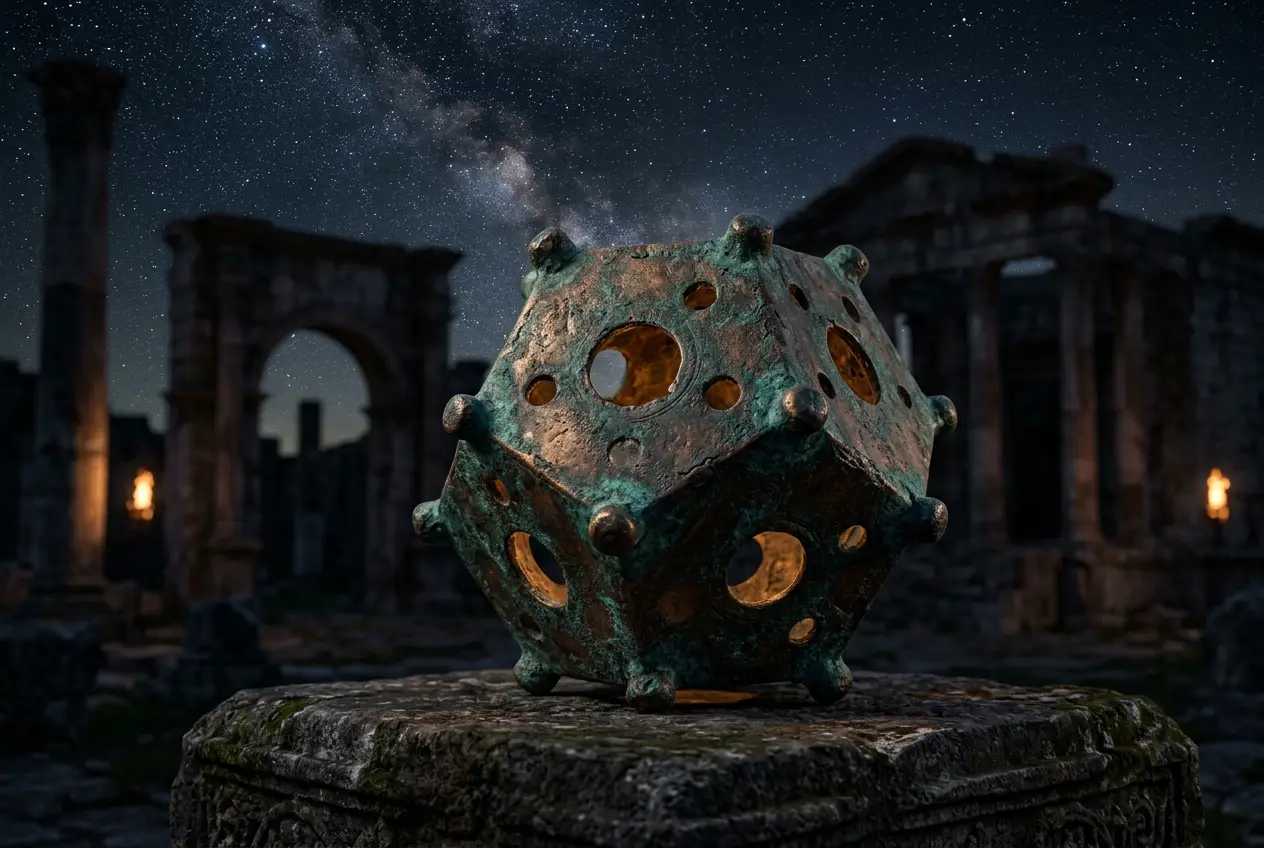
Imagine walking through a bustling Roman market, the air filled with the scent of spices and the murmur of Latin. Suddenly, you spot an object unlike anything you’ve ever seen—a beautifully crafted, hollow bronze dodecahedron, adorned with knobs and holes. What would you make of it? Would you assume it was a child's toy, a decorative piece, or something far more profound, perhaps a forgotten piece of ancient technology? This very question has stumped archaeologists and historians for centuries, pushing us to reconsider the sophistication of ancient civilizations.
I often find myself captivated by these whispers from the past, these relics that defy easy categorization. They remind me that history isn't a linear march of progress but a complex tapestry with lost threads and hidden patterns. The Roman Dodecahedra, a series of enigmatic artifacts discovered across Europe, is one such thread—a tantalizing puzzle that challenges our assumptions about Roman ingenuity and their understanding of the cosmos.
The Roman Dodecahedron: An Alien Object in Ancient Hands?
At first glance, a Roman Dodecahedron looks like something out of a science fiction novel, or perhaps a complex geometric puzzle. Typically cast in bronze, though some stone examples exist, these objects feature twelve flat pentagonal faces, each with a circular hole of varying size. Small spherical knobs often protrude from the corners. Ranging from 4 to 11 centimeters in size, over a hundred of these peculiar artifacts have been unearthed, primarily from Gallo-Roman sites across modern-day France, Germany, and Switzerland, but also in parts of Britain and Italy.
The craftsmanship is undeniable. These weren't crudely fashioned items; they required skill and precision to cast. Yet, despite their widespread distribution and the quality of their manufacture, no ancient Roman texts or drawings explicitly describe their purpose. This silence in the historical record is precisely what fuels the intrigue and the myriad of theories surrounding them. As I delve into this mystery, I can't help but wonder: why would a civilization known for its detailed record-keeping and pragmatic engineering leave no trace of such an apparently important or symbolic object's function?
The Puzzle of Purpose: Unraveling the Theories
Without a definitive explanation, archaeologists and enthusiasts have proposed a dizzying array of possibilities for the Roman Dodecahedra. Some of these theories are more grounded in everyday Roman life, while others venture into the realms of advanced, lost technology.
- Candle Holders: One common suggestion is that they served as decorative candle holders. Candles could be placed on the knobs, or the object could be inverted, using the holes to hold candles. However, the lack of wax residue on most finds makes this theory less convincing.
- Dice for Games: The geometric nature lends itself to being a die. But the varying hole sizes and the often intricate casting suggest something more than a simple game piece. Would Romans invest such effort into manufacturing dice?
- Measuring Instruments: This is where the theories start to get more intriguing. Some propose they were tools for measuring distances, surveying, or even calibrating pipes. The varying hole sizes and specific angles could, in theory, be used for such purposes. A particularly compelling idea suggests they were used for determining the optimal sowing date for winter grain, based on the angle of sunlight.
- Ritual or Religious Artifacts: Given the lack of practical explanation, some scholars lean towards a ceremonial or spiritual function. The dodecahedron shape itself held mystical significance in some ancient philosophies, particularly Pythagoreanism and Platonism, who associated it with the cosmos or the element of "aether."
- Knitting Tools: A surprising theory emerged that they were used for knitting gloves or other garments, with yarn passed through the holes. While creative, it doesn't quite fit the robustness and material of the artifacts.
Each theory offers a piece of the puzzle, but none provides a complete, universally accepted explanation. The true brilliance, or perhaps the frustration, lies in their versatility—they could have been almost anything.
Did Ancients Chart Stars? The Astronomical Hypothesis
Among the most captivating theories, and one that resonates deeply with the spirit of "Curiosity Diaries," is the idea that the Roman Dodecahedra were astronomical instruments. This hypothesis proposes that these objects were used for celestial observations, perhaps to measure angles, track stars, or even determine specific dates based on solar or stellar alignments.
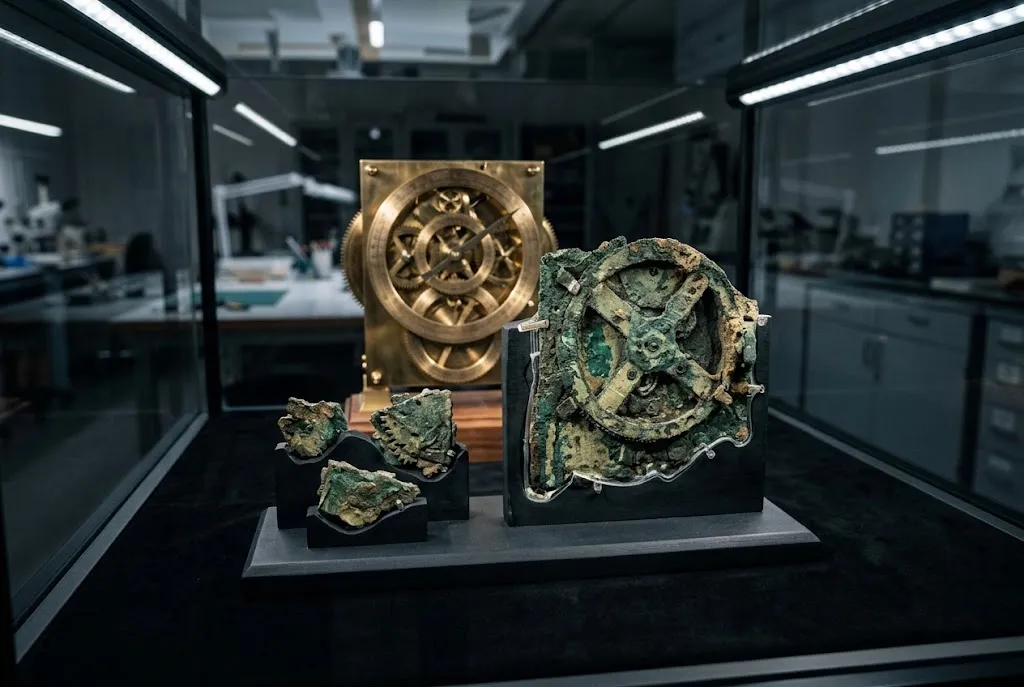
Consider the context: ancient civilizations were deeply connected to the sky. Navigation, agriculture, and religious calendars all depended on understanding celestial movements. We know the Romans adopted much of Greek astronomical knowledge, and objects like the Antikythera Mechanism (though far more complex and advanced) demonstrate a sophisticated understanding of gears and celestial mechanics. While the Dodecahedra are much simpler, their precise angles and varying hole sizes could have been used to sight specific stars or constellations.
One fascinating proposal, as detailed on Wikipedia's entry for the Roman Dodecahedron, suggests they might have been used to measure the apparent diameter of the sun or specific stellar positions at different times of the year. Imagine holding the dodecahedron up to the sky, aligning a star through two specific holes, and using the resulting angle to determine a date or latitude. This would be an ingenious, albeit simple, piece of celestial navigation technology.
This idea gains traction when we consider the prevalence of astronomical observations in ancient Roman society. For instance, the renowned Roman architect Vitruvius discussed the importance of astronomical knowledge for accurate timekeeping and sundial construction in his work De architectura (On Architecture). While not directly referencing dodecahedra, it underscores the scientific mindset of the era. The Romans, though often remembered for their pragmatic engineering, also held a deep respect for celestial mechanics, as seen in their elaborate calendar systems and public sundials. If you're curious about how other ancient structures might have tracked the cosmos, you can read our blog on Ancient Alignments: Did Structures Track the Cosmos?.
Another theory, put forth by Professor G. M. C. Wagemans from Belgium, suggests the dodecahedra could have been used to determine the exact length of daylight during the equinoxes and solstices, thus aiding in creating accurate calendars. This aligns perfectly with agricultural and ritualistic needs. The precision in the manufacturing of these objects, particularly the varying diameters of the holes, implies a deliberate design choice, possibly for specific angular measurements.
Craftsmanship and Context: More Than Meets the Eye
The fact that so many of these objects exist, spread across the former Roman Empire, hints at a widespread, if poorly documented, use. Their consistent design, despite regional variations, suggests they were not merely decorative whims but served a recognized function. The bronze casting process itself required a good understanding of metallurgy and mold-making—skills the Romans certainly possessed. To explore other lost ancient technologies, check out our post on Lost Acoustic Tech: Did Ancients Control Sound Waves?.
The lack of textual evidence remains the biggest hurdle. Why would the Romans, who documented so much of their daily lives, laws, and engineering marvels, omit any mention of these tools? Perhaps they were so commonplace that they didn't warrant special mention, much like we don't write treatises on how to use a screwdriver. Or, more dramatically, perhaps their use was restricted to a select group of astronomers, priests, or engineers, and their knowledge was passed down orally, or simply lost to time.
I tend to believe the latter—that specialized tools, especially those tied to potentially sacred or crucial knowledge like celestial observation, might have been guarded secrets. The sheer number of discoveries, however, suggests a broader utility than just a niche priestly instrument.
Why the Mystery Persists & Modern Insights
Despite numerous modern attempts to recreate and test the Dodecahedra, a definitive function remains elusive. Replicas have been used for various experiments:
- Aligning specific stars or constellations: Experiments have shown that certain hole combinations could align with known stars at specific latitudes.
- Measuring shadow lengths: Some tests involve using them as gnomons (shadow-casting devices) to determine time or season.
- Determining military logistics: Could they have been used to accurately gauge terrain angles or distances for military campaigns?
The key issue is that while the dodecahedra could perform these functions, there's no conclusive proof that they did. The evidence is largely circumstantial. This is a common challenge in archaeology when dealing with artifacts from which all contextual information has been stripped away.
Historian Andrea Schär from the University of Basel suggests in her research that the dodecahedron was likely a measuring instrument, possibly for calculating trajectories or surveying. She points to their precision and the distribution patterns as indicators of a utilitarian function, rather than purely decorative or ritualistic.
Conclusion: A Glimpse into Forgotten Innovation
The Roman Dodecahedra stand as a testament to the enduring mysteries of our past. They force us to question the limits of ancient knowledge and technology, reminding us that there are still profound discoveries waiting to be made. Was it an intricate game piece, a specialized measuring device for agriculture, or an esoteric tool for charting the very stars above?
I believe the most compelling aspect of the Roman Dodecahedron isn't necessarily its singular purpose, but its capacity to spark our imagination and challenge our historical narratives. It pushes us to view the Romans not just as builders of roads and aqueducts, but as potentially sophisticated astronomers or engineers whose specific innovations have simply been lost to the sands of time. As we continue to unearth artifacts from forgotten eras, we’ll undoubtedly encounter more such puzzles, each whispering stories of historical tech and curious phenomena that redefine our understanding of human ingenuity.
The search for answers continues, and perhaps one day, a lost scroll or a new archaeological find will finally illuminate the true purpose of these enigmatic geometric wonders, revealing whether the Romans were indeed charting the heavens with these mysterious tools.
References:
- Wikipedia, Roman Dodecahedron: https://en.wikipedia.org/wiki/Roman_dodecahedron (opens in a new tab)
- Wikipedia, Ancient Roman astronomy: https://en.wikipedia.org/wiki/Ancient_Roman_astronomy (opens in a new tab)
- Wikipedia, Vitruvius: https://en.wikipedia.org/wiki/Vitruvius (opens in a new tab)



Conversation0
No comments yet. Be the first to share a thought — the best questions often become new stories.