



I often find myself lost in the dusty corridors of history, sifting through forgotten texts and whispered legends, searching for echoes of forgotten technology. It’s a fascination that started young, fueled by tales of civilizations far more advanced than conventional history books suggest. Recently, I stumbled upon a concept that has captivated my imagination like few others: Vimanas. The very word conjures images of mythical chariots soaring through the heavens, but what if these weren't mere myths? What if ancient India possessed the knowledge, or even the actual machines, for flight thousands of years before the Wright brothers?
The idea seems outlandish, I know. Yet, within the vast repository of ancient Indian literature – from the grand epics like the Ramayana and Mahabharata to specialized texts like the Vaimanika Shastra – there are descriptions of aerial vehicles that defy simple explanation. Could these be the tantalizing hints of a lost technology, a "historical tech anomaly" that challenges our understanding of human ingenuity?
The Sky Chariots: Unpacking the Vimana Concept
When I first delved into the concept of Vimanas, I anticipated poetic allegories or divine interventions. What I found was something far more intriguing. The word "Vimana" itself has various interpretations, often referring to a mythological flying palace or chariot. However, in many contexts, the descriptions are surprisingly technical, hinting at actual physical devices rather than just fantastical elements.
In the Ramayana, for instance, the Pushpaka Vimana is described as an aerial car that belonged to Ravana and was later used by Rama. It could travel at the speed of thought and carried a large number of people. It was no mere flying carpet; it was a complex machine. The Mahabharata mentions Vimanas used in epic battles, capable of swift maneuvers and even carrying devastating weapons. These weren't chariots pulled by horses; they were self-propelled, piloted craft.
One of the most compelling texts is the Vaimanika Shastra, also known as the "Science of Aeronautics." Attributed to the sage Bharadvaja in the 4th century BC (though some scholars place its compilation much later, in the early 20th century, based on older oral traditions or fragments), it purports to describe the construction and operation of Vimanas. This text details various types of aircraft, their materials, propulsion systems, pilot training, and even evasive maneuvers. It speaks of anti-gravity mechanisms, mercury vortex engines, and different types of metal alloys for construction.
Consider this passage from the Vaimanika Shastra:
"By means of the forces inherent in the solar rays, which are exceedingly hot, it creates a region of cold and by mixing it with the current generated by the Ether, it creates a region of intense darkness, which is invisible to the eye of the enemy."
This sounds remarkably like a description of stealth technology or perhaps a form of atmospheric manipulation for concealment. The text continues to describe various power sources, including "Rasa" (mercury) and solar energy, suggesting a sophisticated understanding of energy conversion.
The Scientific Scrutiny: Myth or Mechanism?
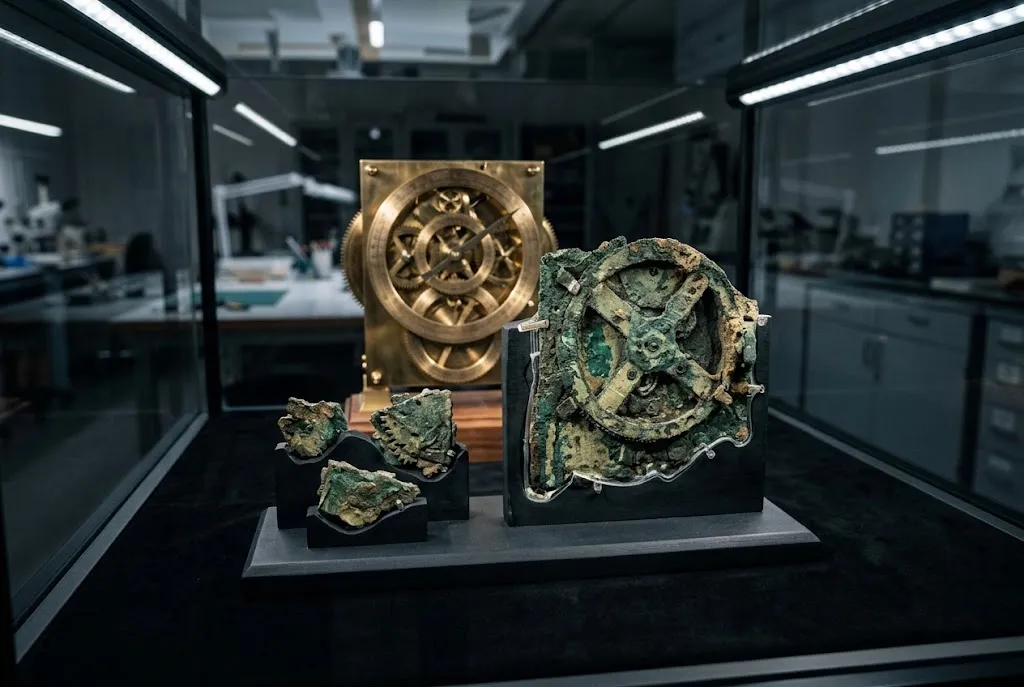
The immediate challenge for modern science is the lack of physical evidence. Unlike the Antikythera Mechanism, which was a tangible artifact, Vimanas remain largely textual. This leads to a crucial debate: are these elaborate myths, or do they represent genuine, if lost, technological knowledge?
Many mainstream historians and scientists dismiss the Vaimanika Shastra as a work of fiction or a modern hoax, pointing to its compilation date and the fanciful nature of some descriptions. They argue that the technology described, such as mercury vortex engines for anti-gravity, defies known physics and could not have been practically realized in ancient times. Skeptics suggest that the vivid imaginations of ancient authors, combined with a desire to attribute supernatural powers to their deities or heroes, led to these descriptions. For a deeper dive into the challenges of interpreting ancient texts as scientific documents, you might find this Wikipedia article on the history of pseudoscience fascinating.
However, a passionate group of researchers, Indologists, and aviation enthusiasts argue otherwise. They propose that the texts, even if embellished, contain kernels of scientific truth. They point to parallels with modern aerospace concepts:
- Multi-stage propulsion: The idea of different "forces" being harnessed.
- Stealth capabilities: Descriptions of invisibility or confusing enemy radar.
- Aerodynamic shapes: Various Vimana types are described with specific forms.
- Advanced Metallurgy: The texts mention unique alloys for aircraft construction, suggesting a deep knowledge of materials science.
Dr. V. Raghavan, a Sanskrit scholar, and aerospace engineer, has highlighted that while many aspects might be mythological, the consistent, detailed descriptions across various texts warrant further investigation. "The sheer volume and specific nature of these descriptions suggest something more than pure fantasy," he argues. "It's a challenge to decode the ancient scientific language."
Bridging the Gap: What Could This Mean for Us?
If even a fraction of the Vimana descriptions were based on actual technology, it would revolutionize our understanding of human history and technological progress. It would mean that advanced scientific principles, potentially including aspects of aerodynamics, propulsion, and even anti-gravity, were understood and applied in an ancient civilization thousands of years before their "rediscovery" in the modern era.
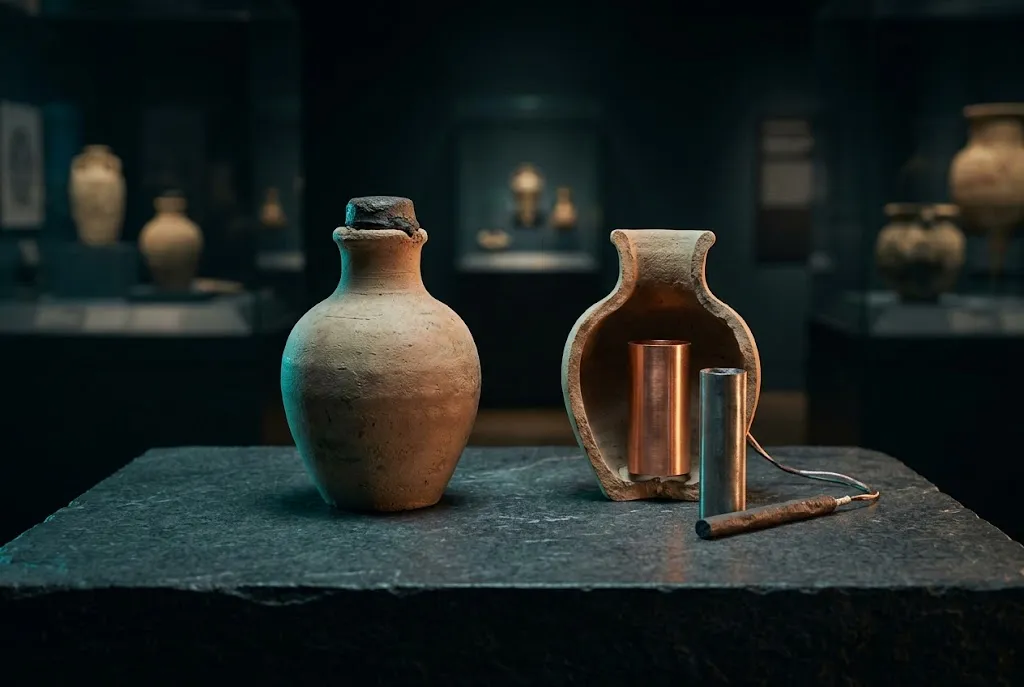
This isn't just about ancient flying machines; it's about the very nature of innovation and knowledge transmission. Did a highly advanced civilization exist and then decline, losing its technological prowess to time, war, or natural catastrophe? Or were these technologies guarded secrets, accessible only to a select few? The idea that sophisticated historical technologies might be lying undiscovered or misinterpreted in ancient records resonates with other archaeological puzzles, such as the mysterious Baghdad Battery or the Antikythera Mechanism, which you can read more about in our article: Antikythera: Did Ancient Greeks Code a Cosmos Machine?.
The Vimana concept also raises fascinating questions about the "source" of this knowledge. Some proponents suggest ancient astronauts or extraterrestrial influence, while others believe it points to an indigenous, highly developed scientific tradition that simply took a different path than Western science. The intricate details of warfare described in the Mahabharata, including advanced weapons that sound eerily similar to modern explosives or even nuclear devices, add another layer of complexity to this historical tech mystery. You can find more information about these ancient warfare descriptions on its dedicated Wikipedia page.
The Future of Vimana Research
For now, the Vimanas remain firmly in the realm of historical mystery and speculative science. However, the ongoing efforts to translate and interpret ancient texts with a fresh, scientific lens are crucial. As our understanding of ancient languages, metallurgy, and even theoretical physics advances, we might find new ways to approach these enigmatic descriptions.
I believe the biggest takeaway from the Vimana phenomenon isn't necessarily about proving ancient flight, but about keeping an open mind to the possibilities of the past. History isn't a linear march of progress; it's a winding river with forgotten tributaries and lost civilizations. Perhaps the "Curiosity Diaries" of the future will look back at our present and wonder how we could have missed such obvious clues. Whether literal flying machines or sophisticated allegories for deeper scientific principles, Vimanas remind us that the human capacity for innovation, and indeed, for wonder, knows no bounds—past, present, or future.
This journey into historical tech anomalies often leads us to ponder other fundamental questions about our reality. Could advanced technologies, even entire civilizations, simply disappear without a trace? The idea itself is food for thought, much like the debate around simulation theory, which you can explore in our piece: Could Our Reality Be A Simulation? Decoding the Matrix Hypothesis.
Ultimately, the tale of the Vimanas is a potent reminder that our understanding of history is constantly evolving. It challenges us to look beyond established narratives and ask: What else have we overlooked? What other incredible advancements, scientific breakthroughs, or technological marvels lie hidden within the forgotten pages of antiquity? The quest for answers continues, fueled by an insatiable curiosity about the profound ingenuity of those who came before us.



Conversation0
No comments yet. Be the first to share a thought — the best questions often become new stories.