


I’ve always been fascinated by the figures who stand at the crossroads of genius and eccentricity, whose visions were so far ahead of their time they often bordered on science fiction. One name invariably comes to mind: Nikola Tesla. His life reads like a thrilling novel, filled with flashes of brilliant innovation, dramatic rivalries, and an enduring aura of mystery that continues to captivate us. But beyond the well-known AC motor and radio advancements, a persistent whisper echoes through history: did Tesla possess, and perhaps hide, even more revolutionary inventions? Specifically, was he on the verge of gifting the world free energy, only for it to be suppressed or lost to time?
It’s a question that ignites the imagination, hinting at a world that could have been drastically different. As I delve into the annals of his life and work, the lines between established scientific fact, historical intrigue, and tantalizing speculation often blur. This isn't just about dusty patents; it’s about a legacy that challenges our understanding of what was possible, even a century ago.
The Man Who Illuminated the Future
Before we explore the shadows, it’s crucial to appreciate the light Tesla brought. Born in 1856, Nikola Tesla was a Serbian-American inventor, electrical engineer, mechanical engineer, and futurist best known for his contributions to the design of the modern alternating current (AC) electricity supply system. His genius reshaped the world, literally powering cities and industries. He wasn't just an inventor; he was a visionary, dreaming of a world interconnected by wireless technology, long before the internet or even widespread radio.
His inventions include the Tesla coil, the foundation of radio technology, remote control, and even basic robotics. Yet, despite his monumental contributions, Tesla died in relative obscurity and financial difficulty, leaving behind a complex tapestry of documented achievements, half-realized dreams, and tantalizing hints of technologies that might have changed everything.
The Enigma of Tesla's "Lost" Inventions
The allure of Tesla’s "hidden" or "suppressed" inventions primarily revolves around technologies that promised to deliver power and communication in ways that would have rendered existing infrastructures obsolete. These aren’t just wild conjectures; many are rooted in his patents, notes, and public statements, though their practical realization and true capabilities remain subjects of intense debate.
1. The Wardenclyffe Tower and Worldwide Wireless Power
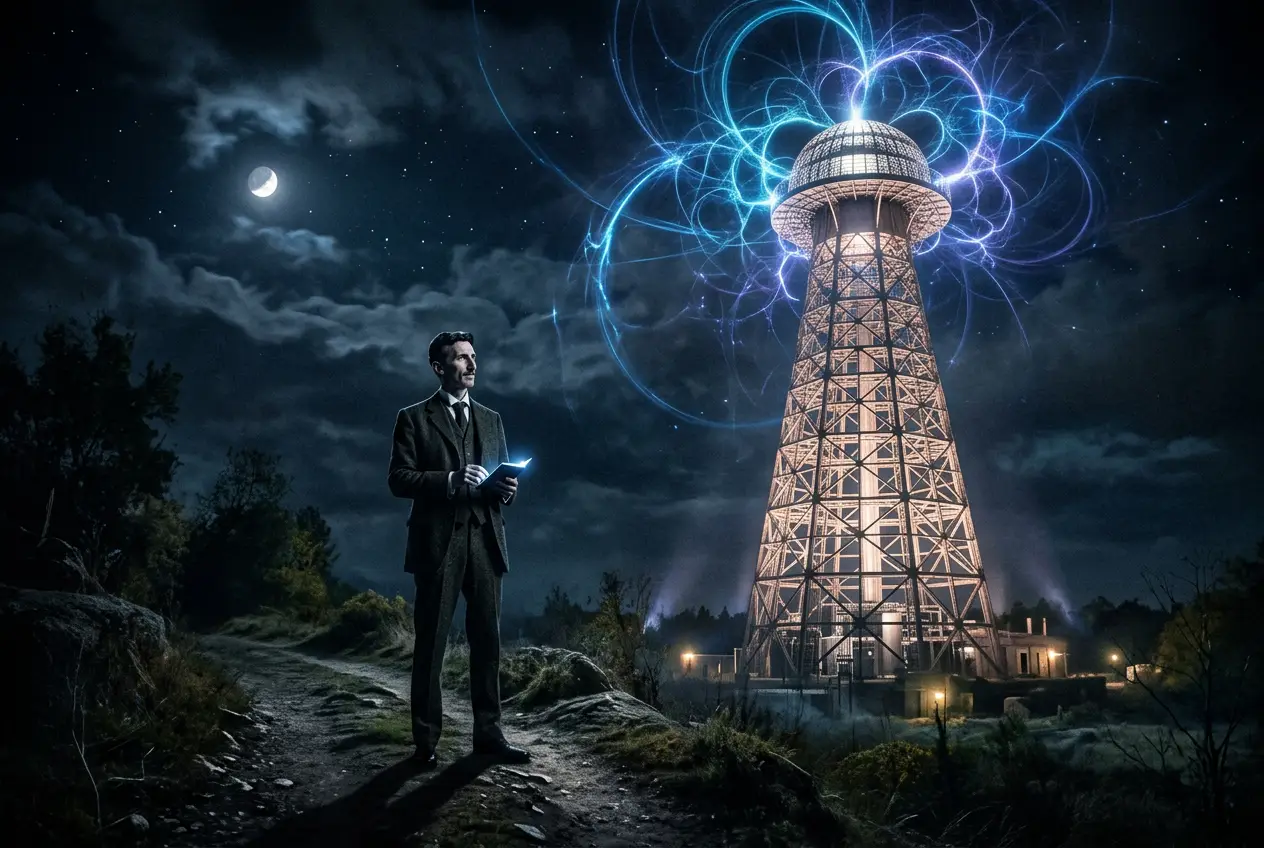
Perhaps the most famous of Tesla's unfulfilled ambitions was the Wardenclyffe Tower, built on Long Island, New York, in the early 1900s. Tesla envisioned this massive structure as the heart of a global wireless communication and power transmission system. He believed he could transmit electrical energy wirelessly through the Earth and atmosphere, enabling free, abundant power for everyone.
"I have harnessed the cosmic rays," Tesla once claimed, "and I have made them work for humanity. The cosmic rays carry many pulsations, and they are of such intensity that they can do much of the work that is now being done by other means." This ambition was not merely about communication; it was about a revolution in energy.
The project, however, ran into financial trouble. J.P. Morgan, Tesla’s primary financier, eventually pulled funding. The popular narrative suggests Morgan withdrew support because he realized Tesla’s system would make electricity unmetered and unprofitable. Why invest in a system that wouldn't generate revenue? This theory forms the cornerstone of the "free energy suppression" argument. While the tower was never fully operational for its intended purpose and was eventually dismantled, it stands as a powerful symbol of Tesla's dream of boundless, accessible energy. You can read more about its fascinating history on Wikipedia's Wardenclyffe Tower page (opens in a new tab).
2. The "Death Ray" (Teleforce)
In the 1930s, Tesla announced the invention of a "teleforce" weapon, which the press sensationalized as a "death ray." He described it as a particle beam weapon capable of destroying an army of 10,000 planes at a distance of 200 miles. Tesla, a staunch pacifist, claimed his invention was a defensive weapon meant to end all wars by making any attack impossible.
He reportedly offered his design to various governments, including the U.S., Britain, the Soviet Union, and Yugoslavia. The blueprints and detailed notes for this device, which was said to involve a high-vacuum chamber with an open end, a method for creating a stream of tungsten particles, and a powerful accelerating voltage, were reportedly among the documents seized by the U.S. government after his death. While no functional "death ray" was ever found or publicly demonstrated, the concept highlights Tesla’s focus on advanced energy manipulation, even for military applications, driven by a desire for global peace.
3. Anti-Gravity Devices and UFO Propulsion
Among the more speculative claims attributed to Tesla are his work on anti-gravity and what some interpret as designs for flying machines, often linked to the nascent field of aviation and later, UFO theories. Stories circulate about a "flying machine" that Tesla supposedly invented, which could operate without wings or propellers, powered by an internal source. Some even suggest he was experimenting with concepts of electromagnetism that could generate thrust without traditional combustion.
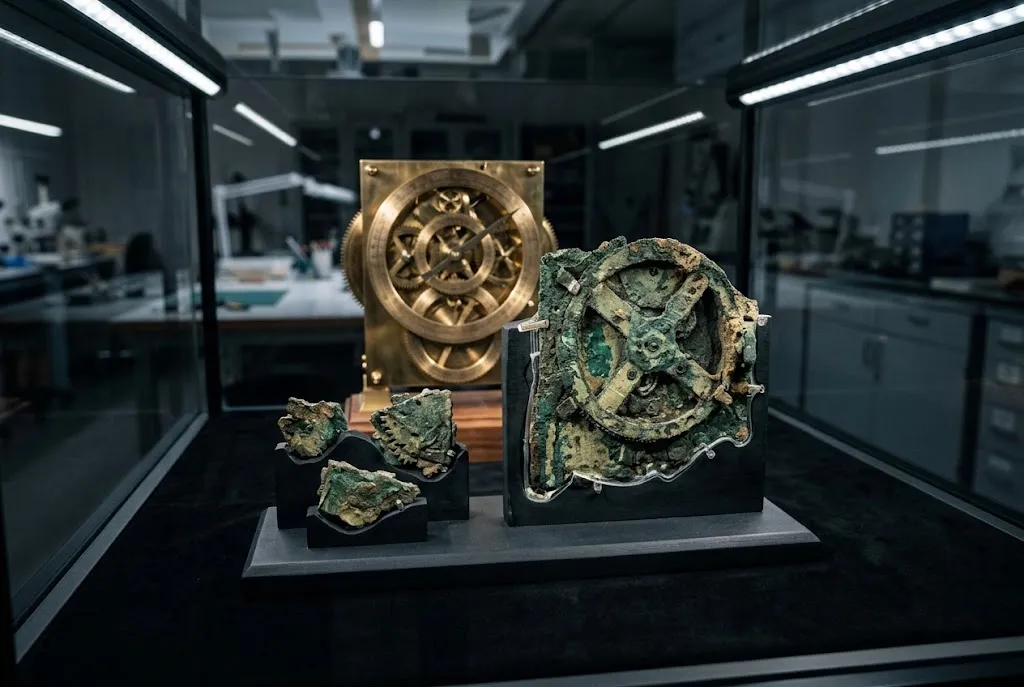
While concrete evidence for fully realized anti-gravity devices remains elusive, Tesla’s profound understanding of electromagnetism and his relentless pursuit of radical new technologies fuel these fascinating theories. His vision for flight was undeniably revolutionary, suggesting machines that would defy conventional aerodynamics. This echoes the wonder felt when considering historical anomalies, much like the debate around ancient advanced technology discussed in our blog, Did Ancient Greeks Build a Cosmic Computer?.
4. The Earthquake Machine (Tesla's Resonance Oscillator)
A more grounded, yet equally sensational, invention attributed to Tesla is his mechanical oscillator. In 1898, he claimed to have built a small, steam-powered mechanical oscillator that, when attached to a building, generated vibrations that grew so powerful they nearly destroyed the building and surrounding structures, causing panic among his neighbors. Tesla quickly smashed the device with a sledgehammer to avoid a greater disaster.
He reportedly stated that with a device small enough to fit in a pocket, he could "split the Earth in half." While hyperbole, his experiments with mechanical resonance showed how small, rhythmic forces, applied at a specific frequency, could amplify into destructive power. This is a real phenomenon, demonstrated by bridges collapsing due to resonant frequencies. While not a "free energy" device, it exemplifies Tesla's ability to tap into fundamental forces in novel and potentially dangerous ways. You can find more information about mechanical resonance on Wikipedia (opens in a new tab).
Why Were These Inventions "Hidden" or Unfinished?
The question of why Tesla’s most radical inventions never fully materialized often leads to a blend of practical realities and intriguing conspiracy theories.
- Financial Ruin and Lack of Support: This is arguably the most significant factor. Tesla was brilliant but not a shrewd businessman. His grand visions required immense capital, and after J.P. Morgan withdrew funding for Wardenclyffe, subsequent investors were hesitant, especially for projects that didn't promise immediate, obvious profits. The idea of "free energy" was inherently at odds with existing economic models reliant on metered consumption.
- Technological Limitations: Some of Tesla's ideas, while conceptually sound, may have been ahead of the materials science and manufacturing capabilities of his era. Transmitting significant amounts of power wirelessly over long distances, for example, is still a significant challenge today, even with advanced semiconductors and antennas.
- National Security and Government Interest: As the world plunged into two World Wars, governments became intensely interested in military applications of new technologies. After Tesla's death in 1943, during WWII, the U.S. government, particularly the FBI and the Office of Alien Property Custodian, seized his papers and property. This act fueled speculation that his "death ray" or other sensitive inventions were deemed too dangerous or strategically important to be made public, or that the government wanted to exploit them in secret. The mysteries surrounding this seizure are akin to some of the unexplained phenomena we've explored, like the Mysteries on the Moon: Are Anomalies Unexplained Tech?.
- Conspiracy Theories: The most dramatic explanation posits a deliberate suppression by powerful energy cartels or governments unwilling to see their control over the world's resources diminish. The notion that "they" don't want us to have free energy because it would disrupt the global economy is a powerful and persistent narrative surrounding Tesla's legacy. While compelling, these theories often lack verifiable evidence and sometimes lean heavily on circumstantial interpretations.
The Enduring Legacy: Fact, Fiction, and the Future
So, did Nikola Tesla really hide free energy from the world? The truth is likely more nuanced than a simple yes or no. He certainly envisioned a world of free, wireless energy and worked tirelessly towards it. His patents and writings provide a glimpse into advanced concepts that were decades, if not a century, ahead of their time. The failure of Wardenclyffe was a catastrophic blow, not just to Tesla personally, but potentially to the rapid advancement of certain energy technologies.
What’s undeniable is Tesla's profound impact and the continuous inspiration he provides. Many contemporary technologies, from wireless charging for smartphones to ongoing research into resonant inductive coupling for long-range power transfer, echo his original visions. Even the dream of a "cosmic computer" or harnessing the universe's inherent power, as we discussed in Black Holes: Nature's Ultimate Quantum Computers?, finds a spiritual predecessor in Tesla's grand ambitions.
Tesla’s story serves as a powerful reminder that innovation often comes at a cost, and that true visionaries frequently face resistance from the status quo. Whether his most revolutionary ideas were suppressed, misunderstood, or simply unattainable with the technology of his era, they continue to fuel our curiosity and push the boundaries of what we believe is possible. His "lost" inventions aren't just historical footnotes; they are an invitation to keep exploring, to keep questioning, and to keep dreaming of a future where energy is abundant and accessible to all.


Conversation0
No comments yet. Be the first to share a thought — the best questions often become new stories.