I remember staring at the night sky as a child, utterly captivated by the countless pinpricks of light. Each one a distant sun, a potential home for untold stories. As I grew older and delved into the mysteries of the cosmos, my fascination only deepened, especially when contemplating objects so extreme they challenge our very understanding of physics. Today, I find myself particularly drawn to **neutron stars** – the collapsed cores of massive stars, packing unimaginable density into a sphere no larger than a city. What if these incredible cosmic behemoths aren't just stellar remnants, but perhaps the universe's ultimate, natural data storage devices?
The idea sounds like science fiction, something ripped from the pages of an Isaac Asimov novel. But as I’ve learned, the line between speculative fiction and cutting-edge science often blurs when we're talking about the farthest reaches of space. The thought of harnessing a neutron star, or even just understanding its potential for information storage, is a concept that truly sparks my imagination.
## Unpacking the Neutron Star: A Cosmic Marvel
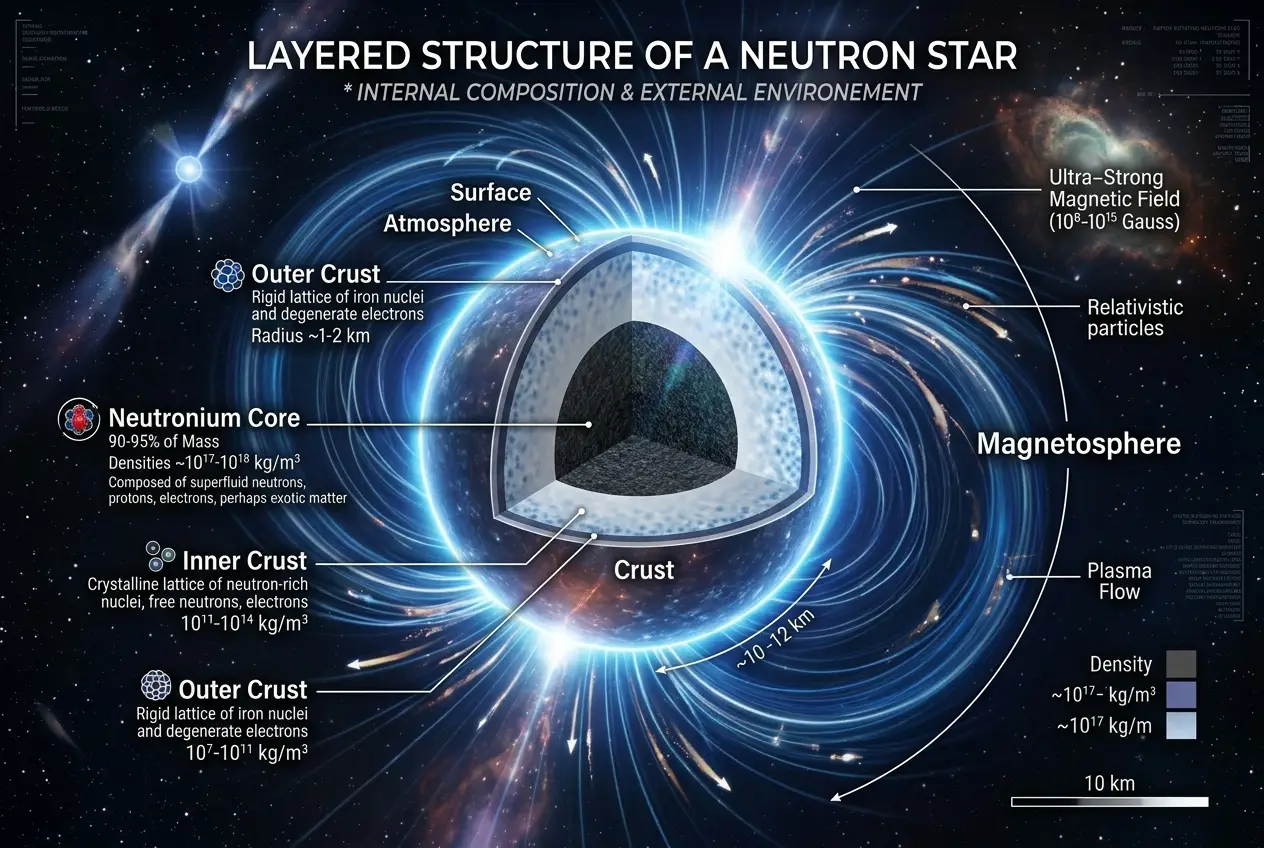
Before we dive into the wild possibility of cosmic data drives, let's understand what a neutron star truly is. Imagine a star much larger than our Sun reaching the end of its life. It explodes in a spectacular supernova, shedding its outer layers. What's left behind is its incredibly dense core, compressed under immense gravitational forces. If this core is between roughly 1.4 and 2.5 times the mass of our Sun, it becomes a **neutron star**. Any heavier, and it collapses further into a black hole.
What defines a neutron star is its composition: predominantly neutrons. The gravity is so intense that protons and electrons are forced to combine, overcoming the electrostatic repulsion and creating a super-dense state of matter unlike anything we typically encounter on Earth. A sugar cube-sized piece of a neutron star would weigh billions of tons – more than all the cars on Earth combined. This extreme density is the key to our cosmic data drive hypothesis.
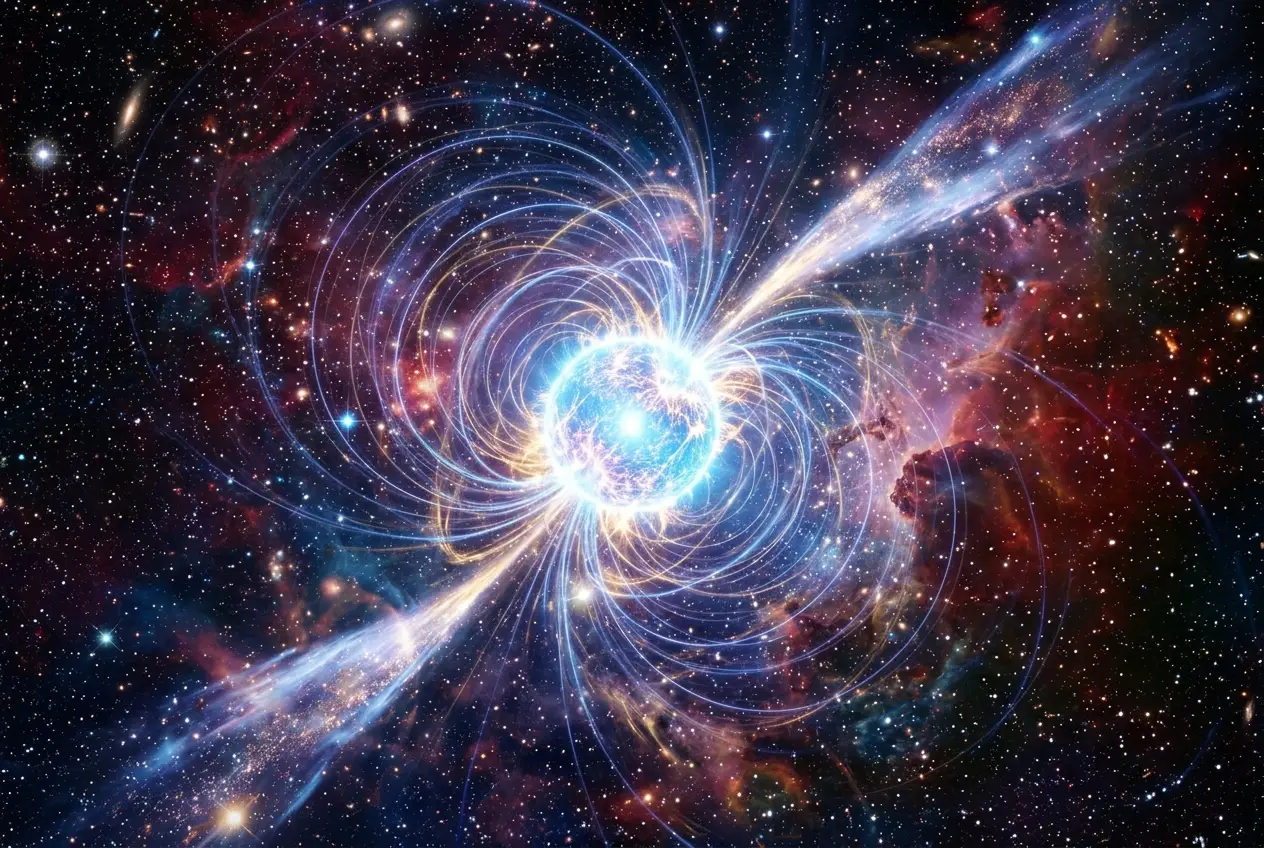
The conditions on a neutron star are mind-boggling. They spin incredibly fast, sometimes hundreds of times per second, emitting powerful beams of radiation that we detect as **pulsars** if their beams sweep past Earth. Their magnetic fields are trillions of times stronger than Earth's, so potent they can tear apart atoms and warp spacetime around them. It's a place where the laws of physics are pushed to their absolute limits, offering a unique laboratory for theoretical exploration. You can learn more about these fascinating objects on [Wikipedia](https://en.wikipedia.org/wiki/Neutron_star).
## Data Storage on Earth: Our Current Limits
To appreciate the theoretical potential of neutron stars, let's briefly consider our terrestrial data storage. We've come a long way from punch cards and magnetic tape. Today, data is stored primarily using two main principles:
* **Magnetic Storage:** Hard Disk Drives (HDDs) use magnetic domains to represent bits (0s and 1s).
* **Flash Memory (NAND):** Solid State Drives (SSDs) store charge in floating gates within transistors.
Both methods rely on manipulating a relatively large number of atoms or electrons to represent a single bit of information. Even at the atomic scale, achieving truly microscopic data density is challenging. For instance, researchers have managed to store data in individual atoms, but this is far from practical for mass storage. This reminds me of the question, "Can a single atom store all our data?" which we explored in an earlier post: [Can a Single Atom Store All Our Data?](https://www.curiositydiaries.com/blogs/can-a-single-atom-store-all-our-data-2754). The answer, practically speaking, is still no, but the theoretical limits are astounding.
Current commercial storage boasts impressive densities, but they pale in comparison to the theoretical maximums allowed by physics. We're talking about storing terabytes on tiny chips, but the "matter" itself is still relatively dilute.
## The Neutron Star as a Theoretical Data Repository
Now, let's project these concepts onto a neutron star. Its extreme density offers a unique medium. Imagine matter so compressed that its fundamental particles behave in ways we can barely comprehend.
### Extreme Density and Quantum Information
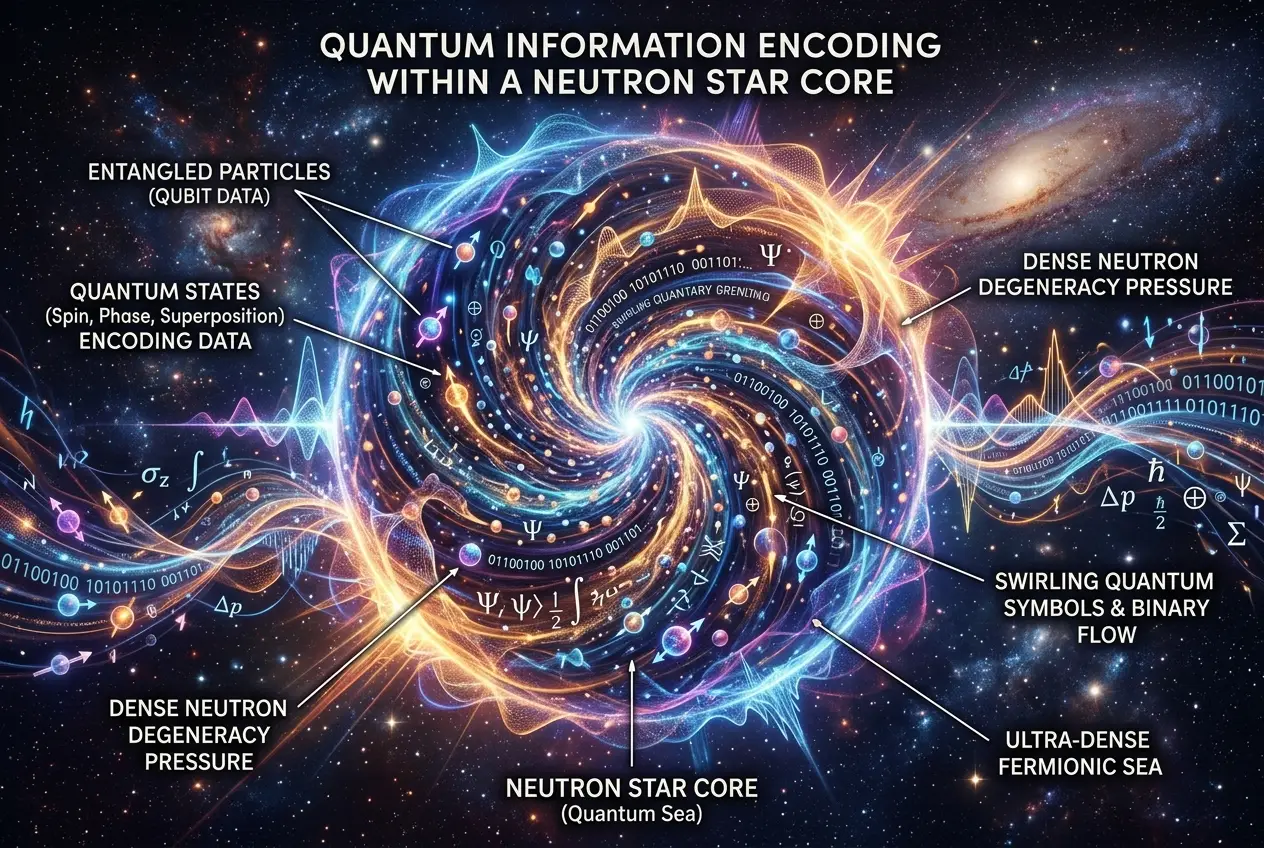
At the heart of the neutron star data drive idea is **density**. The sheer number of particles (neutrons, protons, electrons, and exotic particles like hyperons in the core) packed into a small volume is astronomical. If each particle, or even groups of particles, could represent a single bit or qubit of information, the storage capacity would be beyond calculation.
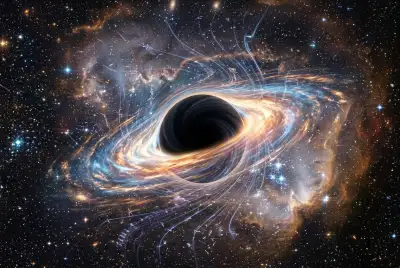
Consider the **information paradox** related to black holes – the idea that information might be lost when matter falls in. While neutron stars are not black holes, they share a common thread of extreme gravitational fields and dense matter. Some theories suggest that information might be encoded in the very fabric of spacetime or the quantum states of particles under such conditions. For a deeper dive into similar cosmic data questions, check out our post on [Do Black Holes Store Universe's Lost Data?](https://www.curiositydiaries.com/blogs/do-black-holes-store-universes-lost-data-5797).
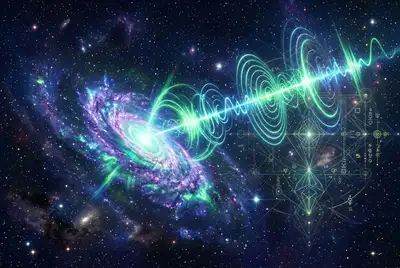
The state of matter within a neutron star is often described as **neutronium** – a degenerate gas of neutrons. In such a state, quantum effects dominate. Could the quantum states of these neutrons, their spins, or their interactions, be manipulated or naturally exist in specific configurations that encode data? This pushes into the realm of **quantum information storage** at a cosmic scale.
### Quark-Gluon Plasma and Exotic Matter
Some theories propose that the very core of the most massive neutron stars might even contain **quark-gluon plasma**, a state where quarks and gluons (the fundamental particles that make up protons and neutrons) are no longer confined within individual particles. This exotic matter offers another layer of complexity and potential for information encoding. The sheer energy and extreme conditions could theoretically allow for incredibly stable, high-density quantum information. We’ve discussed the potential of such matter to store information in "Can Extreme Matter Store Humanity's Data?", a related blog post you can find here: [Can Extreme Matter Store Humanity's Data?](https://www.curiositydiaries.com/blogs/can-extreme-matter-store-humanitys-data-3811).
## Challenges and Speculations
While tantalizing, the idea of neutron stars as data drives faces monumental challenges.
### Encoding and Retrieving Information
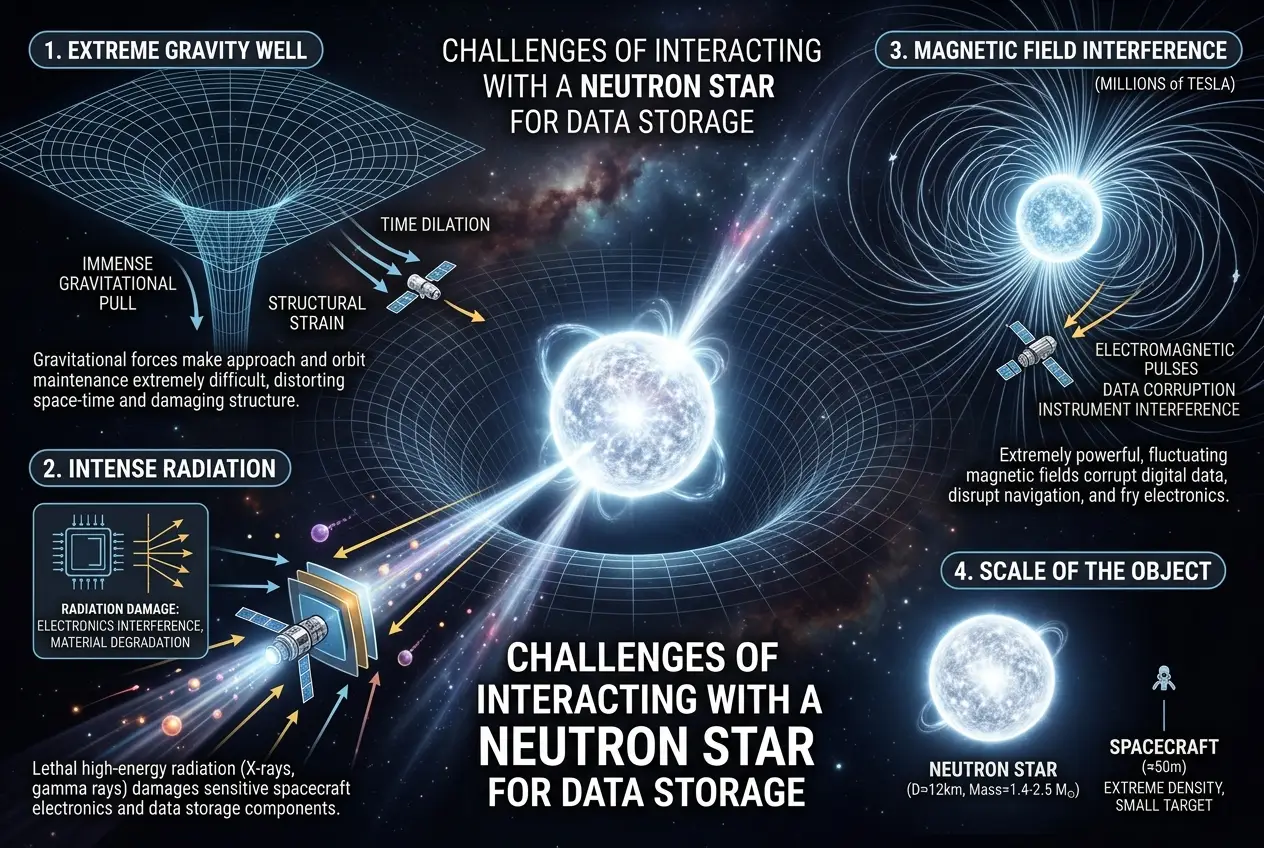
The biggest hurdle is **how to encode and retrieve data**. We're talking about interacting with matter under conditions that would instantly annihilate any known probe or technology. Even if information *is* naturally encoded in the quantum states of the neutrons, how would we "read" it? This isn't like writing to a hard drive with a magnetic head. We don't even fully understand the precise state of matter within a neutron star, let alone how to manipulate it.
### Stability and Durability
Neutron stars are incredibly stable over cosmic timescales, but they are also dynamic. They have "starquakes" as their crust adjusts, and their powerful magnetic fields can undergo dramatic changes. Would this internal turbulence corrupt stored data? The answer is likely yes, unless the encoding mechanism is incredibly robust and self-correcting.
### Accessibility and Human Intervention
Even if we could hypothetically encode data, accessing it would be a feat of engineering and physics beyond anything we can currently conceive. Traveling to a neutron star, let alone interacting with it, is currently impossible. We can barely send probes to Mars, let alone an object with such immense gravity and radiation.
## Could Spacetime Store Data? A Parallel Thought
The idea of storing information in the most fundamental aspects of the universe isn't entirely new. Theoretical physicists have also explored the idea of **spacetime itself** acting as a medium for data. Gravitational waves, for example, are ripples in spacetime that carry information about cosmic events. Could these ripples, or other distortions, be used to encode information? This intriguing concept is explored in another one of our articles: [Could Spacetime Store Quantum Data?](https://www.curiositydiaries.com/blogs/could-spacetime-store-quantum-data-2719).
The universe, in many ways, behaves like a gigantic, complex information processor. From the quantum foam at the Planck scale to the vast cosmic web, information is constantly being generated, stored, and transformed. Neutron stars, as incredibly dense and energetic information hubs, could be a part of this grand cosmic computation.
## The Future of Cosmic Data
While actively using neutron stars as data storage is a pipe dream for now, the exploration of this concept forces us to think about the ultimate limits of information density. It pushes us to consider:
* What are the fundamental physical limits to how much information can be stored in a given volume or mass?
* Are there natural, extreme cosmic phenomena that inherently store vast amounts of information?
* Could advanced civilizations, far beyond our own, possess the technology to interact with such objects, perhaps encoding their entire history within the heart of a dead star?
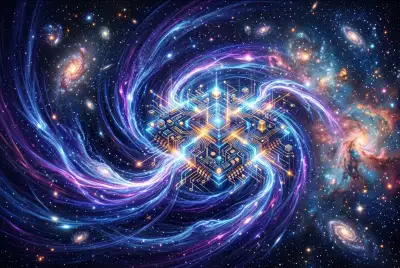
The very idea of a neutron star as a cosmic computer drive, a silent sentinel archiving galactic histories in its unimaginably dense core, is a profound thought. It speaks to the incredible mysteries still hidden within our universe, waiting for us to unravel them. Perhaps one day, a future civilization will develop the means to not just observe these cosmic wonders, but to tap into their fundamental properties in ways we can only begin to imagine.
For now, neutron stars remain a testament to the extreme physics of the universe, dazzling us with their power and posing questions that stretch the boundaries of our scientific inquiry. They serve as a powerful reminder that the universe holds secrets far more astounding than any fiction we could invent.
## Conclusion
The concept of neutron stars as cosmic data drives pushes the boundaries of current scientific understanding and technological capability. While purely theoretical and deeply speculative, it serves as a powerful thought experiment. It encourages us to contemplate the ultimate limits of data storage, the nature of information in extreme physical environments, and the untapped potential of the universe itself. As our understanding of quantum mechanics and astrophysics deepens, who knows what "impossible" possibilities might one day become within reach? For now, the silent, spinning giants continue their cosmic dance, holding perhaps more secrets than we can ever fathom.
Frequently Asked Questions
A neutron star is the super-dense, collapsed core of a massive star that has undergone a supernova explosion. It's composed primarily of neutrons and packs more mass than our Sun into a sphere only about 20 kilometers (12 miles) in diameter.
On Earth, data is predominantly stored using magnetic fields (in Hard Disk Drives) or by trapping electron charges (in Solid State Drives). Both methods rely on manipulating atomic or electronic states to represent binary information (0s and 1s).
The extreme density of neutron stars is the primary factor. The sheer number of particles (neutrons and other exotic matter) packed into a tiny volume, combined with quantum effects prevalent in such conditions, theoretically offers an unimaginably high information storage capacity if those particles' quantum states could be manipulated or observed as data.
The challenges are immense and currently insurmountable. They include: interacting with matter under extreme gravity, magnetic fields, and radiation; developing a method to encode and retrieve information from subatomic quantum states; and physically accessing or influencing such a distant and hostile cosmic object.
It's a fascinating theoretical possibility. The intense quantum conditions within a neutron star's core, potentially involving quark-gluon plasma, could naturally lead to highly complex, stable configurations of particles and fields that might be interpreted as encoded information, though without a way to 'read' it, this remains pure speculation.
Verified Expert
Alex Rivers
A professional researcher since age twelve, I delve into mysteries and ignite curiosity by presenting an array of compelling possibilities. I will heighten your curiosity, but by the end, you will possess profound knowledge.
Leave a Reply
Comments (0)
No approved comments yet. Be the first to share your thoughts!
 Join Us
 Unknown Author









Leave a Reply
Comments (0)