I’ve always been captivated by the stories of lost technologies, those whispers from antiquity that suggest our ancestors possessed knowledge far beyond what we typically imagine. Think of the Antikythera Mechanism, a marvel of ancient engineering that continues to baffle us with its complexity (and something I find endlessly fascinating, as explored in a previous post: [The Antikythera: Greece's Ancient Cosmic Computer](https://www.curiositydiaries.com/blogs/the-antikythera-greeces-ancient-cosmic-computer-6564)). But what if there were entire *materials*—superalloys or advanced compounds—that have simply vanished from our collective memory? I recently stumbled upon the enigma of **Orichalcum**, a metal so legendary, it borders on myth, yet its historical mentions hint at a sophisticated metallurgical capability that makes me wonder: did ancient civilizations truly forge a lost supermetal?
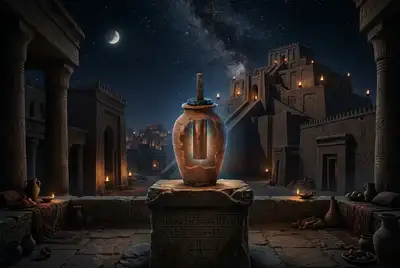
The name "Orichalcum" itself conjures images of Atlantis and forgotten empires. Mentioned prominently by Plato in his dialogues *Critias* and *Timaeus*, Orichalcum was described as a metal second only to gold in value, radiating a fiery red light. Plato claimed it was mined in the legendary city of Atlantis and used to adorn their temples and pillars, shimmering with an inner glow. Such a description sounds fantastical, a product of poetic license rather than engineering fact. Yet, the question lingers: was Orichalcum purely a myth, or was it based on a real, perhaps unusually advanced, metallic alloy that has since been forgotten?
## Unpacking the Orichalcum Enigma: Myth or Metallurgy?
For centuries, scholars dismissed Orichalcum as a fictional metal, a literary device used by Plato to enhance the grandeur of his Atlantean narrative. However, the term "Orichalcum" (meaning "mountain copper" or "gold copper") wasn't unique to Plato. Roman writers like Virgil and Pliny the Elder also mentioned *aurichalcum*, often referring to a brass-like alloy. This historical breadth suggests that *some* form of special, high-value copper alloy existed in antiquity, even if not quite the glowing, Atlantean wonder described by Plato.
The most compelling modern-day evidence that reignited the Orichalcum debate emerged in 2015. Italian archaeologists discovered 39 ingots of what they believed to be Orichalcum off the coast of Sicily, near a shipwreck dating back to the 6th century BCE. Chemical analysis of these ingots revealed them to be an alloy consisting of about 80% copper, 15-20% zinc, and small percentages of nickel, lead, and iron. This composition is essentially **brass**, specifically a high-zinc brass, which would have been extremely valuable and difficult to produce with consistency in ancient times.
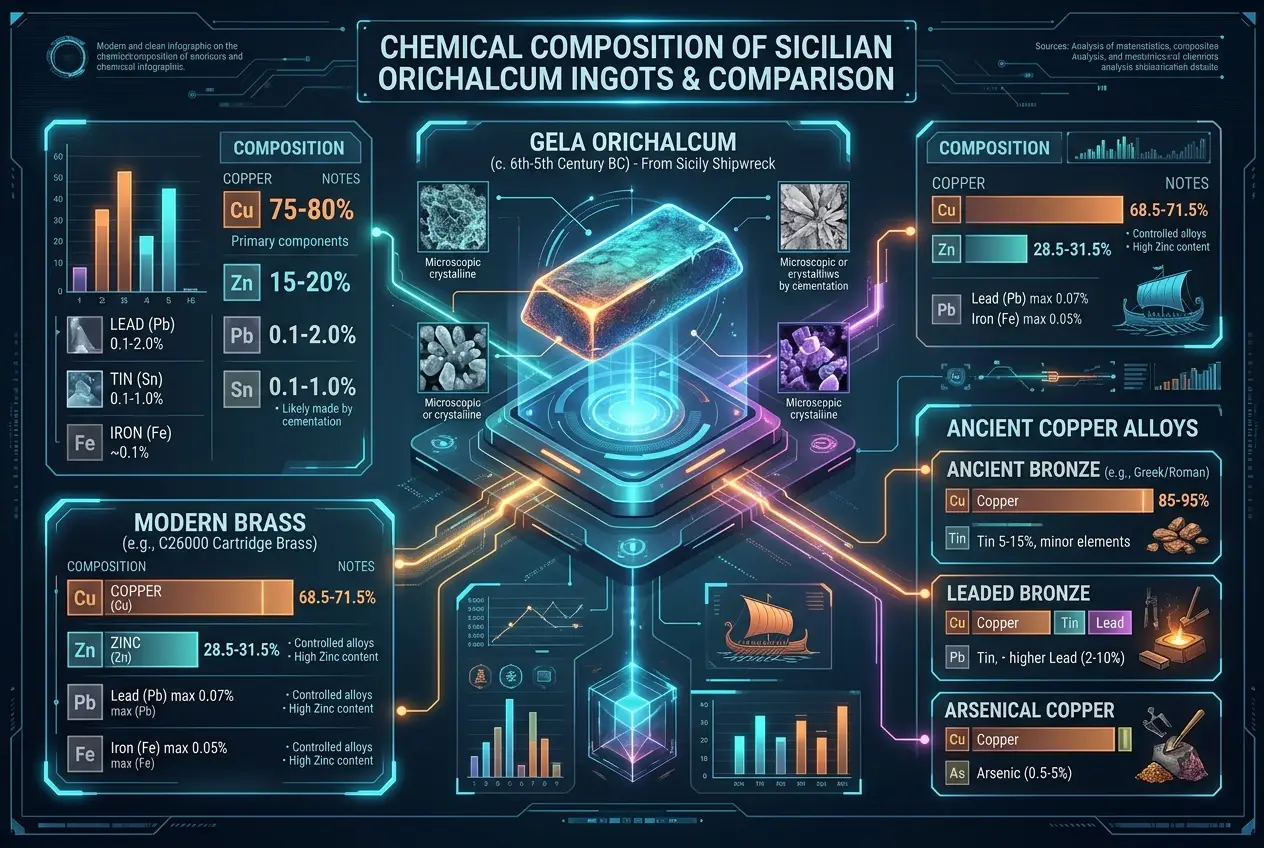
While not radiating a "fiery red light," the discovery was significant. It indicated that ancient civilizations, particularly those in the Mediterranean, were capable of producing complex alloys whose properties might have seemed extraordinary to the uninitiated. This wasn't just simple bronze (copper and tin); it was brass, requiring knowledge of zinc, which is harder to work with metallurgically because it vaporizes at relatively low temperatures.
### The Challenge of Ancient Brass Production
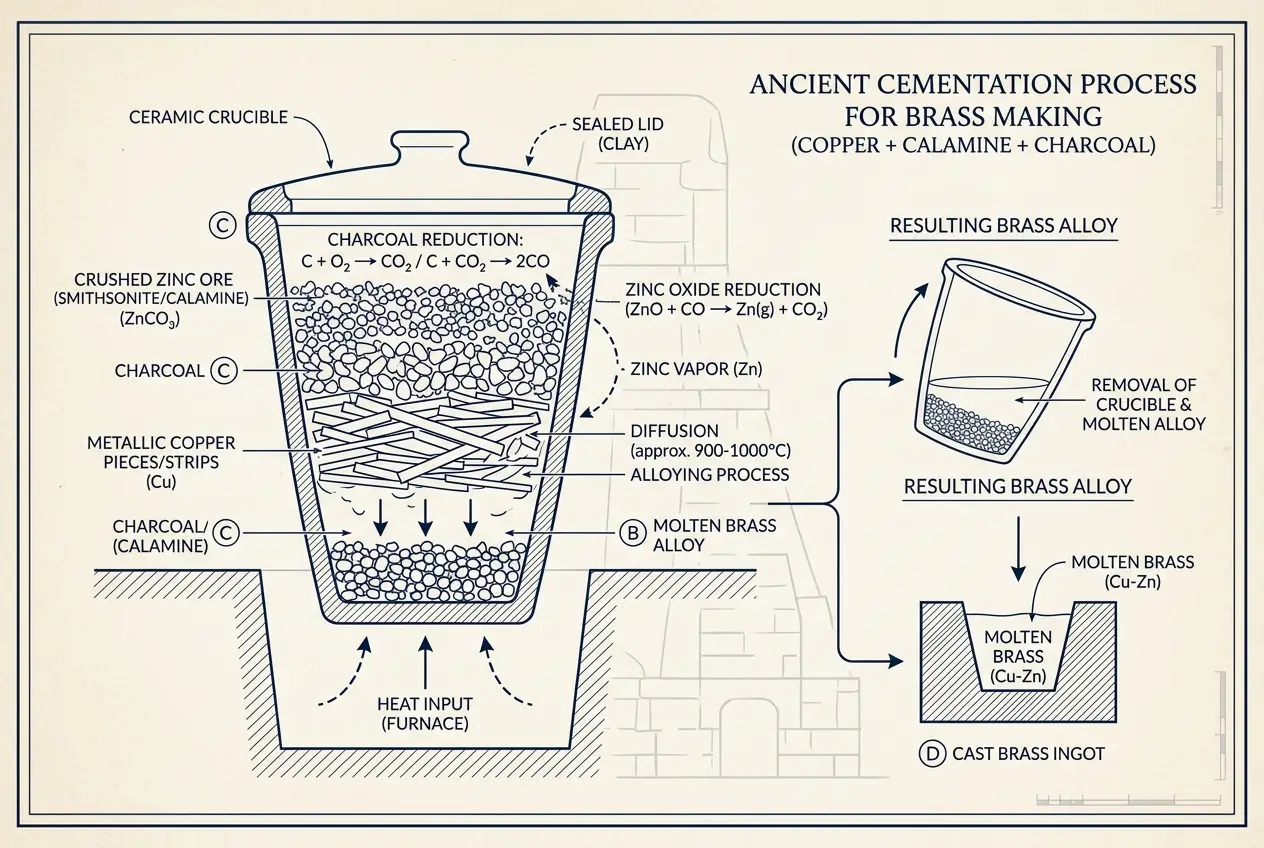
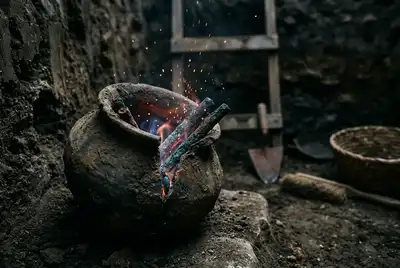
Producing brass in antiquity was no simple feat. Zinc metal itself was not isolated until much later in history. Ancient brass was primarily made using the **cementation process**. This involved heating copper along with zinc ore (like calamine, which is zinc carbonate) and charcoal in a crucible. The zinc ore would reduce to zinc vapor, which would then be absorbed by the molten copper, forming the alloy. This process was complex and required specific conditions and knowledge of material science.
"The discovery of these ingots suggests a sophisticated understanding of metallurgy that goes beyond the common alloys of the period. It forces us to reconsider the technological capabilities of ancient craftsmen." – [Archaeological Sicily, 2015](https://www.wikipedia.org/wiki/Orichalcum)
Consider the implications: if this Sicilian discovery truly represents Orichalcum, it highlights a mastery of materials science that could easily be mistaken for magic or divine gifts in an age lacking scientific explanation. A metal that was aesthetically pleasing, durable, and perhaps had a unique resonance or acoustic property (brass is known for its acoustic qualities) could certainly attain mythical status.
**Table: Composition Comparison of Ancient Alloys**
| Alloy Type | Primary Elements (Approx.) | Key Characteristics | Ancient Usage | Modern Comparison |
| :-------------- | :------------------------- | :---------------------------------------------------------- | :------------------------------------------------ | :---------------------------- |
| **Pure Copper** | Copper (>99%) | Malleable, good conductivity, oxidizes easily | Tools, ornaments, early coinage | Electrical wiring |
| **Bronze** | Copper (90-95%), Tin (5-10%) | Harder than copper, good casting properties, corrosion resistant | Weapons, tools, statues, mirrors | Bearings, sculptures |
| **Orichalcum (Sicilian)** | Copper (80%), Zinc (15-20%), trace elements | Lustrous, harder than copper, distinctive golden hue | Adornment, ceremonial objects (speculative) | Modern Brass (various types) |
| **Gold** | Gold (>90%), Silver/Copper (trace) | Highly ductile, corrosion-resistant, high value | Jewelry, coinage, status symbols | Electronics, dentistry |
The precise control required to achieve a consistent zinc content of 15-20% through the cementation process suggests not just accidental discovery but a refined, repeatable technique. This level of consistency implies a form of empirical science, passed down through generations of artisans.
## Beyond Brass: The Atlantean Glow and Modern Interpretations
Plato's description of Orichalcum radiating a "fiery red light" still sparks curiosity. Could a simple brass alloy truly achieve this? While brass itself doesn't glow, its surface can be polished to a high luster, and in certain lighting conditions, particularly firelight, it might have appeared to "radiate" warmth or light. Some scholars have suggested that the "fiery light" might refer to its golden-red hue, which is distinct from the yellow of gold or the brown of bronze.
However, more exotic interpretations persist. What if Plato's description was not merely metaphorical?
* **Phosphorescent Alloys:** Could ancient metallurgists have incorporated phosphorescent materials or minerals into the alloy, creating a subtle glow? While highly speculative, the knowledge of certain minerals and their properties was extensive in ancient cultures.
* **Surface Treatment:** Perhaps a lost alchemical surface treatment or coating gave the metal a unique luminescence. Ancient Egyptian artisans, for instance, were masters of glazes and enamels, capable of creating vibrant and enduring colors.
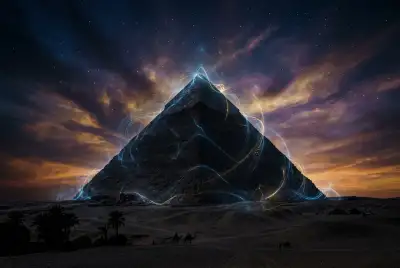
* **Optical Illusions:** The design and placement of Orichalcum artifacts within dark Atlantean temples could have been engineered to play with light, making the metal appear to glow. This ties into ancient architectural prowess, as seen in structures like the pyramids and their precise alignments, a topic often explored in other discussions on [ancient structures and cosmic data](https://www.curiositydiaries.com/blogs/did-ancient-sites-process-cosmic-data-4975).
The fascination with Orichalcum also brings to mind other supposed "lost" materials or metallurgical secrets. Damascus steel, known for its extraordinary strength and unique patterns, is another example of ancient craftsmanship whose exact methods were lost for centuries (we’ve also delved into this in [Damascus Steel: Did Ancient Smiths Use Nanotech?](https://www.curiositydiaries.com/blogs/damascus-steel-did-ancient-smiths-use-nanotech-8000)). The pursuit of Orichalcum is a journey into understanding not just the materials themselves, but the societal and technological ecosystems that allowed such knowledge to flourish—and then, seemingly, disappear.
## Orichalcum's Legacy: A Catalyst for Scientific Inquiry
The Orichalcum enigma serves as a powerful reminder of how much we still don't know about ancient technologies. The discovery of the Sicilian ingots, far from fully explaining the myth, instead provides a tangible anchor to its reality. It shifts Orichalcum from the realm of pure fantasy into a fascinating historical and metallurgical puzzle.
Understanding ancient brass production not only sheds light on historical trade routes and economic values but also on the empirical scientific methods employed by ancient artisans. These individuals, through repeated experimentation and observation, developed sophisticated techniques without the benefit of modern scientific instruments or theoretical frameworks. Their "laboratories" were crucibles and furnaces, their "theories" were passed down through apprenticeship and practical application.
The search for Orichalcum isn't just about finding a shiny metal; it's about uncovering a piece of humanity's intellectual history. It challenges our often linear view of technological progress, suggesting that certain pockets of advanced knowledge might have existed, only to be lost to war, natural disaster, or simply a shift in cultural priorities. The quest for Orichalcum encourages us to look deeper into ancient texts and archaeological sites, not just for what they explicitly tell us, but for what they might implicitly reveal about a forgotten scientific past.
Could there be other "supermetals" or lost materials hidden in the annals of history or beneath the earth? The story of Orichalcum keeps that door wide open, reminding us that the past still holds countless secrets, waiting for our curiosity and scientific tools to unlock them. As I reflect on this, I feel a renewed sense of awe for the ingenuity of ancient civilizations and a constant urge to dig deeper into the mysteries they left behind.
Ultimately, whether Orichalcum was a glowing wonder of Atlantean lore or simply a particularly fine and difficult-to-produce brass alloy, its legend serves a vital purpose. It pushes us to question, to investigate, and to appreciate the profound scientific and technological achievements of our ancestors. And who knows what other "lost supermetals" might still be waiting to be rediscovered, challenging our understanding of ancient capabilities?
&meta_title; Orichalcum: Did Ancient Civilizations Forge a Lost Supermetal? &meta_title;
&meta_description; Discover the ancient mystery of Orichalcum, the legendary metal mentioned by Plato. Explore archaeological finds and metallurgical science to uncover whether this supposed "supermetal" was a myth or a testament to forgotten ancient technological prowess. &meta_description;
&faqs;{"faqs":[{"id":1,"question":"What is Orichalcum, and where is it mentioned historically?","answer":"Orichalcum is a legendary metal first mentioned by the Greek philosopher Plato in his writings about Atlantis, where he described it as a precious metal second only to gold. Later Roman writers also referred to a similar high-value copper alloy called 'aurichalcum'."},{"id":2,"question":"Was Orichalcum a real metal, or just a myth?","answer":"While Plato's description of a 'fiery red light' suggests myth, archaeological evidence, specifically the discovery of 39 ingots off the coast of Sicily, suggests Orichalcum was a real alloy, identified as a high-zinc brass. This discovery implies sophisticated ancient metallurgical knowledge."},{"id":3,"question":"How did ancient civilizations produce brass like Orichalcum without modern technology?","answer":"Ancient civilizations produced brass primarily through the cementation process. This involved heating copper with zinc ore (like calamine) and charcoal in a crucible. The zinc ore would reduce to zinc vapor, which then absorbed into the molten copper to form the brass alloy."},{"id":4,"question":"Why was Orichalcum considered so valuable in ancient times?","answer":"Orichalcum was highly valued due to its unique golden luster, durability, and the difficulty of its production. The complex cementation process required specific knowledge and control over materials, making the resulting brass a rare and prestigious material."},{"id":5,"question":"What does the discovery of Orichalcum ingots tell us about ancient technology?","answer":"The Orichalcum discovery demonstrates that ancient artisans possessed a surprisingly advanced understanding of metallurgy and empirical science. Their ability to consistently produce complex alloys like high-zinc brass challenges our conventional view of ancient technological capabilities and suggests that some sophisticated knowledge may have been lost over time."}]}&faqs;
Frequently Asked Questions
Orichalcum is a legendary metal first mentioned by the Greek philosopher Plato in his writings about Atlantis, where he described it as a precious metal second only to gold. Later Roman writers also referred to a similar high-value copper alloy called 'aurichalcum'.
While Plato's description of a 'fiery red light' suggests myth, archaeological evidence, specifically the discovery of 39 ingots off the coast of Sicily, suggests Orichalcum was a real alloy, identified as a high-zinc brass. This discovery implies sophisticated ancient metallurgical knowledge.
Ancient civilizations produced brass primarily through the cementation process. This involved heating copper with zinc ore (like calamine) and charcoal in a crucible. The zinc ore would reduce to zinc vapor, which then absorbed into the molten copper to form the brass alloy.
Orichalcum was highly valued due to its unique golden luster, durability, and the difficulty of its production. The complex cementation process required specific knowledge and control over materials, making the resulting brass a rare and prestigious material.
The Orichalcum discovery demonstrates that ancient artisans possessed a surprisingly advanced understanding of metallurgy and empirical science. Their ability to consistently produce complex alloys like high-zinc brass challenges our conventional view of ancient technological capabilities and suggests that some sophisticated knowledge may have been lost over time.
Verified Expert
Alex Rivers
A professional researcher since age twelve, I delve into mysteries and ignite curiosity by presenting an array of compelling possibilities. I will heighten your curiosity, but by the end, you will possess profound knowledge.
Leave a Reply
Comments (0)
No approved comments yet. Be the first to share your thoughts!
 Join Us


 Unknown Author



















Leave a Reply
Comments (0)