


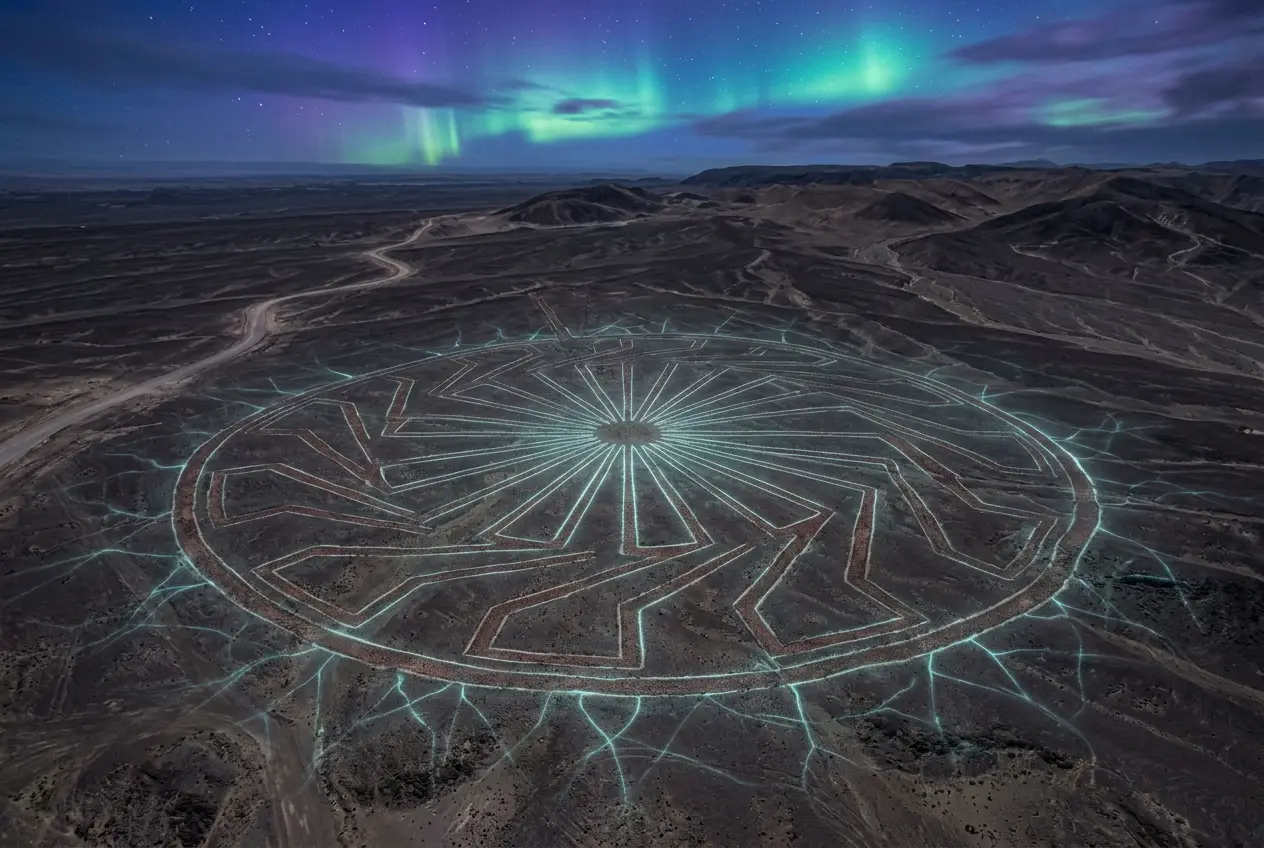
The sun bakes the Peruvian desert, a vast, ochre canvas stretching to the horizon. As an archaeologist, I’ve often found myself mesmerized by the sheer scale of human ingenuity across civilizations. But there’s a particular corner of this arid landscape that consistently sends shivers down my spine: the Nazca Lines. From the ground, they’re barely discernible, just scattered rocks and depressions. Yet, step onto a viewing platform or, better yet, take a small plane above, and an astonishing, intricate tapestry unfolds. Giant hummingbirds, monkeys, spiders, and perfect geometric shapes appear, etched into the Earth with astonishing precision. Who created these colossal geoglyphs, and more importantly, why?
For decades, the Nazca Lines have baffled scientists, historians, and enthusiasts alike. Conventional wisdom suggests they were ceremonial pathways, astronomical calendars, or even desperate pleas to the gods for water. But recently, I've been diving into a more audacious theory, one that pushes the boundaries of our understanding of ancient technology and anomalous phenomena: Could the Nazca Lines be more than just art or ritual? Could they, in fact, represent a blueprint for an ancient energy grid, or perhaps even a form of early technological communication?
The Unseen Hand: Crafting the Colossal Canvases
To truly appreciate the mystery, one must first grasp the monumental effort involved. Spread across nearly 450 square kilometers, these geoglyphs were created by simply removing the reddish-brown iron oxide-coated pebbles to expose the lighter, yellowish-grey clay beneath. The lines are remarkably shallow, typically 10 to 15 centimeters deep, yet they have endured for over 1,500 years, largely thanks to the region's arid climate and unique geological conditions. The top layer of dark rocks absorbs heat, creating a cushion of warm air that protects the lighter surface from wind erosion.
But how did the Nazca people, without the benefit of aerial perspective, achieve such geometric perfection and massive scale? Archaeologists theorize they used a combination of simple tools: stakes, ropes, and sighting lines. Imagine a team of ancient engineers, meticulously laying out thousands of meters of rope, sighting across vast distances, adjusting for terrain, all to create a perfect trapezoid several kilometers long or a spiral that maintains its integrity over hundreds of meters. It’s an astounding feat of planning and execution, indicating a highly organized society with advanced observational and mathematical skills. This wasn't merely scratching lines in the dirt; it was precision engineering on an epic scale. You can read more about their proposed construction methods on Wikipedia's Nazca Lines page (opens in a new tab).
Beyond the Obvious: Challenging Conventional Theories
While many theories exist regarding the purpose of the Nazca Lines, none fully satisfy the entire spectrum of their characteristics.
- Astronomical Calendar: Some figures align with solstices and equinoxes, suggesting an astronomical function. However, not all lines align, and the precision isn't always perfect for sophisticated celestial tracking.
- Water Rituals: Given the extreme aridity of the Nazca region, some scholars believe the lines were part of rituals to invoke rain or mark underground water sources. While water was undoubtedly crucial, this doesn't explain the abstract or zoomorphic figures.
- Pathways for Deities: Another theory posits they were processional paths for religious ceremonies, visible only to airborne gods. This is compelling, but again, doesn't fully explain the precise geometric designs.
- Alien Runways (The Erich von Däniken Theory): This is the most sensational and least scientifically supported theory, popularized by Erich von Däniken in "Chariots of the Gods." He suggested they were landing strips for extraterrestrial spacecraft. While fascinating, it lacks any empirical evidence and often overshadows more grounded research.
I often find myself wondering if we're looking at the wrong set of possibilities. What if their purpose was more utilitarian, but with a technological basis that we've simply forgotten or never understood? This is where the "energy grid" theory gains a curious traction.
The Energy Grid Hypothesis: A Network of Power?
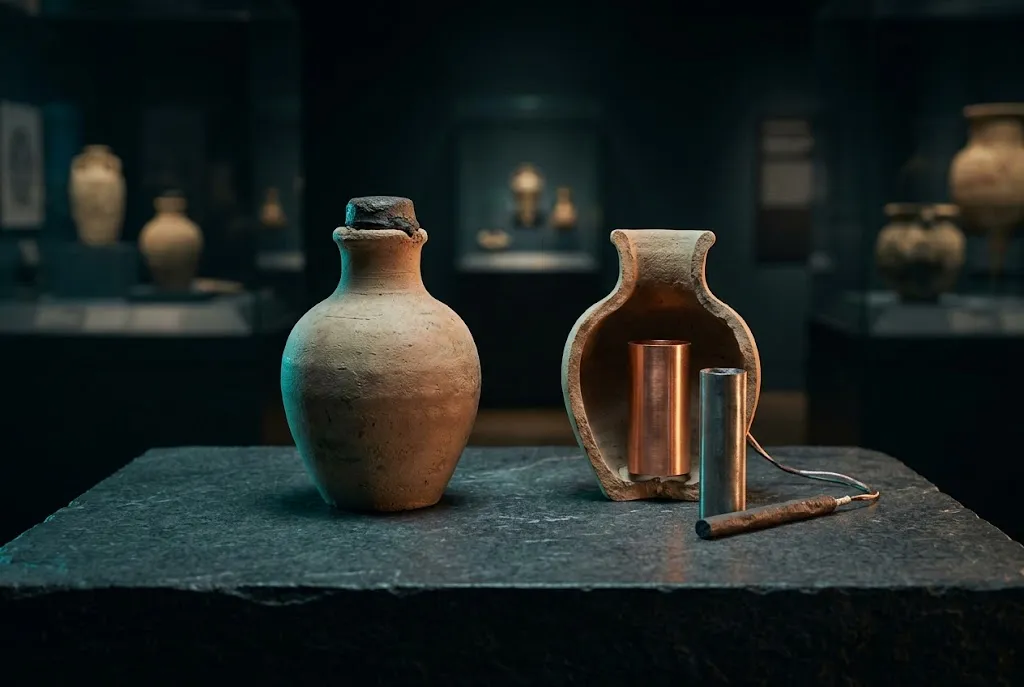
The idea that ancient civilizations might have harnessed natural energies is not entirely new. From the Baghdad Battery to speculations about lost acoustic technologies (you can explore more about that at our post: Lost Acoustic Tech: Did Ancients Control Sound Waves?), there's a recurring whisper in the annals of history about advanced knowledge that vanished. When I look at the Nazca Lines, especially the long, perfectly straight lines and massive trapezoids, I can't help but connect them to discussions about telluric currents and Earth's subtle energy fields.
Telluric currents are natural electric currents that flow underground, generated by natural causes like solar wind interactions with Earth's magnetosphere. These currents are present everywhere, but their flow can be influenced by geological features and mineral deposits. Some fringe theories propose that ancient cultures might have had a deeper understanding of these energies, even how to manipulate or amplify them.
Consider the immense trapezoidal shapes. They are often several kilometers long and hundreds of meters wide. If these weren't just paths, could they have been designed to collect or channel something? Imagine the vast surface area acting like a gigantic antenna or a rectifier for natural telluric energy. The lines could be paths for these currents, influencing geological activity or even creating localized energetic effects.
Connecting the Dots: Anomalies and Precedents
It might sound far-fetched, but there are other anomalies that hint at such possibilities. For instance, some researchers have studied the geomagnetic anomalies in the Nazca region. While not conclusive, these studies suggest unusual magnetic properties in the soil beneath and around the lines. Could the placement of the lines have been strategic, leveraging existing geological "hotspots" of telluric energy?
Another intriguing aspect is the acoustic properties of the Nazca area. The dry, compact soil can transmit vibrations remarkably well. Some propose that certain lines or arrangements could have created acoustic resonance chambers or acted as conduits for specific frequencies. Could these be related to some form of communication or even influencing the local ecosystem? It reminds me of the discussions around the Hessdalen Lights and their potential connection to plasma technologies (Hessdalen Lights: A Glimpse of Unknown Plasma Tech).
"The mysteries of Nazca continue to challenge our preconceived notions of ancient capabilities," writes Dr. Maria Reiche, the German mathematician who dedicated her life to studying the Nazca Lines. "We are only scratching the surface of their true purpose." This quote, though not directly about energy, encapsulates the open-mindedness needed to approach such profound enigmas.
The Aqueducts of Nazca: A Glimpse of True Ingenuity
While the energy grid theory remains speculative, the Nazca people certainly possessed undeniable technological prowess. Their most overlooked and equally impressive achievement is the construction of puquios, ancient underground aqueducts. These intricate systems of tunnels, wells, and channels tapped into subterranean water sources, bringing vital water to their arid lands. These puquios are a testament to their advanced understanding of hydrology, geology, and engineering – a practical application of their profound connection to the Earth. You can learn more about the engineering marvel of the puquios here: Wikipedia's Puquios page (opens in a new tab).
If they could master the flow of water beneath the Earth with such precision, is it so impossible to imagine them attempting to understand and perhaps even manipulate other unseen forces like telluric currents? Their worldview was deeply integrated with their environment, seeking patterns and harmonies. Perhaps what we see as simple art or ritual was a complex interplay of engineering, cosmology, and a practical application of environmental knowledge.
Unanswered Questions and Future Exploration
The Nazca Lines continue to be a profound archaeological puzzle. While the energy grid theory is speculative, it pushes us to consider capabilities beyond our current understanding of ancient civilizations. It forces us to ask: what if their "technology" wasn't based on metals and circuits, but on a nuanced understanding of natural forces and subtle energies? Could the lines be a complex form of geoglyphic communication, perhaps even designed to interact with a planetary network, as some propose for other ancient sites? Our own planet might be humming with unseen signals, just as we explore in our blog on Earth’s Hidden Pulse: Does Our Planet Hum a Secret Song?.
Could they be a form of ancient data storage? Imagine the intricate patterns as a massive, unreadable hard drive, encoding information about their knowledge, history, or perhaps even celestial events. It reminds me of how some cultures used oral traditions or knotted ropes (khipus) to store complex data. The scale of the Nazca Lines certainly suggests an intention for long-term preservation and communication.
As researchers continue to employ drones, satellite imagery, and ground-penetrating radar, new geoglyphs are still being discovered, adding layers to an already complex mystery. Each discovery brings fresh data, new questions, and the tantalizing possibility that one day, we might decipher the true message etched into the Nazca Plain. Perhaps then, we will understand if these magnificent creations were merely messages to the heavens, or if they were, in fact, an integral part of an ancient, cosmic computer, silently processing Earth's unseen energies.
Conclusion: A Legacy Etched in Time
The Nazca Lines are more than just ancient drawings; they are a profound testament to the intelligence, organization, and enduring mystery of a vanished civilization. Whether they represent an astronomical observatory, a ritualistic pathway, or a sophisticated ancient energy grid, their sheer existence challenges our perceptions of what was possible millennia ago. As we continue to marvel at their scale and precision, we are reminded that history is not a closed book, and some of its most intriguing chapters are still waiting to be fully understood, perhaps hinting at a technological past far richer and more complex than we currently imagine. The quest to uncover their true purpose continues to fuel our curiosity, pushing the boundaries of scientific inquiry and historical imagination.


Conversation0
No comments yet. Be the first to share a thought — the best questions often become new stories.