


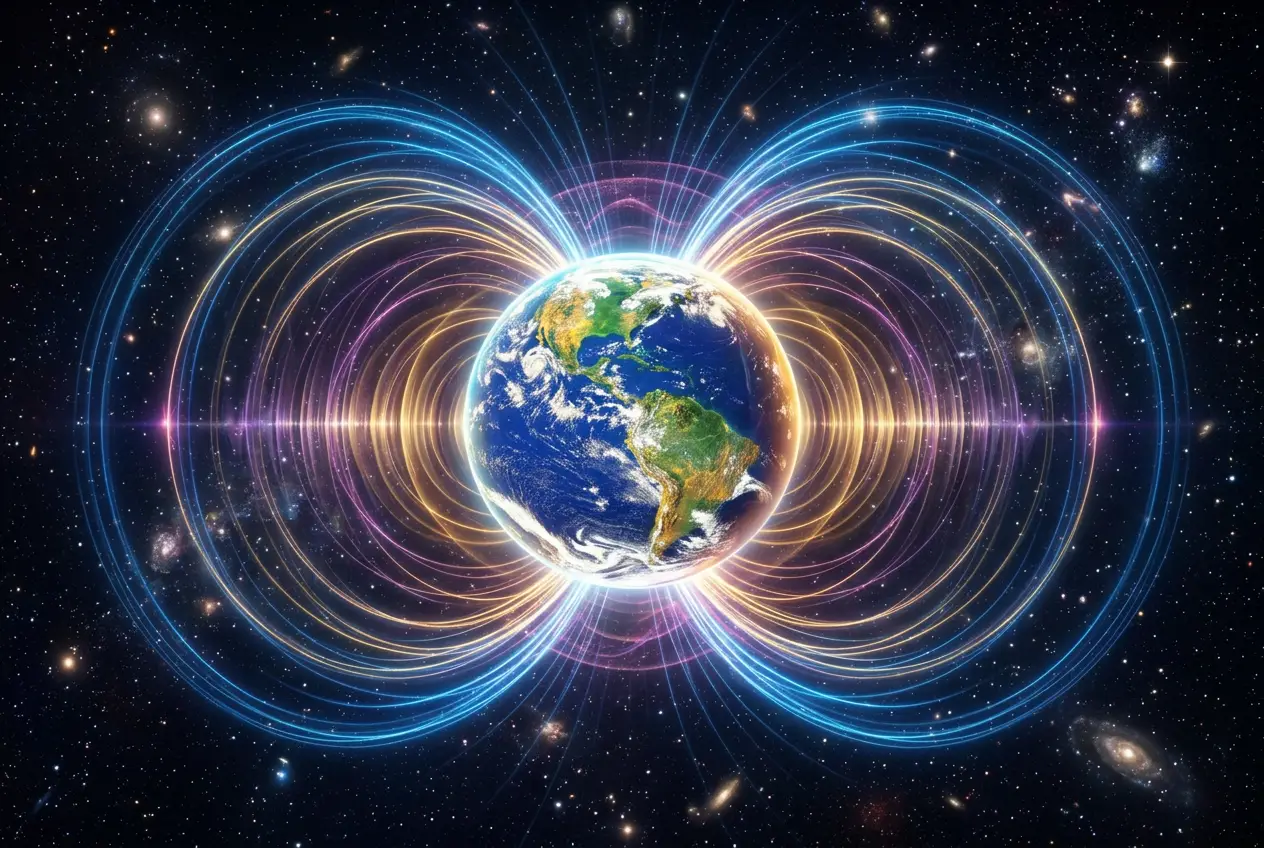
I remember a quiet night, years ago, when I first heard it. Not a distinct sound, but more of a feeling – a low, persistent thrumming beneath the surface of everything. I dismissed it as my imagination, perhaps a distant truck, or even just the blood rushing in my ears. But what if I told you that our planet itself has a heartbeat, a secret song it’s been humming for millennia, mostly unheard by human ears?
This isn't a mere poetic fancy; it's a fascinating intersection of geophysics, electromagnetic phenomena, and even the subtle influence on life itself. Welcome to the world of Earth's natural resonances, a hidden pulse that shapes our world in ways we're only just beginning to comprehend.
The Unseen Choir: Unveiling Schumann Resonance
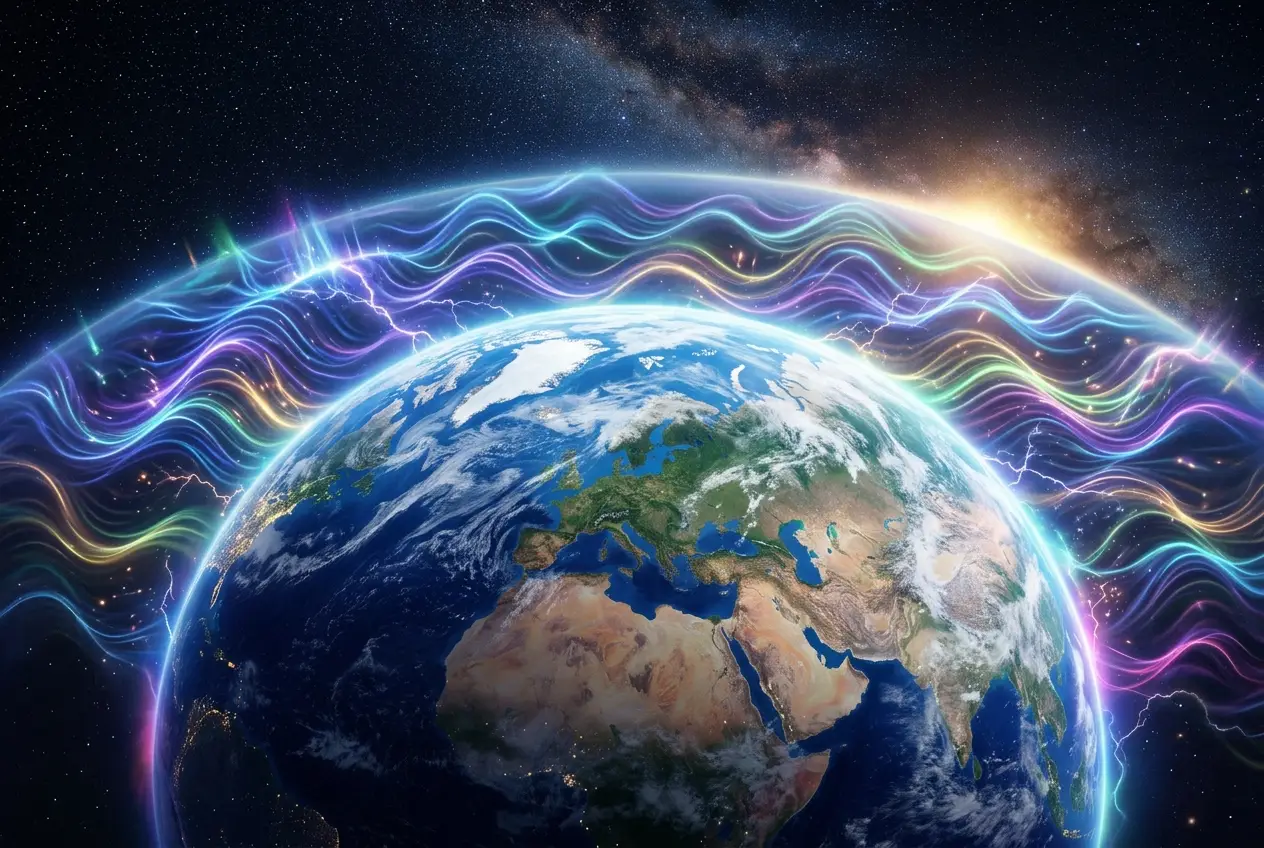
At the heart of Earth’s secret song lies a phenomenon known as the Schumann Resonance. Picture our planet not just as a rock hurtling through space, but as a giant, spherical capacitor. The Earth's surface acts as one plate, and the ionosphere—a layer of charged particles in the upper atmosphere—acts as the other. Between these two conductive layers, a cavity forms, approximately 55 kilometers (34 miles) high.
Within this cavity, electromagnetic waves generated primarily by global lightning activity bounce around, creating standing waves. Think of it like a giant bell ringing, or a guitar string vibrating at specific frequencies. These specific frequencies are the Schumann Resonances, named after German physicist Winfried Otto Schumann, who predicted their existence in 1952. The primary and strongest resonance typically hovers around 7.83 Hertz (Hz), a frequency often dubbed "Earth's heartbeat." Subsequent harmonics occur at approximately 14.3, 20.8, 27.3, and 33.8 Hz, among others.
What makes this frequency particularly intriguing is its remarkable stability. Despite continuous variations in lightning activity and solar radiation, the fundamental frequency remains surprisingly consistent. This consistency has led some to view it as a reliable, natural "tuning fork" for our planet.
To delve deeper into the specifics of Schumann Resonance, you might find the detailed explanation on Wikipedia's Schumann Resonance page (opens in a new tab) quite enlightening.
Beyond the Buzz: How We Detect Earth's Hum
If Earth is constantly humming, why don't we hear it? The frequencies of Schumann Resonances are incredibly low, falling into the Extremely Low Frequency (ELF) range, far below the threshold of human hearing (which typically starts around 20 Hz). Moreover, the electromagnetic fields generated are very weak, making direct human perception impossible without specialized equipment.
Scientists use highly sensitive instruments called magnetometers and ELF receivers to detect and measure these subtle fluctuations. These instruments can pick up the faint electromagnetic whispers that pervade our atmosphere, allowing researchers to monitor the global lightning activity and even infer changes in the ionosphere, which can be influenced by solar flares and other cosmic events. It's a testament to human ingenuity that we've managed to tune into a planetary rhythm that's both ever-present and exquisitely subtle.
The Planetary Orchestra: Natural Sources of Earth's Rhythms
While global lightning storms are the dominant driver of Schumann Resonance, they aren't the only source of Earth’s pervasive hum. Our planet is a dynamic system, constantly generating various natural frequencies:
- Geomagnetic Pulsations: The Earth's magnetic field itself is not static. It experiences subtle fluctuations and pulsations, often caused by interactions with the solar wind. These can create ultra-low frequency (ULF) waves that propagate through the magnetosphere and atmosphere. These phenomena can sometimes lead to what some call "Earthquakes of the Sky," impacting technologies and even potentially contributing to ground currents. Want to know more about similar phenomena? Check out our article on Giant Electrical Discharges: Earth's Hidden Power Grid.
- Seismic Activity: Earthquakes and volcanic eruptions generate seismic waves that travel through the Earth's crust. While these are mechanical vibrations, they can sometimes have electromagnetic precursors or accompanying signals.
- Oceanic Microseisms: The constant pounding of ocean waves on coastlines and the interaction of wave systems generate continuous seismic noise, known as microseisms. These can resonate through the Earth's crust, contributing to the planet's background vibrations.
- Solar Wind Interaction: The constant stream of charged particles from the Sun, known as the solar wind, interacts with Earth's magnetosphere. This interaction can generate a wide spectrum of electromagnetic waves, some of which penetrate the atmosphere and contribute to the overall electromagnetic environment.
It’s like Earth has its own internal processes and external cosmic influences all contributing to a complex, low-frequency symphony. This intricate interplay reminds me of how our blog once explored whether Cosmic Rays Spark Earth's Tech Anomalies, suggesting a broader connection between cosmic events and earthly phenomena.
The "Hum": A Mysterious Low-Frequency Phenomenon
Beyond the scientifically established Schumann Resonance, there's a more anecdotal, yet persistent, phenomenon known simply as "The Hum." This is an unidentifiable, pervasive low-frequency humming sound reported by a small percentage of people worldwide. It's often described as a diesel engine idling nearby, or a low, throbbing sound that can be deeply disturbing and disruptive to those who experience it.
Unlike Schumann Resonance, "The Hum" is not universally heard, and its source remains largely unknown. Various theories have been proposed:
- Industrial Noise: Some instances have been linked to specific industrial equipment, power lines, or even large-scale infrastructure.
- Tinnitus: It could be a form of internal auditory perception, similar to tinnitus, but with specific low-frequency characteristics.
- Natural Phenomena: Could it be an unexplained manifestation of natural low-frequency waves, perhaps related to seismic activity, oceanic waves, or even rare atmospheric conditions?
- Geomagnetic Activity: Some researchers speculate that highly localized geomagnetic pulsations or earth currents could induce auditory sensations in sensitive individuals.
The mystery of "The Hum" highlights our limited understanding of how subtle environmental frequencies might interact with human physiology. The search for its origin continues, spanning acoustics, electromagnetism, and even psychology. For more on similar unexplained auditory phenomena, you might find our article on Hearing the Universe's Echoes: A Cosmic Language to be an interesting read.
The Resonance Connection: Earth's Frequencies and Life
Perhaps the most captivating aspect of Earth's hidden pulse is its potential influence on living organisms. Our brains operate within specific frequency ranges, such as alpha (8-12 Hz) and theta (4-8 Hz) waves, which overlap with the Schumann Resonances. This overlap has led to intriguing hypotheses:
- Brainwave Synchronization: Could the stable 7.83 Hz frequency act as a kind of natural "metronome" for our brains, influencing our states of consciousness, relaxation, and even sleep patterns? Some studies have explored potential correlations between Schumann Resonance fluctuations and human physiological and psychological states, though conclusive evidence is still being gathered. A fascinating read on brainwave states can be found on Wikipedia's Brainwave page (opens in a new tab).
- Biological Clocks: Many biological processes, from circadian rhythms to cell division, are regulated by internal clocks. The consistency of Earth's fundamental frequency might provide an environmental cue that helps synchronize these processes.
- Navigational Aid: Some animals, particularly those that migrate long distances, are known to sense Earth's magnetic field. Could they also be subtly influenced by or even navigate using these very low-frequency electromagnetic rhythms?
While the direct causal link between Schumann Resonance and specific biological effects is still an active area of research, the existence of such a stable planetary rhythm in a frequency range relevant to biological systems certainly sparks curiosity. It hints at a deeper, unseen connection between us and the very planet we inhabit. It makes me wonder if ancient cultures, through intuition or observation, had some understanding of these subtle forces.
Monitoring Earth's Heartbeat: Modern Science at Play
Today, research into Earth's electromagnetic rhythms is more sophisticated than ever. Stations around the globe continually monitor Schumann Resonance, looking for anomalies and variations. These variations can provide insights into:
- Global Climate Change: Changes in global lightning activity, which drives the Schumann Resonance, can be linked to shifts in weather patterns and atmospheric conditions.
- Solar Activity: Solar flares and geomagnetic storms can significantly impact the ionosphere, altering the frequencies and amplitudes of the Schumann Resonances. Monitoring these changes can help scientists understand space weather and its effects on Earth.
- Earth-Ionosphere Coupling: The interaction between the Earth's surface and the ionosphere is a complex system. Studying Schumann Resonance helps us understand this dynamic coupling, which is crucial for radio communication and satellite navigation.
- Predicting Phenomena: While still nascent, some researchers explore whether significant anomalies in Schumann Resonance might precede seismic events or severe weather, though this remains highly speculative. It’s a bit like wondering if there are unseen signals that could predict geological shifts.
The data gathered from these monitoring stations is contributing to a richer, more holistic understanding of our planet as an interconnected system, influenced by both internal processes and cosmic forces. For more about global monitoring efforts, the Global Coherence Initiative (opens in a new tab) provides public access to live Schumann Resonance data from various stations, offering a real-time glimpse into Earth's heartbeat.
Conclusion: A Symphony of the Spheres, Unveiled
The idea that our planet hums a secret song is not just a scientific curiosity; it's a profound thought that connects us to something larger. Earth's hidden pulse, predominantly manifested as the Schumann Resonance, is a constant, subtle reminder of the intricate energetic dance occurring all around and within us. It’s a powerful natural phenomenon, constantly generated and modulated by everything from lightning storms to solar flares, and potentially influencing the very rhythm of life.
So next time you find yourself in a moment of quiet, perhaps you'll tune in, not with your ears, but with your imagination. You might just feel the subtle, persistent thrum of Earth's secret song, a silent symphony playing across the cosmos, waiting for us to listen.





Conversation0
No comments yet. Be the first to share a thought — the best questions often become new stories.