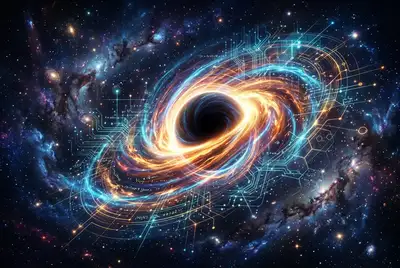
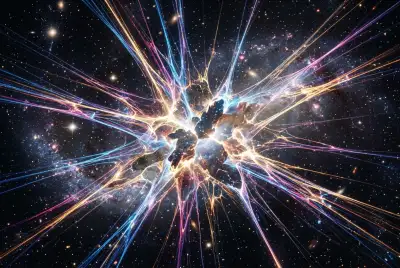
I’ve often found myself staring at the night sky, feeling the profound mystery of existence. We live in a universe governed by elegant, underlying laws—laws that dictate everything from the spin of an electron to the majestic dance of galaxies. For centuries, humanity has strived to decode these fundamental principles, pushing the boundaries of observation, experimentation, and theoretical brilliance. But what if the next great leap in understanding doesn't come solely from human intellect, but from a silicon-based mind? What if Artificial Intelligence (AI) holds the key to unlocking the universe's most hidden code?
It’s a thought that truly excites me, and one that's increasingly moving from science fiction to the realm of serious scientific inquiry. Researchers are now actively exploring whether AI can do more than just process data or optimize algorithms; they're asking if AI can actually *discover* new physical laws, generate novel theories, or even identify patterns in cosmic phenomena that have eluded us for millennia.
### The Universe: A Gigantic Dataset
Think about it: the universe, in essence, is a colossal, intricate dataset. Every star, every black hole, every quantum fluctuation, every ripple in spacetime—all are data points waiting to be analyzed. Historically, human scientists have excelled at this analysis, creating theories like general relativity and quantum mechanics that beautifully explain vast swathes of reality. But even our most brilliant minds are limited by cognitive biases, computational speed, and the sheer volume of information. This is where AI steps onto the stage.
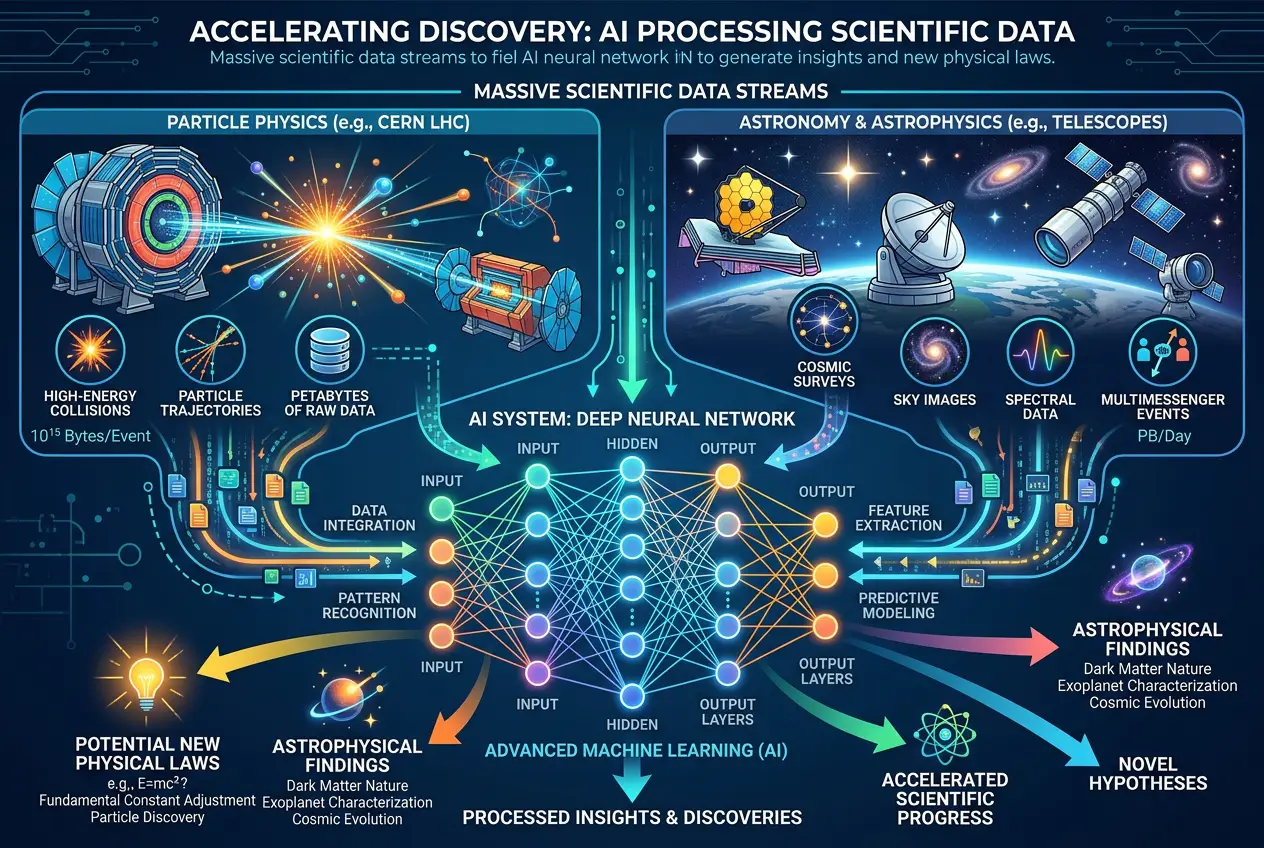
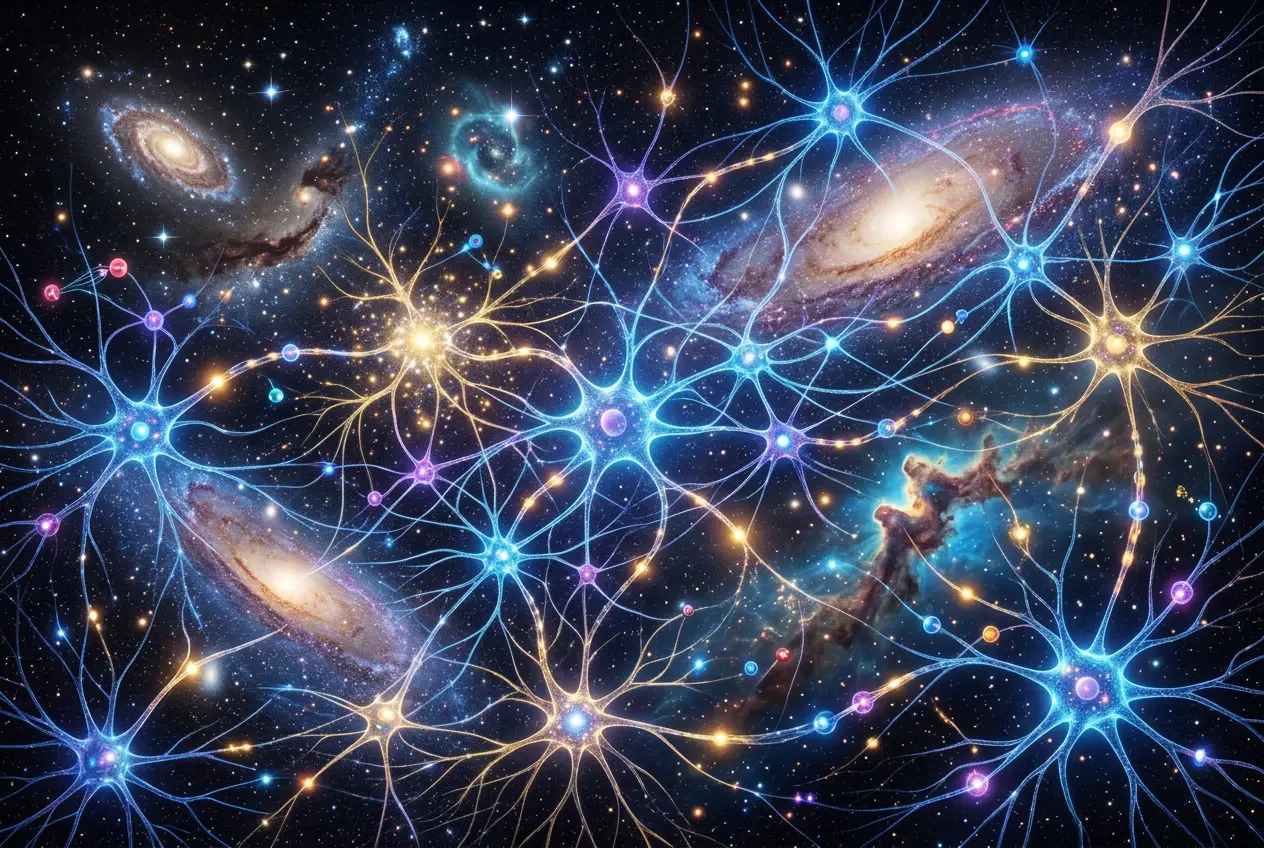
Modern physics is drowning in data. Particle accelerators like the Large Hadron Collider (LHC) generate petabytes of data from collisions, far more than any human team could manually sift through. Astronomical observatories capture images and signals from billions of light-years away, revealing complex structures and transient events. This deluge of information presents both a challenge and an unprecedented opportunity. AI, with its unparalleled ability to identify subtle correlations, uncover hidden structures, and generalize from vast datasets, is perfectly positioned to tackle this challenge.
### Beyond Human Intuition: AI as a Scientific Explorer
One of the most fascinating aspects of AI in scientific discovery is its potential to move beyond human intuition. Human physicists often develop theories based on existing frameworks, mathematical elegance, or educated guesses born from years of experience. While incredibly powerful, this approach can sometimes lead to blind spots or an inability to perceive radically different explanations.
AI, particularly certain types of machine learning models, operates differently. It can be trained on raw data, instructed to find patterns, and left to "learn" the underlying rules without preconceived notions. Imagine an AI sifting through decades of astrophysical observations. It might identify a subtle oscillation in the cosmic microwave background radiation that human models dismissed as noise, but which, when combined with other data, points to a new type of dark matter interaction. Or consider the hunt for a "Theory of Everything," a grand unified theory that reconciles general relativity with quantum mechanics. This remains one of physics' holy grails (see more on this on [Wikipedia's article on the Theory of Everything](https://en.wikipedia.org/wiki/Theory_of_everything)). Could an AI, unburdened by our current theoretical divides, find an entirely novel mathematical framework that bridges this gap?
Recent research has shown promising steps in this direction. For instance, AI algorithms have successfully rediscovered fundamental physical laws, such as Newton’s laws of motion, purely by observing data on pendulum swings or planetary orbits. While these are known laws, the fact that an AI can derive them without explicit programming demonstrates its capability for *de novo* discovery. What happens when we apply this same power to phenomena where the laws are *unknown*?
### The Hunt for New Physics: From Quarks to Cosmos
The areas where AI is making significant inroads are diverse:
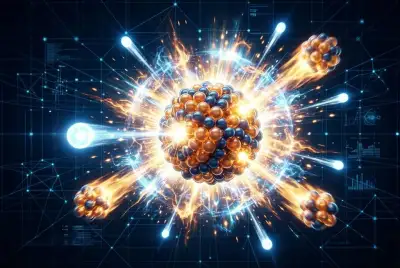
* **Particle Physics:** At facilities like the LHC, AI is crucial for filtering through billions of collision events to identify rare particles or subtle deviations that could signal "physics beyond the Standard Model" (explore this concept further on [Wikipedia's Physics Beyond the Standard Model page](https://en.wikipedia.org/wiki/Physics_beyond_the_Standard_Model)). It helps differentiate between background noise and genuine signals of new phenomena, speeding up the discovery process exponentially.
* **Astrophysics and Cosmology:** AI excels at analyzing astronomical images to classify galaxies, detect supernovae, or identify gravitational lensing events. More profoundly, it can model complex cosmic evolution, predict properties of exoplanets, and even search for anomalies in the distribution of matter that might hint at new cosmological theories, or even reveal hidden components of the universe, echoing some of the questions explored in our blog about whether
dark matter hides a universe we can't see.
* **Materials Science:** AI can predict the properties of new materials even before they are synthesized, dramatically accelerating the discovery of superconductors, catalysts, or stronger alloys. By exploring vast compositional spaces, AI can uncover optimal material designs that human intuition might never stumble upon.
### The Challenge of Explainable AI (XAI)
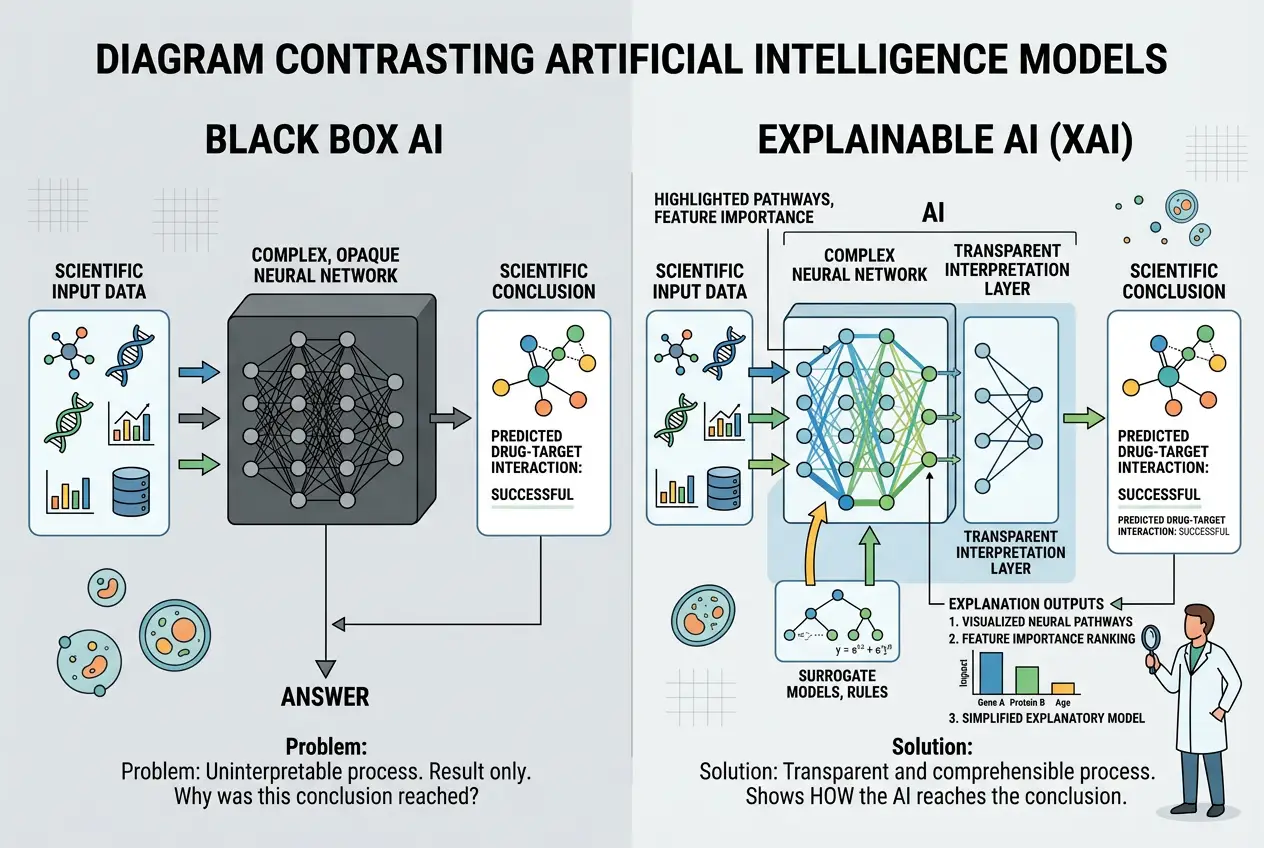
While AI’s predictive power is undeniable, one of its biggest challenges in fundamental scientific discovery is **explainability**. If an AI "discovers" a new physical law, how do we understand *how* it arrived at that conclusion? Many powerful AI models, especially deep neural networks, operate as "black boxes." They provide accurate predictions or classifications, but the intricate decision-making process within their layers remains opaque to human observers.
For science, merely having the right answer isn't enough; understanding the *why* is paramount. A truly groundbreaking discovery needs to be comprehensible, verifiable, and ideally, expressible in a mathematical framework that humans can build upon. This is where the field of **Explainable AI (XAI)** becomes critical. Researchers are developing techniques to peek inside these black boxes, to understand which features AI models prioritize, and how they weigh different pieces of information. This transparency is vital if we want to trust AI not just as a tool, but as a genuine partner in scientific exploration. You can delve deeper into XAI on [Wikipedia's page for Explainable Artificial Intelligence](https://en.wikipedia.org/wiki/Explainable_artificial_intelligence).
### The Future: A Symbiotic Relationship
Ultimately, the future of AI in unlocking the universe's hidden code likely lies not in AI replacing human scientists, but in a powerful, symbiotic relationship. AI can serve as an unparalleled data analyst, a hypothesis generator, and a pattern recognition engine, sifting through complexities that would overwhelm any human. Human scientists, in turn, provide the critical thinking, the conceptual leap, the intuition for novel experimental designs, and the rigorous framework for theoretical validation.
Imagine a scenario where an AI flags an anomalous pattern in cosmological data, suggesting a tweak to the existing model of dark energy. Human cosmologists then take this AI-generated hypothesis, develop the mathematical formalism, design new observational tests, and integrate it into our broader understanding of the cosmos. This collaborative approach could accelerate discovery at an unprecedented pace.
The question isn't whether AI *can* discover new laws of physics, but *when* and *how* we best integrate its capabilities into our scientific workflow. The universe is vast, and its secrets are deep. With AI as our digital co-pilot, we stand on the precipice of a new era of discovery, one where the hidden code of reality might finally be within our grasp. Much like how we ponder if
AI can predict humanity's next big leap, we are now asking if it can predict the universe's next big revelation. This journey will demand not just technological prowess, but also profound ethical consideration as we redefine the very nature of scientific knowledge.
 Join Us
 Alex Rivers









Leave a Reply
Comments (0)