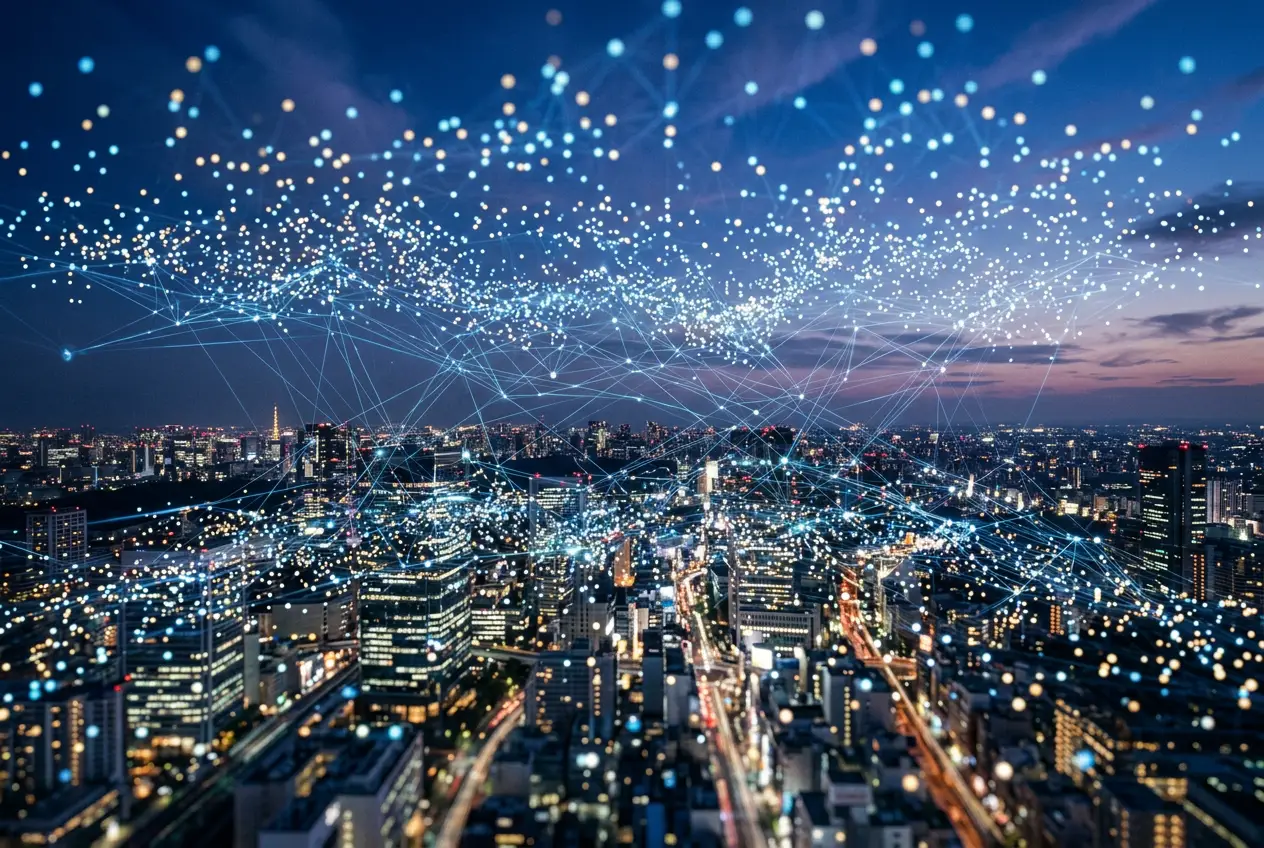
I often find myself wondering about the next frontier in technology, not just big, flashy inventions, but the subtle, pervasive ones that could truly reshape our daily existence. Imagine a world where every surface, every breath of air, every object could sense, compute, and communicate. A world where our environment is not just observed, but intelligently responsive, a living, breathing digital entity. This isn't a scene from a distant sci-fi movie; it's the audacious promise of **smart dust**.
Recently, I was contemplating how our obsession with miniaturization—from bulky mainframes to pocket-sized smartphones—is relentlessly driving us towards an era where technology isn't just small; it's *invisible*. Smart dust takes this concept to its ultimate extreme: computing power, sensors, and communication capabilities shrunken down to the size of a grain of sand, or even smaller. I envision a future where these microscopic marvels could literally give our planet a "digital skin," an omnipresent layer of intelligence that observes, analyzes, and interacts with the physical world in ways we're only beginning to grasp.
### What Exactly is Smart Dust?
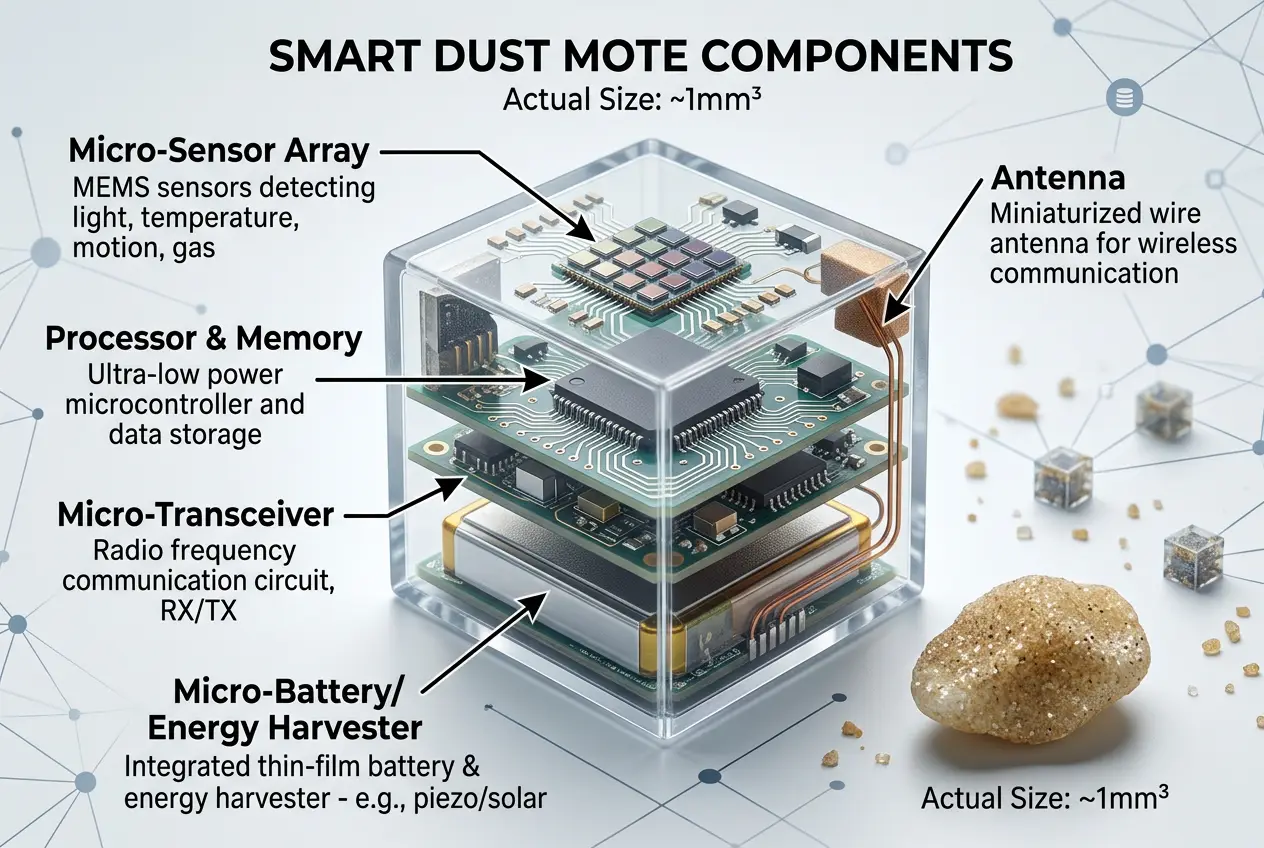
At its core, smart dust refers to a hypothetical system of tiny, autonomous microelectromechanical systems (MEMS) that contain sensors, tiny computers, wireless transceivers, and power sources. These "motes" would be dispersed over a vast area, forming a pervasive, distributed network. The idea originated in the 1990s, notably from research at the University of California, Berkeley, and the California Institute of Technology. The vision was to create sensor networks so small and numerous that they could monitor virtually any environment without being intrusive.
Think of it as the ultimate evolution of the Internet of Things (IoT), but instead of distinct smart devices, it’s an integrated, microscopic fabric woven into the very air we breathe and the surfaces we touch. While fully realized smart dust remains largely a theoretical concept and a formidable engineering challenge, the underlying technologies are advancing rapidly, making its eventual emergence seem less like fantasy and more like an inevitable outcome of our technological trajectory.
### The Micro-Mechanics of an Invisible Network
How could something so small possibly function? The magic lies in **MEMS technology**. MEMS devices integrate mechanical elements, sensors, actuators, and electronics on a common silicon substrate through microfabrication techniques. These are the same technologies used in accelerometers in your smartphone or inkjet printer heads. For smart dust, MEMS allows the creation of:
* **Sensors**: Microscopic sensors capable of detecting light, temperature, humidity, vibration, chemicals, even biological agents.
* **Processors**: Ultra-low-power microcontrollers to process sensor data locally.
* **Transceivers**: Tiny radios to communicate with other motes or a central hub, often using ultra-wideband (UWB) or optical communication to conserve power.
* **Power Sources**: The biggest hurdle. Current ideas include miniature batteries, solar cells, or energy harvesting from vibrations, ambient light, or even radio frequencies.
The sheer number of these motes is what gives smart dust its power. Individually, a single motes might be simple, but collectively, they form a highly redundant and resilient network, capable of gathering vast amounts of data over large areas. This distributed intelligence means that even if many motes fail, the network can still function. You can learn more about how MEMS work on [Wikipedia](https://en.wikipedia.org/wiki/Microelectromechanical_systems).
### Envisioning a World with a Digital Skin: Applications
The potential applications of smart dust are breathtakingly vast and span almost every sector imaginable. I believe its true impact will come from its ability to create an ambient intelligence that anticipates and responds to our needs, often without us even realizing it.
#### Environmental Monitoring and Climate Control
Imagine entire forests or oceans peppered with smart dust, constantly monitoring pollution levels, temperature shifts, and wildlife movements. Cities could dynamically adjust streetlights, heating, and cooling based on real-time occupancy and environmental conditions, leading to unprecedented energy efficiency. This real-time, hyper-localized data could revolutionize our understanding of ecosystems and our response to climate change.
#### Smart Cities and Infrastructure
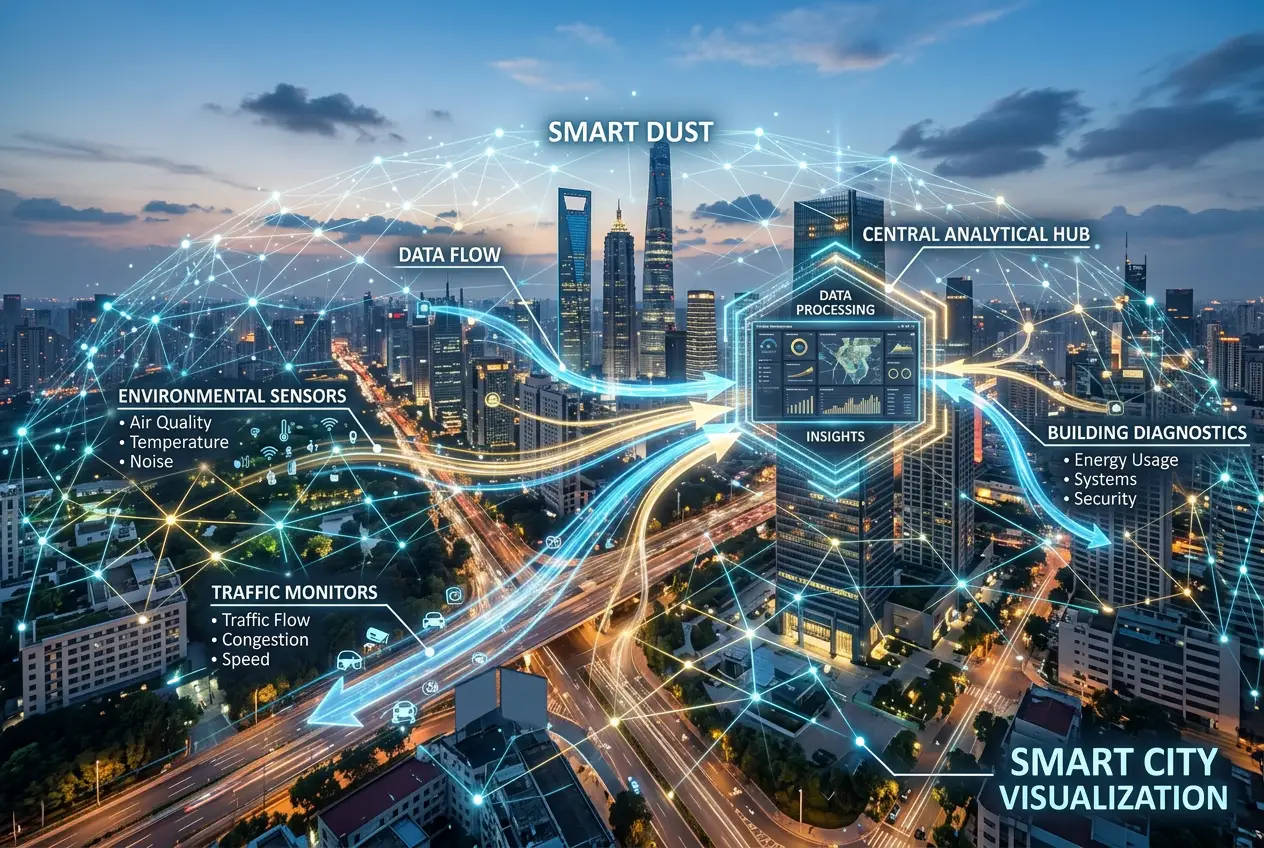
In a smart dust-enabled city, infrastructure could literally tell us if it's healthy. Bridges could report micro-fractures before they become critical, pipelines could detect leaks instantly, and traffic systems could react to individual vehicle movements with uncanny precision. Roads could self-monitor for wear and tear, scheduling maintenance automatically. We might even see a future where humanity lives in a utopia or tech dystopia depending on how these systems are managed, a topic I’ve explored before in posts like [Earth 2099: Will Humanity Live in Utopia or Tech Dystopia?](/blogs/earth-2099-will-humanity-live-in-utopia-or-tech-dystopia-5078).
#### Healthcare and Diagnostics
For healthcare, the implications are profound. Smart dust could be ingested or injected into the body, performing non-invasive diagnostics, monitoring vital signs, and even delivering targeted medication. Imagine tiny motes detecting early cancer cells, tracking glucose levels with pinpoint accuracy, or repairing damaged tissues from within. It could transform reactive medicine into predictive, personalized care, a true revolution in health.
#### Security and Defense
The military applications are clear: undetectable surveillance, battlefield monitoring, chemical and biological threat detection, and even precision guidance for autonomous systems. While powerful for defense, it also raises significant ethical questions regarding privacy and control, which I’ll touch upon shortly.
#### Manufacturing and Supply Chain
From monitoring product quality at a microscopic level to tracking goods with unprecedented detail across global supply chains, smart dust could bring new levels of efficiency and integrity to industrial processes. Imagine a future where products themselves communicate their journey and condition.
### The Elephant in the Room: Challenges and Ethical Dilemmas
Despite its astounding potential, smart dust is not without its formidable challenges and, more importantly, its ethical quandaries.
#### Power and Longevity
The most significant engineering hurdle is **power**. How do you power millions, if not billions, of microscopic devices for extended periods? Current battery technology isn't up to the task. Energy harvesting is promising, but relying solely on ambient sources can be inconsistent. Innovations in materials science and energy storage, perhaps even new forms of 'living light' as discussed in [Living Light: Can Bioluminescence Power Our Future?](/blogs/living-light-can-bioluminescence-power-our-future-5096), will be critical.
#### Communication and Data Overload
Establishing reliable communication among countless motes and efficiently transmitting petabytes of data without overwhelming networks is another major challenge. Developing robust, self-organizing communication protocols for these dense, dynamic networks is an active area of research.
#### Security and Privacy
This is where I find myself wrestling with the most significant ethical concerns. A world permeated by smart dust implies **ubiquitous surveillance**. If every corner of our environment can see, hear, and analyze, what happens to individual privacy? Who controls this data? How do we prevent malicious actors from hacking these networks for espionage, manipulation, or even harm? The risk of a **dystopian future** where privacy is completely eroded is a very real possibility.
#### Deployment and Retrieval
How do you safely disperse billions of motes, and more importantly, how do you retrieve or deactivate them? Environmental impact, potential health effects of inhaling or ingesting these particles, and the sheer logistical nightmare of managing such a vast network are questions that demand answers before widespread deployment.
### The Road Ahead: A Digital Metamorphosis
The journey to a world enveloped in smart dust is long and fraught with both incredible potential and daunting risks. As researchers continue to miniaturize components and develop more efficient power solutions, the dream of a digitally "skinned" world inches closer. I believe the future will be a continuous negotiation between technological advancement and our collective ethical responsibility.
Will smart dust truly give our world a digital skin? I think it’s not a matter of if, but when. And when it does, humanity will face a profound choice: will we harness this omnipresent intelligence for unprecedented progress and environmental stewardship, or will we succumb to the perils of pervasive surveillance and control? The answers will define the very fabric of our future. We must ensure that the invisible hand of smart dust guides us towards a more informed and harmonious existence, rather than an unseen, inescapable cage. The discussions around ethical AI and data privacy, which we've touched upon in articles like [Can Brain Interfaces Upload Our Memories?](/blogs/can-brain-interfaces-upload-our-memories-9476), will become even more critical in this future.
To delve deeper into the technical challenges of developing smart dust networks, I recommend checking out this article on [Pervasive Computing on Wikipedia](https://en.wikipedia.org/wiki/Pervasive_computing).
Frequently Asked Questions
Long-term power for smart dust is a major challenge. Researchers are exploring various energy harvesting methods, including miniature solar cells, thermoelectric generators that convert heat into electricity, kinetic energy harvesters from vibrations, and even radio frequency (RF) energy harvesting from ambient electromagnetic waves. The goal is to make motes self-sustaining using energy from their environment.
Smart dust motes would likely use ultra-low-power wireless communication protocols. Options include ultra-wideband (UWB) for short-range, high-bandwidth communication, radio frequency (RF) identification (RFID) technology, or even optical communication using tiny laser diodes and photodetectors for line-of-sight transmission. Mesh networking would allow motes to relay data to a central hub.
The potential health and environmental risks are significant concerns. Inhaling or ingesting microscopic particles could lead to unforeseen health issues, similar to concerns with nanoparticles. The impact of widespread dispersion on ecosystems, soil, and water quality is also unknown. Rigorous testing and strict regulatory frameworks would be essential before widespread deployment.
Securing smart dust networks would be incredibly complex due to their distributed nature and tiny form factor. Encryption, secure boot processes, and authentication protocols would be vital, but challenging to implement on resource-constrained motes. Decentralized security models and AI-driven anomaly detection would also be explored to prevent unauthorized access or malicious deployment.
While both involve networked sensors, smart dust represents a quantum leap in scale and invisibility. Traditional IoT devices are distinct, identifiable objects (e.g., smart thermostats, cameras). Smart dust motes are microscopic, autonomous, and designed to be indistinguishable from their environment, forming an omnipresent, pervasive computing layer rather than a collection of discrete 'smart' things.
Verified Expert
Alex Rivers
A professional researcher since age twelve, I delve into mysteries and ignite curiosity by presenting an array of compelling possibilities. I will heighten your curiosity, but by the end, you will possess profound knowledge.
Leave a Reply
Comments (0)
No approved comments yet. Be the first to share your thoughts!
 Join Us

 Alex Rivers
























Leave a Reply
Comments (0)