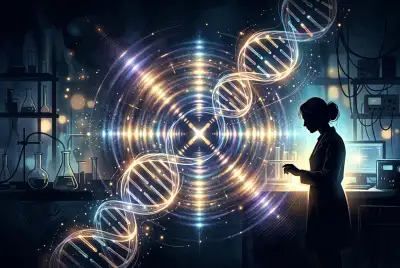
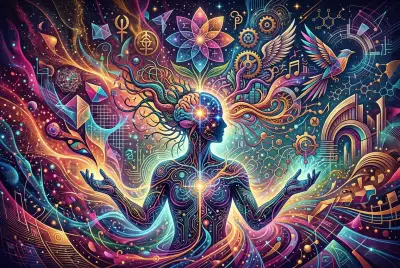
I remember a conversation from my early days in science, a casual chat that turned profound. We were discussing the mind, consciousness, and the seemingly impenetrable barrier between individual thoughts. "What if," someone mused, "our brains aren't just electrical circuits, but quantum processors? What if the universe itself has a secret, entangled network we're only beginning to perceive?" At the time, it sounded like pure science fiction, a delightful thought experiment. But recently, as I’ve delved deeper into the bizarre world of quantum physics and its potential applications, I've started to wonder: could there be more to that musing than we dared to imagine? Could quantum entanglement, that "spooky action at a distance" Einstein famously described, somehow connect our minds?
It sounds far-fetched, doesn't it? The idea of two minds linked by an invisible, instantaneous thread, sharing thoughts or even emotions, conjures images straight out of a psychic thriller. Yet, the foundations of quantum mechanics are inherently weird, challenging our classical understanding of reality. If quantum mechanics operates at the most fundamental levels of matter, and our brains are made of matter, it's not entirely unreasonable to ask if these quantum phenomena play a role in the intricate dance of consciousness.
### The Quantum Realm: Where Reality Gets Weird
Before we leap into mind-bending connections, let’s briefly touch upon what quantum entanglement actually is. Imagine two particles, say two electrons, that are generated together or interact in a specific way. From that moment on, they become **entangled**. This means that the quantum state of one particle is intrinsically linked to the quantum state of the other, no matter how far apart they are. If you measure a property of one entangled particle – its spin, for instance – you instantly know the corresponding property of the other, even if it's light-years away. There's no time delay, no signal transmission. It's instantaneous, defying our classical understanding of speed and information transfer. You can learn more about the concept of quantum entanglement on [Wikipedia](https://en.wikipedia.org/wiki/Quantum_entanglement).
For decades, entanglement was primarily observed in highly controlled laboratory settings, usually with subatomic particles or photons. The larger the system, the more difficult it becomes to maintain this delicate quantum coherence, as interactions with the environment (a process called **decoherence**) quickly disrupt the entangled state. This is why scaling up quantum computers is such a monumental challenge.
### The Brain: A Biological Supercomputer
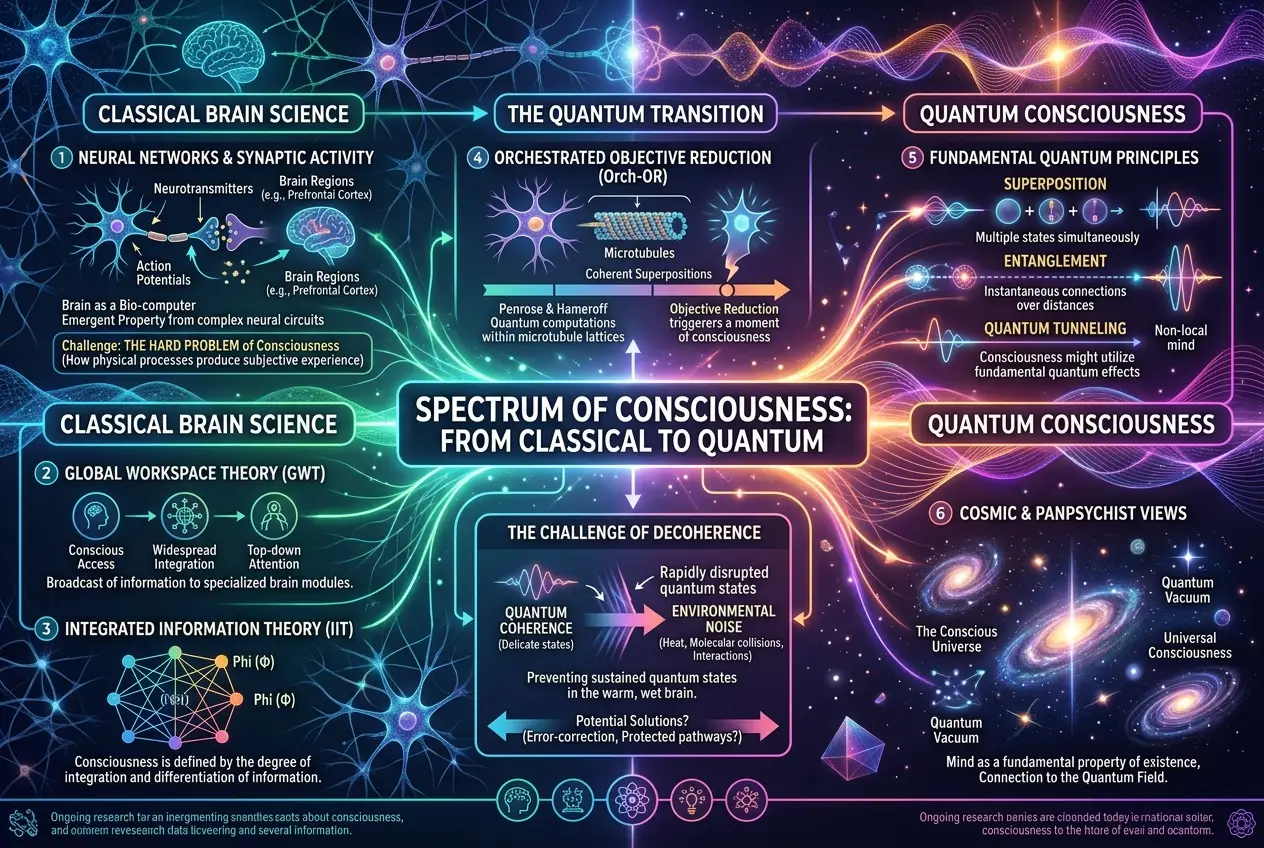
Now, let's turn to the brain. It's an organ of staggering complexity, housing billions of neurons, each firing electrical impulses and forming trillions of connections. Our thoughts, memories, emotions, and consciousness all arise from this intricate biological network. Classically, neuroscience has focused on electrochemical signaling – neurotransmitters bridging synaptic gaps, electrical potentials propagating along axons. This model has been incredibly successful in explaining many aspects of brain function.
However, some scientists have proposed that classical physics alone might not fully account for the unique properties of consciousness. What about the speed of information processing, the binding problem (how disparate sensory inputs coalesce into a single conscious experience), or the subjective nature of experience itself? Could quantum effects play a role in these phenomena? This is where the field of **quantum biology** steps in. While still highly contentious and in its early stages, quantum biology explores whether quantum mechanical phenomena, like superposition and entanglement, might be at work in biological systems. We've previously explored related ideas such as whether [plants use quantum entanglement to talk](https://www.curiositydiaries.com/blogs/do-plants-use-quantum-entanglement-to-talk-1312) or if [our bodies harbor hidden quantum clocks](https://www.curiositydiaries.com/blogs/do-our-bodies-harbor-hidden-quantum-clocks-3312), hinting at a universe much more quantum-enabled than we once thought.
### The Orch-OR Theory: Microtubules and Consciousness
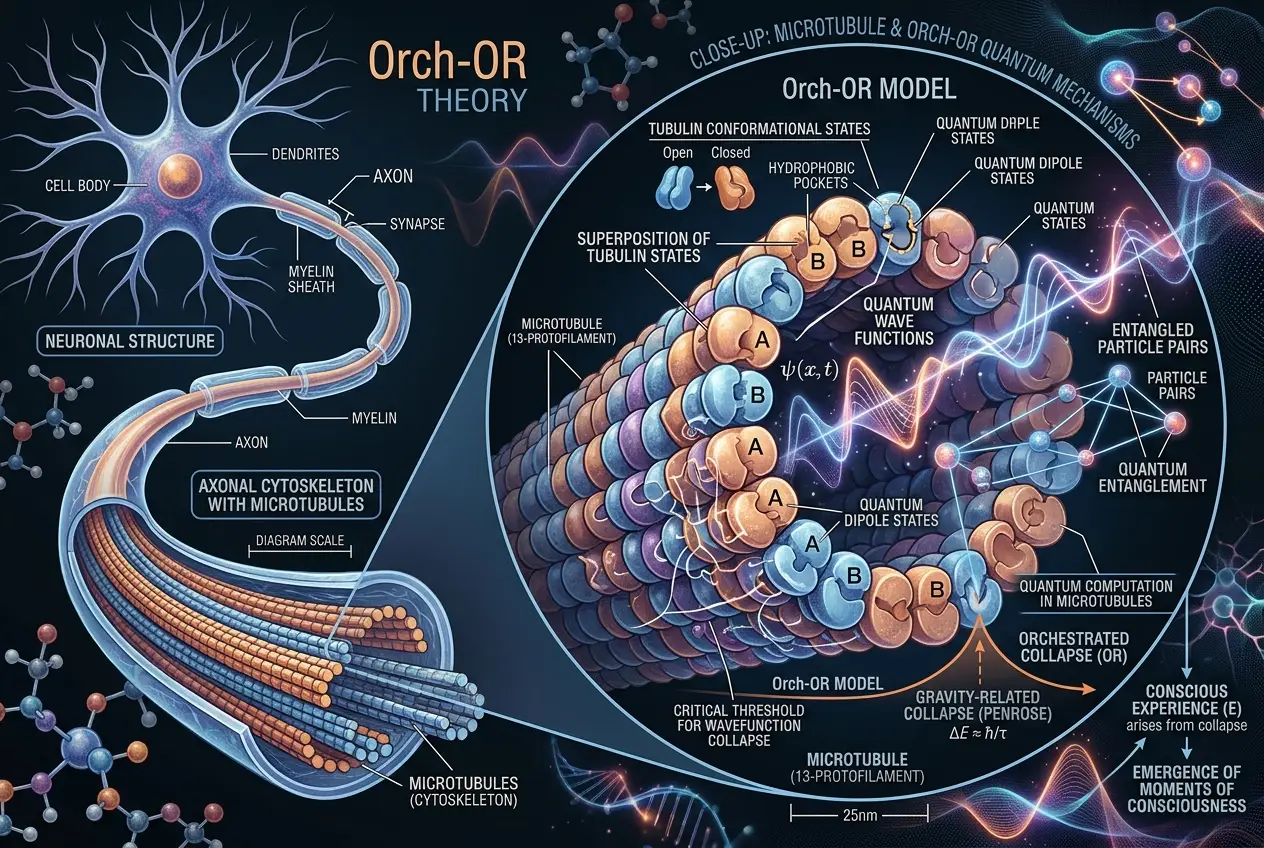
One of the most prominent, albeit controversial, theories attempting to link quantum mechanics to consciousness is the **Orchestrated Objective Reduction (Orch-OR)** theory, proposed by physicist Roger Penrose and anesthesiologist Stuart Hameroff. Their hypothesis suggests that consciousness originates from quantum computations occurring in protein structures called **microtubules** within neurons.
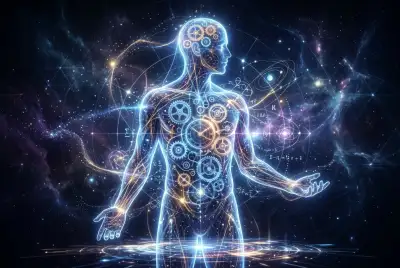
According to Orch-OR, microtubules are not just structural components but act as quantum information processors. They propose that quantum coherence, including entanglement, can be maintained within these microtubules, leading to moments of "objective reduction" that generate discrete conscious events. If this theory were true, it would imply that our brains are not merely classical computers but operate with a significant quantum component. This could be a game-changer, potentially explaining how the brain handles massive amounts of information so efficiently and integrates it into a unified conscious experience. You can find more details on the Orch-OR theory on [Wikipedia](https://en.wikipedia.org/wiki/Orchestrated_objective_reduction).
**Key Components of Orch-OR Theory**
| Feature | Classical Neuroscience View | Orch-OR Quantum View |
| :------------------- | :--------------------------------------------------------- | :--------------------------------------------------------- |
| **Information Unit** | Neuron firing, synaptic strength | Quantum superposition of states within microtubules |
| **Consciousness** | Emergent property of complex neural networks | Derived from "objective reduction" of quantum states |
| **Binding Problem** | Handled by synchronous neural oscillations | Unified by global quantum coherence across microtubules |
| **Speed** | Limited by electrochemical signal propagation | Instantaneous quantum effects |
| **Microtubules** | Structural, transport | Quantum computation sites |
### Bridging the Gap: How Could Minds Entangle?
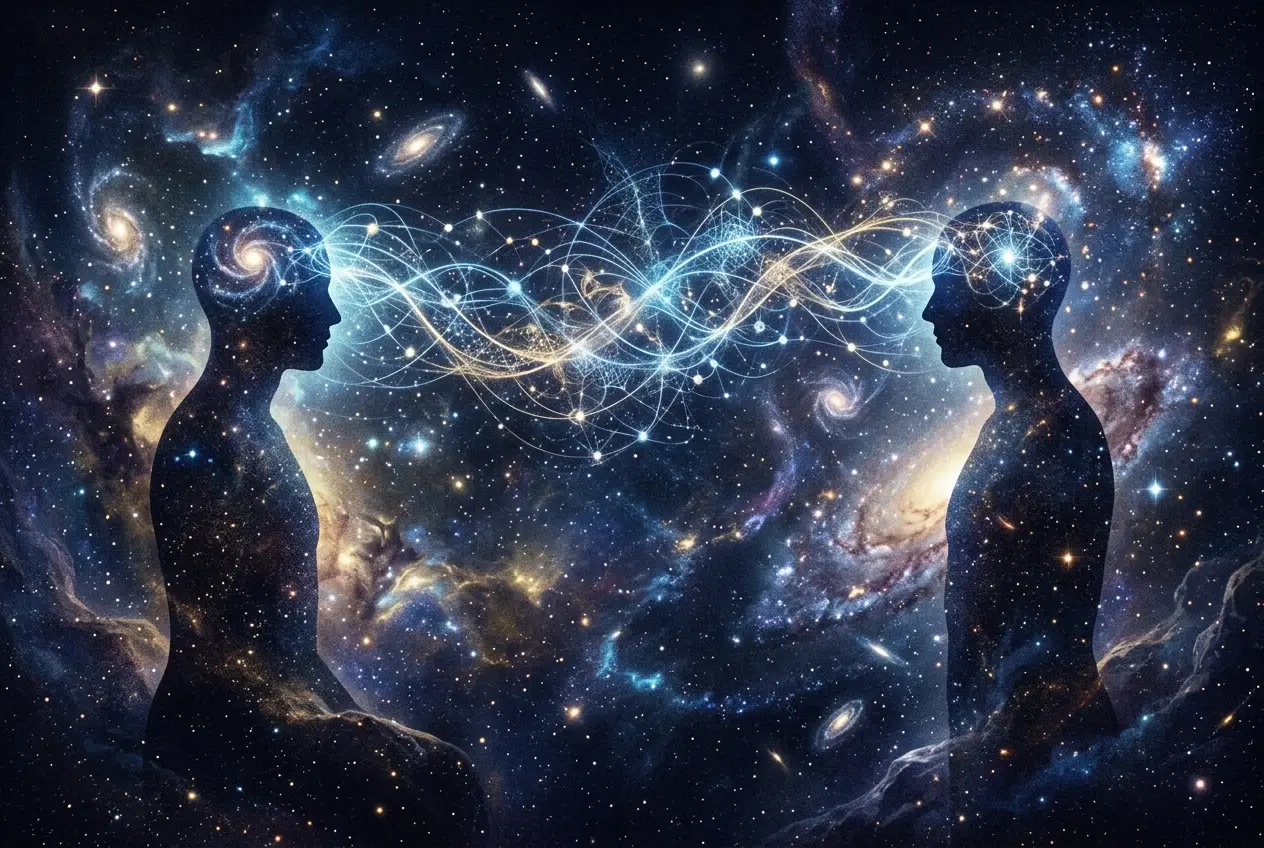
If we accept, even hypothetically, that quantum processes are fundamental to consciousness, the next logical (and highly speculative) step is to consider how entanglement might bridge the gap between minds.
1. **Shared Quantum Substrate:** If consciousness arises from quantum states within microtubules, and these states could, in theory, become entangled between individuals, then a form of "mind entanglement" might be possible. This would require specific conditions to prevent decoherence, perhaps through highly synchronized brain states or even external quantum fields.
2. **Information Transfer:** In a truly entangled state, information about one mind's quantum state would instantly be known by the other. This doesn't necessarily mean thought-for-thought telepathy, but perhaps a subtle alignment, a shared intuition, or an unconscious understanding that transcends traditional communication.
3. **Resonance and Coherence:** Perhaps minds don't *entangle* in the strict sense of particle physics, but rather resonate at a deep quantum level. Imagine a universe where consciousness itself is a field, and individual minds are localized coherent states within it. Entanglement could then be a mechanism for these states to synchronize or influence each other. This is highly speculative, reaching into the realm of universal consciousness, a topic we touched upon when asking [if the universe is a giant neural network](https://www.curiositydiaries.com/blogs/is-the-universe-a-giant-neural-network-2907).
### The Hurdles and Skepticism
It's crucial to address the significant challenges and skepticism surrounding these ideas.
* **Decoherence:** The biggest hurdle is decoherence. The brain is a hot, wet, noisy environment. Maintaining quantum coherence in such conditions for long enough to be relevant for consciousness is extremely difficult, if not impossible, according to many physicists. The Orch-OR theory attempts to address this by proposing that microtubules offer a "protected" environment, but experimental evidence for this remains elusive.
* **Scale:** Quantum effects are typically observed at microscopic scales. For them to influence macro-level phenomena like consciousness would require a colossal amplification or an entirely new understanding of how quantum and classical worlds interact within biological systems.
* **Lack of Empirical Evidence:** Currently, there is no direct, verifiable experimental evidence to support the idea that quantum entanglement plays a role in consciousness or mind-to-mind communication. Much of the discussion remains theoretical and philosophical. While fascinating, it needs rigorous scientific validation. The scientific community largely views quantum consciousness theories with healthy skepticism, awaiting concrete proof.
"Extraordinary claims require extraordinary evidence." - **Carl Sagan** (though sometimes attributed to Marcello Truzzi)
This quote perfectly encapsulates the scientific approach to such profound questions. While the idea of quantum entanglement connecting minds is captivating, the evidence base is simply not there yet.
### The Future of Exploration
Despite the skepticism, the exploration of quantum mechanics in biological systems continues. Scientists are investigating:
* **Quantum Biology Experiments:** Researchers are studying phenomena like bird navigation (magnetoreception), photosynthesis, and enzyme catalysis, where subtle quantum effects seem to enhance efficiency. These are not directly about consciousness, but they demonstrate that biological systems *can* harness quantum mechanics.
* **Advanced Brain Imaging:** New technologies might one day be sensitive enough to detect subtle quantum signatures within living brains, if they exist.
* **Theoretical Frameworks:** Continued theoretical work is essential to refine quantum consciousness models, making them more testable and falsifiable.
The question of whether quantum entanglement can connect minds remains one of science's most profound and unanswered mysteries. While the current scientific consensus leans heavily against it due to the challenges of decoherence and lack of direct evidence, the tantalizing possibilities continue to fuel imagination and drive research at the intersection of physics, biology, and neuroscience. It reminds me that our understanding of the universe, and indeed our own minds, is still in its infancy. Perhaps one day, a breakthrough in quantum biology or a novel experiment will provide the missing pieces, allowing us to glimpse the quantum dance that may underpin our very thoughts. Until then, the idea remains a powerful spark for curiosity, pushing the boundaries of what we believe is possible. The universe, after all, has a habit of surprising us, much like when we explore [whether our devices are hiding alien echoes](https://www.curiositydiaries.com/blogs/are-our-devices-hiding-alien-echoes-decoding-cosmic-signals-3706) or wonder if [AI can truly learn from human intuition](https://www.curiositydiaries.com/blogs/can-ai-truly-learn-from-human-intuition-5138), blurring the lines of what we consider 'natural' or 'possible'.
The journey to unravel the mysteries of consciousness and the quantum universe is far from over. It's a testament to human curiosity that we continue to ask these bold questions, pushing the frontiers of knowledge and daring to dream of connections that transcend our current understanding.
Frequently Asked Questions
The core idea is that if consciousness arises from quantum processes within the brain, then quantum entanglement could theoretically link these quantum states between individuals, leading to a form of instantaneous, non-local connection between their minds.
The Orchestrated Objective Reduction (Orch-OR) theory, proposed by Penrose and Hameroff, suggests that consciousness originates from quantum computations within microtubules in neurons. If these quantum computations can occur, then it opens a speculative door for entanglement between such quantum systems in different brains.
The primary objections are the extreme difficulty of maintaining quantum coherence (entanglement) in the warm, noisy environment of the brain due to rapid decoherence, and the current lack of any empirical evidence or experimental observations supporting the hypothesis.
While direct evidence for quantum entanglement in consciousness is lacking, the broader field of quantum biology is investigating quantum phenomena like superposition and entanglement in simpler biological processes such as photosynthesis, bird navigation (magnetoreception), and enzyme catalysis. These demonstrate that life can harness quantum effects.
If mind entanglement were possible, it wouldn't necessarily mean direct telepathy. It could manifest as subtle forms of shared intuition, deep empathy, unconscious synchronized states, or a non-local resonance between minds, where information about one's state is instantly reflected in another's, without conventional communication.
Verified Expert
Alex Rivers
A professional researcher since age twelve, I delve into mysteries and ignite curiosity by presenting an array of compelling possibilities. I will heighten your curiosity, but by the end, you will possess profound knowledge.
Leave a Reply
Comments (0)
No approved comments yet. Be the first to share your thoughts!
 Join Us



 Unknown Author

















Leave a Reply
Comments (0)