I remember standing on a hill during a summer storm, watching lightning crackle across the sky. The raw, untamed power was both terrifying and mesmerizing. It struck me then, as it has struck countless humans throughout history, how immense and awe-inspiring nature's electricity truly is. For millennia, humanity has sought to understand, control, and even harness the forces of the natural world. But what if our ancestors, far removed from the age of Edison and Tesla, had already found a way to tap into the very fury of the sky?
The idea sounds like science fiction, doesn't it? Yet, when we look at the monumental structures left behind by ancient civilizations – the soaring obelisks of Egypt, the majestic ziggurats of Mesopotamia, the towering temples of the Maya – a provocative question emerges: **Could these ancient wonders have served as more than just temples, tombs, or observatories? Could they have been early attempts to capture and utilize the immense power of atmospheric electricity, particularly lightning?**
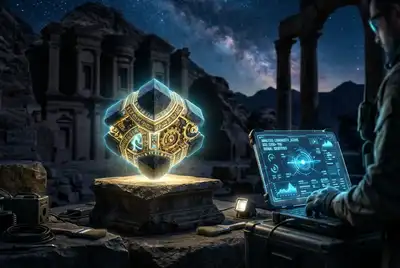
This isn't about conjuring images of ancient pharaohs powering lightbulbs with thunderbolts. It's about exploring a fascinating intersection of archaeology, physics, and a deep appreciation for the ingenuity of early cultures. While direct evidence remains elusive, the circumstantial clues and theoretical possibilities are enough to spark intense curiosity.
## The Allure of Ancient Electrical Systems
For centuries, humanity has sought to understand the invisible forces of the universe. From static electricity to magnetism, these phenomena often held a mystical quality before scientific understanding unveiled their true nature. The story of Benjamin Franklin’s kite experiment in the 18th century is iconic, demonstrating the electrical nature of lightning. But could cultures thousands of years older have grappled with this same phenomenon, perhaps even attempting to control it?
We know that ancient civilizations were masters of engineering, astronomy, and metallurgy. They built structures that defy explanation even today in terms of their precision and scale. Many of these structures incorporated advanced knowledge of materials, orientation, and even acoustics. It's not a huge leap to wonder if their understanding extended to other natural phenomena that might yield power or insight. After all, the famous Baghdad Battery suggests that some ancient societies had at least a rudimentary understanding of galvanic electricity, as explored in our blog: [Baghdad Battery: Did Ancients Spark Our Electric Age?](/blogs/baghdad-battery-did-ancients-spark-our-electric-age-7832).
### Obelisks and Ziggurats: Potential Sky-Catchers?
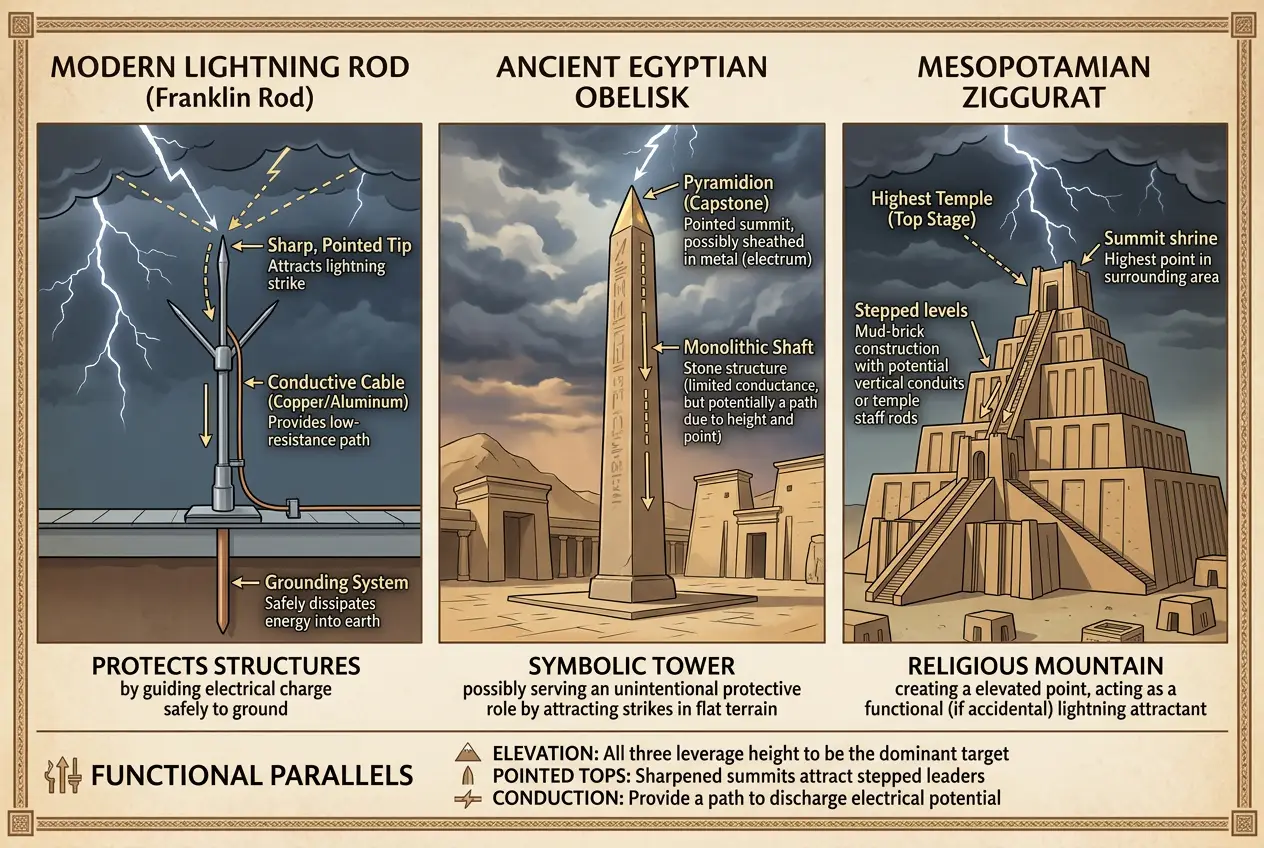
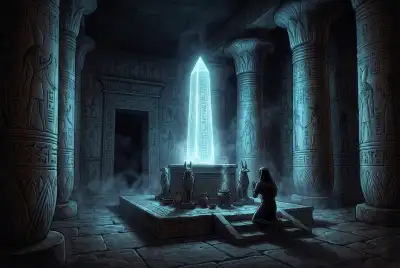
Consider the Egyptian obelisks. These monolithic stone pillars, often capped with electrum (a gold-silver alloy) or pure gold, pointed majestically towards the heavens. They were symbols of the sun god Ra, embodying divine power and connection to the cosmos. But their design also bears a striking resemblance to a modern lightning rod – a tall, pointed conductor designed to attract and safely dissipate electrical charges.
Ancient Egyptians were not only skilled stone masons but also expert metallurgists. They used gold and copper extensively, metals known for their excellent electrical conductivity. The very tips of obelisks, often gilded, would have been prime targets for atmospheric discharge. Imagine the awe and terror of witnessing lightning strike such a monumental structure; it would undoubtedly reinforce its sacred status and association with divine power.
Similarly, the ziggurats of Mesopotamia, massive stepped pyramids built of mud brick, also reached for the sky. While their primary function was religious, serving as temples and observatories, their sheer height and construction could have made them conduits for electrical energy. Some theories even suggest that these massive structures might have been built on geologically active sites, potentially tapping into telluric currents or amplifying natural electrical phenomena, a concept we've touched upon when discussing [Did Ancient Structures Resonate with Earth's Frequencies?](/blogs/did-ancient-structures-resonate-with-earths-frequencies-1132).
## The Science of Lightning and Ancient Materials
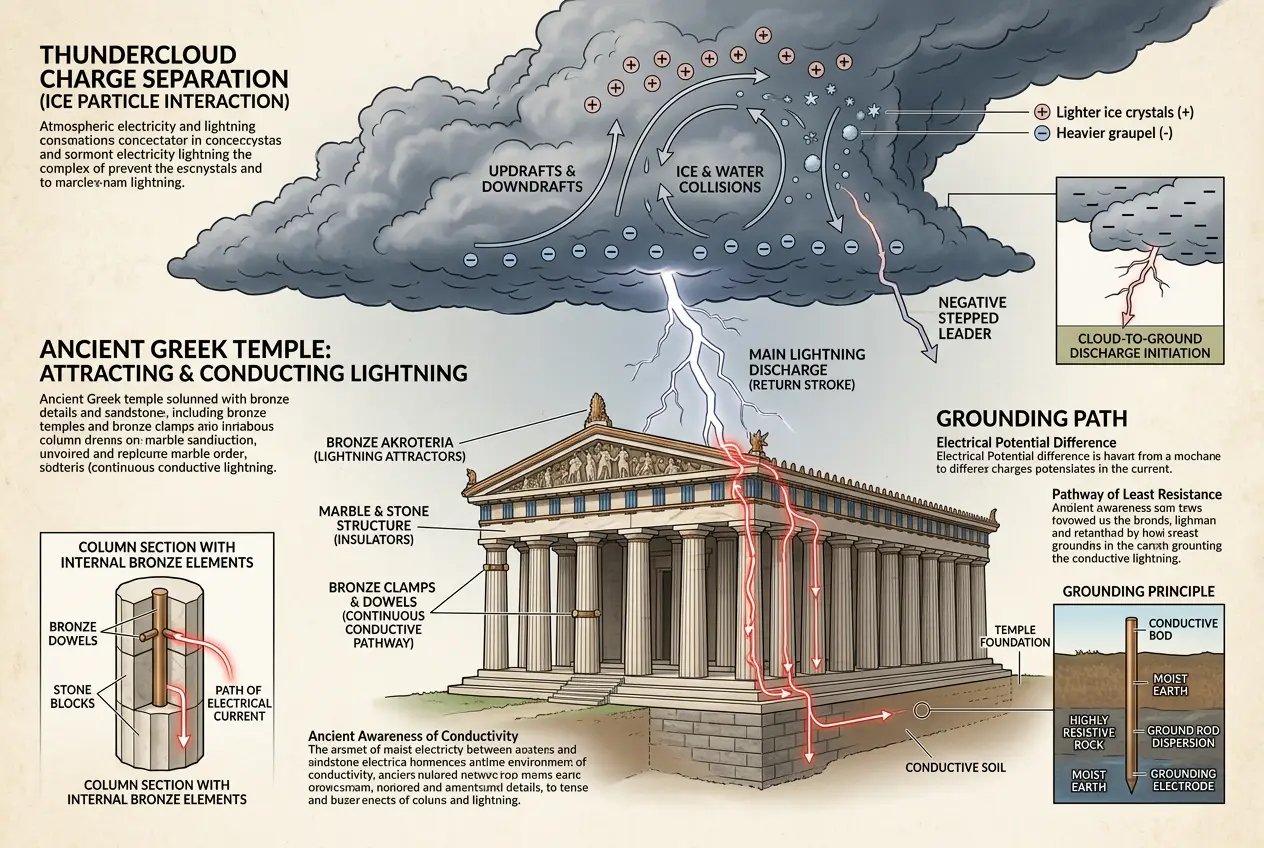
To understand the hypothesis, we need a basic grasp of how lightning works. Lightning is essentially a massive electrostatic discharge that occurs when an electrical potential difference builds up between regions of the atmosphere (usually between clouds or between a cloud and the ground). Water droplets and ice crystals rubbing together within storm clouds generate static electricity, leading to a separation of charges – positive at the top, negative at the bottom. When this potential difference becomes too great, the air, usually an insulator, breaks down, and a massive electrical current flashes through it.
For ancient structures to harness this, a few conditions would need to be met:
1. **Conduction:** The structure would need to be made of, or incorporate, materials that could conduct electricity.
2. **Height:** Taller structures are more likely to be struck.
3. **Grounding:** The electrical charge would need a path to safely dissipate into the earth.
Ancient cultures certainly had access to excellent conductors. Copper was one of the first metals extensively worked by humans, prized for tools and ornamentation. Gold, found in alluvial deposits, was used for millennia. The electrum caps of obelisks, being a gold-silver alloy, are highly conductive. The use of these precious metals at the apex of towering structures is highly suggestive. You can read more about the incredible ancient metallurgical skills on [Wikipedia's page about Ancient Egyptian Metallurgy](https://en.wikipedia.org/wiki/Ancient_Egyptian_metallurgy).
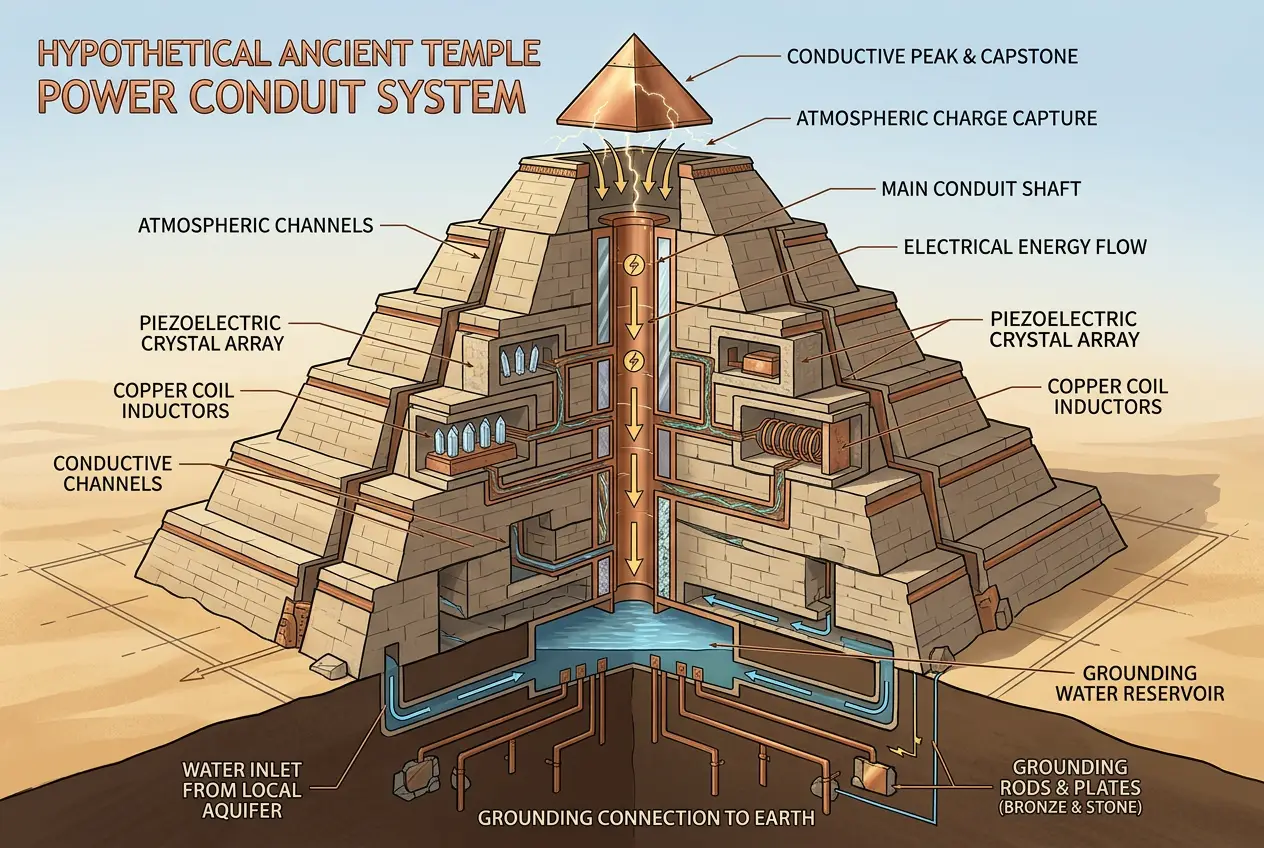
What about grounding? Many ancient temples and monumental buildings incorporated extensive water features, often with complex irrigation systems or proximity to rivers. Water is a conductor, and these systems could have provided a natural grounding path, carrying any collected charge safely into the earth. Could the Nile itself have been part of an elaborate ancient grounding system for obelisks along its banks?
## The "How" and "Why": Challenges and Speculation
The biggest hurdle for this theory is the **lack of explicit textual or archaeological evidence** describing "lightning harvesting" equipment or processes. No hieroglyphs depict wires leading from obelisks to power ancient devices, nor do cuneiform tablets detail methods for storing atmospheric energy. This silence is often considered the theory's death knell.
However, consider this: much ancient knowledge was esoteric, passed down orally, or encoded in symbolic forms not immediately obvious to modern interpretation. Some advanced techniques might have been kept secret by priestly castes or ruling elites. Moreover, the sheer destructive power of lightning means that any ancient attempt to harness it would likely result in catastrophic failures before any successes. What survives might only be the "safe" components, like the obelisk itself, which could act as a passive collector and dissipator rather than an active energy generator.
Even if ancient engineers could attract lightning, how would they *store* or *use* such immense, intermittent bursts of energy? This remains a significant technological hurdle even for modern science, which is still exploring practical lightning energy harvesting. Ancient "batteries" like the Baghdad Battery were capable of producing very low voltage current, useful for electroplating or mild electrotherapy, not powering a city.
So, if not for practical power, then why?
* **Ceremonial Power:** Lightning strikes are dramatic. If an obelisk, seen as a conduit to the divine, regularly attracted lightning, it would reinforce the power and authority of those associated with it. The raw, visible energy could have been interpreted as divine blessing or a demonstration of cosmic connection, a potent tool for spiritual and political control.
* **Symbolic Illumination:** Perhaps the flash was enough. The brilliant, albeit fleeting, light of a lightning strike could have been a spectacular, divinely ordained "illumination" of sacred spaces, awe-inspiring to the masses during religious festivals.
* **Early Warning Systems:** Some scientists have even speculated that certain structures, sensitive to changes in atmospheric electrical potential, could have served as crude predictors of impending storms, offering a practical benefit.
## Modern Echoes and Unanswered Questions
The idea that ancient civilizations might have touched upon advanced scientific concepts is not entirely new. We constantly uncover new facets of their wisdom, from sophisticated astronomical calculations to advanced medical practices. While the notion of ancient lightning harvesters remains largely speculative, it prompts us to look at familiar archaeological sites with fresh eyes.
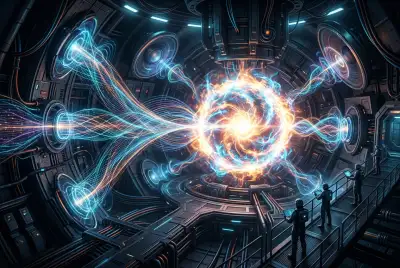
Modern research continues to explore ways to harness lightning, albeit on a far more sophisticated scale. Scientists are investigating methods to convert lightning's immense energy into usable forms, though the challenges are formidable. This pursuit of clean, powerful energy from the sky mirrors, in a sense, the ancient fascination with this dramatic natural phenomenon.
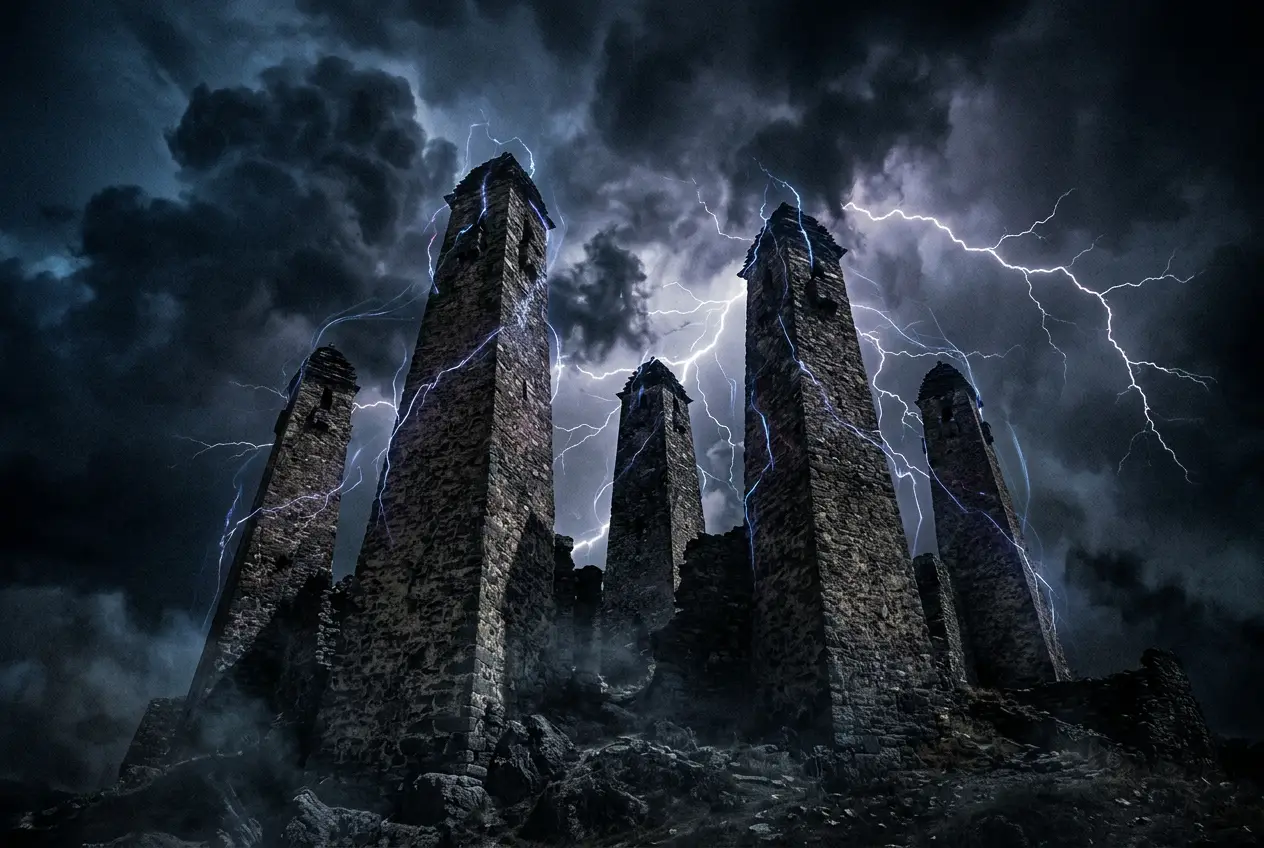
Ultimately, whether ancient towers truly aimed to harness lightning's fury or simply stood as magnificent artistic and spiritual expressions, their enduring presence continues to inspire wonder. They remind us that the human quest for understanding and mastery of the natural world is a story as old as civilization itself, a story full of mysteries waiting to be unraveled.
The next time you see a majestic obelisk or hear the distant rumble of thunder, I encourage you to pause and ponder: Could those ancient stones have once been reaching not just for the gods, but for the very spark of the heavens?
Verified Expert
Alex Rivers
A professional researcher since age twelve, I delve into mysteries and ignite curiosity by presenting an array of compelling possibilities. I will heighten your curiosity, but by the end, you will possess profound knowledge.
Leave a Reply
Comments (0)
No approved comments yet. Be the first to share your thoughts!
 Join Us
 Alex Rivers





























Leave a Reply
Comments (0)