


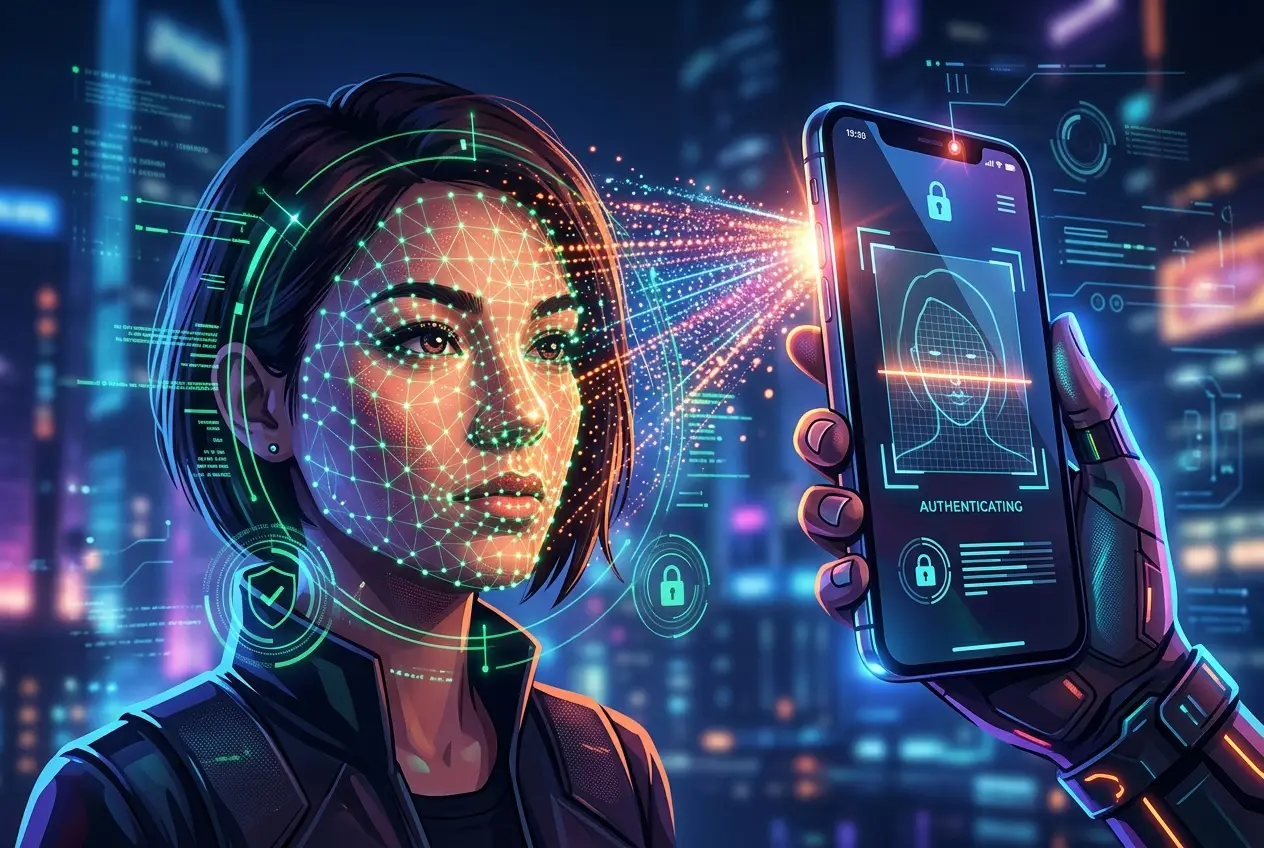
I remember the first time I saw someone effortlessly unlock their smartphone with just a glance. It felt like something straight out of a sci-fi movie. No fumbling with passwords, no precise fingerprint placement – just a quick look, and voila! Access granted. This seamless interaction is now a daily ritual for millions, but it often leaves us wondering: how does my phone truly recognize my face? Is it just taking a fancy picture, or is there something far more complex, almost magical, happening behind that sleek screen?
The truth, as I’ve delved into it, is far more intricate and ingenious than a simple snapshot. We're talking about a sophisticated blend of advanced optics, infrared light, and powerful artificial intelligence working in harmony to secure our digital lives. It’s a marvel of modern engineering, taking biometric security to a level that few could have imagined just a decade ago.
Beyond the Selfie: The Infrared Secret
When you unlock your phone with Face ID, it’s not simply looking at your face like a camera taking a photograph. If it were that simple, a picture of you could potentially unlock your device, rendering the security almost useless. Instead, the technology employs a method that's largely invisible to the human eye, yet incredibly precise: infrared light.
Your phone's "TrueDepth" camera system (or its Android equivalent) utilizes a tiny component called a dot projector. This projector beams out tens of thousands of infrared dots onto your face. These aren't just random lights; they form a precise, structured pattern. Simultaneously, an infrared camera on your device reads this pattern, capturing how these dots distort and reflect off the unique contours of your face. Think of it like a highly detailed laser grid being projected onto you, mapping every curve and crevice. For a deeper dive into how different sensors work in phones, you might find our blog on how fingerprint scanners really see your skin an interesting read.
This process happens in milliseconds and is why Face ID can work effectively even in complete darkness or bright sunlight. The infrared light bypasses the need for ambient visible light, making it a robust solution for diverse environments. "The power of infrared allows facial recognition to transcend visual light limitations, operating flawlessly in varying conditions," explains a researcher in biometrics. This structured light approach is a critical distinction from traditional 2D facial recognition, which relies solely on analyzing patterns and features from a flat image.
Building a 3D Map: The Foundation of Security
The real genius of Face ID lies in its ability to construct a three-dimensional (3D) depth map of your face. Each of those thousands of infrared dots captured by the camera provides a data point, collectively forming a unique topographical map. This map isn't just about the color of your skin or the shape of your eyes in a flat image; it includes crucial depth information – the exact distance from your phone to your nose, the contours of your chin, the depth of your eye sockets.
This 3D mapping is what makes Face ID so difficult to spoof. A 2D photograph or even a sophisticated video won't fool it because they lack the essential depth data. Even a highly realistic mask would struggle to perfectly replicate the minute three-dimensional characteristics of a human face. For example, some early attempts at facial recognition systems could be tricked by a printed photo, but the introduction of 3D scanning made such attempts largely futile. The system is designed to detect the subtle nuances that distinguish a living face from an inanimate replica. You can learn more about 3D facial recognition on Wikipedia's page on facial recognition system (opens in a new tab).
The Brain Behind the Scan: Neural Networks and AI
Once the 3D depth map is generated, the real "seeing" begins, powered by artificial intelligence (AI) and neural networks. The data from the depth map is fed into a highly sophisticated neural engine within your phone's processor. This engine is essentially a specialized AI designed for machine learning tasks, particularly pattern recognition.
During the initial setup of Face ID, your phone takes multiple scans of your face from different angles, creating an encrypted mathematical representation of your unique facial features. This isn't an image of your face stored somewhere; it's a complex algorithm that uniquely identifies you. This encrypted "template" stays securely stored on your device's secure enclave – a dedicated, isolated hardware component designed to protect sensitive data like biometric information. It's never sent to cloud servers, minimizing privacy risks.
When you try to unlock your phone, the newly captured 3D map is compared against this stored mathematical template. The neural network works at an incredible speed, analyzing hundreds of facial features – from the distance between your eyes to the shape of your jawline – and calculating the probability of a match. This AI is also constantly learning and adapting. If you grow a beard, put on glasses, or change your hairstyle, the system subtly updates its stored mathematical representation, ensuring continuous recognition without compromising security. This adaptive learning is crucial for real-world usability. "Machine learning has revolutionized biometric authentication, enabling systems to adapt to changes in appearance without sacrificing security," according to experts in biometric security, as outlined in Wikipedia's article on artificial neural networks (opens in a new tab).
Real-Life Connections: Why It Matters to You
So, why is this intricate process so valuable in your daily life?
- Enhanced Security: The 3D mapping and AI make Face ID significantly more secure than simpler 2D facial recognition or even some fingerprint scanners, reducing the chance of unauthorized access. It’s estimated that the probability of a random person unlocking your phone with Face ID is about 1 in 1,000,000, compared to 1 in 50,000 for Touch ID (fingerprint).
- Convenience in Any Light: Because it uses infrared, Face ID works just as well in a pitch-black room as it does on a sunny beach, making unlocking your phone seamless at any time.
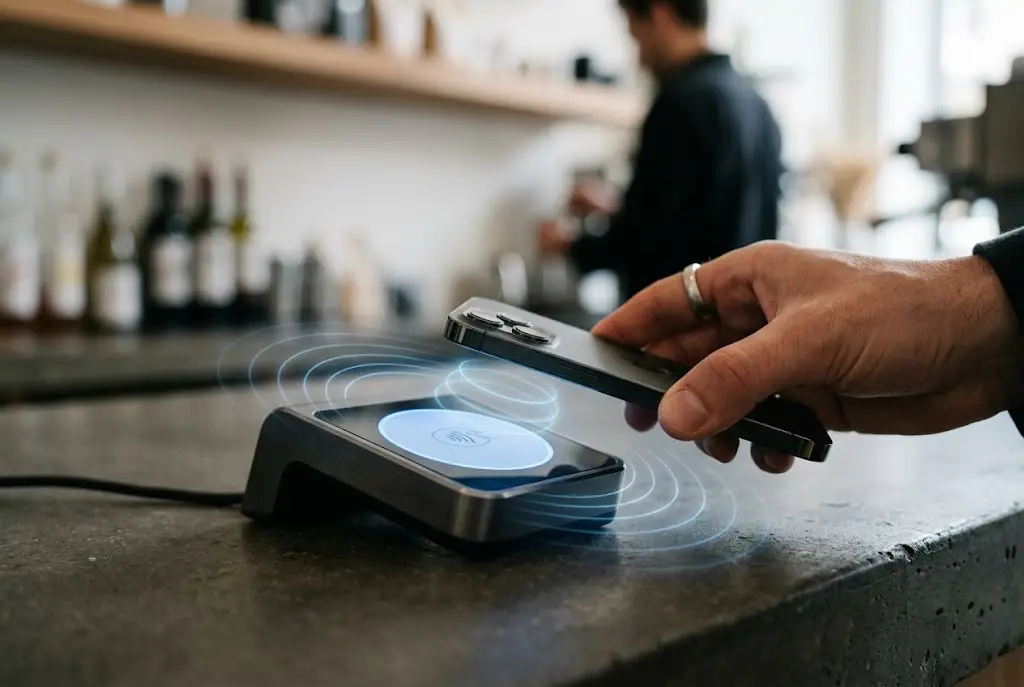
- Seamless Integration: Beyond unlocking your phone, Face ID integrates with various apps for secure logins, authorizing purchases (like Apple Pay), and accessing sensitive information. This is why when you complete a transaction, a quick glance is all it takes to verify your identity.
- Adaptability: The AI's learning capabilities mean that your phone can still recognize you even as your appearance changes over time, whether it's through aging, new accessories, or styling choices.
This technology directly impacts how we interact with our devices, making security less of a barrier and more of an invisible, constant guardian. It's a prime example of how advanced tech is moving towards intuitive, user-friendly experiences.
The Future of Facial Recognition
Face ID and similar technologies are continually evolving. Researchers are exploring ways to make these systems even more robust, faster, and more energy-efficient. Beyond smartphones, facial recognition is finding applications in various fields, from enhancing airport security and streamlining payment systems to personalizing experiences in smart homes. The ethical discussions around privacy, data storage, and potential misuse are also ongoing, shaping how these powerful tools are developed and deployed in the future. The balance between convenience, security, and privacy will remain a critical challenge as this technology advances.
In essence, when your phone "sees" your face, it’s doing far more than just looking. It’s conducting a rapid, highly sophisticated, three-dimensional scan, processed by a miniature AI, all designed to ensure that only you have access to your digital world. It’s not magic, but a testament to how far technology has come, transforming an everyday action into an invisible shield.
Conclusion
The next time you glance at your phone and it unlocks instantly, take a moment to appreciate the complex dance of infrared light, 3D mapping, and artificial intelligence happening behind the scenes. This isn't just a convenient feature; it's a cutting-edge security system that makes your daily digital interactions safer, faster, and remarkably intuitive. Face ID isn't just about recognizing a face; it's about authenticating an identity in a secure and seamless way, truly bringing science fiction into our pockets.




Conversation0
No comments yet. Be the first to share a thought — the best questions often become new stories.