I remember a moment, sitting by my window, watching a squirrel chatter furiously at a bird. What were they saying? Was it a territorial dispute, a warning, or simply a casual remark about the weather? For centuries, humanity has gazed at the animal kingdom with profound wonder, yearning to pierce the veil of silence that separates our species. We’ve imagined talking to dolphins, understanding the roar of a lion, or deciphering the intricate dances of bees. This dream, once confined to mythology and children's stories, is now edging closer to reality, thanks to the relentless march of **Artificial Intelligence**.
The idea isn't just about giving animals a voice in human terms, but about truly comprehending their complex communication systems, often far removed from our own linear linguistic structures. Can AI really bridge this ancient divide and unlock the secret language of animals? Many scientists believe we’re on the cusp of an incredible breakthrough.
## The Untamed Tongue: Why Animal Communication is So Hard to Grasp
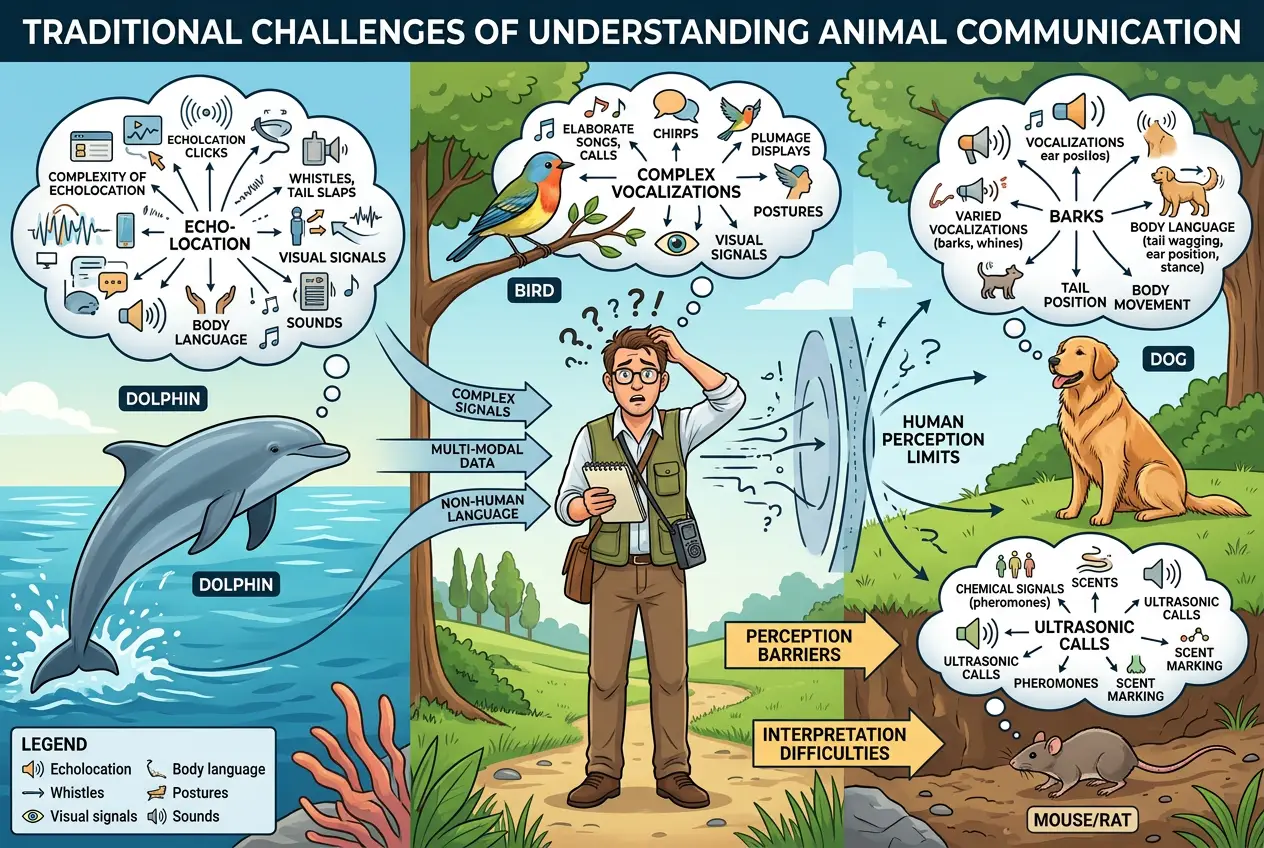
Understanding animal communication is far more complex than simply matching a sound to a meaning. It's not a simple code to be cracked. Animals communicate through a symphony of modalities: vocalizations (from whale songs to insect chirps), body language (postures, facial expressions, dances), chemical signals (pheromones, scent markings), and even electrical impulses. Each species has its own intricate "language," shaped by millions of years of evolution and environmental pressures.
Consider the challenge:
* **Context is King:** A specific call might mean different things depending on the situation – predator proximity, food discovery, or mating ritual.
* **Subtlety and Nuance:** Animal signals can be incredibly subtle, involving minute shifts in tone, frequency, or body posture that human ears and eyes often miss.
* **Sensory Worlds:** Animals perceive the world differently. Bats use echolocation, snakes sense infrared, and many insects communicate through pheromones invisible to us. Our human-centric perspective inherently limits our understanding.
* **Lack of a "Rosetta Stone":** Unlike deciphering ancient human languages, we lack a direct comparative tool to establish foundational meaning. We’re often starting from scratch, observing behavior and making inferences, a field known as **ethology**. You can learn more about the scientific study of animal behavior on [Wikipedia's Ethology page](https://en.wikipedia.org/wiki/Ethology).
## Enter AI: A Paradigm Shift in Decoding Nature
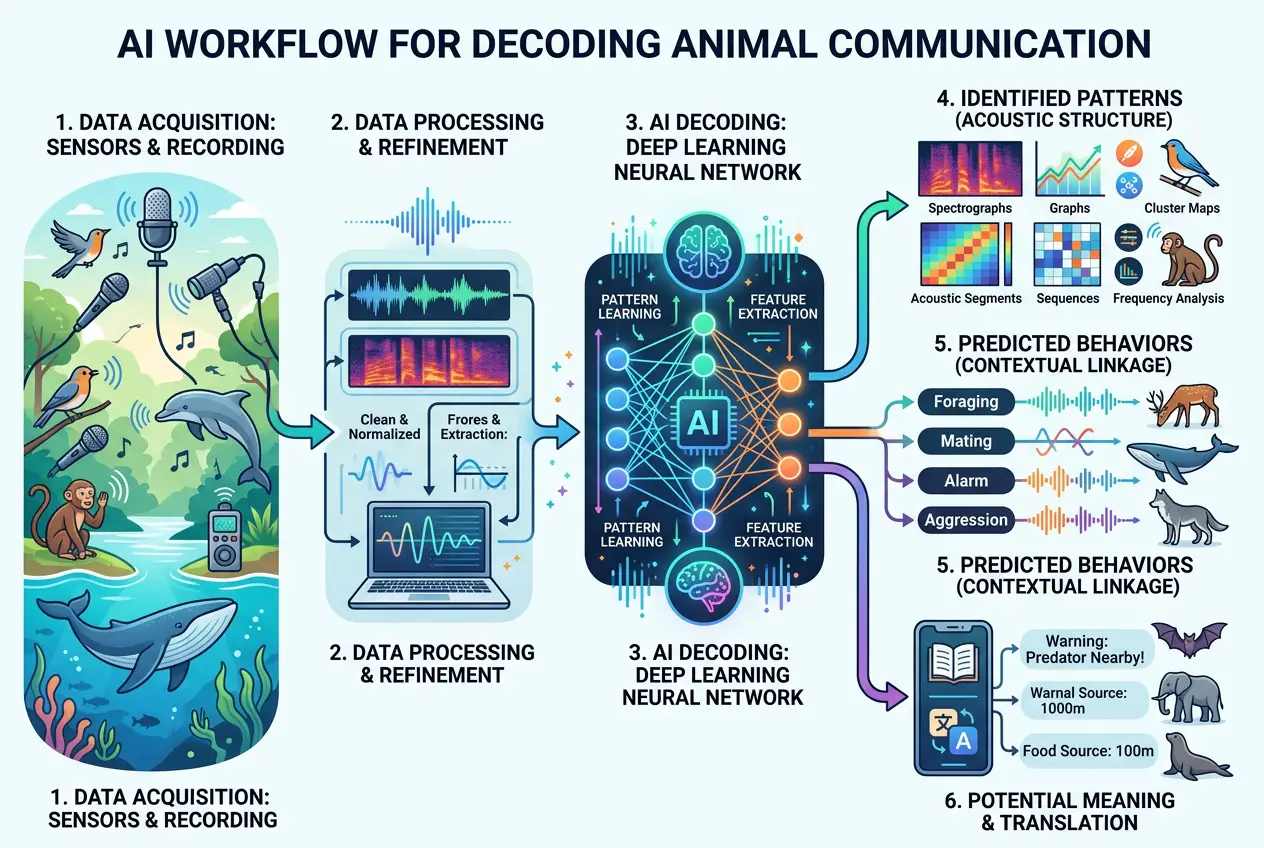
For decades, ethologists meticulously observed and recorded animal behavior. While invaluable, this manual approach had inherent limitations in scale and the ability to detect subtle patterns across vast datasets. This is where AI, particularly **machine learning** and **deep learning**, offers a revolutionary new lens.
AI thrives on pattern recognition, a strength perfectly suited to the seemingly chaotic, yet often highly structured, world of animal communication. With the advent of powerful sensors and massive data storage, researchers can now collect unprecedented amounts of animal data: hours of audio recordings, terabytes of video footage, and detailed chemical analyses.
### The AI Toolkit for Interspecies Communication
1. **Bioacoustics & Spectrograms:** AI can process vast amounts of acoustic data, converting sound waves into visual representations called spectrograms. These reveal subtle variations in frequency, duration, and amplitude that are almost impossible for humans to analyze manually. Deep learning algorithms, trained on thousands of such spectrograms, can identify individual calls, discern emotional states, and even recognize specific "words" or phrases. [Bioacoustics](https://en.wikipedia.org/wiki/Bioacoustics) is a fascinating field at the intersection of biology and acoustics.
2. **Computer Vision:** For visual communication (body language, gestures, facial expressions), computer vision AI can track animal movements, analyze postures, and even detect micro-expressions, identifying patterns linked to specific behaviors or intentions.
3. **Chemical Signal Analysis:** AI can process data from chemical sensors to identify complex pheromone blends or scent messages, correlating them with observed behaviors.
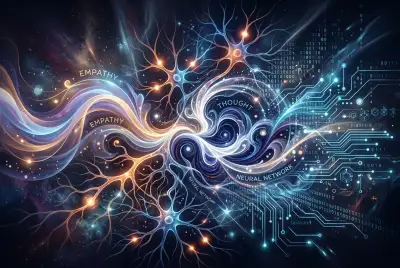
4. **Neural Networks for Translation:** Inspired by the human brain, neural networks can learn to map complex inputs (e.g., a dolphin's click sequence) to specific outputs (e.g., a known dolphin behavior or another sequence). This is similar to how AI translates human languages, but with an added layer of biological and contextual complexity.
**Quote:** *"If you talk to an animal, you hear one side of a conversation. If you listen to an animal, you begin to understand the universe through their eyes."* – **Dr. Karen Wild, animal behaviorist.**
## Real-World Explorations: From Whales to Prairie Dogs
Several groundbreaking projects are already using AI to make strides in animal communication:
* **Project CETI (Cetacean Translation Initiative):** Perhaps the most ambitious, Project CETI aims to use advanced AI and machine learning to understand and potentially communicate with sperm whales. They deploy sophisticated hydrophones, drones, and AI algorithms to record and analyze millions of sperm whale clicks, hoping to identify a fundamental language structure. This initiative is a prime example of AI's potential in this domain. You can dive deeper into their work on [Wikipedia's Project CETI page](https://en.wikipedia.org/wiki/Project_CETI).
* **Dolphin Communication:** Researchers have long studied dolphins, known for their complex vocalizations. AI is now being used to analyze their whistles and burst-pulsed sounds, looking for syntax and semantic patterns.
* **Prairie Dog "Words":** Con Slobodchikoff's work with prairie dogs is a classic example of deciphering specific alarm calls. He found prairie dogs have distinct "words" not just for "predator," but for "tall, thin human," "small, fat human," or "red coyote," complete with information about speed and direction. AI can accelerate the recognition and categorization of these nuanced calls.
* **Elephant Infrasound:** Elephants communicate using low-frequency infrasound, imperceptible to human ears, over vast distances. AI helps detect, separate, and analyze these signals, revealing insights into their social structures and warnings.
These efforts aren't just about simple word-for-word translation; they are about understanding the entire communication system, its rules, its purpose, and its context. When we discuss AI's broader capabilities, it's fascinating to consider how these systems might even "hallucinate" meaning, as explored in our blog on /blogs/do-ai-hallucinations-hint-at-digital-consciousness-6447, underscoring the complexities of interpretation.
## The Promise and Perils of Interspecies Dialogue
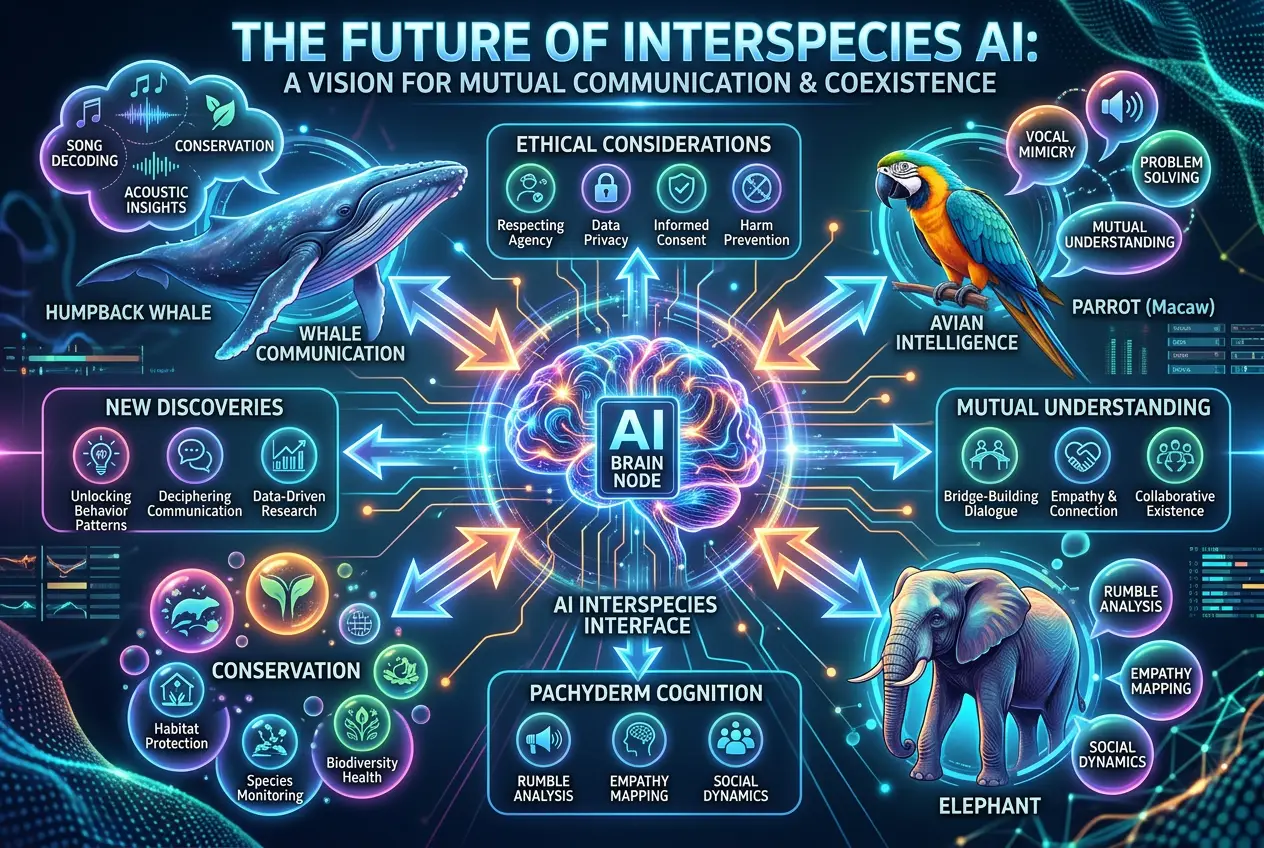
Imagine a world where we could truly understand the distress calls of endangered species, intervene more effectively in conservation, or even gain profound new perspectives on cognition and consciousness. The applications are immense:
* **Conservation:** AI-driven understanding could provide early warnings of environmental threats, track poaching activities more accurately, or even help mitigate human-wildlife conflict by predicting animal movements and intentions. This predictive power aligns with how AI is attempting to /blogs/can-ai-really-predict-sciences-next-big-leap-9069 in scientific discovery.
* **Animal Welfare:** By understanding stress signals or expressions of joy, we could vastly improve the welfare of domestic animals, zoo animals, and research subjects.
* **Scientific Discovery:** Deciphering animal languages could unlock evolutionary secrets, reveal unknown aspects of animal intelligence, and challenge our very definitions of language and thought. Some researchers even explore how seemingly basic biological systems, like those involved in /blogs/does-quantum-biology-unlock-animal-super-senses-4682, might leverage advanced sensory capabilities that AI could help us understand.
However, the path is fraught with ethical considerations and potential pitfalls. What if we understand, but what we hear is profoundly unsettling? What right do we have to intrude on the private communications of another species? Could such knowledge be exploited for commercial or harmful purposes? We must approach this endeavor with immense responsibility and a commitment to animal welfare above all else.
## Beyond Translation: Towards Interspecies Collaboration?
The ultimate goal might not just be one-way translation, but a form of two-way communication, where AI could generate responses that animals understand. This could range from simple warnings to complex negotiations, facilitated by an AI acting as an interspecies ambassador. Imagine an AI learning to mimic a specific bird's warning call to alert it to danger, or to play a whale song segment that conveys a human intention.
This future isn't without its philosophical challenges. What defines consciousness? How do we measure comprehension across such vastly different cognitive frameworks? The journey to translate animal languages is not merely a technological one; it’s a profound exploration of what it means to be intelligent, to communicate, and to share our planet with an astonishing diversity of life. The silent conversations that fill our forests, oceans, and skies may soon be revealed, forever changing our relationship with the natural world.
## Conclusion
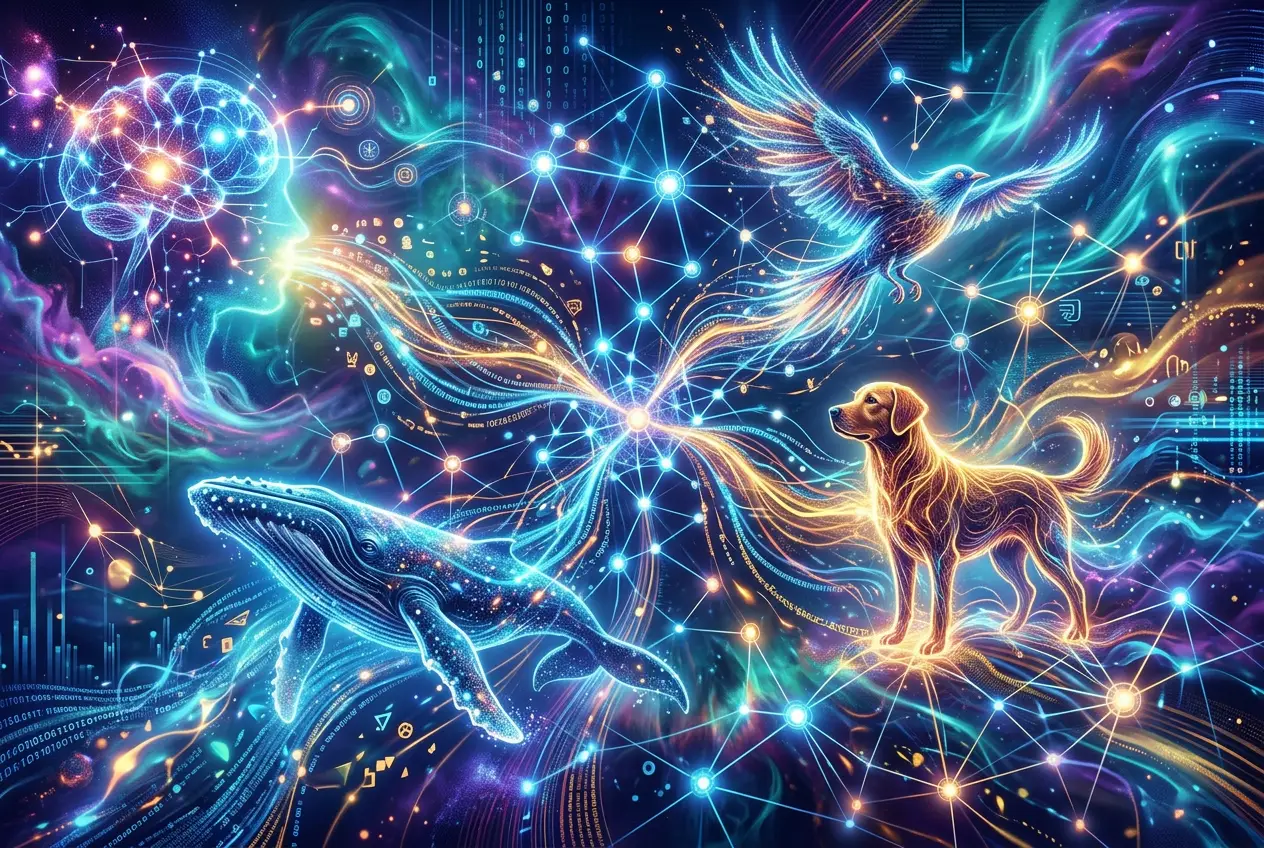
The dream of speaking with animals, once fantasy, is evolving into a tangible scientific quest, powered by the exponential growth of AI. While the challenges are immense and the ethical questions complex, the potential rewards—a deeper understanding of life on Earth, enhanced conservation efforts, and perhaps even a new form of interspecies empathy—are too significant to ignore. As we continue to refine our AI tools and listen more closely than ever before, we might just find that the animals have had a lot to say all along.
Frequently Asked Questions
The primary technologies are machine learning and deep learning, particularly within fields like bioacoustics and computer vision. These AI algorithms excel at identifying complex patterns in vast datasets of animal vocalizations, body language, and other signals that are often imperceptible or too subtle for humans to analyze manually.
Yes, several ethical concerns exist. These include the right to intrude on animal privacy, potential exploitation of animals if their communications are understood, the risk of anthropomorphizing animal signals (projecting human emotions/meanings), and the responsibility that comes with such profound knowledge, especially concerning intervention in natural behaviors.
While currently a long-term goal, researchers are exploring whether AI could not only translate animal signals for humans but also generate responses that animals can understand. This would involve AI mimicking animal vocalizations or behaviors in a contextually appropriate way, potentially leading to a rudimentary form of interspecies dialogue.
Key species include sperm whales (like in Project CETI), dolphins, elephants, and prairie dogs, among others. These animals are chosen due to their complex communication systems, often involving intricate vocalizations, social structures, or unique sensory modalities that provide rich data for AI analysis.
AI-driven insights into animal communication can significantly aid conservation by providing early warnings of distress, predicting migration patterns, identifying threats like poaching through unique calls, and helping to mitigate human-wildlife conflicts. This deeper understanding allows for more targeted and effective conservation strategies.
Verified Expert
Alex Rivers
A professional researcher since age twelve, I delve into mysteries and ignite curiosity by presenting an array of compelling possibilities. I will heighten your curiosity, but by the end, you will possess profound knowledge.
Leave a Reply
Comments (0)
No approved comments yet. Be the first to share your thoughts!
 Join Us



 Alex Rivers


























Leave a Reply
Comments (0)