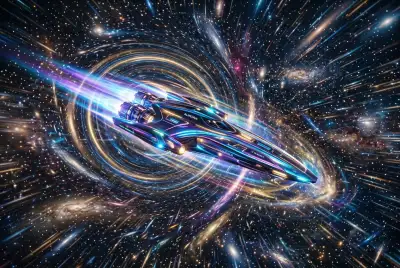
I remember spending countless hours as a kid, lost in the pages of sci-fi novels and glued to the screen during space opera movies. The idea of starships zipping across galaxies in mere moments, not just through hyperspace, but by bending the very fabric of existence, always sparked an incredible sense of wonder in me. That concept, so prevalent in fiction, often goes by a single, intriguing name: **wormholes**. But is this just Hollywood magic, or could these cosmic shortcuts truly exist? Could they even be a bridge to parallel universes, as some theories suggest?
Join me as we dive deep into the fascinating, albeit highly theoretical, world of wormholes.
### The Cosmic Shortcut: What Exactly is a Wormhole?
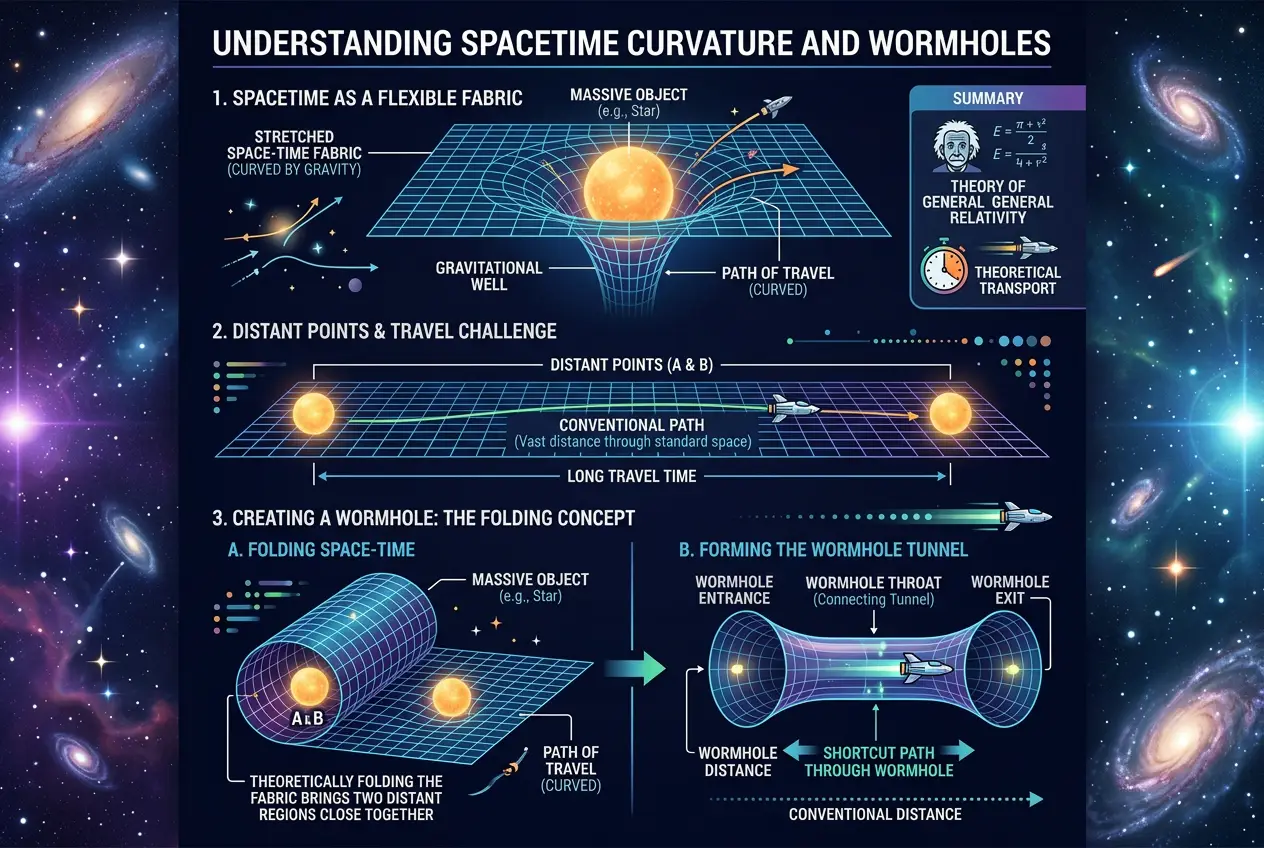
At its heart, a wormhole is a hypothetical "tunnel" through space-time that could connect two distant points, or even two different universes. Imagine our vast cosmos as a flat sheet of paper. To get from point A to point B, you'd have to travel across the surface. But what if you could fold that paper, bringing point A and point B together, and then punch a hole through both? That hole would be your wormhole – a shortcut that bypasses the immense distances of conventional space.
The scientific concept of a wormhole first emerged from Albert Einstein's theory of **General Relativity**. In 1935, Einstein and Nathan Rosen explored solutions to the equations of general relativity, discovering that they allowed for the theoretical existence of "bridges" through space-time. These theoretical structures became known as **Einstein-Rosen bridges**, or more popularly, wormholes. They essentially describe a distortion of space-time so extreme that it creates a kind of throat, linking two separate regions.
### Beyond Theory: Are Wormholes More Than Just Math?
While the mathematics of general relativity *permits* the existence of wormholes, that doesn't automatically mean they exist in reality. The universe, as we observe it, is a complex place, and many mathematical possibilities turn out to be physically improbable or impossible.
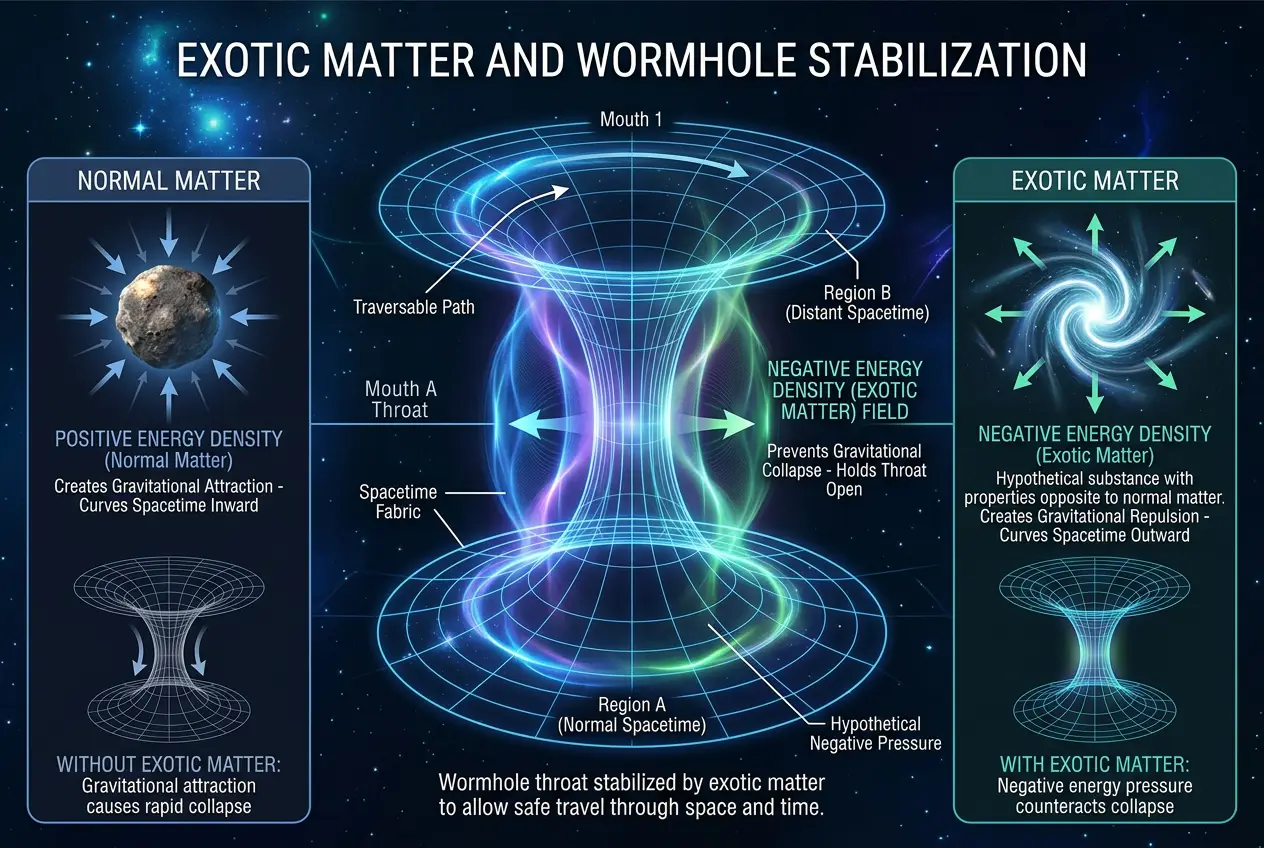
One of the biggest hurdles for traversable wormholes – the kind you could actually fly a spaceship through – is their inherent instability. According to general relativity, any wormhole formed naturally would likely collapse almost instantly, faster than even light could cross it. This means it wouldn't be stable enough for anything, let alone a spaceship, to pass through.
"Wormholes, if they exist at all, are likely to be extremely small and unstable," notes physicist Kip Thorne, a pioneer in wormhole research. "To keep a wormhole open and traversable, you need something truly extraordinary: **exotic matter**."
### The Exotic Matter Problem: A Cosmic Conundrum
So, what is this "exotic matter" that could stabilize a wormhole? It's not something you'd find in your everyday life, or even in the most extreme conditions known to modern physics. Exotic matter is a hypothetical substance with **negative energy density** and negative pressure. This is unlike any known matter, which always has positive energy density.
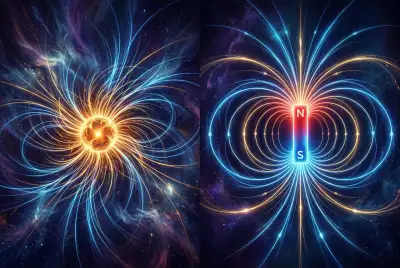
Imagine trying to push two magnets together, but instead of repelling, they attract. Now imagine matter that, instead of gravitating normally, would actually *repel* gravity. That's essentially what exotic matter would do: its negative energy density would counteract the gravitational pull that would otherwise cause a wormhole to collapse, holding its throat open long enough for passage.
The problem? We've never observed exotic matter. While some quantum effects, like the **Casimir effect**, suggest the possibility of localized negative energy densities, these effects are tiny and fleeting, nowhere near what would be required to stabilize a macroscopic wormhole. This is where the scientific community faces a significant roadblock, as I discussed in my exploration of the possibility of [Did Ancient Greeks Build a Cosmic Computer?](/blogs/did-ancient-greeks-build-a-cosmic-computer-9469) where ancient tech often faced similar material limitations.
### Connecting Universes: Fact or Fiction?
Now, to the most exciting part of the question: could wormholes link *universes*? The possibility depends on how you interpret "universe."
1. **Connecting Distant Regions Within Our Universe:** Most scientific discussions about wormholes focus on connecting two vastly separated points *within our own universe*. This is the primary motivation for considering them for interstellar or intergalactic travel. Instead of taking millions of years to reach a distant galaxy, a wormhole could theoretically make the journey instantaneous.
* One of the challenges is identifying potential "entrances" and "exits." Unlike the cosmic anomalies we discussed in [Galactic Anomaly: What Explains Tabby's Star?](/blogs/galactic-anomaly-what-explains-tabbys-star-5773), wormholes wouldn't just be strange stars; they'd be entirely new structures.
2. **Connecting Different Parallel Universes:** This is where things get even more speculative and truly enter the realm of science fiction, though with some theoretical backing. If you subscribe to **multiverse theories** – such as the many-worlds interpretation of quantum mechanics or the inflationary multiverse model – then it's conceivable that wormholes *could* provide a pathway between these separate cosmic realities.
* The idea is that a wormhole's two mouths might not open into different locations in our universe, but into entirely different space-time continua. This would mean passing through a wormhole could literally transport you to another universe with different physical laws, or a different version of events.
* However, the scientific evidence for parallel universes themselves is still highly debated and purely theoretical. Wormholes connecting them would be a secondary theoretical layer on top of an already unproven concept. It's an incredibly enticing thought, a grand cosmic adventure waiting to happen, but one that currently lacks any empirical basis.
The discussions around the potential for wormholes to connect parallel universes often intersect with the mind-bending concepts of quantum mechanics, similar to the intriguing nature of [Does Quantum Entanglement Connect Parallel Universes?](/blogs/does-quantum-entanglement-connect-parallel-universes-7602).
### Wormholes and Time Travel: A Tangled Web
An intriguing, and often problematic, consequence of traversable wormholes is their potential for **time travel**. If one end of a wormhole were to be accelerated to near the speed of light and then brought back, time dilation would occur. The accelerated end would have experienced less time than the stationary end. If you then entered the accelerated end, you could theoretically emerge from the stationary end at an earlier point in time.
This scenario immediately brings up the famous **grandfather paradox**: if you could travel back in time and prevent your grandfather from meeting your grandmother, you would cease to exist, thus never being able to travel back in time in the first place. Physicists are still grappling with how such paradoxes might be resolved, or if they simply mean that time travel via wormholes is fundamentally impossible due to some as-yet-unknown physical law.
### Detecting the Undetectable: Are We Missing Them?
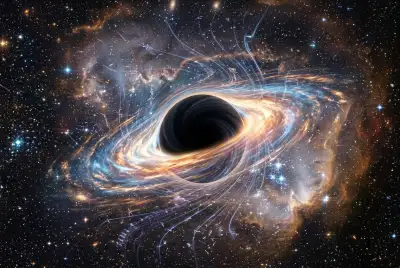
Given their theoretical nature and the requirements for exotic matter, detecting wormholes currently seems impossible. We can't see "negative energy," and even if a wormhole existed, its gravitational signature might be indistinguishable from that of a black hole unless it possessed properties far beyond our current understanding.
However, scientists continue to look for indirect evidence. Some theories suggest that if wormholes were to form naturally (perhaps during the Big Bang), they might leave subtle gravitational wave signatures, or peculiar light bending effects that differ from those caused by massive objects like black holes. These are frontier areas of research, pushing the boundaries of what we can conceive and measure.
### Conclusion: A Glimmer of Hope in a Cosmic Enigma
So, do wormholes link universes? The answer remains a resounding, and perhaps frustrating, "maybe." The mathematics allows for it, offering a tantalizing glimpse into a universe far stranger and more interconnected than we currently comprehend. However, the practical challenges – particularly the need for exotic matter and the inherent instability of these cosmic tunnels – are immense.
Wormholes remain one of the most exciting and speculative areas of theoretical physics. While we might not be zipping through them to visit alternate realities anytime soon, the pursuit of understanding them pushes the boundaries of our knowledge about space-time, gravity, and the very nature of existence. It's a reminder that the universe still holds countless secrets, waiting for our curiosity to unlock them. Perhaps one day, the fantastical portals of our imagination will become the superhighways of the cosmos.
Verified Expert
Alex Rivers
A professional researcher since age twelve, I delve into mysteries and ignite curiosity by presenting an array of compelling possibilities. I will heighten your curiosity, but by the end, you will possess profound knowledge.
Leave a Reply
Comments (0)
No approved comments yet. Be the first to share your thoughts!
 Join Us

 Unknown Author







Leave a Reply
Comments (0)