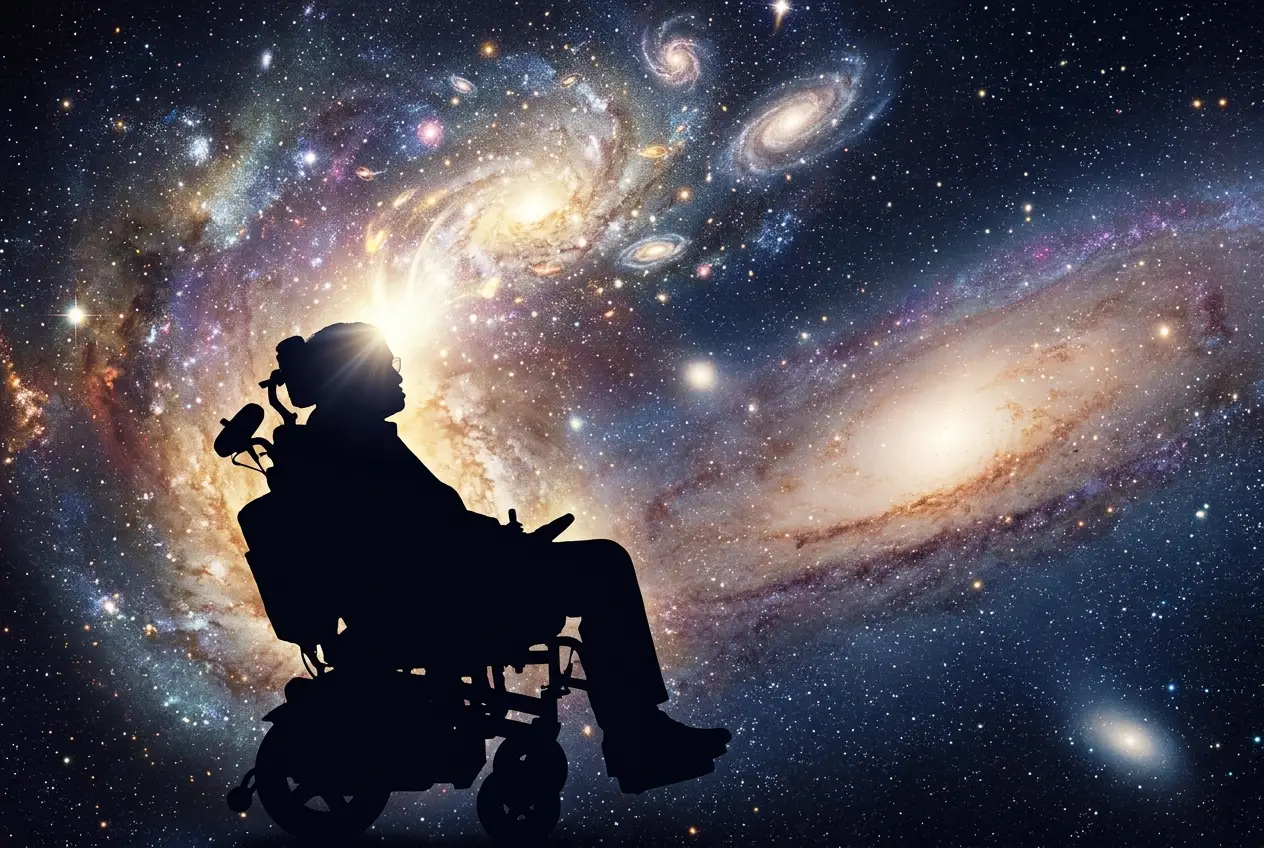
I remember a profound silence falling over the world when news broke of Stephen Hawking’s passing. It wasn't just the death of a brilliant physicist; it felt like the universe itself had lost one of its most eloquent translators. For decades, despite a body ravaged by illness, his mind soared beyond the confines of Earth, grappling with the most profound mysteries of existence: the birth of the universe, the nature of black holes, and the very fabric of time and space. His life was an extraordinary testament to human resilience, intellectual curiosity, and an unwavering pursuit of knowledge. This is going to be a very long blog, delving deeply into the complete life story of a man who redefined our understanding of the cosmos, challenged conventional wisdom, and inspired millions.
## The Genesis of a Genius: Early Life and Education
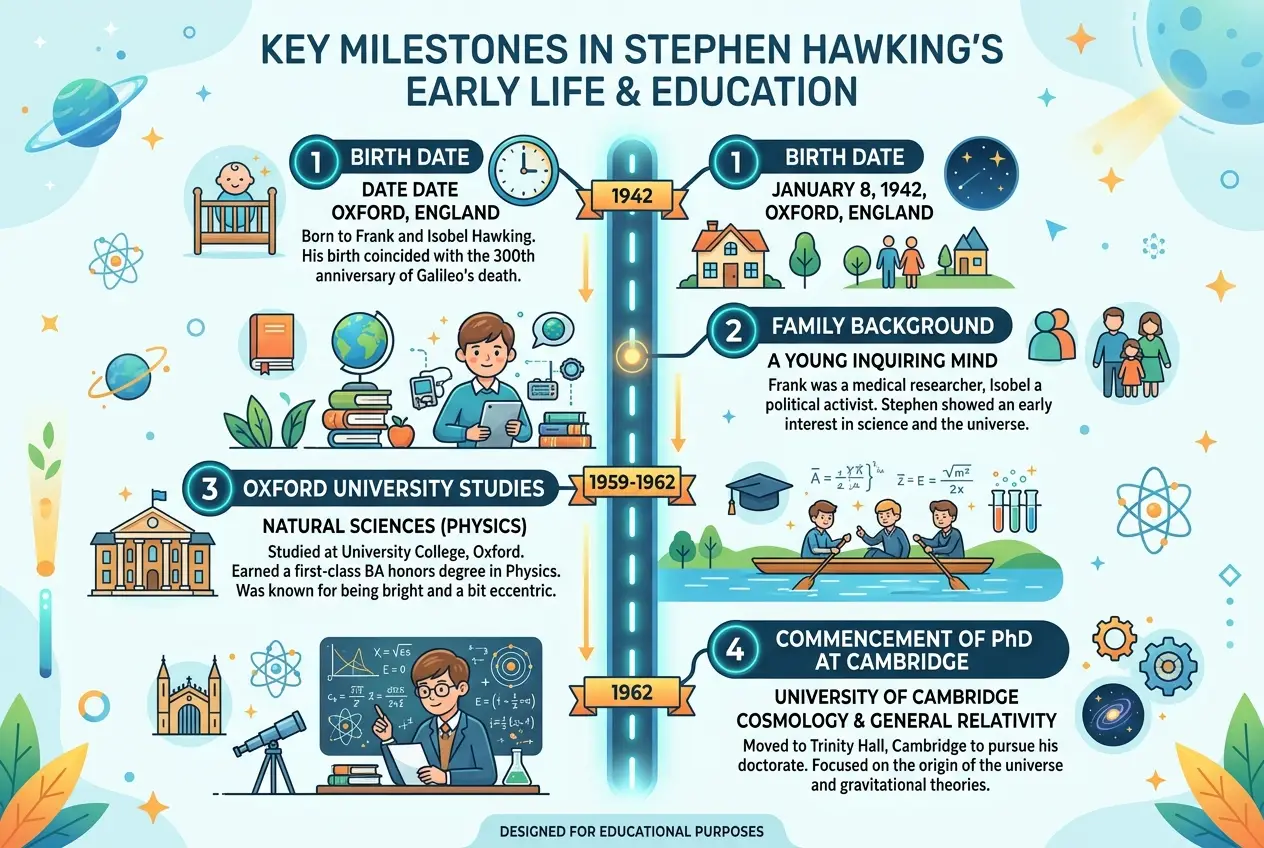
Stephen William Hawking was born on January 8, 1942, in Oxford, England, exactly 300 years after Galileo Galilei's death. This intriguing coincidence often felt symbolic, as if fate had earmarked him for a legacy in astronomy and physics. His parents, Frank and Isobel Hawking, were intellectual and somewhat eccentric. Frank was a research biologist, and Isobel held degrees in Philosophy, Politics, and Economics. Their home was a haven for intellectual discussion, albeit one filled with old, somewhat decrepit furniture and a penchant for second-hand cars.
Growing up, Stephen was not an immediate academic prodigy in the traditional sense. At St Albans School, while certainly bright, he wasn't top of his class. His strengths lay in mathematics and physics, but his handwriting was notoriously illegible, and his early school performance was, by his own admission, "lazy." However, his friends recognized his innate intelligence, forming a group where they discussed science and built models. He was known for his curiosity, often taking things apart to understand how they worked, even if he wasn't always successful in putting them back together.
At 17, Hawking entered University College, Oxford, to study Natural Sciences. He initially wanted to specialize in mathematics, but since mathematics wasn't available at Oxford at the time, he pursued physics. His time at Oxford was marked by a somewhat unconventional approach to study. He later recalled putting in very little effort, estimating he worked only an average of one hour a day. Despite this, his sharp intellect allowed him to grasp complex concepts quickly. He was a popular figure, though, active in the boat club as a coxswain, a role that perhaps satisfied his need for competitive engagement and allowed him to direct others.
After three years at Oxford, Hawking graduated with a first-class BA (Hons) degree in Natural Sciences. His next ambition was to pursue postgraduate studies, specifically in cosmology. He initially hoped to study under Fred Hoyle, a prominent astrophysicist at Cambridge, but instead found himself under the supervision of Dennis Sciama, another distinguished cosmologist, at Trinity Hall, Cambridge, in 1962. It was at Cambridge that his life would take an unforeseen and tragic turn, even as his academic career began to soar.
## The Shadow of Illness: Diagnosis and Early Struggles
The early years at Cambridge were a mix of excitement and unease. Hawking found the initial math for general relativity challenging and somewhat disconnected from the cosmological questions that truly fascinated him. However, the burgeoning field of cosmology was rapidly gaining momentum, with new discoveries and theories about the Big Bang. This intellectual environment was ripe for a brilliant mind like Hawking's.
It was during his final year at Oxford, and increasingly noticeable in his first year at Cambridge, that Stephen began experiencing health issues. He stumbled frequently, had difficulty tying his shoelaces, and his speech became slurred. Initially, doctors attributed it to clumsiness or even alcohol consumption. However, in 1963, shortly after his 21st birthday, he received a devastating diagnosis: Amyotrophic Lateral Sclerosis (ALS), also known as motor neuron disease.
ALS is a progressive neurodegenerative disease that affects nerve cells in the brain and spinal cord, leading to loss of muscle control. The prognosis was dire: doctors gave him only two to three years to live. This news plunged Hawking into a deep depression. He felt his future had been snatched away, and he questioned the point of continuing his PhD research if he had so little time left. His initial reaction was to withdraw, to stop working, and even to consider giving up on life itself.
However, two pivotal factors helped him overcome this despair. First, he met Jane Wilde, a language student, at a New Year's party shortly before his diagnosis. Their relationship blossomed, and their engagement in 1964 provided him with a profound reason to live and work. He realized he needed to complete his PhD to secure employment and provide for a family. "If we were to get married, I had to get a job, and to get a job, I had to finish my Ph.D.," he later reflected.
Second, he found renewed purpose in his studies. Witnessing a friend die of leukemia made him realize that he was still alive and capable of intellectual work. He began to apply himself with extraordinary vigor to his doctoral thesis, "Properties of Expanding Universes." His illness, paradoxically, sharpened his focus. As his body deteriorated, his mind became his sanctuary and his most powerful tool. The limited time he was told he had pushed him to make every moment of intellectual inquiry count. He realized that the greatest barrier was not his physical condition, but the limitations he placed on his own spirit and intellect. The insights gained from this period were not just academic; they were profoundly personal, shaping his philosophy on life and perseverance.
## Relativistic Insights: Black Holes and Singularities
Stephen Hawking's early research at Cambridge focused on singularities – points in space-time where the laws of physics as we know them break down, such as those found at the center of black holes and at the Big Bang. Collaborating with Roger Penrose, a brilliant mathematician, Hawking extended Penrose's singularity theorems. Penrose had shown that if general relativity is correct, and if a star collapses beyond a certain point, a singularity must form. Hawking, along with Penrose, demonstrated that if the universe is expanding as observed, then it must have originated from a singularity – the Big Bang.
Their joint work, published in 1970, established that the universe began as an extremely hot, dense point, a singularity, and expanded from there. This provided crucial mathematical backing for the Big Bang theory, moving it from a speculative idea to a cornerstone of modern cosmology. This was a monumental achievement for Hawking, still in his late twenties and battling increasing physical limitations.
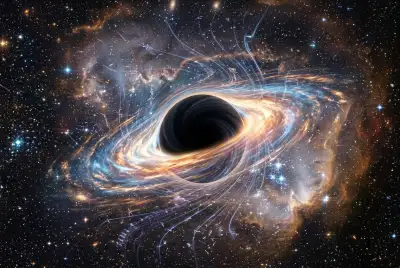
His focus then shifted to black holes, regions of spacetime where gravity is so strong that nothing—no particles or even electromagnetic radiation such as light—can escape from it. Initially, black holes were thought to be perfect cosmic traps, absorbing everything that crossed their event horizon. However, Hawking began to combine the seemingly disparate fields of general relativity and quantum mechanics. This was a bold and revolutionary step, as these two pillars of modern physics had largely been considered incompatible.
In 1974, Hawking made his most groundbreaking discovery: **black holes are not entirely black.** He theorized that, due to quantum effects near the event horizon, black holes emit radiation, now famously known as **Hawking Radiation**. This radiation means that black holes slowly lose mass and energy over time and will eventually evaporate. This was a stunning revelation, as it contradicted the classical understanding of black holes and implied that information could, in principle, escape from them, albeit in a highly scrambled form.
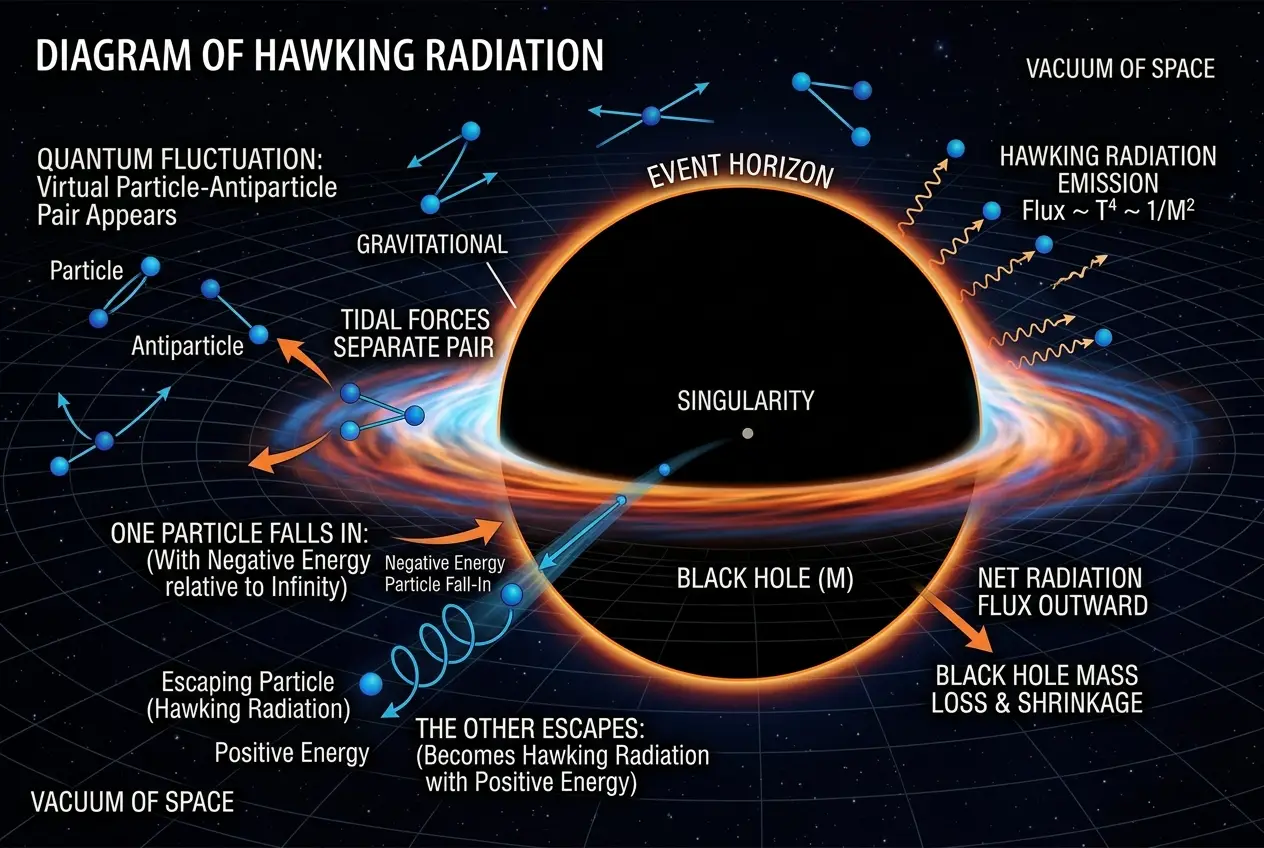
The concept of Hawking Radiation was revolutionary because it bridged the gap between general relativity, which describes gravity on a large scale, and quantum mechanics, which describes the behavior of matter at the atomic and subatomic level. It presented a deep paradox, the "information paradox," which became a central challenge in theoretical physics for decades. If a black hole evaporates, what happens to the information about the particles that fell into it? Is it truly lost, violating a fundamental principle of quantum mechanics, or is it preserved in some subtle way within the Hawking radiation? This question continues to be a subject of active research and debate among physicists today, demonstrating the profound impact of Hawking's work. You can explore more about black holes and their enigmatic nature in our blog, [Black Holes: Are They Nature's Ultimate Quantum Computers?](/blogs/black-holes-are-they-natures-ultimate-quantum-computers-5819).
## The Lucasian Chair: A Legacy of Brilliance
In 1979, Stephen Hawking was appointed to the Lucasian Professorship of Mathematics at the University of Cambridge, a position once held by Isaac Newton. This was an extraordinary honor, especially considering his deteriorating health. He held this prestigious chair for 30 years, until 2009, making significant contributions to theoretical physics and popularizing science.
The Lucasian Chair came with certain responsibilities, including delivering public lectures. Despite his increasing difficulty in speaking, Hawking continued to lecture and write, driven by his passion to communicate scientific ideas to a broad audience. His appointment solidified his status as one of the world's foremost scientific minds, a position he leveraged to advocate for science and address existential questions facing humanity.
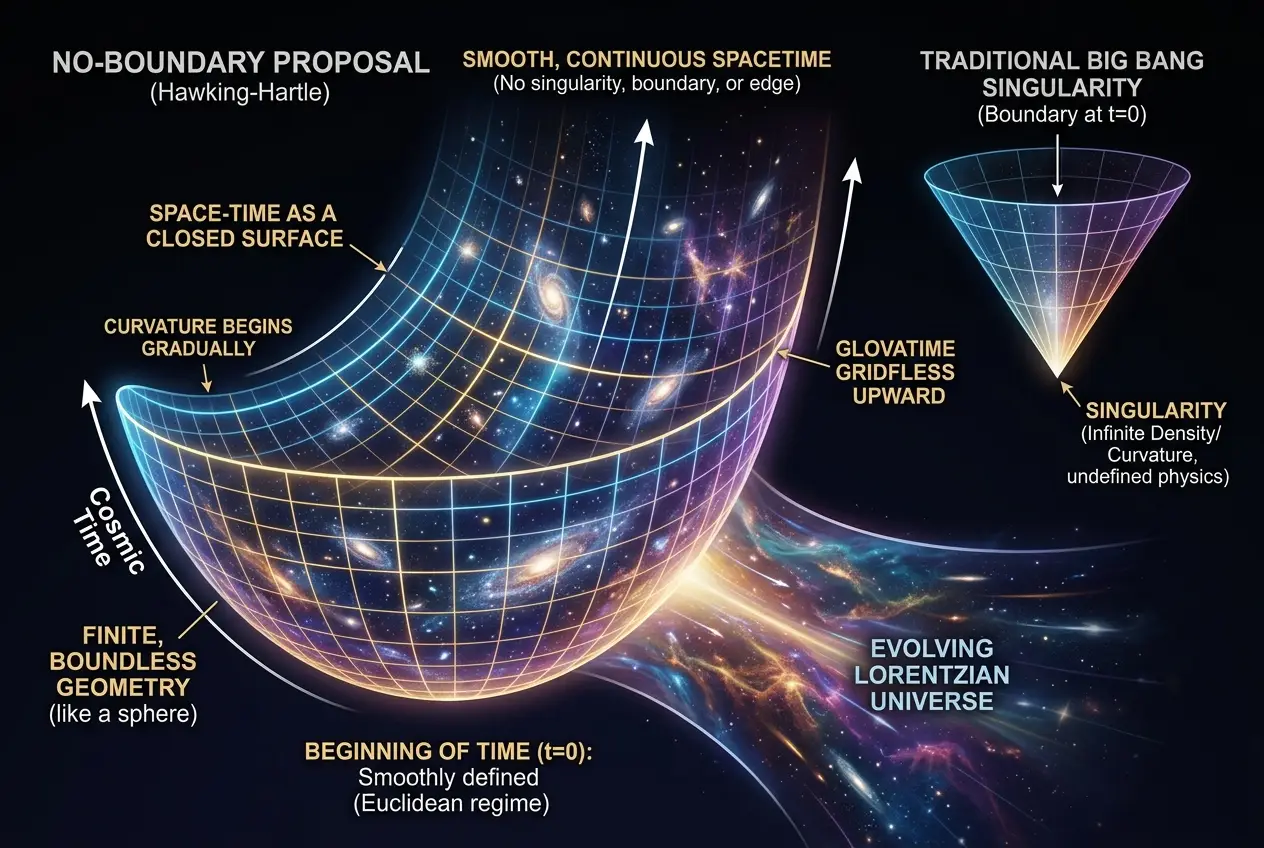
His work continued to push boundaries. He delved deeper into the nature of the Big Bang, proposing models of the universe without boundaries, suggesting that the universe might not have a beginning or end in the traditional sense. These ideas were part of his broader quest for a "theory of everything" that would unify general relativity and quantum mechanics.
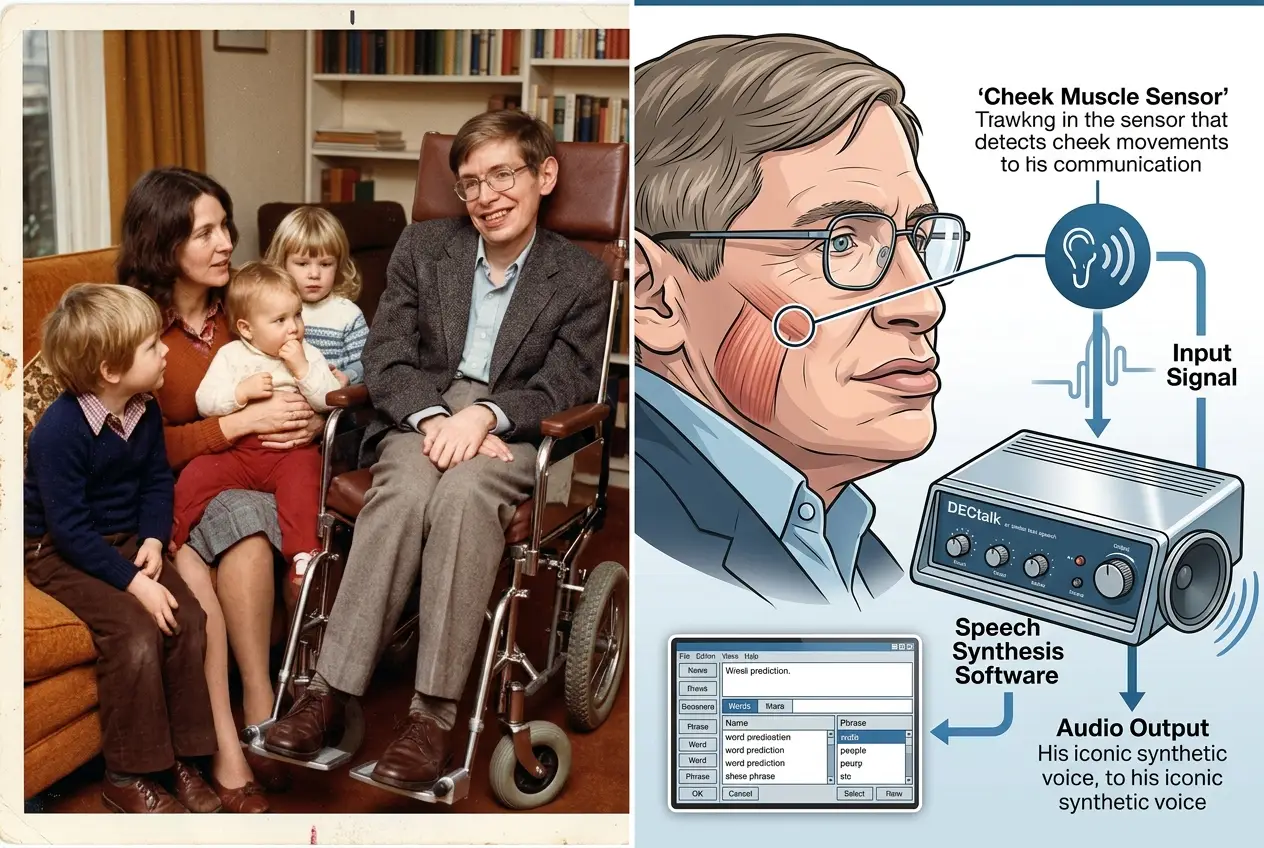
As his physical condition worsened, his methods of communication became more sophisticated. By the mid-1980s, a tracheotomy procedure following a bout of pneumonia meant he lost the ability to speak entirely. He began using a speech synthesizer, operated first by a hand-held clicker, then by a single cheek muscle, which allowed him to select words from a computer screen. This distinctive synthesized voice became his trademark, instantly recognizable globally.
| Year | Key Event in Hawking's Career | Scientific Contribution Highlight |
| :--- | :----------------------------- | :-------------------------------- |
| 1963 | ALS Diagnosis | Renewed focus on PhD research |
| 1966 | PhD awarded | Properties of Expanding Universes |
| 1970 | Penrose-Hawking Singularity Theorems | Mathematical proof for Big Bang and black hole singularities |
| 1974 | Discovers Hawking Radiation | Unites relativity and quantum mechanics for black holes |
| 1979 | Appointed Lucasian Professor | Assumes prestigious chair at Cambridge (held by Newton) |
| 1988 | Publishes "A Brief History of Time" | Popularizes cosmology to millions |
| 2004 | Reconsiders Information Paradox | Suggests information might escape black holes |
| 2009 | Retires from Lucasian Chair | Continues research and public engagement |
| 2018 | Passes Away | Legacy of scientific discovery and inspiration |
## A Brief History of Time: Bringing Science to the Masses
In 1988, Stephen Hawking published "A Brief History of Time: From the Big Bang to Black Holes." This book was an unprecedented phenomenon. It aimed to explain complex cosmological concepts – such as the Big Bang, black holes, wormholes, and the arrow of time – to a lay audience, avoiding mathematical equations as much as possible (famously, with only one equation: E=mc²).
The book became an international bestseller, selling over 10 million copies and translated into numerous languages. Its success transformed Hawking into a global scientific celebrity, making him a household name. He appeared in popular culture, from *The Simpsons* to *Star Trek: The Next Generation*, using his platform to make science accessible and exciting.
I believe "A Brief History of Time" didn't just disseminate knowledge; it ignited a spark of curiosity in millions of people who might never have considered picking up a science book. It demonstrated that profound scientific questions are not just for specialists but are part of the shared human experience, resonating with our innate desire to understand our place in the cosmos. His ability to distill intricate theories into engaging prose, despite his communication challenges, was a testament to his sheer determination and genius. The book made us all feel a little bit closer to the universe's grand narrative. You can read more about mind-bending cosmic concepts like the [cosmic web](/blogs/can-the-cosmic-web-compute-our-universes-fate-1603) and more in our other intriguing posts.
## The Quest for a Theory of Everything
Throughout his career, Stephen Hawking was deeply invested in the quest for a "theory of everything," a unified theory that would reconcile general relativity with quantum mechanics. He believed that such a theory was essential to fully understand the universe, from its origin to its ultimate fate. His work on Hawking radiation was a crucial step in this direction, showing how quantum effects could influence gravitational phenomena.
He proposed the "no-boundary proposal" for the universe, developed with James Hartle. This theory suggested that the universe has no initial boundary condition, meaning it didn't begin from a singularity in the traditional sense, but rather smoothly transitioned from a state with no definable beginning. It's a bit like imagining the surface of a sphere, which has no edge or starting point. This idea aimed to remove the need for specific initial conditions to explain the universe's existence, making the Big Bang a less singular, more intrinsic event.
Hawking was also a prominent voice in discussions about the **information paradox** of black holes. While his initial work suggested information might be lost, he later revised his position, proposing mechanisms by which information could be preserved, possibly encoded on the boundary of the black hole or in a new form in the Hawking radiation. This demonstrated his intellectual humility and willingness to re-evaluate his own theories in the face of new insights and arguments from other physicists. His pursuit of understanding was paramount, even if it meant challenging his own established ideas. This dynamic process of scientific inquiry is central to how we push the boundaries of knowledge, whether exploring the mysteries of [quantum computers](/blogs/can-quantum-computers-break-every-encryption-1438) or the possibility of [parallel universes colliding](/blogs/are-parallel-universes-colliding-decoding-cosmic-echoes-1709).
## Beyond Science: Philosophy, Humanity, and the Future
Hawking's contributions extended far beyond theoretical physics. He was a profound thinker about the nature of humanity, our place in the cosmos, and the ethical implications of scientific advancements. He often contemplated the future of humanity, expressing both optimism and caution.
He frequently warned about the potential dangers of artificial intelligence, advocating for careful development and regulation to ensure AI remains beneficial to humanity. He also stressed the importance of continued space exploration, believing that humanity must become a multi-planetary species to ensure its long-term survival in the face of threats like climate change, nuclear war, or asteroid impacts. His message was clear: **"Look up at the stars and not down at your feet. Try to make sense of what you see, and wonder about what makes the universe exist. Be curious."**
Despite his severe physical limitations, Hawking never lost his sense of humor or his deep connection to the human experience. He used his platform to inspire countless individuals, showing that disability does not equate to inability. He became a symbol of the triumph of the human spirit over adversity, demonstrating that intellectual freedom can thrive even when physical freedom is severely restricted.
His life and work raised philosophical questions about the existence of God, free will, and the ultimate meaning of life. While he was an atheist, his contemplation of these profound questions encouraged others to engage with them, using scientific understanding as a powerful tool for philosophical inquiry. He believed in the power of reason and the beauty of the laws governing the universe.
## Personal Life and Relationships
Stephen Hawking's personal life was as complex and fascinating as his scientific theories. His first marriage to Jane Wilde was a defining period, providing him with stability, care, and motivation during the initial, most challenging years of his illness. Together, they had three children: Robert, Lucy, and Timothy. Jane's memoir, "Travelling to Infinity: My Life with Stephen," offered a poignant glimpse into the extraordinary demands and emotional complexities of their life together. It revealed the immense sacrifices Jane made to support his career and well-being, especially as his condition progressed, requiring round-the-clock care. Their story became the subject of the highly acclaimed film "The Theory of Everything."
However, the strains of his increasing disability, his growing fame, and the constant presence of caregivers eventually took their toll on their marriage. In 1990, Stephen left Jane and, in 1995, married Elaine Mason, one of his former nurses. This second marriage was tumultuous and controversial, marked by allegations of abuse that Hawking always denied. They divorced in 2006.
Despite the personal challenges, Hawking maintained relationships with his children, particularly his daughter Lucy, who became an author and collaborated with him on children's books that explored scientific concepts. These books, such as "George's Secret Key to the Universe," aimed to introduce complex ideas to young minds, continuing his mission of popularizing science.
His relationships, both personal and professional, were a testament to his complex character—a brilliant, driven individual whose genius was matched by his immense need for human connection and support, even amidst profound personal and physical isolation. The enduring image of him, communicating through his speech synthesizer, speaking to millions, underscored a life lived fully, defying every expectation.
## The Final Years and Lasting Impact
In his later years, Stephen Hawking continued to defy expectations, both medically and intellectually. He continued his research, wrote books, gave lectures, and traveled the world, becoming a powerful advocate for science and disability rights. His global presence was undeniable, a figure of immense inspiration.
One of his later significant works involved revisiting the black hole information paradox. In 2004, he made a public announcement that he had seemingly resolved the paradox, suggesting that information is not lost but rather emerges from the black hole in a "garbled" form, implying that information might be encoded on the event horizon itself. This sparked renewed debate and further research in the field, once again showcasing his immense influence on theoretical physics.
He also explored the concept of "time crystals," a fascinating state of matter that breaks time-translation symmetry, which you can learn more about in our blog [Do Time Crystals Break Physics? The Strange State of Matter](/blogs/do-time-crystals-break-physics-the-strange-state-of-matter-1285). While not directly his primary field, his general interest in quantum mechanics and the fundamental nature of time was ever-present.
Stephen Hawking passed away on March 14, 2018, at the age of 76. His death marked the end of an era, but his legacy lives on. His scientific contributions have fundamentally reshaped our understanding of cosmology and quantum gravity. His books continue to inspire new generations of scientists and curious minds. More profoundly, his life itself became a powerful narrative of human potential—a reminder that the greatest adventures often unfold not in physical voyages, but in the boundless expanses of the mind.
I find it particularly poignant that he spent his life unraveling the mysteries of the universe's beginning and end, while simultaneously battling the relentless progression of a disease that threatened to prematurely end his own personal journey. Yet, he persevered, proving that curiosity, resilience, and the relentless pursuit of knowledge are among humanity's most extraordinary traits. Stephen Hawking was not just a scientist; he was a phenomenon, a beacon of intellect and an enduring symbol of what the human spirit can achieve against unimaginable odds. His journey reminds us that even when faced with the most formidable challenges, the human mind can still reach for the stars and touch the very edge of creation.
### References (Wikipedia):
* [Amyotrophic Lateral Sclerosis](https://en.wikipedia.org/wiki/Amyotrophic_lateral_sclerosis)
* [General Relativity](https://en.wikipedia.org/wiki/General_relativity)
* [Hawking Radiation](https://en.wikipedia.org/wiki/Hawking_radiation)
* [A Brief History of Time](https://en.wikipedia.org/wiki/A_Brief_History_of_Time)
* [University of Cambridge](https://en.wikipedia.org/wiki/University_of_Cambridge)
Verified Expert
Alex Rivers
A professional researcher since age twelve, I delve into mysteries and ignite curiosity by presenting an array of compelling possibilities. I will heighten your curiosity, but by the end, you will possess profound knowledge.
Leave a Reply
Comments (0)
No approved comments yet. Be the first to share your thoughts!
 Join Us

 Unknown Author

























Leave a Reply
Comments (0)