I've always been fascinated by the quiet resilience of nature, particularly the plants that grace our planet. We tend to view them as static, passive beings, rooted to one spot, simply converting sunlight into sugar. But what if this perception is fundamentally flawed? What if, beneath their serene green exterior, plants are engaging in complex computations, making decisions, and even remembering experiences in a way that challenges our very definition of intelligence?
Recently, a wave of groundbreaking research has made me rethink everything I thought I knew about botanical life. Scientists are uncovering evidence that plants exhibit behaviors strikingly similar to cognition, prompting a provocative question: **Can plants truly think?** This isn't just about reflex responses or simple tropisms; it's about complex information processing, learning, and adaptive behavior that might just redefine what it means to be "smart."
### The Radical Idea of Plant Intelligence
For centuries, our understanding of intelligence has been inextricably linked to brains and nervous systems. Animals, with their intricate neural networks, have been the sole proprietors of this cognitive club. Plants, lacking these familiar structures, were largely dismissed as complex machines, albeit incredibly efficient ones. However, as I've delved deeper into this fascinating field, I've come to realize that this anthropocentric view might be limiting our scientific imagination.
Consider this: plants are masters of survival in incredibly harsh and dynamic environments. They can't run from predators, they can't seek shelter when the weather turns foul, and they can't forage for food in distant lands. Instead, they must exquisitely sense their surroundings and make adaptive "decisions" to thrive. This constant interaction with their environment, requiring sophisticated information processing, has led some researchers to propose the concept of **plant neurobiology**.
This field, though controversial, posits that plants possess complex communication and signaling networks that function in analogous ways to animal nervous systems. While they don't have neurons as we understand them, they utilize electrical signals, hormones, and chemical messengers to transmit information throughout their bodies. Think of it as a decentralized, distributed intelligence, where every cell contributes to the overall "thinking" process.
### Sensing the World: More Than Just Roots and Leaves
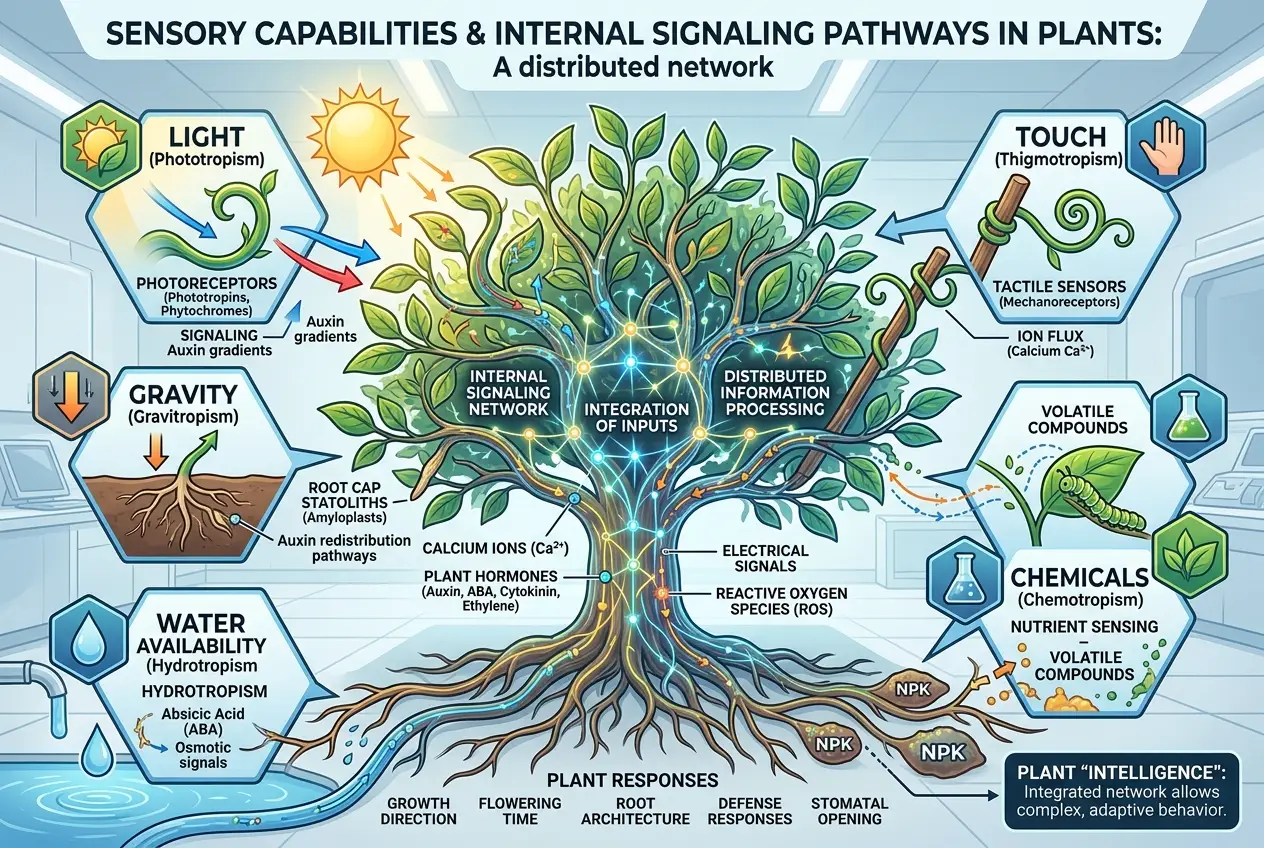
One of the most compelling arguments for plant intelligence comes from their incredible sensory capabilities. I've always been amazed by how plants navigate their world, but the extent of their perception is truly mind-boggling.
* **Light:** Beyond simple photosynthesis, plants detect various wavelengths of light, distinguish between different light qualities (e.g., direct sunlight vs. shade), and even "remember" past light conditions to optimize growth and flowering.
* **Touch:** Some plants, like the famous Mimosa pudica, rapidly fold their leaves in response to touch, a defense mechanism. But beyond dramatic movements, plants can sense gentle brushes of wind, the presence of climbing supports, and even the touch of neighboring plants.
* **Gravity:** Roots grow downwards and shoots upwards, a fundamental response to gravity. But the mechanisms involved are intricate, requiring continuous recalibration based on environmental cues.
* **Chemicals:** Plants are expert chemists, both producing and sensing a vast array of chemical compounds. They can detect nutrients in the soil, identify pathogens, communicate with beneficial microbes, and even "smell" airborne signals released by stressed neighbors. As documented on [Wikipedia's article on Plant perception](https://en.wikipedia.org/wiki/Plant_perception), this sensory richness is far more complex than previously imagined.
These sensory inputs aren't just passively received; they are integrated and processed to drive behavioral changes. It's not unlike how our own senses feed information to our brains, allowing us to interpret and react to the world.
### Learning and Memory: Do Plants Remember?
The idea that plants can learn and remember is perhaps the most radical aspect of plant intelligence. Learning is generally defined as an adaptive change in behavior based on experience. Memory involves retaining that information. Emerging research suggests plants do both.
Take the example of habituation, a simple form of learning where an organism learns to ignore a harmless, repetitive stimulus. In experiments with *Mimosa pudica*, researchers repeatedly dropped the plants from a small height. Initially, the leaves folded dramatically. After several drops, the plants stopped folding, indicating they had learned that the stimulus was not a threat. Remarkably, they retained this "memory" for several days, even weeks, despite being brainless. This phenomenon is discussed in detail in scholarly articles, with a good overview on [Wikipedia's page for Plant communication](https://en.wikipedia.org/wiki/Plant_communication), showcasing how intricate these processes can be.
Another fascinating area is associative learning. While not as robustly demonstrated as habituation, some studies suggest plants might be able to associate a neutral stimulus with an environmental cue. For instance, a plant might learn to anticipate the arrival of light based on a specific sound or vibration, optimizing its photosynthetic machinery in advance.
These findings suggest that plants aren't just reacting to the present moment; they are drawing on past experiences to inform future actions, a hallmark of intelligent behavior.
### Communication: The "Wood Wide Web" and Beyond
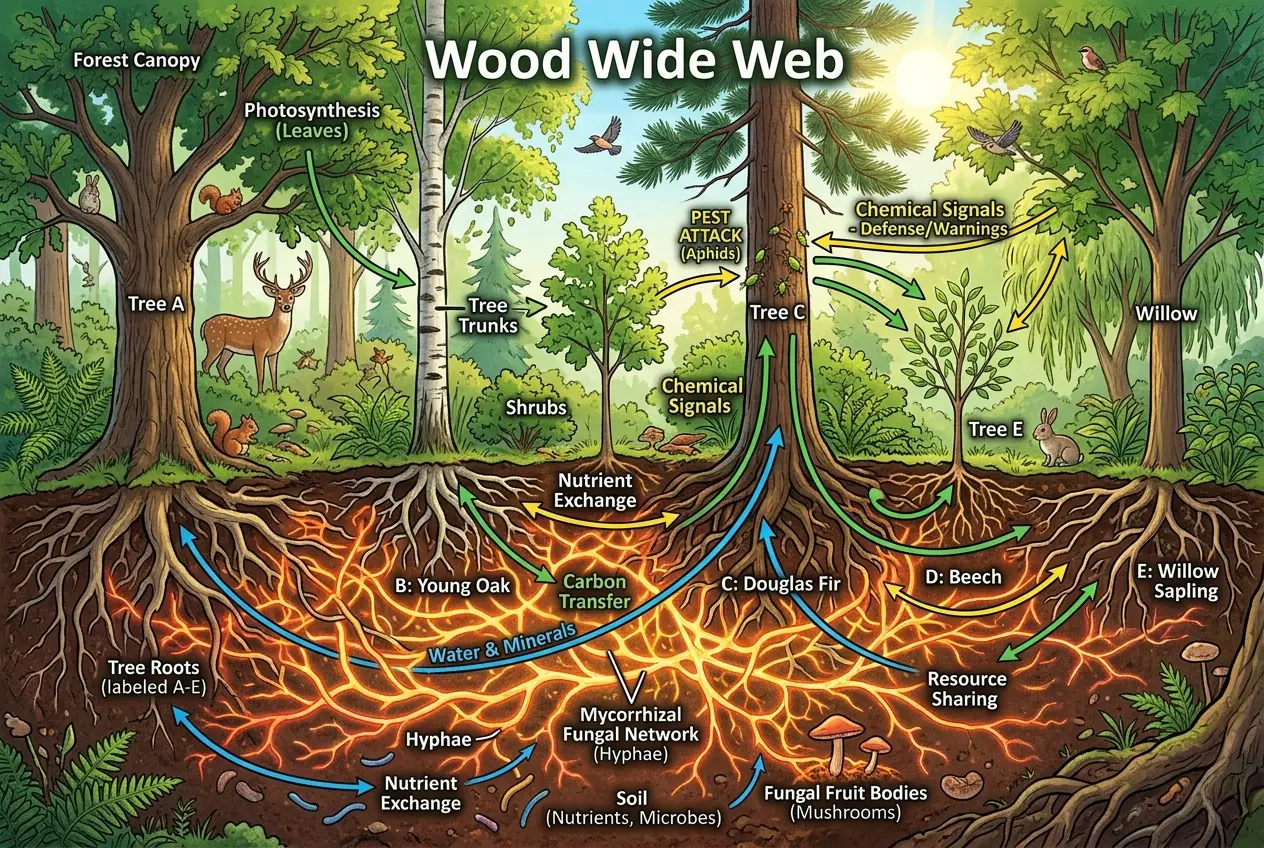
If plants can sense and learn, how do they share information? The answer lies in intricate communication networks, both above and below ground. I find the concept of the "Wood Wide Web" particularly captivating. Beneath our feet, a hidden fungal network connects the roots of trees and other plants, allowing them to exchange nutrients, water, and even warning signals.
* **Mycorrhizal Networks:** These symbiotic relationships between fungi and plant roots form vast underground highways. Trees can use these networks to share resources with their offspring or with struggling neighbors. When one tree is attacked by pests, it can send chemical distress signals through the fungal network, alerting other trees to ramp up their defenses. This amazing phenomenon is described on [Wikipedia's Mycorrhiza page](https://en.wikipedia.org/wiki/Mycorrhiza).
* **Volatile Organic Compounds (VOCs):** Above ground, plants release VOCs into the air, acting as airborne messages. These chemical signals can warn nearby plants of herbivore attacks, attract pollinators, or even deter pests. It's a complex aerial dialogue, invisible to our eyes, but vital to plant survival.
These communication systems demonstrate a level of cooperation and information sharing that challenges the notion of plants as solitary, competitive entities. It suggests a collective intelligence, where individual plants contribute to the well-being of the broader plant community. Our blog on [can-trees-talk-decoding-earths-hidden-network-4031](/blogs/can-trees-talk-decoding-earths-hidden-network-4031) explores this topic in more detail.
### Practical Implications and Bio-Inspired Innovation
Understanding plant intelligence isn't just an academic exercise; it has profound implications for how we interact with the natural world and how we design future technologies.
If plants are intelligent, it compels us to re-evaluate our agricultural practices, potentially moving towards more respectful and sustainable farming methods. Imagine farming that "listens" to the plants, responding to their needs and signals for optimal growth and health.
Moreover, the decentralized, robust, and energy-efficient nature of plant information processing offers incredible inspiration for engineering. Researchers are already looking to plant structures and communication networks to design:
* **Self-repairing materials:** Inspired by how plants heal wounds.
* **Adaptive robotics:** Mimicking how roots navigate obstacles.
* **Smarter sensors:** Learning from plants' environmental detection abilities.
The future of technology might just be rooted in the silent wisdom of plants. Our exploration into [can-plants-grow-our-next-microchips-8067](/blogs/can-plants-grow-our-next-microchips-8067) further delves into this bio-inspired technological leap.
### The Debate Continues: Defining Intelligence
It's important to acknowledge that the concept of "plant intelligence" remains a subject of intense scientific debate. Critics argue that attributing terms like "thinking," "learning," and "memory" to plants anthropomorphizes their behavior and risks undermining rigorous scientific inquiry. They contend that complex adaptive responses can be explained through biochemical pathways and genetic programming without invoking "intelligence."
However, I believe the heart of the debate lies in our definition of intelligence itself. If we broaden our understanding beyond brain-centric models, we might find that intelligence manifests in myriad forms across the tree of life. Perhaps the very elegance of plant adaptations—their ability to solve complex problems without a central nervous system—offers a new paradigm for understanding cognition.
As Stefano Mancuso, a leading proponent of plant neurobiology, eloquently puts it:
> "Plants show that it is possible to be intelligent in a different way, without a brain and without locomotion. They are a kind of intelligence that we are only beginning to understand."
This journey into the cognitive world of plants forces us to confront our biases and embrace the possibility of diverse forms of intelligence. It opens up a universe of wonder, revealing that even the simplest sprout might be a silent, profound thinker, constantly engaging with, and adapting to, its world. This re-evaluation could significantly impact fields from [can-plants-power-our-future-unearthing-bioelectricity-5187](/blogs/can-plants-power-our-future-unearthing-bioelectricity-5187) to bio-mimicry.
### Conclusion
The question "Can plants think?" moves beyond mere semantics. It challenges us to expand our understanding of life, intelligence, and the incredible sophistication hidden within the natural world. As research progresses, I anticipate we'll continue to uncover even more astonishing capabilities of plants, pushing the boundaries of what we consider cognitive. Perhaps, by listening more closely to nature's silent minds, we might just discover new pathways to understanding ourselves and the complex web of life that connects us all.
Frequently Asked Questions
Plants communicate using various methods, including electrical signals, chemical messengers (like hormones and volatile organic compounds released into the air), and vast underground mycorrhizal networks formed by fungi that connect roots and allow for the exchange of nutrients and warning signals.
Plant neurobiology is a controversial but emerging field that suggests plants possess complex communication and signaling networks throughout their bodies that function in analogous ways to animal nervous systems, allowing for distributed information processing, decision-making, and adaptive behavior.
While not in the same way animals do, research shows plants exhibit simple forms of learning, such as habituation (learning to ignore harmless repetitive stimuli). Some studies also suggest they retain this information, demonstrating a basic form of memory, impacting future actions.
The study of plant intelligence inspires bio-mimicry, leading to the development of self-repairing materials, adaptive robotics, and advanced sensors that can better detect environmental changes, leveraging plants' efficient, decentralized information processing systems.
Plants have an impressive range of sensory abilities, allowing them to detect and respond to light quality and direction, touch, gravity, water availability, nutrient levels, and even the presence of pathogens or other plants through chemical cues.
The debate largely stems from the lack of a centralized nervous system or brain in plants, which traditionally defines intelligence. Critics argue that attributing cognitive terms to plants anthropomorphizes their behavior, while proponents advocate for a broader, more inclusive definition of intelligence that encompasses distributed, adaptive information processing.
Verified Expert
Alex Rivers
A professional researcher since age twelve, I delve into mysteries and ignite curiosity by presenting an array of compelling possibilities. I will heighten your curiosity, but by the end, you will possess profound knowledge.
Leave a Reply
Comments (0)
No approved comments yet. Be the first to share your thoughts!
 Join Us



 Unknown Author




































Leave a Reply
Comments (0)