The whispers of history often echo with tales that defy our modern understanding. I’ve always found myself drawn to these enigmatic stories, especially when they intersect with science and technology. Recently, I was watching a documentary about ancient civilizations, and a particular segment sparked my curiosity like never before: the idea that the ancient pyramids, those colossal monuments of stone, might have once functioned as sophisticated energy generators. It sounds like something out straight out of science fiction, doesn’t it? Yet, the more I delved into the theories, the more I realized that this wasn't just idle speculation but a fascinating convergence of archaeology, physics, and historical mystery.
I remember thinking about how we perceive ancient builders. We often relegate them to simple, albeit ingenious, laborers with primitive tools. But what if their knowledge extended far beyond our current textbooks? What if they understood principles of physics and energy that we are only now beginning to grasp, or perhaps even rediscovering? This blog isn't about promoting unverified conspiracy theories, but rather exploring the intriguing scientific hypotheses that suggest a technological purpose for structures like the Great Pyramid of Giza. Could these wonders of the ancient world have been more than just tombs or observatories?
## The Enigma of the Great Pyramid of Giza
The Great Pyramid of Giza, a marvel of engineering that stood as the tallest man-made structure for over 3,800 years, is the primary focus of many of these energy generation theories. Its sheer scale and precision are astounding. Built with an estimated 2.3 million stone blocks, some weighing up to 80 tons, its construction remains a subject of intense debate. Beyond the logistical challenges, its internal structure and choice of materials have led some researchers to propose radical alternative functions.
The pyramid is aligned almost perfectly with true north, and its geometric ratios reportedly encode fundamental mathematical constants like Pi and Phi. While many dismiss these as coincidental, a growing number of people believe these were intentional, perhaps hinting at a deeper scientific purpose. For centuries, the predominant view was that the pyramids were elaborate burial sites for pharaohs. However, no pharaohs or mummies were ever found within the Great Pyramid, and the chambers, often referred to as "King's Chamber" and "Queen's Chamber," lack the typical funerary decorations found in other Egyptian tombs. This absence of traditional use opens the door to other interpretations.
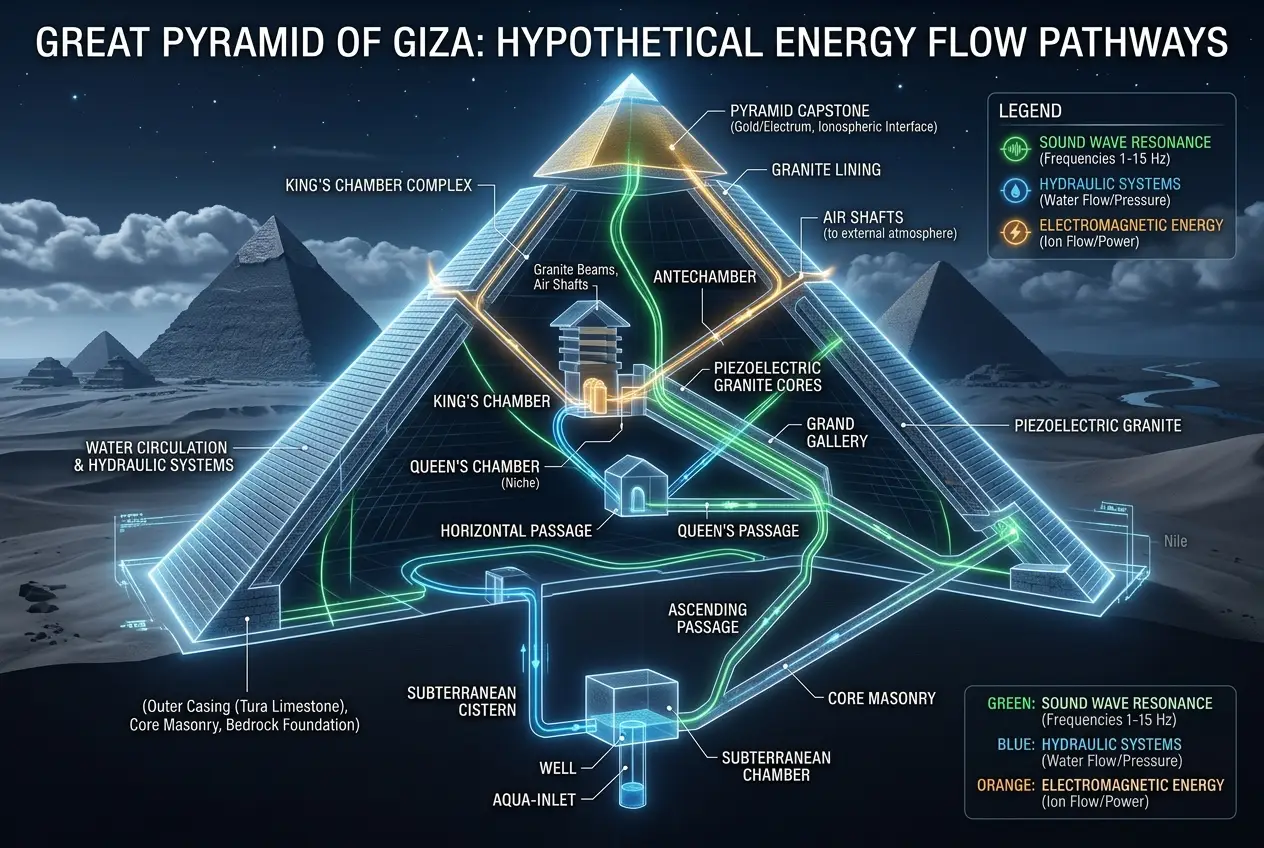
## Resonating with Earth’s Energy: The Piezoelectric Effect
One of the most compelling theories revolves around the **piezoelectric effect**. I find this particularly fascinating. Piezoelectricity is the electric charge that accumulates in certain solid materials (such as crystals, certain ceramics, and bone) in response to applied mechanical stress. Quartz, a common crystal, exhibits this property. What does this have to do with pyramids?
The Great Pyramid is constructed primarily from limestone and granite. While limestone itself isn't strongly piezoelectric, granite, especially the large granite blocks used in the King's Chamber and its ceiling, contains a significant amount of quartz. Some researchers hypothesize that the immense weight of the pyramid's upper structure, combined with external forces like seismic activity (even minor tremors), could have generated subtle electrical currents within the granite. You can learn more about the piezoelectric effect on [Wikipedia](https://en.wikipedia.org/wiki/Piezoelectricity).
Imagine this: The entire Giza plateau sits on a natural bedrock of limestone, which could act as an insulator. Below this, there's the Earth's natural geomagnetic field and various telluric currents – electrical currents that flow naturally underground. Could the pyramid have been designed to interact with these natural energy flows? Some theorists suggest the pyramid's shape and internal chambers were meticulously engineered to amplify these subtle energies, turning mechanical stress or geomagnetic fluctuations into usable electrical charge. This is a bold claim, but the scientific principle behind it is sound.
## The Water Pump Hypothesis and Hydrogen Production
Another intriguing line of thought connects the pyramids to water and acoustics. The theory often cites the presence of an underground aquifer directly beneath the Giza plateau. One hypothesis, championed by figures like Christopher Dunn, suggests the pyramid was not an electrical generator in the conventional sense, but a massive **hydro-acoustic energy device**.
Dunn proposes that water from the aquifer could have been pumped into the pyramid's internal shafts and chambers. The descending water, perhaps facilitated by sonic vibrations or resonance, could have generated mechanical energy. Furthermore, the Grand Gallery, with its corbelled ceiling, has been speculated to be a giant resonator. If water was flowed through this chamber, it could have created powerful acoustic vibrations. These vibrations, combined with specific frequencies, might have been capable of **sonoluminescence** – the phenomenon where sound waves generate light or even plasma in liquids – or even separating hydrogen from water, a clean energy source. While the idea of ancient hydrogen production is highly speculative, the underlying physics of resonance and hydrodynamics is quite real.
We've explored other ancient technologies and their potential uses, such as whether [ancient lamps used lost tech for eternal light](https://www.curiositydiaries.com/blogs/ancient-lamps-did-lost-tech-create-eternal-light-7704) or if [the Baghdad Battery truly sparked an electric age](https://www.curiositydiaries.com/blogs/baghdad-battery-did-ancients-spark-our-electric-age-7832). The pyramid theories take this concept to a monumental scale.
## A Planetary Antenna or Receiver?
Beyond generating energy, some theories propose the pyramids functioned as enormous antennas or receivers, perhaps for cosmic or telluric energy. The unique materials used in the pyramid’s construction – the highly insulative Tura limestone for the exterior, the granite with quartz for internal chambers, and even the dolerite and basalt used for other parts – suggest a careful selection based on their physical properties.
"The Great Pyramid of Giza, with its incredible precision and unique material composition, could have functioned as a vast resonant cavity or a colossal antenna, designed to harness and transmit energy from the Earth's electromagnetic field." — *Source: Speculative theories based on the works of authors like Christopher Dunn and Robert Schoch.*
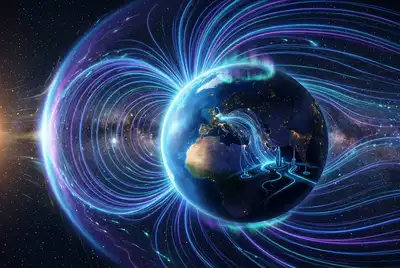
I find it fascinating to consider if ancient civilizations understood the Earth's electromagnetic fields better than we give them credit for. The Earth itself is a giant dynamo, generating a magnetic field. Could the pyramids have been designed to tap into this natural system, perhaps converting electromagnetic energy into a usable form, or even acting as a communication device? This isn't too far-fetched when we consider that [ancient structures might have tracked cosmic particles](https://www.curiositydiaries.com/blogs/did-ancient-structures-track-cosmic-particles-4250), demonstrating an advanced understanding of natural phenomena.
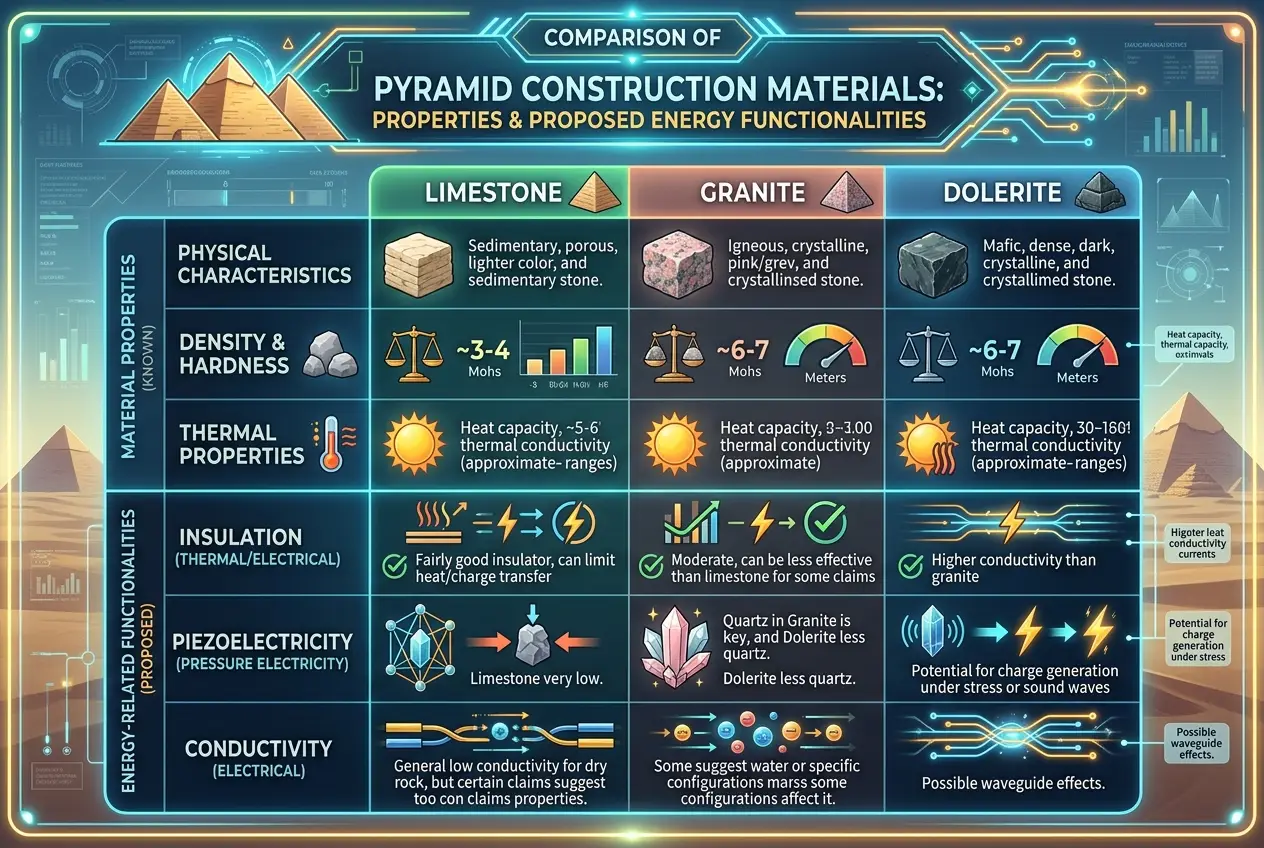
## Table: Proposed Material Properties and Functions in the Great Pyramid
| Material Used | Location / Purpose | Proposed Energy Function | Known Physical Property |
| :----------------- | :---------------------- | :----------------------------------- | :---------------------------- |
| **Tura Limestone** | Exterior casing | High insulation, low conductivity | High purity, dense, excellent insulator |
| **Aswan Granite** | King's Chamber, shafts | Piezoelectric effect, energy conduit | Contains quartz, crystalline structure |
| **Dolerite/Basalt** | Foundations, certain blocks | Grounding, energy channeling | Dense, high iron content, good conductor |
| **Water (hypothetical)** | Aquifer, internal shafts | Hydro-acoustic resonance, hydrogen source | Excellent medium for sound, chemical properties |
This table illustrates how specific materials, strategically placed, could hypothetically contribute to an energy generation or manipulation system.
## The Evidence Gap: Why Aren't We Sure?
Despite the captivating nature of these theories, direct, irrefutable evidence for the pyramids as energy generators remains elusive. Archaeologists and Egyptologists overwhelmingly maintain that the pyramids were elaborate tombs, albeit with unknown ritualistic significance. The lack of machinery, wiring, or clear power transmission systems is a significant hurdle for these theories.
However, proponents argue that such systems might have been organic, non-electrical (like resonant acoustic systems), or made from perishable materials. They also point to anomalies:
* **The "Unfinished" Grand Gallery:** Some believe the slots in the Grand Gallery were for a mechanism, not just ramps.
* **Absence of Soot:** Despite theories of torches used for light, no soot has been found in the deeper chambers, leading some to speculate about an unknown light source, perhaps generated within the pyramid itself, similar to the proposed [static electricity generation in ancient Egypt](https://www.curiositydiaries.com/blogs/did-ancient-egypt-harness-static-electricity-for-light-6166).
* **Precision Engineering:** The almost impossible precision in stone cutting and placement, especially in the granite sarcophagus in the King's Chamber, suggests tools and techniques beyond simple copper chisels.
I believe the challenge lies in our modern technological bias. We search for wires and dynamos because that's how we generate energy. Ancient civilizations might have employed completely different principles, perhaps harnessing natural forces through clever engineering and understanding of materials, resonance, and the Earth's inherent energies.
## Modern Resonance and Future Rediscoveries
The idea of resonant structures and natural energy harvesting isn't new to modern science. Engineers study acoustics to design concert halls and use resonance in various applications. Piezoelectric materials are used in everything from lighters to advanced sensors. The Earth's magnetic field is a known entity. What if the ancients possessed an empirical, perhaps even intuitive, understanding of these phenomena that allowed them to build on a scale we can barely comprehend?
The pyramids stand as a testament to human ingenuity. Whether they were merely tombs, sophisticated observatories, or indeed colossal energy machines, their mystery continues to inspire new questions and push the boundaries of our understanding. As technology advances, perhaps we will develop new ways to scan, analyze, and even replicate the conditions within these ancient structures, finally uncovering their true, profound purpose. The possibility that our ancestors harnessed the very fabric of the Earth for power is an idea that I believe is certainly worth exploring further.
**Conclusion:**
The notion that ancient pyramids could generate energy is a captivating blend of historical wonder and scientific speculation. While mainstream archaeology remains cautious due to a lack of direct evidence, the theories present intriguing possibilities based on known physical principles. They challenge us to reconsider the technological capabilities of ancient civilizations and open our minds to alternative ways energy might have been understood and utilized. As we continue to unravel the mysteries of our past, who knows what astonishing truths about these monumental structures we might yet uncover?
Frequently Asked Questions
One prominent theory suggests that the Great Pyramid of Giza utilized the piezoelectric effect, where the massive granite blocks containing quartz generated electrical charges from the pyramid's immense weight and subtle Earth vibrations. Other theories propose hydro-acoustic systems or harnessing Earth's electromagnetic fields.
The use of granite, which contains piezoelectric quartz, in critical internal chambers like the King's Chamber, is often cited. The exterior's Tura limestone is seen as an insulator, while other materials like dolerite or basalt could act as conductors or grounding elements.
No, there is no definitive scientific or archaeological proof that the pyramids generated energy. Mainstream Egyptology considers them primarily as elaborate tombs or ceremonial structures. The energy theories are largely speculative, drawing on interpretations of materials, geometry, and physical principles.
Yes, principles like piezoelectricity, resonance, and harnessing ambient energy (like Earth's magnetic field or geothermal heat) are all studied and utilized in modern science and technology. The theories propose ancient civilizations may have applied these principles on a grand scale, perhaps with different methodologies.
Proponents of the energy theories suggest that ancient energy systems might have been non-electrical in our modern sense, relied on perishable materials, or harnessed energy in ways we don't recognize. The lack of soot in chambers also suggests an unknown light source, but this is circumstantial.
Verified Expert
Alex Rivers
A professional researcher since age twelve, I delve into mysteries and ignite curiosity by presenting an array of compelling possibilities. I will heighten your curiosity, but by the end, you will possess profound knowledge.
Leave a Reply
Comments (0)
No approved comments yet. Be the first to share your thoughts!
 Join Us


 Unknown Author
































Leave a Reply
Comments (0)