I recently had a conversation with a colleague about the future of computing, and we drifted into a wild, yet surprisingly grounded, idea: what if our next supercomputers weren't made of silicon and metal, but of living cells? It sounds like something out of a science fiction novel, doesn't it? Yet, as I delved deeper, I found that scientists worldwide are actively exploring this very concept – **bio-computing**, where biological systems are harnessed to process information.
Imagine a computer that can literally grow itself, heal its own damage, and perhaps even adapt to new problems like a living organism. This isn’t just a fanciful dream; it’s a burgeoning field that could redefine what we understand as computation. I’ve always been fascinated by the elegance of biological systems, and the thought that they might hold the key to overcoming the current limitations of traditional silicon-based processors is incredibly exciting.
### The Silicon Wall: Why We Need a New Approach
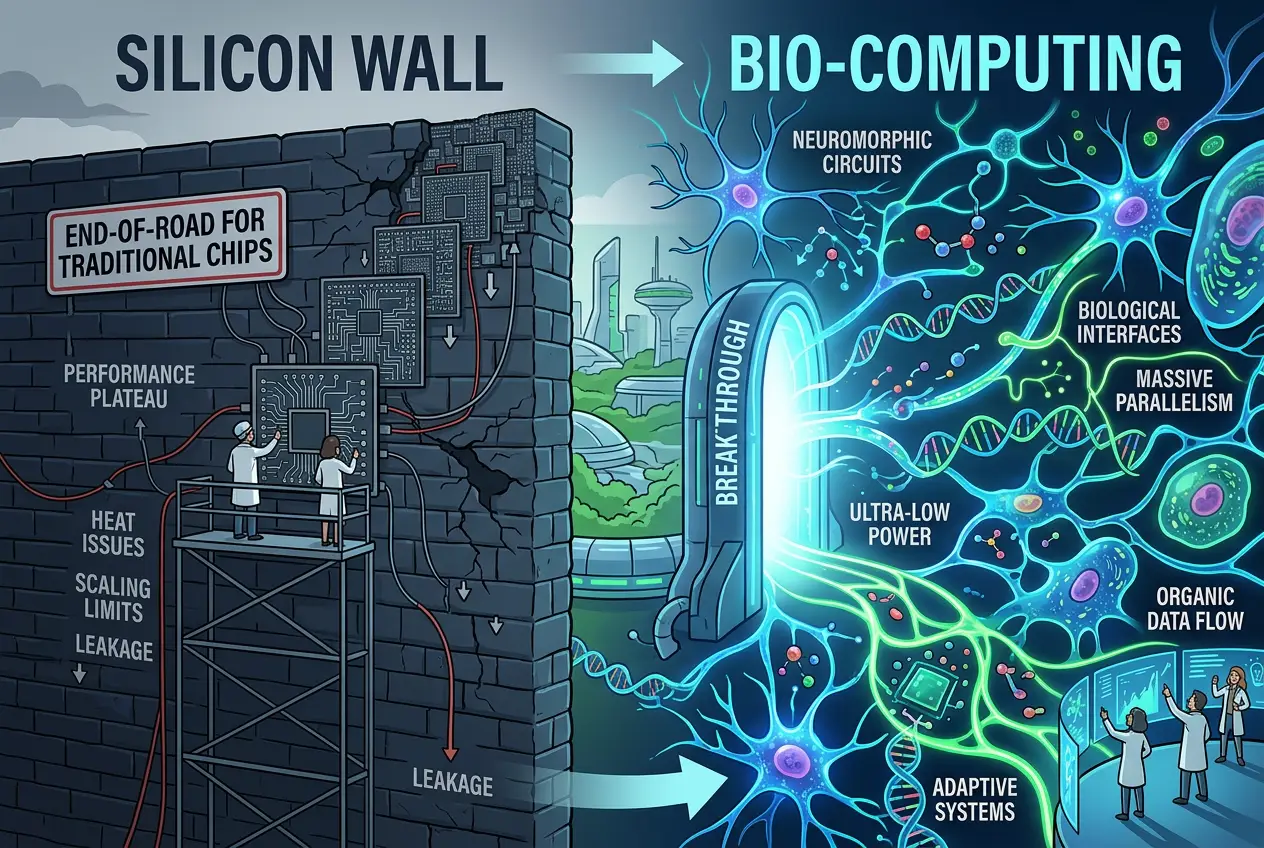
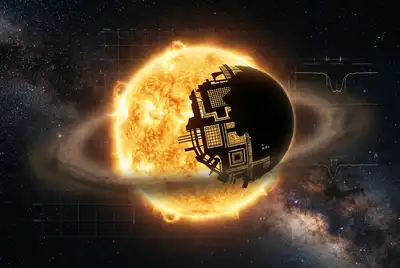
For decades, Moore's Law has been the guiding principle of technological advancement, predicting that the number of transistors on a microchip doubles approximately every two years. This relentless pace has given us the powerful devices we use today, from smartphones to supercomputers. However, physicists and engineers are now confronting fundamental limits. As transistors shrink to atomic scales, quantum effects become dominant, heat dissipation becomes a major challenge, and the physical limits of miniaturization are being reached. We're approaching what many call the "silicon wall."
This impending wall pushes us to look beyond conventional electronics. We need novel computing paradigms that can offer massive parallelism, energy efficiency, and perhaps even entirely new ways of processing information. This is where biology steps in. Biological systems, like our own brains, are incredibly efficient at processing complex information using very little energy. Our brains operate on roughly 20 watts, while even a modest supercomputer can consume megawatts. The difference is staggering, and it points to a profound lesson from nature: life has already perfected a form of highly parallel, low-power computation.
### DNA: Nature's Hard Drive and Logic Gates
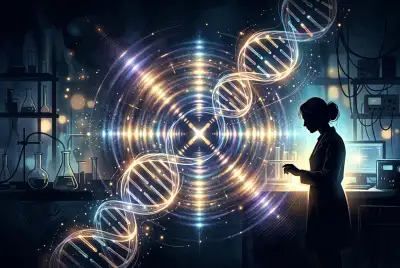
One of the most promising avenues in bio-computing is **DNA computing**. Described by computer scientist Leonard Adleman in 1994, the idea is to use DNA molecules, rather than silicon transistors, to store and process data. Think about it: DNA already holds all the information to build an organism. Its structure — the four bases (Adenine, Guanine, Cytosine, Thymine) — can represent binary data, where sequences encode information.
What makes DNA computing so powerful is its immense parallelism. A single test tube can hold trillions of DNA strands, each acting as a tiny processor simultaneously performing computations. Imagine solving a complex problem not by processing one step at a time, but by having trillions of potential solutions explored concurrently. This is the power of DNA computing. Researchers have already used DNA to solve complex mathematical problems, like the "traveling salesman problem," a classic computational challenge.
"DNA computing is really a way to harness nature's incredible parallel processing capabilities," says Dr. Laura Marcu, a bioengineer I once heard speak at a conference. "We're not just storing data; we're performing operations within a biological medium that is inherently complex and self-organizing."
For further reading on the fundamentals of DNA computing, you can check out its detailed overview on [Wikipedia](https://en.wikipedia.org/wiki/DNA_computing).
### Cellular Computers: Programming Life Itself
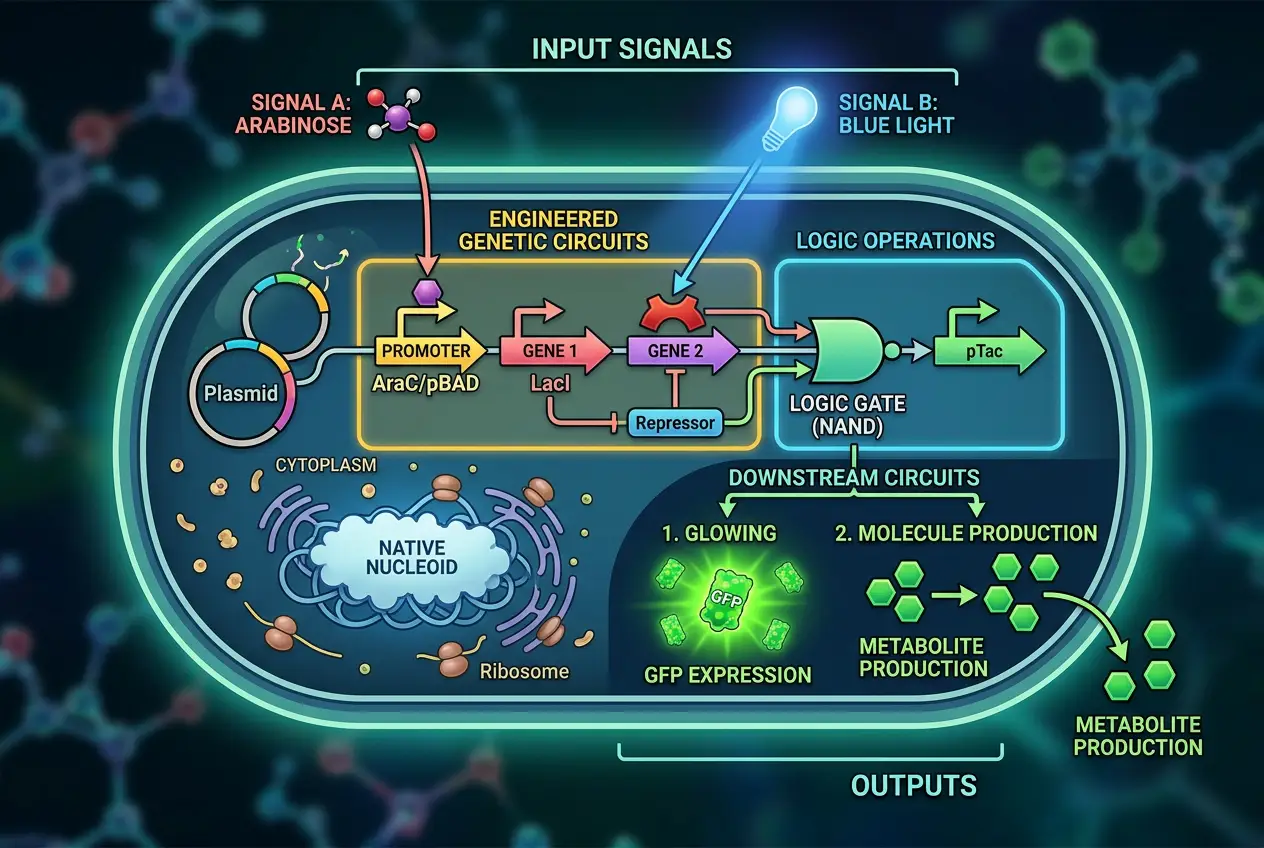
Beyond DNA, scientists are exploring using entire living cells as computational units. This involves **synthetic biology**, a field dedicated to designing and building new biological parts, devices, and systems, or re-designing existing natural biological systems for useful purposes. It's like programming living matter.
In cellular computing, genes can act as logic gates (AND, OR, NOT), proteins can be signals, and cellular pathways can represent complex circuits. Researchers have engineered bacteria to perform simple calculations, detect specific environmental toxins, and even store memories. For example, specific genes can be toggled on or off in response to chemical inputs, effectively creating a biological switch or memory unit.
This type of computing offers incredible advantages, particularly in biomedical applications. Imagine biological computers that live inside our bodies, detecting disease markers, delivering drugs with pinpoint accuracy, or even repairing damaged tissues on a cellular level. It’s a vision that blends medicine and technology in a truly revolutionary way. Some of these concepts mirror earlier discussions about how `can-fungi-build-computers-mycelial-tech-power-1244` by leveraging natural biological structures.
### The Rise of Organoid Intelligence (OI)
Perhaps the most fascinating—and ethically complex—frontier is **Organoid Intelligence (OI)**. This involves using brain organoids – mini-brains grown from human stem cells – to perform computation. Brain organoids are 3D cultures of brain cells that self-organize to mimic some aspects of brain structure and function.
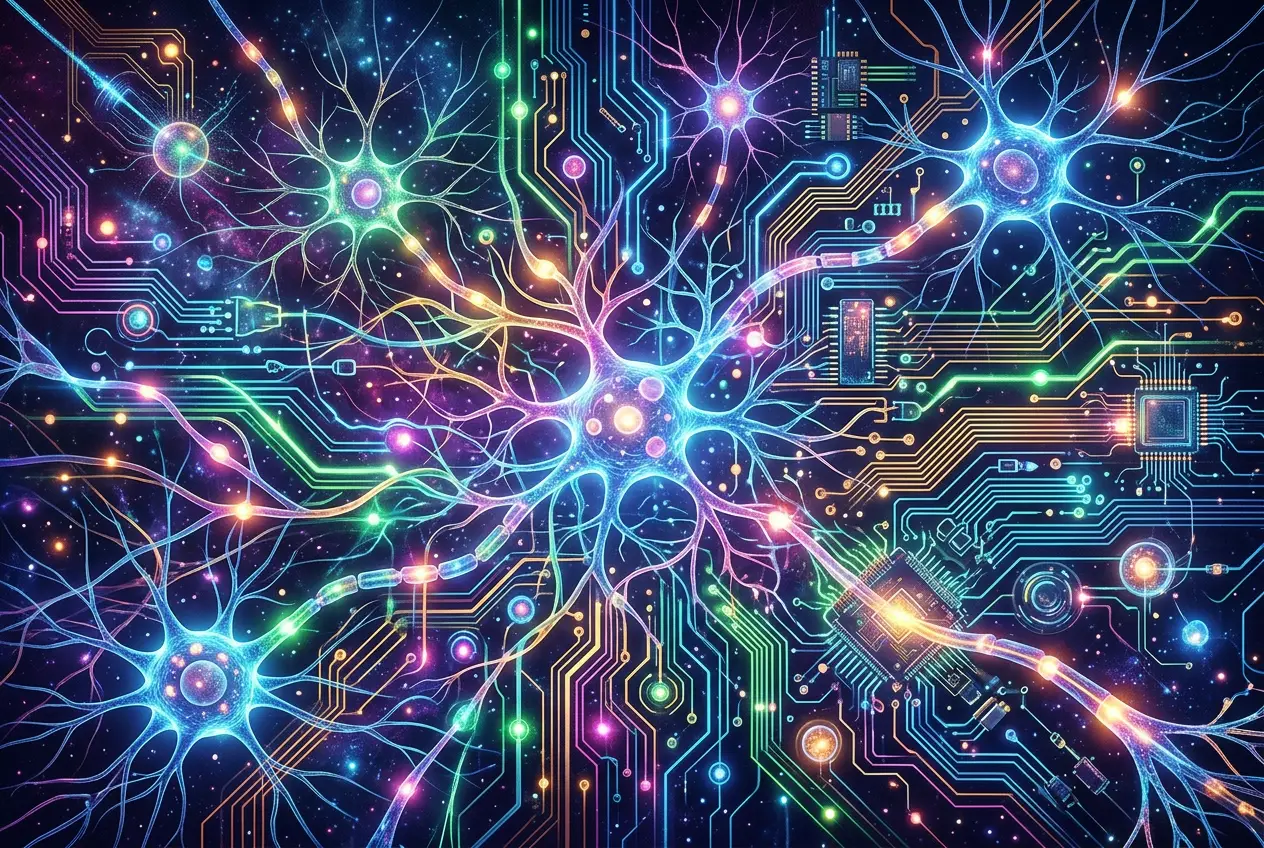
The idea is to leverage the unparalleled computational power of neuronal networks. Neurons in our brains are not just "on" or "off" like transistors; they communicate through complex electrochemical signals, constantly forming and reforming connections. This dynamic, adaptive processing is something silicon chips struggle to replicate. Researchers are exploring how these networks of living neurons could learn, store information, and process data in ways conventional computers cannot.
This is a very new and nascent field, but the potential is enormous. If we could effectively interface with these biological networks, we might unlock forms of intelligence and problem-solving beyond anything current AI models can achieve. It brings up profound ethical questions, of course, about what constitutes consciousness or sentience, but the scientific potential is undeniable.
You can learn more about brain organoids and their potential applications, including in computing, by visiting the [Wikipedia page on Brain Organoids](https://en.wikipedia.org/wiki/Brain_organoid).
### Advantages and Challenges of Living Computers
The allure of bio-computing is strong, driven by several key advantages:
* **Massive Parallelism:** Trillions of biological molecules or cells can perform computations simultaneously.
* **Energy Efficiency:** Biological processes operate at incredibly low energy levels compared to electronic devices.
* **Self-Assembly and Self-Repair:** Living systems can build themselves from basic components and repair damage, potentially leading to highly resilient computers.
* **Adaptability and Learning:** Biological networks, particularly neuronal ones, are inherently capable of learning and adapting.
* **Integration with Biology:** Bio-computers could seamlessly interface with living organisms, opening doors for advanced diagnostics, therapeutics, and bio-interfacing technologies.
However, the road to practical bio-computers is fraught with challenges:
* **Speed:** Individual biological reactions are much slower than electronic switching. The advantage comes from parallelism, but overall speed can still be an issue for certain tasks.
* **Scalability and Control:** Designing and controlling complex biological circuits with trillions of interacting components is incredibly difficult.
* **Error Rates:** Biological systems are inherently noisy and prone to errors, which need robust error correction mechanisms.
* **Interfacing:** Connecting biological computers with conventional electronics and extracting results is a significant engineering hurdle.
* **Stability and Environment:** Living systems require specific environmental conditions (temperature, pH, nutrients) and have finite lifespans, posing challenges for long-term operation.
* **Ethical Considerations:** Especially with organoid intelligence, the ethical implications of creating self-aware or conscious computational entities are vast and require careful consideration.
The development of AI itself, particularly in areas like `can-ai-design-its-own-evolution-decoding-future-machines-4579`, might even help us model and understand these complex biological systems better, ultimately accelerating the field of bio-computing. It also makes me wonder if `is-our-brain-a-quantum-machine-3312`, suggesting our own biology might already be using principles far beyond classical computing.
### The Future is Blended
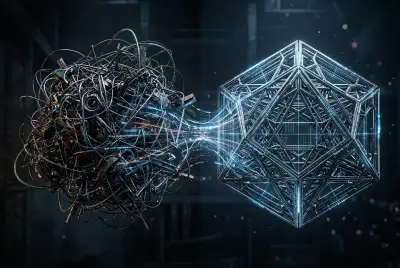
I believe the most likely future involves a hybrid approach. We won't entirely replace silicon, but rather integrate bio-computing components for specific tasks where their unique strengths shine. Imagine a conventional computer augmented with DNA-based memory for ultra-dense data storage, or a medical device incorporating cellular logic for autonomous disease detection and treatment.
The journey to building living supercomputers is just beginning, fraught with scientific, engineering, and ethical puzzles. But the potential rewards—computers that are vastly more powerful, energy-efficient, and capable of solving problems in entirely new ways—make it a quest well worth pursuing. It’s a testament to human curiosity and ingenuity that we look to the very essence of life for the next revolution in technology.
Frequently Asked Questions
The main motivation is to overcome the physical and energetic limitations of traditional silicon-based computers, known as the 'silicon wall.' Bio-computers offer potential for massive parallelism, extreme energy efficiency, and novel computational approaches inspired by biological systems.
DNA computing uses DNA molecules to store and process information. Specific sequences of DNA bases (A, T, C, G) encode data, and biological reactions (like enzyme-driven processes) are used to perform logical operations. Its power comes from the ability to perform trillions of operations simultaneously in a small volume.
Organoid Intelligence involves using brain organoids (mini-brains grown from human stem cells) as computational units. It's significant because it aims to harness the brain's unparalleled neuronal network complexity for learning and information processing, potentially surpassing traditional AI in certain tasks, though it raises significant ethical questions.
Key challenges include the slower speed of individual biological reactions, difficulties in scaling and controlling complex biological systems, managing high error rates, developing robust interfaces with electronic systems, ensuring stability in controlled environments, and navigating significant ethical considerations, especially for OI.
It's unlikely that bio-computers will completely replace silicon computers in the near future. The more probable scenario is a hybrid approach, where bio-computing elements are integrated with conventional electronics for specific tasks where their unique strengths (like parallelism or bio-integration) offer distinct advantages, such as in medical diagnostics or ultra-dense data storage.
Verified Expert
Alex Rivers
A professional researcher since age twelve, I delve into mysteries and ignite curiosity by presenting an array of compelling possibilities. I will heighten your curiosity, but by the end, you will possess profound knowledge.
Leave a Reply
Comments (0)
No approved comments yet. Be the first to share your thoughts!
 Join Us



 Alex Rivers





























Leave a Reply
Comments (0)