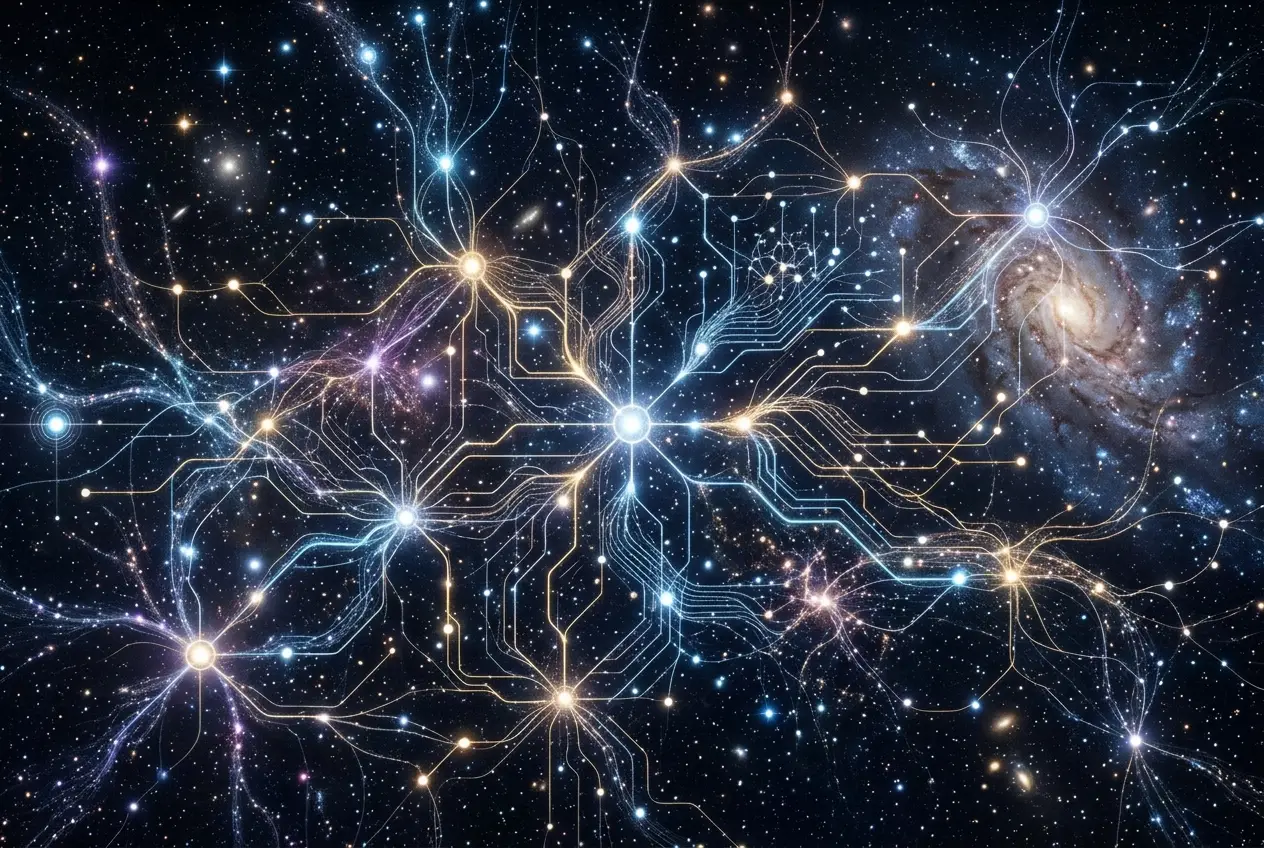
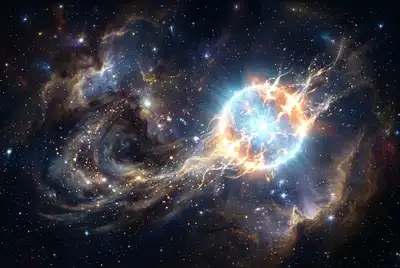
I sometimes find myself staring up at the night sky, overwhelmed by the sheer scale and complexity of it all. It’s not just the billions of stars or the vast stretches of empty space that captivate me; it’s the underlying order, the fundamental laws that govern every atom, every galaxy. For centuries, we’ve sought to understand these laws, charting the cosmos and deciphering its secrets. But what if the universe isn't just following a set of static rules? What if it's not merely a grand, intricate clockwork mechanism, but something far more dynamic, something that is, in a profound sense, *computing* itself?
This isn't a new-age spiritual concept, but a serious proposition at the bleeding edge of physics and computer science: the idea of a **computational universe**. It suggests that the very fabric of reality—space, time, matter, and energy—might be inherently digital, constantly processing information and evolving through a set of cosmic algorithms. Could the universe be, in effect, a giant, self-programming computer, and we, its transient lines of code?
## The Universe as a Cosmic Calculator: From Atoms to Bits
The notion that the universe operates like a machine isn't new. Newton's laws described a predictable, deterministic cosmos. However, the 20th century introduced quantum mechanics, revealing a reality far stranger, built on probabilities and discrete energy packets. This shift from continuous to discrete values opened the door for a new perspective: what if everything, at its most fundamental level, is information?
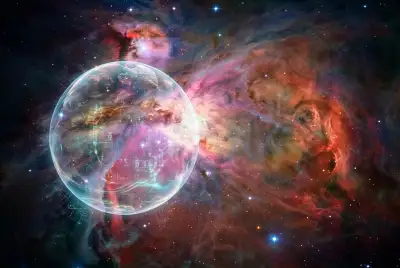
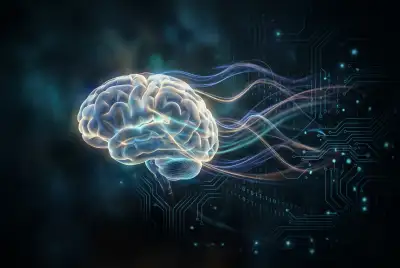
Physicists like John Archibald Wheeler famously coined the phrase "It from Bit," suggesting that every physical "it" – every particle, every field, even spacetime itself – ultimately derives from immaterial "bits" of information. This isn't just a metaphor; it implies that information isn't merely something *carried* by physical objects, but is itself the *bedrock* of existence. Imagine the universe not as a collection of particles interacting, but as a vast, parallel processing system, constantly updating its state based on fundamental informational exchanges.
### Digital Physics: A Universe of Cellular Automata
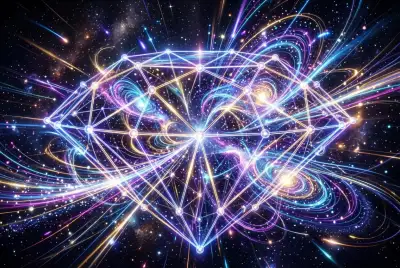
One of the most compelling frameworks for a computational universe comes from the realm of **digital physics**. Pioneered by visionaries like Stephen Wolfram, the idea posits that the universe could be modeled as a gigantic cellular automaton. Think of a cellular automaton like a grid of cells, each with a simple state (e.g., "on" or "off"). These cells update their states simultaneously based on the states of their neighbors and a fixed set of rules. Despite their simplicity, cellular automata can generate incredibly complex and emergent patterns, even replicating behaviors seen in nature. For a deeper dive into how complex systems can emerge from simple rules, you might find our article on how [Do Natures Fractals Hide Universal Algorithms?](https://www.curiositydiaries.com/blogs/do-natures-fractals-hide-universal-algorithms-4401) fascinating.
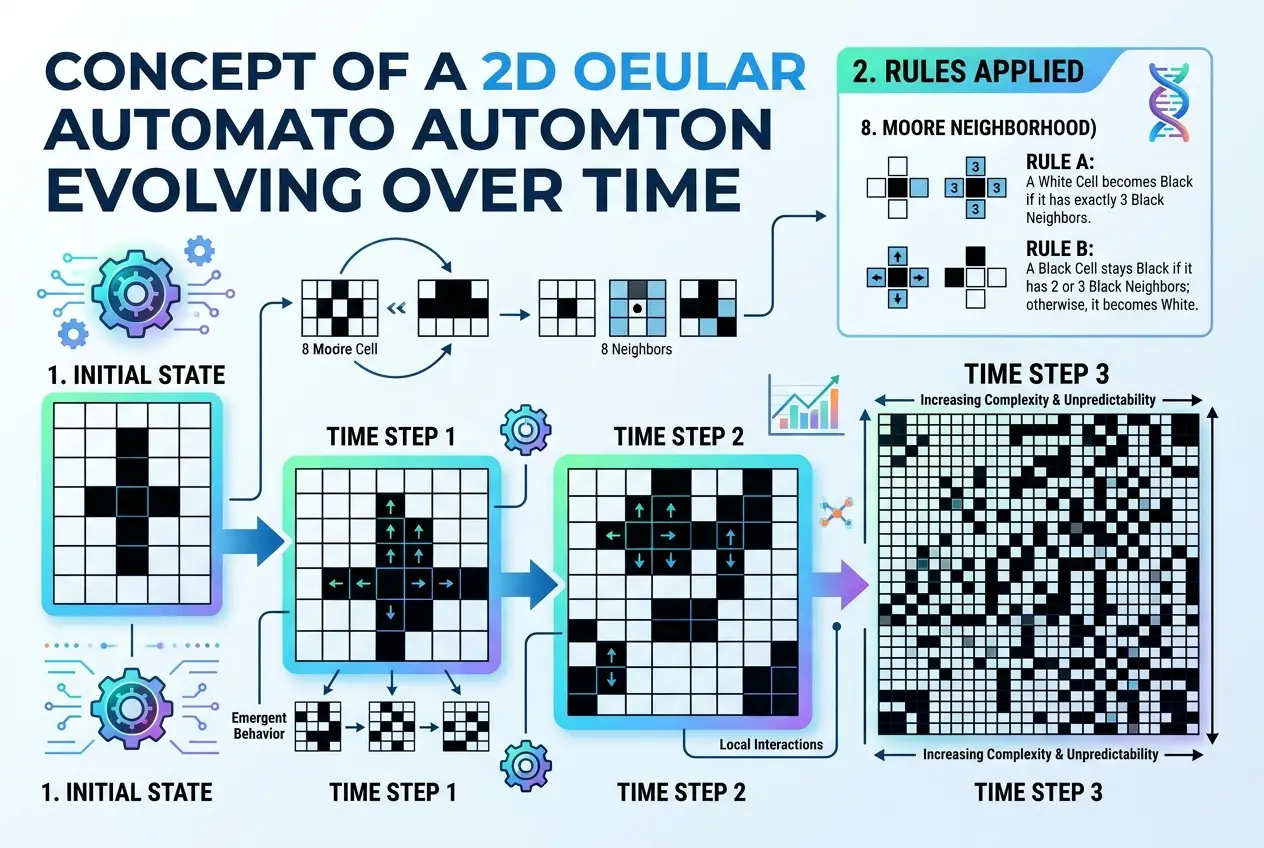
If the universe were a cellular automaton, space would be the grid, and fundamental particles and forces would be the "states" of its cells, evolving according to simple, universal rules. The astounding complexity we observe – stars, galaxies, life, consciousness – would all emerge from these ceaseless, low-level computations. This isn't to say we're living in a simulation in the conventional sense, but rather that computation is intrinsic to the universe's operation. As Wolfram noted in his groundbreaking work *A New Kind of Science*, "Perhaps the universe is just like a cellular automaton, with every part of it continually computing."
## The Quantum Connection: Information at the Core
Quantum mechanics adds another layer of intrigue to this computational paradigm. Concepts like **quantum entanglement** and superposition aren't just strange phenomena; they represent profound ways in which information is processed and stored at the quantum level. When particles become entangled, their fates are linked, and measuring one instantly affects the other, regardless of distance. This instantaneous correlation can be viewed as an incredibly efficient form of information transfer, bypassing the classical speed limit of light. If you've ever wondered how these quantum connections might power future technologies, explore our piece on [Can Quantum Entanglement Fuel Interstellar Comm?](https://www.curiositydiaries.com/blogs/can-quantum-entanglement-fuel-interstellar-comm-5201).
Moreover, the very act of observation in quantum mechanics collapses a particle's superposition into a definite state, which can be seen as an act of information "read-out" or computation. Some theories even propose that gravity itself might be an emergent phenomenon of information loss, similar to how thermodynamics arises from the collective behavior of countless particles. This implies that even the geometry of spacetime might be constantly computed from underlying informational bits.
### The Self-Programming Aspect: Cosmic Evolution
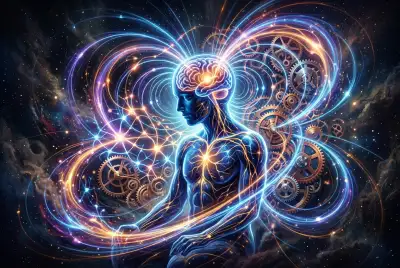
So, if the universe is a computer, how does it "program" itself? This is where the idea shifts from merely computational to **self-programming**. The laws of physics, while seemingly immutable, could be interpreted as the universe's fundamental code. But these laws aren't just static; the universe evolves. From the formation of stars and galaxies to the emergence of life and complex consciousness, the universe appears to be engaged in a continuous process of self-organization and increasing complexity.
One fascinating concept, often discussed in relation to this, is the idea that the universe could be optimizing its own code. Just as an AI program learns and refines its algorithms to achieve better outcomes, perhaps the universe, through its inherent evolutionary processes, fine-tunes its own parameters. This might occur through processes akin to **natural selection**, not just for biological life, but for the fundamental physical laws themselves. For instance, cosmological theories such as "cosmological natural selection" propose that universes that produce more black holes (which could be seen as the "offspring" of universes) are more likely to generate new universes with similar fundamental constants. This continuous feedback loop could be the essence of cosmic self-programming.
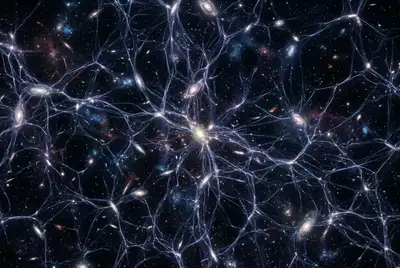
For more on the idea of the universe as a processing system, consider reading about [Is the Universe a Giant Neural Network?](https://www.curiositydiaries.com/blogs/is-the-universe-a-giant-neural-network-2907), which explores a similar concept from a different angle.
## Evidence and Implications: Searching for the Code
While the computational universe hypothesis remains speculative, several areas of research offer tantalizing clues:
1. **Fundamental Constants:** Why do the physical constants (like the speed of light, the strength of gravity, the mass of an electron) have the precise values they do? Many are exquisitely tuned for the existence of complex structures, life, and computation itself. Is this mere coincidence, or evidence of a "programmed" universe? You can learn more about these fundamental constants on [Wikipedia: Physical constant](https://en.wikipedia.org/wiki/Physical_constant).
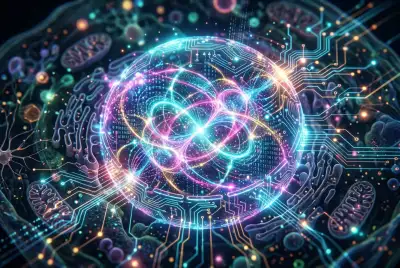
2. **Quantum Information Theory:** This field combines quantum mechanics with information theory, investigating how information is stored, processed, and transmitted at the most fundamental level. Researchers are exploring how quantum systems could represent bits of information and how the universe might be performing vast quantum computations. For instance, [Wikipedia: Quantum information science](https://en.wikipedia.org/wiki/Quantum_information_science) provides an excellent overview.
3. **Black Hole Thermodynamics:** Black holes are not just gravitational behemoths; they are also profound systems for studying information. The Bekenstein-Hawking entropy formula relates a black hole's entropy to its surface area, implying that information can be "stored" on its event horizon. This suggests a deep connection between gravity, thermodynamics, and information, hinting at a universe where information is conserved and processed even in the most extreme environments.
4. **Cosmic Ray Anomalies:** Some researchers have explored whether rare cosmic phenomena, like certain patterns in cosmic microwave background radiation or unexplained anomalies in high-energy particle interactions, could be interpreted as "glitches" or emergent properties of this cosmic computation. However, these interpretations are highly speculative and require much more data and theoretical refinement.
If the universe is indeed self-programming, the implications are profound. It would challenge our understanding of fundamental reality, blurring the lines between physics, mathematics, and computer science. It might even suggest a purpose or direction to cosmic evolution, beyond simple thermodynamic decay. Perhaps our existence, and our relentless quest for knowledge, are part of the universe's ongoing process of self-discovery and algorithmic refinement.
The challenge, of course, is to find concrete, testable predictions. How do we distinguish between a universe that merely *behaves* computationally and one that *is* a computer? What kind of "code" would we look for? These questions push the boundaries of current science and force us to reconsider our place in the cosmos.
As I look at the stars now, I don't just see distant suns; I wonder if I'm glimpsing the emergent patterns of an infinitely complex, self-evolving algorithm, forever writing and rewriting its own story.
## Decoding the Cosmic Source Code: What's Next?
Our journey into the universe's self-programming nature is really just beginning. It requires a multidisciplinary approach, combining insights from cosmology, quantum physics, information theory, and even the philosophy of mind. Future telescopes and particle accelerators might uncover subtle deviations from expected physics that could serve as "debugger outputs" of the cosmic computer. Perhaps, in time, we'll learn to read the universe's own source code, and in doing so, truly understand the ultimate nature of reality. For more on the cutting edge of these theories, you might explore [Wikipedia: Computational universe](https://en.wikipedia.org/wiki/Computational_universe).
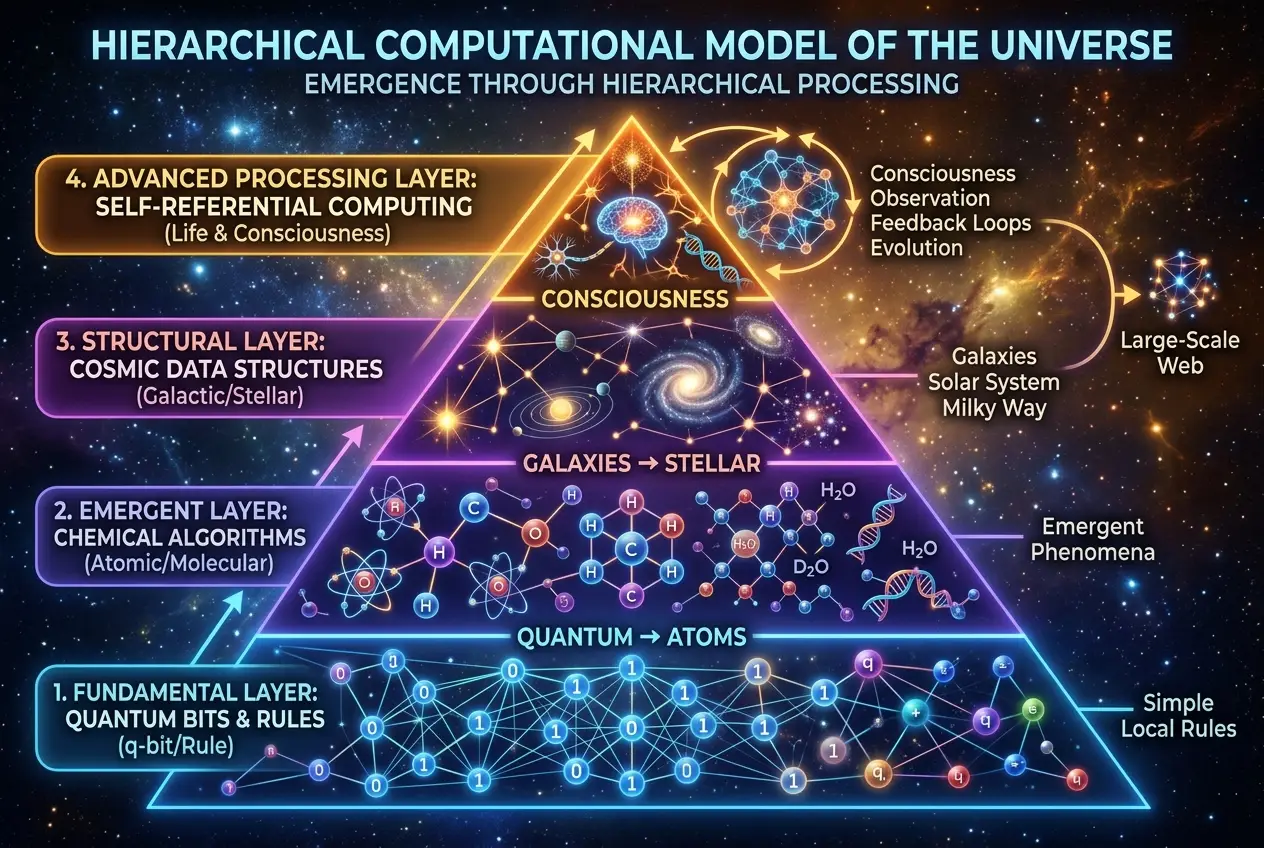
Ultimately, the question of whether the universe is self-programming is not just an academic exercise. It’s an invitation to view our reality with new eyes, to see the dance of existence not just as a random unfolding but as an elegant, intricate computation unfolding across cosmic scales.
Frequently Asked Questions
The core idea is that the universe, at its most fundamental level, is not just governed by laws but actively processes information, much like a vast, self-programming computer. It suggests that physical reality emerges from these underlying informational exchanges or 'bits'.
Digital Physics is a framework within the computational universe hypothesis that proposes the universe could be modeled as a gigantic cellular automaton. This means space, time, and matter would be discrete entities (like pixels) updating their states simultaneously based on simple, universal rules, generating all observed complexity.
Not necessarily in the popular sense of a computer program running on an external machine. The computational universe hypothesis suggests that computation is intrinsic to the *nature* of the universe itself, rather than an external simulation being run. Reality *is* the computation.
Quantum mechanics is crucial because its principles, such as discrete energy levels, superposition, and entanglement, can be interpreted as fundamental ways information is processed and stored. The 'bits' of the computational universe might be quantum bits or qubits, leading to a quantum computational universe.
The 'self-programming' aspect suggests that the universe's fundamental laws are not static but evolve or optimize over cosmic timescales. This could happen through mechanisms similar to natural selection, where universes with certain physical constants or properties are more likely to 'reproduce' or give rise to new universes, effectively refining its own 'code' over time.
Verified Expert
Alex Rivers
A professional researcher since age twelve, I delve into mysteries and ignite curiosity by presenting an array of compelling possibilities. I will heighten your curiosity, but by the end, you will possess profound knowledge.
Leave a Reply
Comments (0)
No approved comments yet. Be the first to share your thoughts!
 Join Us

 Unknown Author













Leave a Reply
Comments (0)