The bedrock of our digital world is solid silicon, etched with microscopic circuits that ferry electrons, executing commands with binary precision. But what if the future of artificial intelligence isn't rooted in rigid structures, but in something fluid, dynamic, and ever-changing? I find myself constantly pondering the boundaries of computation, pushing past the familiar to imagine what else could power our increasingly intelligent machines. Recently, I’ve been fascinated by a concept that sounds almost paradoxical: **liquid crystals thinking for AI.**
We're all familiar with liquid crystals from the displays on our phones and TVs. They're a strange state of matter, neither quite liquid nor entirely solid, possessing properties of both. What if these peculiar materials, capable of self-organization and sensitive to external stimuli, hold the key to a radically different form of AI?
## Beyond the Silicon Ceiling: A Quest for New Architectures
Our current AI, powered by silicon chips, is undeniably powerful. Yet, it faces inherent limitations: immense power consumption, the physical constraints of miniaturization, and the sequential nature of traditional processing. As AI models grow exponentially in complexity, demanding more data and more parameters, the energy cost becomes unsustainable, and the speed of light itself becomes a bottleneck. This is why researchers are actively exploring **unconventional computing paradigms**.
For years, I've seen the relentless march of Moore's Law, but there's a growing awareness that we need fundamental shifts, not just incremental improvements. We need systems that can process information in ways closer to how biological brains operate—massively parallel, energy-efficient, and capable of learning and adapting with inherent flexibility. This is where materials like liquid crystals enter the conversation. They offer an enticing alternative, a bridge between the analog world and the digital future.
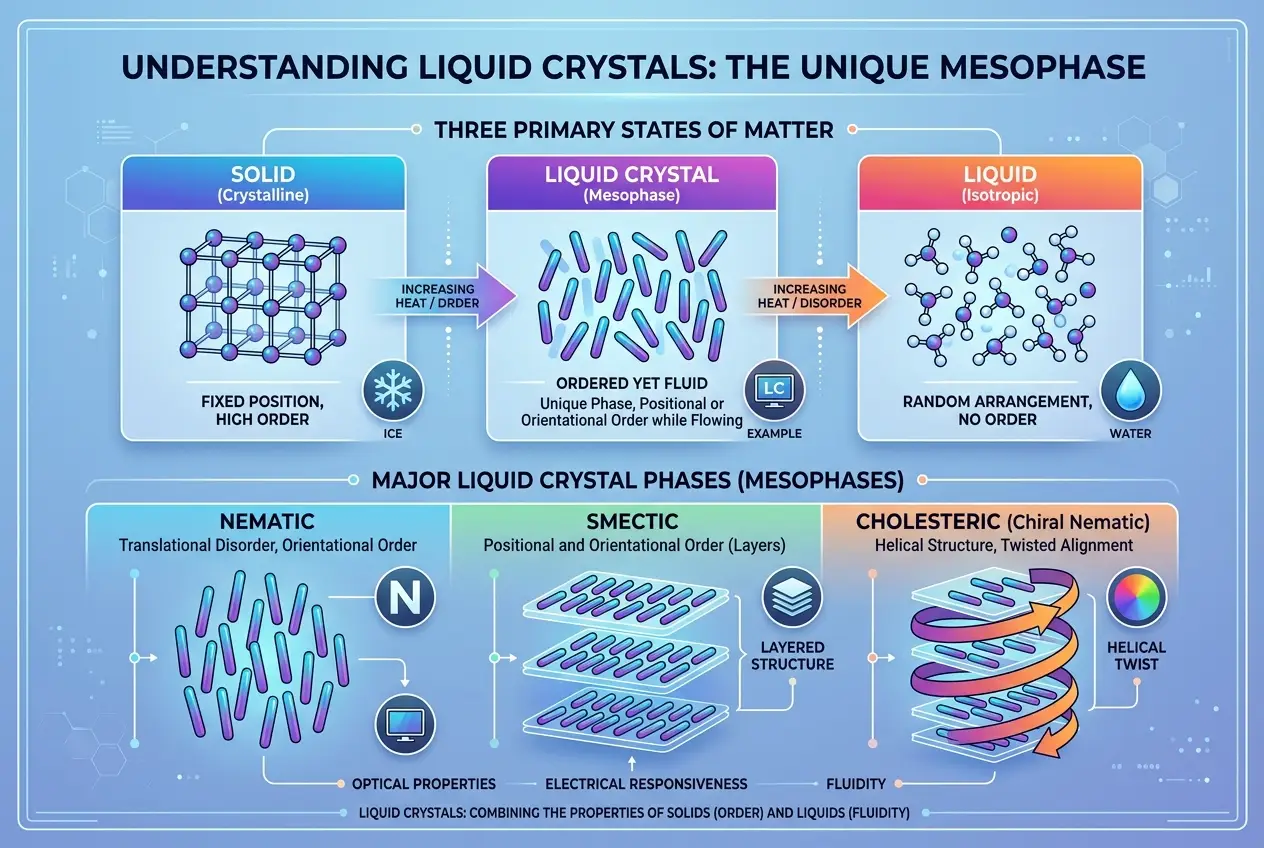
## What Are Liquid Crystals, Anyway?
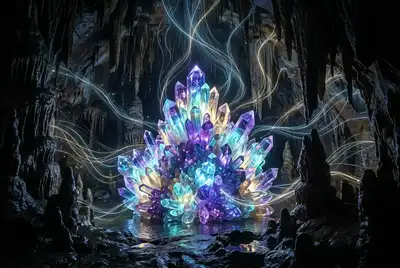
Before we dive into their computational potential, let's briefly grasp what liquid crystals are. Unlike ordinary liquids where molecules are randomly oriented, or solids where they're rigidly fixed, liquid crystals boast a peculiar **intermediate phase**. Their molecules, often rod-like or disc-like, possess some degree of orientational order, yet they retain the ability to flow like a liquid.
This unique characteristic allows them to respond dramatically to external stimuli like temperature, electric fields, or magnetic fields. Imagine a vast crowd of tiny, sensitive compass needles, all trying to align themselves, but also free to drift past one another. When you apply an electric current, they all snap into a new orientation, altering how they interact with light. This property is what makes LCDs (Liquid Crystal Displays) possible. For more detail on their fascinating properties, you can refer to the [Wikipedia page on Liquid Crystals](https://en.wikipedia.org/wiki/Liquid_crystal).
This dynamic reconfigurability is what makes them so interesting for AI. Instead of fixed circuits, we could have a computational medium that can literally **reconfigure itself** on demand.
## The "Thinking" Potential: How Liquid Crystals Could Process Information
The idea of liquid crystals "thinking" isn't about them suddenly gaining consciousness. It's about harnessing their inherent physical properties to perform computational tasks, mimicking aspects of intelligent processing. Here are a few ways this could manifest:
### 1. Analog Computing and Pattern Recognition
Traditional computers are digital: everything is 0s and 1s. But many real-world problems, especially in AI, are analog by nature—think of image recognition, sound processing, or complex fluid dynamics. Liquid crystals excel in analog responses. By precisely controlling electric fields, we can create intricate patterns within the liquid crystal medium. These patterns can then interact with incoming light, which itself can carry information (like an image).
Imagine feeding an image, represented by light patterns, into a liquid crystal system. The liquid crystal, pre-programmed or self-organized into a specific pattern, could "filter" or "transform" that incoming image based on its internal structure, recognizing features or completing patterns. This is akin to optical neural networks, but with the added flexibility of a reconfigurable medium.
### 2. Neuromorphic Architectures: Mimicking the Brain
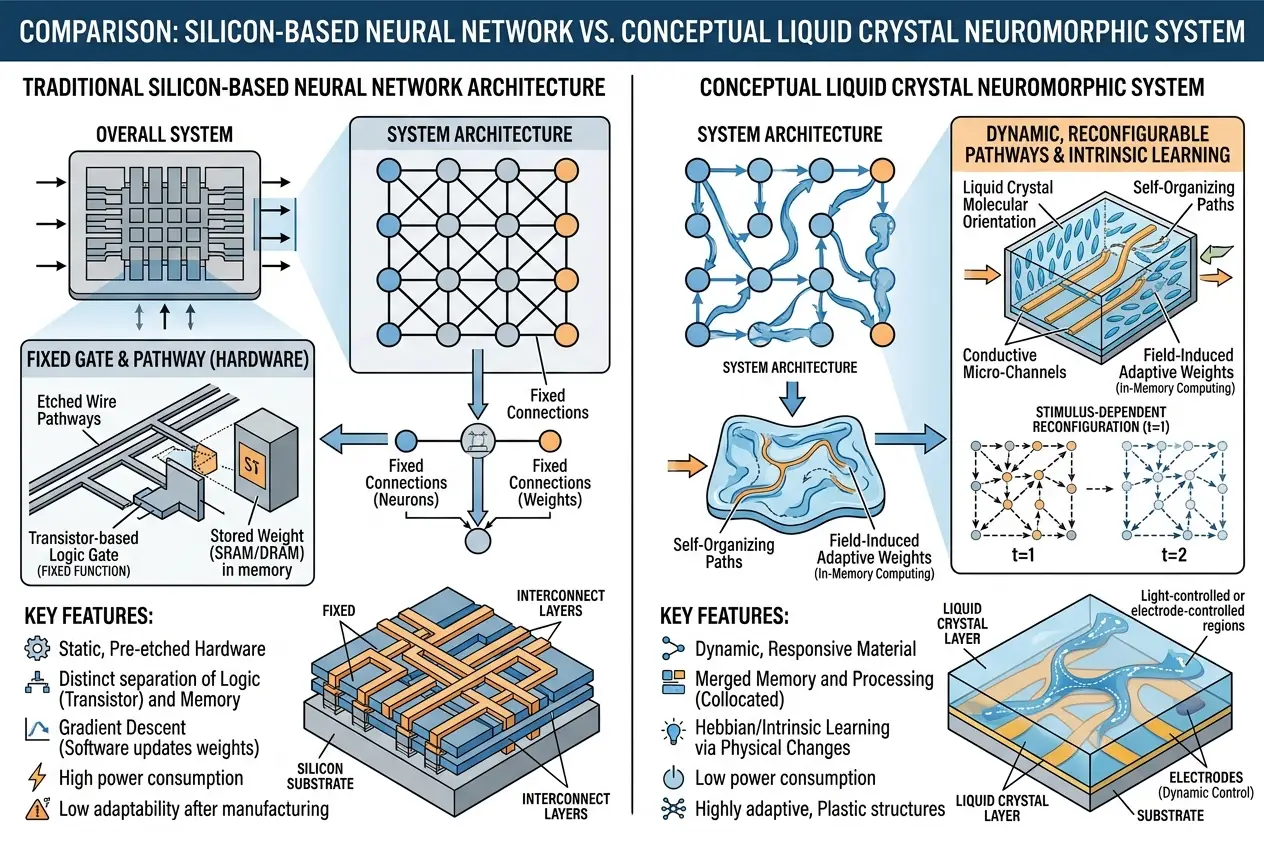
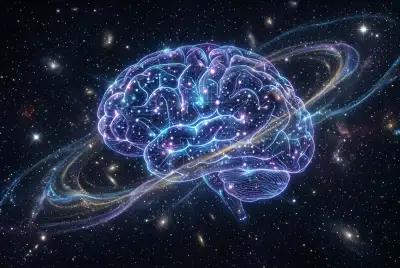
The human brain is a marvel of parallel processing and energy efficiency. Neuromorphic computing aims to build hardware that mimics the brain's structure and function. Liquid crystals, with their ability to self-organize and exhibit complex, non-linear dynamics, are prime candidates for this.
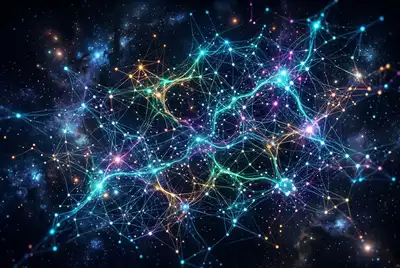
Researchers are exploring how **liquid crystal colloids**, where nanoparticles are suspended within the liquid crystal, can form complex networks that process information. These networks could exhibit emergent properties, similar to how neurons in a brain interact. A single liquid crystal cell could act as an "artificial neuron," with its orientation changing based on electrical inputs, potentially leading to more compact and efficient neural networks. Such research often overlaps with the broader field of [Neuromorphic Engineering](https://en.wikipedia.org/wiki/Neuromorphic_engineering).
### 3. Energy Efficiency and Parallelism
One of the biggest advantages of liquid crystal computing lies in its potential energy efficiency. Unlike silicon chips that dissipate a lot of heat due to electron movement, liquid crystals can change their orientation with relatively little energy. Furthermore, their inherent parallelism means many operations can happen simultaneously across the entire liquid crystal volume, rather than sequentially. This could dramatically reduce the energy footprint of large AI models.
### 4. Reconfigurable Hardware
Imagine a computer chip that isn't fixed in its architecture but can physically rearrange itself to optimize for different tasks. That’s the promise of **reconfigurable liquid crystal computing**. By applying varying electric fields, the "circuits" or "computational pathways" within the liquid crystal can be altered dynamically. This means a single piece of hardware could adapt its processing capabilities on the fly, making it incredibly versatile for tasks ranging from image processing to complex simulations.
## A Glimpse into the Future: Potential Applications
If liquid crystal AI becomes a reality, the implications are profound:
* **Ultra-Efficient Edge AI:** Imagine small, low-power AI devices embedded everywhere—in smart sensors, wearables, or autonomous drones—performing complex tasks without needing to connect to a massive cloud server.
* **Adaptive Robotics:** Robots that can instantly reconfigure their "thinking" to adapt to new environments or tasks, learning and evolving in real-time.
* **Novel Materials Design:** AI systems built from liquid crystals could design new materials with unprecedented properties, accelerating scientific discovery.
* **Beyond Visual Displays:** The current use of liquid crystals is primarily in displays. This new paradigm could redefine their role, making them active computational elements rather than passive display components.
## Challenges on the Liquid Road
While the potential is exciting, the path to liquid crystal AI is fraught with challenges. I'm always mindful that revolutionary ideas require monumental engineering efforts.
* **Stability and Durability:** Liquid crystals are sensitive. Maintaining their desired state over long periods and ensuring durability in diverse environments is crucial.
* **Interfacing:** How do we efficiently input and extract information from these dynamic systems? Bridging the gap between traditional electronics and liquid crystal computation is a complex engineering hurdle.
* **Programming Complexity:** Developing algorithms and programming languages for such a dynamic and analog medium will require entirely new paradigms, moving away from conventional binary code.
* **Scalability:** Can these systems be scaled up to handle the massive datasets and complex models required for modern AI?
## Current Research and the Horizon
The field is still largely in its theoretical and early experimental stages. Researchers are working on "active liquid crystals" that can self-propel and self-organize, showing emergent behaviors that hint at primitive computational abilities. Others are exploring how light-sensitive liquid crystals can be used for optical pattern recognition or as components in [photonic computers](httpsen.wikipedia.org/wiki/Optical_computing).
While a fully functional liquid crystal AI system is still years, if not decades, away, the fundamental research is laying the groundwork. The beauty lies in the exploration of a completely different computational substrate. For a deep dive into the properties of these unique materials, you might find this resource on [Liquid Crystal Physics](https://en.wikipedia.org/wiki/Liquid_crystal_display#Liquid_crystal_physics) insightful.
## The Next Frontier of Intelligence
The idea that a substance often associated with displaying images could one day be a medium for intelligence is truly mind-bending. It forces us to reconsider our definition of a "computer" and "computation." If silicon gave us the digital revolution, could liquid crystals usher in an era of fluid, adaptive, and highly energy-efficient intelligence? It’s a compelling vision, suggesting that the most powerful breakthroughs often come not from refining the old, but from bravely exploring the radically new.
The journey to unlock the "thinking" potential of liquid crystals for AI is a testament to human curiosity and our relentless pursuit of more efficient, more powerful, and more intelligent technologies. It reminds me that the future of computing might look far different than anything we've ever imagined, perhaps even as shimmering and fluid as a liquid crystal itself. Perhaps, one day, we will look back and see that the displays of yesterday became the brains of tomorrow. You can learn more about similar unconventional computing methods in our post about [Can Living Organisms Compute? The Rise of Biocomputing](blogs/can-living-organisms-compute-the-rise-of-biocomputing-5626) or explore the potential of future hardware in [Can Graphene Chips Unleash AI Superpowers?](blogs/can-graphene-chips-unleash-ai-superpowers-8640). We are truly just at the beginning of understanding what intelligence can be.
Frequently Asked Questions
Liquid crystals possess unique properties, being neither entirely solid nor liquid. Their molecules can orient themselves in response to external stimuli like electric fields, allowing for dynamic reconfigurability, analog processing, and potential for energy efficiency, which are highly beneficial for unconventional AI architectures.
Liquid crystals wouldn't 'think' in a conscious sense, but could process information by using their physical properties. They could perform analog computations, recognize patterns through light interaction, or form neuromorphic networks where their molecular orientations act like artificial neurons, enabling parallel processing.
Potential advantages include significantly lower power consumption, inherent parallelism for faster processing, flexibility through dynamic reconfigurability (the hardware can change its structure), and the ability to handle analog data more naturally than digital silicon chips.
The field is still in its early stages, with most research focusing on theoretical models and experimental demonstrations of specific computational functionalities. Fully functional, large-scale liquid crystal AI systems are not yet developed, but foundational research is promising.
Key challenges include ensuring the stability and durability of liquid crystal systems, developing efficient interfaces with traditional electronics, creating new programming paradigms for dynamic and analog media, and scaling up these systems to handle the complexity of modern AI tasks.
Verified Expert
Alex Rivers
A professional researcher since age twelve, I delve into mysteries and ignite curiosity by presenting an array of compelling possibilities. I will heighten your curiosity, but by the end, you will possess profound knowledge.
Leave a Reply
Comments (0)
No approved comments yet. Be the first to share your thoughts!
 Join Us


 Unknown Author














Leave a Reply
Comments (0)