



I’ve always been fascinated by the intricate dance between celestial bodies and our home planet. From the predictable rhythm of seasons dictated by Earth's tilt to the awe-inspiring spectacle of meteor showers, the cosmos constantly reminds us of our place within a grander design. But what if this cosmic influence extended beyond what we typically imagine, reaching deep into the very core of our planet? What if distant solar flares, those violent eruptions on the Sun's surface, could actually play a role in triggering earthquakes here on Earth? It sounds like science fiction, a dramatic plot twist in a disaster movie, yet a growing body of scientific inquiry suggests that the connection might not be so far-fetched after all.
The idea that solar activity could influence seismic events has been a fringe theory for decades, often dismissed by mainstream geophysicists. However, as our understanding of space weather and its interaction with Earth's complex systems deepens, researchers are finding intriguing correlations that demand closer inspection. Is this a genuine, albeit subtle, cosmic trigger for geological upheaval, or merely a case of pareidolia, where we seek patterns where none truly exist? Let's dive into this captivating mystery.
The Sun's Fury: A Primer on Solar Flares
Before we explore the potential link, it's crucial to understand what we're dealing with. Solar flares are colossal bursts of radiation from the Sun, often associated with coronal mass ejections (CMEs), which are massive expulsions of plasma and magnetic field from the Sun's corona. These events are incredibly powerful, releasing energy equivalent to millions of hydrogen bombs. They hurl charged particles and electromagnetic radiation across the solar system at incredible speeds.
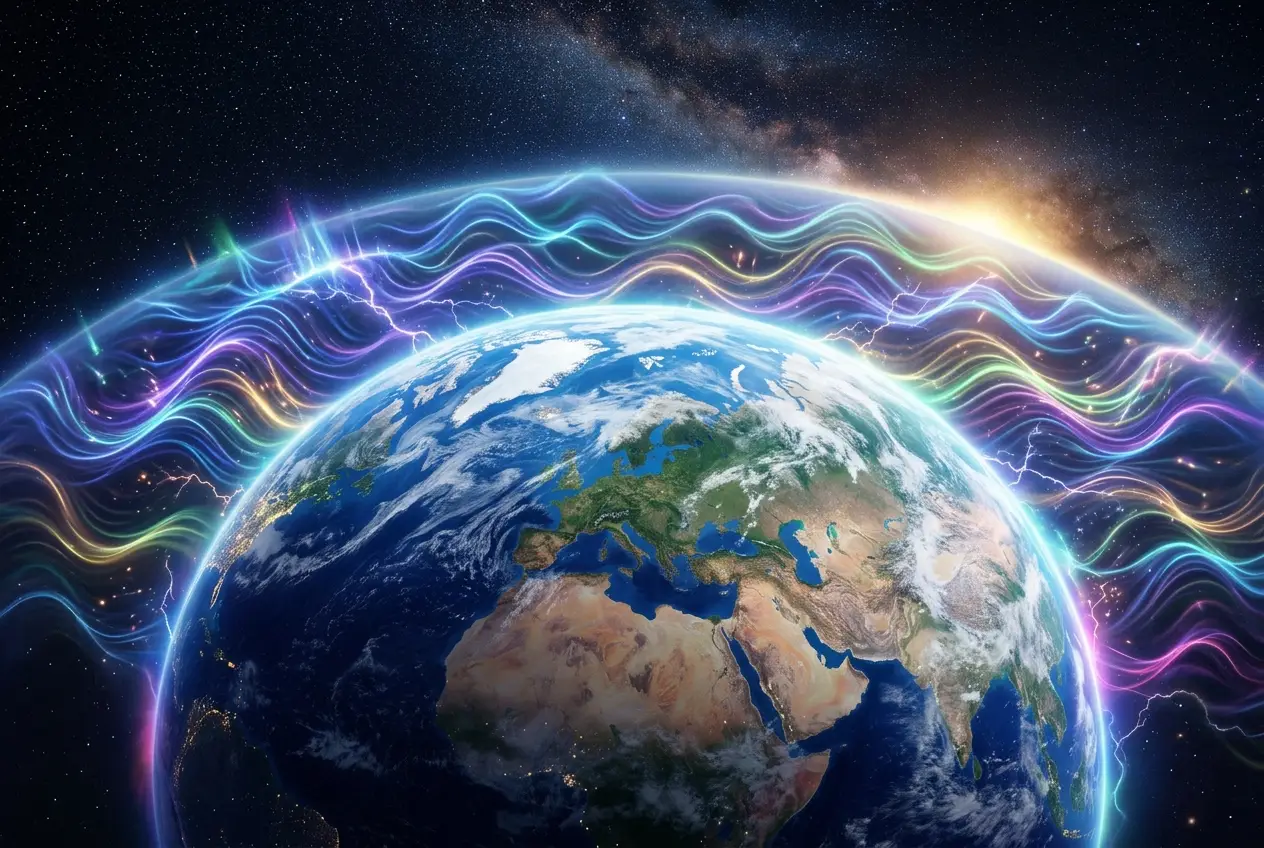
When these charged particles and radiation reach Earth, they interact with our planet's protective magnetosphere. This interaction can cause a variety of phenomena collectively known as space weather, including beautiful auroras, disruptions to radio communications, and even damage to satellites and power grids. The stronger the solar flare or CME, the more pronounced its effects on Earth.
Earth's Restless Skin: The Mechanics of Earthquakes
Earthquakes, on the other hand, are primarily caused by the sudden release of energy in the Earth's crust, creating seismic waves. This energy buildup typically occurs due to the movement of tectonic plates—gigantic slabs of rock that make up Earth's outer shell. These plates are constantly grinding past, pulling apart, or colliding with each other. When the stress along fault lines becomes too great, the rock suddenly breaks or slips, releasing stored energy as an earthquake.
Geophysicists have meticulously studied these processes, modeling plate movements and stress accumulation with incredible precision. The forces involved are immense, driven by convection currents in the Earth's mantle, a process that seems entirely independent of external cosmic influences. So, where could solar activity possibly fit into this geological picture?
The Proposed Mechanism: How Cosmic Links Might Work
The theories attempting to link solar flares and earthquakes generally propose that electromagnetic forces or subtle changes in Earth's environment, induced by solar activity, could act as a 'trigger' for already stressed fault lines. It's not about solar flares causing earthquakes from scratch, but rather providing the final push to faults already on the brink of rupture.
Here are some of the leading hypotheses:
-
Geomagnetic Storms and Induced Currents: When a strong solar flare or CME hits Earth, it can cause a geomagnetic storm. These storms create fluctuations in Earth's magnetic field, which in turn can induce electrical currents within the Earth's crust. Some researchers hypothesize that these induced currents could exert subtle electromagnetic forces on rocks along fault lines, potentially increasing stress or altering their frictional properties. While the forces would be small compared to tectonic pressures, they might be enough to trigger an earthquake in a critically stressed area. You can learn more about geomagnetic storms on Wikipedia (opens in a new tab).
-
Changes in Earth's Rotation/Momentum: Another less common but intriguing theory suggests that extreme space weather events could slightly alter Earth's rotation or angular momentum. While these changes would be infinitesimal, proponents argue that over time, or during particularly violent solar events, they might contribute to stress redistribution within the planet's crust. This idea is highly speculative and lacks strong empirical evidence.
-
Ionospheric and Atmospheric Coupling: Solar activity heavily influences Earth's ionosphere, a layer of charged particles in the upper atmosphere. Some studies have looked for correlations between ionospheric anomalies—caused by solar flares—and subsequent seismic events. The mechanism here is less clear but could involve electro-ionospheric coupling, where changes in the ionosphere might somehow transfer energy or stress downwards.
The Evidence: Correlations and Controversies
So, what does the actual data tell us? The evidence for a direct link is primarily correlational, which means scientists have observed that major earthquakes sometimes occur shortly after significant solar events. However, correlation does not equal causation, and this is where the scientific debate intensifies.
-
Statistical Studies: Several studies have analyzed historical earthquake data alongside records of solar activity. Some have reported a statistically significant increase in seismic activity, particularly for larger earthquakes, following periods of intense solar flares or geomagnetic storms. For instance, a few researchers have highlighted spikes in earthquake occurrences during the descending phase of the solar cycle, when large, sudden flares can still occur.
-
Specific Events: Anecdotal observations often point to specific instances. For example, some researchers have noted that the 2004 Sumatra-Andaman earthquake, one of the most powerful on record, occurred during a period of heightened solar activity, though most seismologists attribute it solely to tectonic forces. Similarly, I recall discussions about how our understanding of Earth's deep internal structure is crucial to these models; you can read more about it in our post, Is Earth's Core a Giant Crystal? Decoding Seismic Clues.
-
Counterarguments: Many seismologists remain skeptical, emphasizing that the energy released by even the strongest geomagnetic storms is minuscule compared to the immense forces involved in tectonic plate movements. They argue that any observed correlations could be coincidental, or a result of selective data analysis. The Earth experiences numerous earthquakes daily, and attributing a specific event to an external cosmic trigger requires far more robust evidence than simple temporal correlation.
One significant challenge is the difficulty in isolating the effect of solar activity from the multitude of other factors that influence seismic events, such as tidal forces from the Moon and Sun, changes in atmospheric pressure, or even heavy rainfall.
Beyond the Quake: Other Cosmic-Terrestrial Links
While the earthquake-solar flare link remains contentious, it's part of a broader field of research exploring how cosmic phenomena influence Earth. We know that cosmic rays, for example, can have subtle but measurable effects on our planet, as explored in our article, Cosmic Rays: Do They Spark Earth's Tech Anomalies?. Similarly, ancient civilizations often sought to understand these connections, mapping the skies and observing phenomena in ways that hint at a deeper, albeit perhaps less scientific, understanding of cosmic energies. Our post, Did Ancient Cultures Map Invisible Skies? delves into this fascinating historical perspective.
The scientific community continues to gather data and refine models. Satellites like NASA's STEREO and the European Space Agency's Solar Orbiter constantly monitor the Sun, providing unprecedented detail on solar flares and CMEs. On Earth, seismic networks are more extensive and sensitive than ever before. This wealth of data allows for more sophisticated statistical analyses and the development of more comprehensive geoelectric models. Continued research might reveal subtle, previously overlooked coupling mechanisms. Find out more about solar monitoring missions on Wikipedia (opens in a new tab).
The Future of Prediction and Understanding
If a definitive link between solar flares and earthquakes is established, even if it's only for a small percentage of events or under specific conditions, it could revolutionize our approach to earthquake prediction and hazard mitigation. Imagine a future where space weather forecasts don't just warn of communication blackouts but also highlight periods of increased seismic risk in tectonically active regions. This would be a monumental shift, adding a cosmic dimension to our understanding of Earth's internal dynamics.
For now, the jury is still out. The hypothesis linking solar flares to earthquakes remains on the intriguing frontier of geophysics and heliophysics. It serves as a powerful reminder that our planet is not an isolated system but an integral part of a vast, interconnected cosmos. The ongoing investigation into this profound question embodies the very spirit of "Curiosity Diaries"—pushing the boundaries of what we know, and daring to ask: what if?
The pursuit of this knowledge is not just about satisfying our curiosity; it's about understanding the fundamental forces that shape our world, both from within and from the distant, fiery heart of our star. The universe is full of mysteries, and some of the most profound ones might be hiding in plain sight, just waiting for us to connect the dots.



Conversation0
No comments yet. Be the first to share a thought — the best questions often become new stories.