



Imagine a world before oscilloscopes, before radio telescopes, before even the concept of a 'frequency' was scientifically articulated. How would humanity perceive the intricate, rhythmic pulse of the universe? Would they feel it in the earth beneath their feet, hear it in the wind, or see its patterns woven into the celestial tapestry above? For centuries, across diverse civilizations, there's been a persistent thread of belief: that the cosmos, our planet, and even our own bodies vibrate with hidden frequencies, a universal symphony playing just beyond our ordinary senses.
This isn't about mere superstition. It's about a deep, often intuitive engagement with the natural world, an attempt to understand the underlying order and chaos that governs existence. As I delve into this fascinating topic, I can’t help but wonder: did our ancestors, through their intricate rituals, monumental architecture, and profound philosophical insights, somehow tap into universal frequencies that modern science is only now beginning to fully comprehend?
The Whispers of Ancient Harmony: Sound, Architecture, and Healing
From the megalithic structures of Stonehenge to the majestic pyramids of Egypt and the intricate temples of the Maya, ancient sites often display remarkable acoustic properties. These weren't mere accidents of construction; I believe they were deliberate design choices, indicative of a profound understanding of sound and resonance.
Consider the ancient Greek theaters. Their design allowed sound to carry over vast distances without modern amplification, a testament to their mastery of acoustics. But did this understanding extend beyond simple audibility? Many scholars suggest that ancient cultures used sound not just for communication or entertainment, but for healing, meditation, and even spiritual transformation. The harmonious tones produced within these sacred spaces might have been designed to induce specific states of consciousness, aligning individuals with what they perceived as cosmic rhythms.
I’ve read accounts describing how chants and specific musical intervals were used in ancient healing practices, particularly in traditions like those of Tibet and indigenous cultures worldwide. These practices often focus on restoring balance to the body's energetic fields, an idea that resonates surprisingly with modern vibrational medicine. Could this be an early, intuitive form of what we now call bio-resonance?
Earth's Own Hum: Geological Rhythms and Sacred Sites
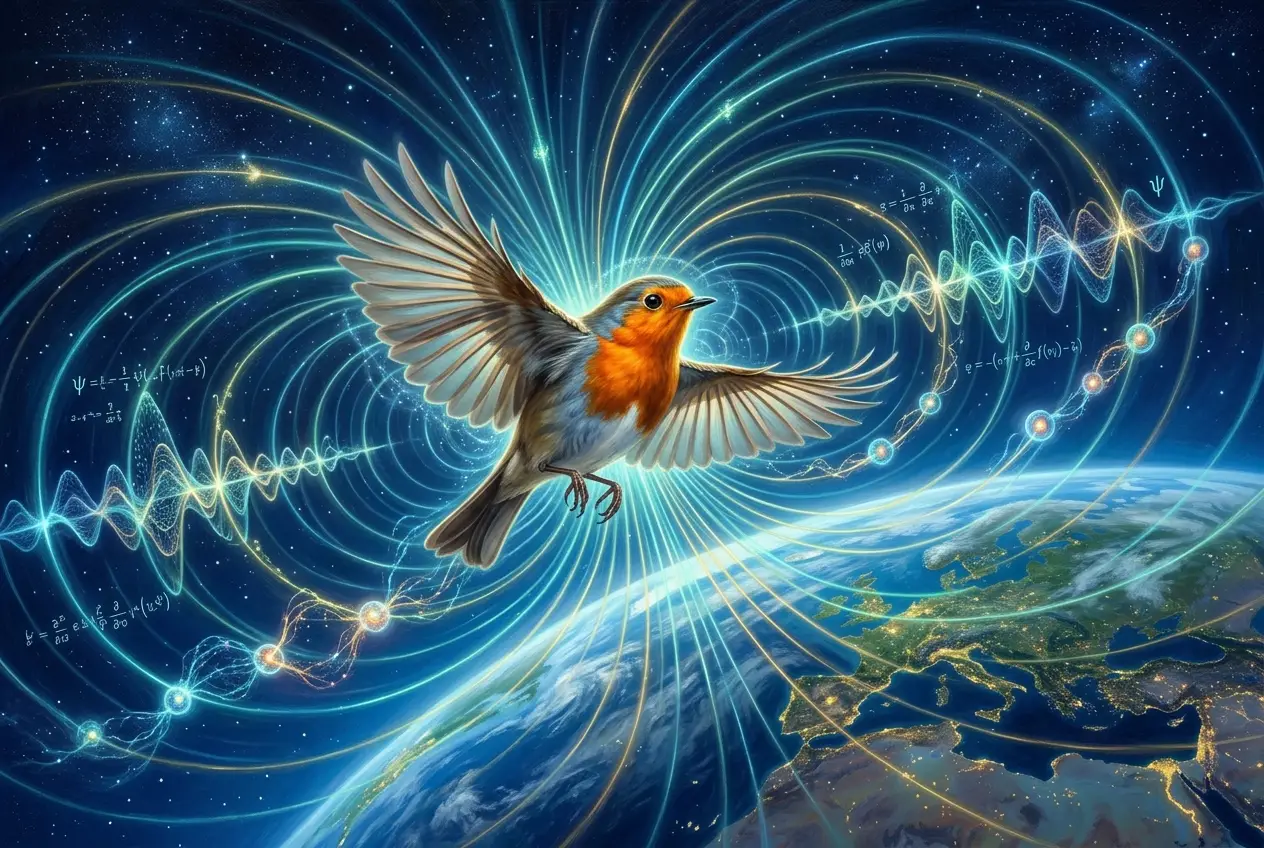
Beyond man-made structures, the Earth itself pulses with a natural rhythm. One of the most famous examples is the Schumann Resonance, a set of peaks in the extremely low frequency (ELF) portion of the Earth's electromagnetic field spectrum, caused by lightning discharges in the Earth-ionosphere cavity. These resonances, first predicted by Winfried Otto Schumann in 1952, typically oscillate around 7.83 Hz – a frequency often referred to as Earth's "heartbeat" or natural rhythm. You can learn more about this fascinating phenomenon on Wikipedia's Schumann Resonance page (opens in a new tab).
It's a curious coincidence that this natural frequency aligns with alpha brainwave states in humans, often associated with relaxation, meditation, and creativity. Did ancient civilizations, without the benefit of scientific instruments, intuitively perceive this planetary hum? Many sacred sites, often built on geological fault lines or atop powerful energy vortexes, suggest a conscious selection of locations that amplified these natural Earth frequencies. I'm personally captivated by the idea that our ancestors might have been acutely sensitive to these subtle terrestrial vibrations.
Moreover, ancient geological observations were profound. The alignment of sites like the Great Pyramid of Giza with cardinal directions and specific stars might also reflect an awareness of Earth's rotational dynamics and its interaction with cosmic forces. These alignments weren't just for stargazing; I believe they were about harmonizing with the pervasive energetic patterns of their world.
Cosmic Resonances: Planetary Harmonies and Celestial Mechanics
The concept of a "harmony of the spheres" was central to ancient Greek philosophy, notably articulated by Pythagoras. He proposed that celestial bodies, in their motions, produced an inaudible music, a mathematical symphony reflecting the perfect ratios of the universe. This wasn't a literal sound, but rather an underlying mathematical order that governed both musical scales and planetary orbits.
While we might not hear planets singing in traditional musical notes, modern astronomy does acknowledge various cosmic frequencies. Pulsars, for example, emit beams of radiation that appear as highly regular pulses when observed from Earth, acting like cosmic lighthouses blinking at incredibly precise frequencies. For more on these remarkable objects, check out the Wikipedia page on Pulsars (opens in a new tab). These steady, predictable cosmic rhythms were, in a symbolic sense, anticipated by ancient philosophies that sought universal order in the heavens.
I've explored how similar ideas might connect to modern theories about planetary vibrations in our blog post, "Do Planets Emit Secret Frequencies? Unpacking Cosmic Resonances". It’s incredible how ancient philosophical concepts echo contemporary scientific inquiries into the universe’s underlying structure.
Patterns in Chaos: Sacred Geometry and Visible Frequencies
Ancient cultures across the globe incorporated sacred geometry into their art, architecture, and cosmology. Patterns like the Flower of Life, the platonic solids, and the golden ratio appear consistently from ancient Egypt to Celtic art and beyond. These geometric forms were not merely aesthetic; they were considered blueprints of creation, embodying the fundamental principles of the universe.
Modern science, particularly through the study of Cymatics, offers a tantalizing link to how these patterns might be perceived manifestations of frequency. Cymatics, the study of visible sound and vibration, demonstrates how different frequencies can create distinct geometric patterns in various mediums, such as sand on a vibrating plate. Low frequencies might produce simple, symmetrical shapes, while higher frequencies yield more complex, intricate designs. The physicist Hans Jenny extensively documented these phenomena. You can delve deeper into this intriguing field on Wikipedia's Cymatics page (opens in a new tab).
Could it be that our ancestors, observing nature and experimenting with sound, intuitively understood that geometry was the visible language of frequency? That these energetic patterns were not arbitrary but were inherent to the vibrational nature of reality? It’s a compelling thought that their sacred geometries were, in essence, ancient depictions of universal frequencies made manifest. This perspective adds a new dimension to understanding why these specific patterns held such profound significance across disparate cultures.
Bridging the Gap: Intuition, Technology, and the Unseen
While ancient civilizations lacked the technology to measure frequencies with precision, their keen observational skills and philosophical frameworks allowed them to infer underlying patterns. Their "detection" might have been more intuitive, experiential, and holistic, integrating human consciousness with the perceived rhythms of the world.
Today, we use advanced technology to explore the same concepts. We have devices that measure electromagnetic fields, analyze sound frequencies, and even attempt to map the subtle energies within living organisms. The quest to understand the unseen forces that shape our reality continues. In a way, modern vibrational physics and quantum mechanics are asking similar questions about the fundamental building blocks of the universe, albeit with different tools and terminologies. I explored the cutting-edge aspects of how sound interacts with matter in "Can Sound Waves Manipulate Matter at Quantum Level?".
The idea that our ancestors perceived these universal hidden frequencies invites us to reconsider the depth of their scientific and philosophical understanding. It challenges the notion that scientific progress is a linear path, suggesting instead a cyclical rediscovery of timeless truths. Perhaps they understood, better than we often give them credit for, that reality is not just what we see, but a complex tapestry of vibrations, rhythms, and resonances. It's a humbling thought, and one that encourages me to look at ancient wisdom with renewed curiosity and respect.





Conversation0
No comments yet. Be the first to share a thought — the best questions often become new stories.