I’ve always been fascinated by the sheer mystery of memory. It’s one of those fundamental aspects of being human, or indeed, any complex organism, that we still don't fully grasp. How do we recall the scent of rain from a childhood summer, or the exact details of a conversation years ago? Scientists have traditionally pointed to synaptic connections, neural networks, and biochemical cascades. But what if there’s a deeper, more subtle layer at play, something as ubiquitous and fundamental as magnetism? What if our biological systems aren't just *affected* by magnetic fields, but actually *use* them to encode, store, or retrieve information – in essence, building a form of magnetic biological memory?
It might sound like science fiction, a concept bordering on the fantastical. Yet, the more I delve into the fascinating intersection of biology, physics, and neuroscience, the more plausible – or at least, worthy of serious consideration – this idea becomes. We know organisms interact with magnetic fields in profound ways. Could memory be one of them?
## The Elusive Nature of Memory
Before we explore magnetism, let's briefly touch upon what memory is. In simple terms, memory is the faculty of the brain by which information is encoded, stored, and retrieved when needed. It’s a complex process involving multiple brain regions, neurotransmitters, and intricate cellular changes. From the short-term recall of a phone number to the long-term consolidation of skills and experiences, our understanding has traditionally focused on the electrochemical signals within neurons and the structural changes at synapses. You can dive deeper into the general understanding of memory on [Wikipedia's Memory page](https://en.wikipedia.org/wiki/Memory).
This framework has served us well, explaining many aspects of learning and forgetting. However, some phenomena, like the uncanny ability of certain individuals to recall vast amounts of information, or the resilience of memories to significant brain trauma, sometimes hint at mechanisms beyond simple synaptic plasticity. This is where the curiosity often leads to exploring less conventional avenues, like the potential role of magnetic fields.
## Magnetoreception: Nature’s Hidden Compass
The idea of organisms interacting with magnetic fields isn’t new; it's a well-established scientific fact known as **magnetoreception**. I find it incredible how many species possess an innate "magnetic sense." Birds use Earth's geomagnetic field for long-distance migration, sea turtles navigate vast oceanic expanses, and even some insects and fish rely on it. Perhaps one of the most compelling examples comes from magnetotactic bacteria, which contain tiny, iron-rich crystals called **magnetosomes** that act like miniature compass needles, guiding them along magnetic field lines. This phenomenon is extensively documented on [Wikipedia's Magnetoreception page](https://en.wikipedia.org/wiki/Magnetoreception).
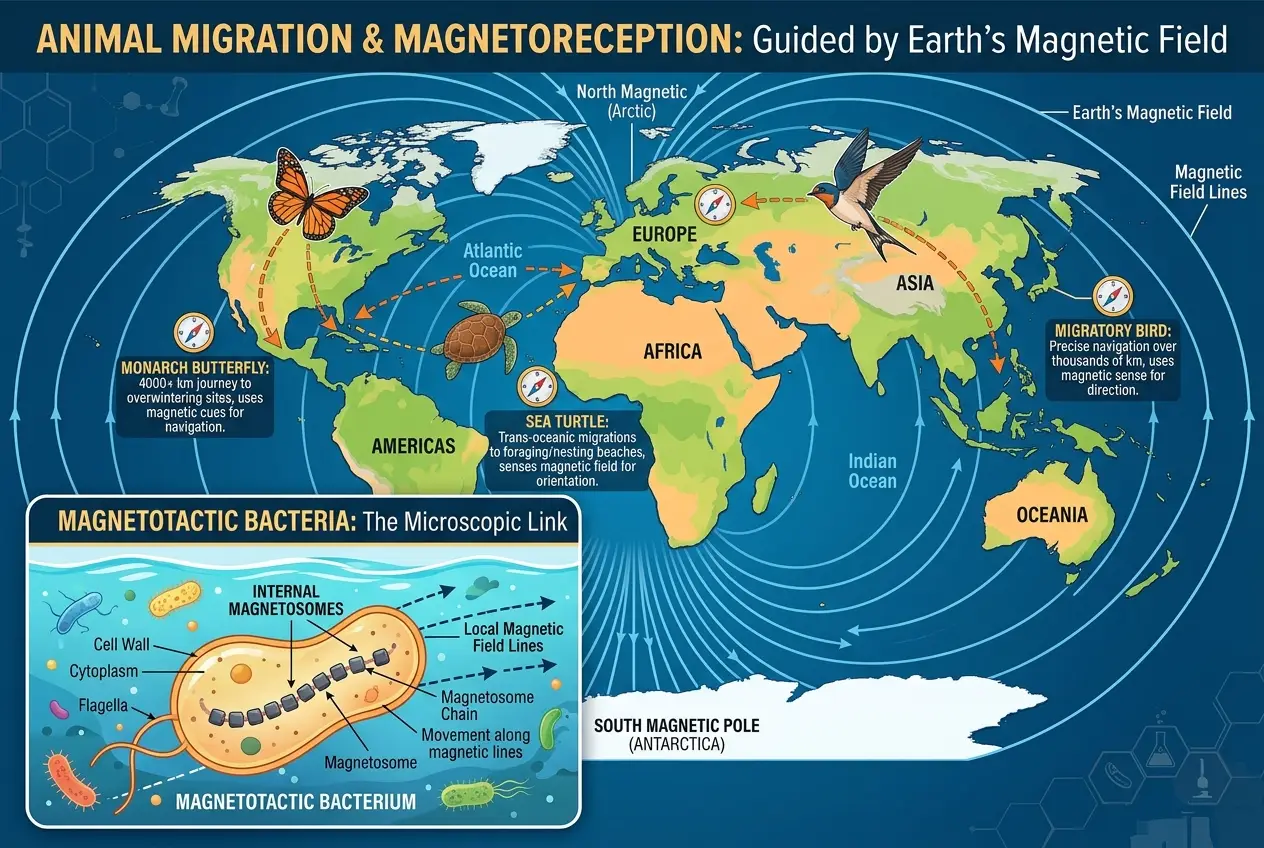
What’s truly astonishing is that this magnetic sense isn’t just for primitive navigation. Some research suggests that even humans might possess a rudimentary form of magnetoreception, albeit largely subconscious. Studies have shown that changes in ambient magnetic fields can subtly alter brainwave patterns in humans. If organisms can sense and react to these incredibly weak magnetic fields, could they also be involved in more sophisticated biological processes, like the formation or storage of memories?
## From Navigation to Cognition: A Magnetic Leap?
The leap from using magnetic fields for navigation to using them for memory storage is significant, but not entirely without precedent in speculative science. If magnetoreception relies on biophysical mechanisms that can be modulated by external fields, it's not a stretch to wonder if internal, biologically generated magnetic fields or magnetically sensitive cellular structures could play a role in encoding states.
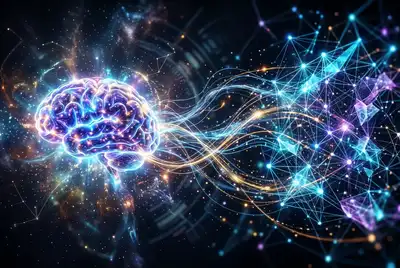
Consider the brain itself. Every thought, every feeling, every memory is accompanied by electrical activity, which in turn generates minuscule magnetic fields. These fields are what we detect with technologies like magnetoencephalography (MEG). While typically seen as epiphenomena—byproducts of neural activity—what if these fields, or the structures that generate them, are more than just passive observers in the memory process? What if they contribute to the very fabric of how information is stored and retrieved?
### The Brain's Magnetic Susceptibility
The human brain, particularly areas crucial for memory like the **hippocampus**, is highly complex and sensitive. The hippocampus is vital for memory consolidation and spatial navigation, two functions where magnetic fields could, theoretically, play a role. You can learn more about the hippocampus and its functions on [Wikipedia](https://en.wikipedia.org/wiki/Hippocampus). Could the magnetic susceptibility of certain brain regions contribute to how memories are organized or stabilized?
Some researchers propose that specialized cells within the brain might contain their own magnetosomes or other magnetically sensitive molecules. These molecular structures could align, flip, or change conformation in response to extremely weak magnetic fields, potentially acting as tiny, bistable switches. Such switches could represent bits of information, encoding aspects of memory. This idea, while largely theoretical, opens up a fascinating avenue for exploring how subtle physical interactions might underpin cognitive functions.
For a deeper dive into how brains might generate complex fields, check out our blog post on [Are Our Brains Quantum Field Generators?](/blogs/are-our-brains-quantum-field-generators-7406).
## The Quantum Connection: A New Frontier
One of the most intriguing theoretical frameworks for how such weak magnetic fields could influence biological processes comes from the field of **quantum biology**. This nascent field explores how quantum mechanical phenomena—like entanglement, superposition, and tunneling—might play a role in biological systems. On a macro level, magnetic fields are weak, but at the quantum level of individual molecules, they can exert significant influence. [Wikipedia's Quantum Biology page](https://en.wikipedia.org/wiki/Quantum_biology) provides a great overview.
For instance, the cryptochrome proteins involved in bird magnetoreception are thought to leverage quantum entanglement. When blue light hits these proteins, electron pairs become entangled, and their spin states are exquisitely sensitive to external magnetic fields. This sensitivity could be the basis for sensing the Earth's field. If such quantum phenomena can guide a bird’s migration, could similar, perhaps more complex, quantum biological processes be involved in memory formation or storage in our brains?
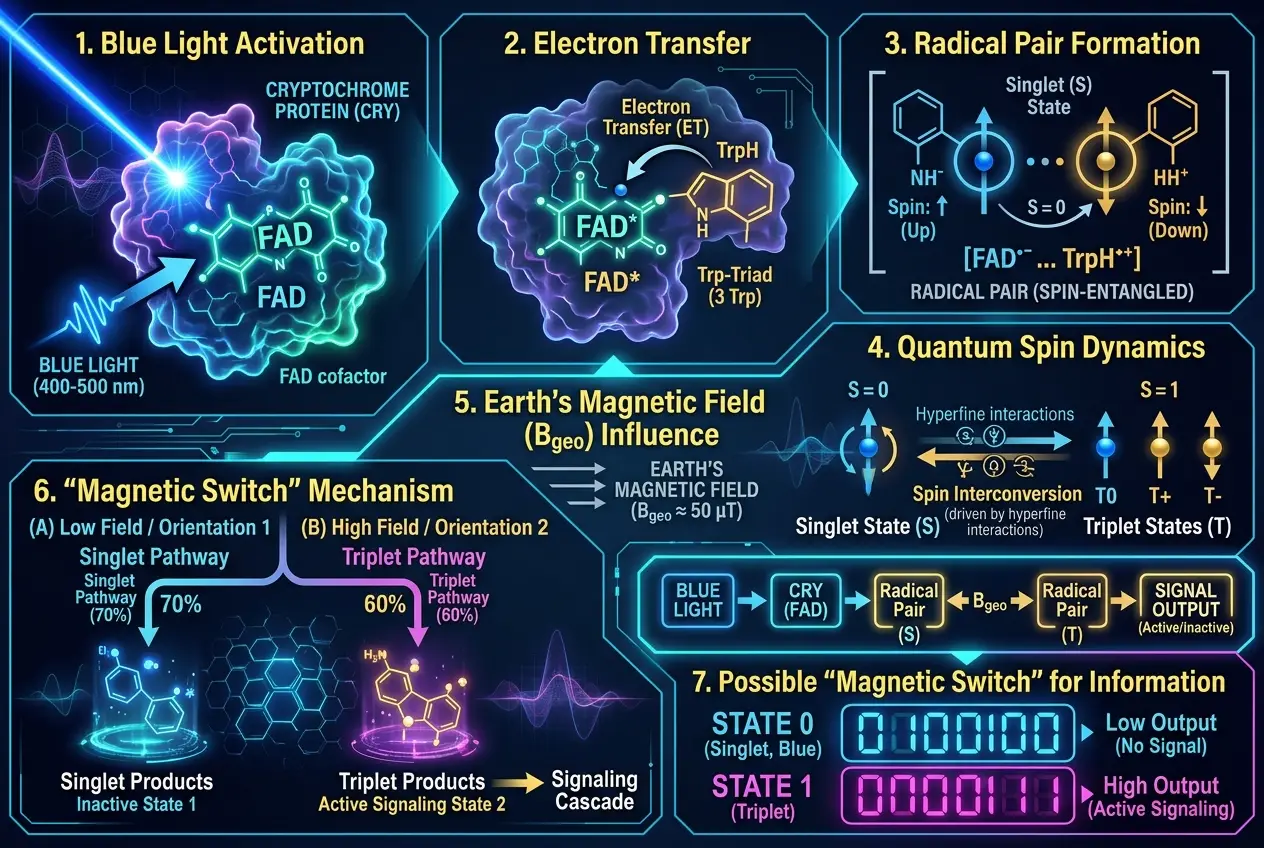
The idea is that magnetic fields might influence the quantum spin states of certain molecules in the brain, potentially altering their chemical reactivity or even their structural configuration in a way that could encode information. This is highly speculative, of course, but it bridges the gap between the purely electrochemical view of the brain and a more fundamental, quantum physical one.
## Glimmers of Evidence and Future Experiments
Direct evidence that magnetic fields *store* biological memory is, admittedly, scarce and largely indirect. However, there's growing research exploring the *effects* of magnetic fields on cognitive processes and the brain:
* **Transcranial Magnetic Stimulation (TMS):** This well-established technique uses strong, localized magnetic pulses to stimulate or inhibit specific brain regions. TMS is used to treat depression and can temporarily disrupt or enhance cognitive functions, including memory. While it doesn't prove magnetic *storage*, it demonstrates how magnetic fields can profoundly influence brain activity related to memory.
* **Studies on Animals:** Research on certain animal species has explored magnetic fields' influence on learning and memory. For example, some fish species show altered learning patterns when exposed to modified magnetic fields.
* **Human Sensitivity:** Some experiments hint at human sensitivity to magnetic fields. One notable study from Caltech in 2019, for instance, showed that human brains exhibited a clear neural response when participants were exposed to changes in magnetic fields that mimicked Earth's. This suggests an unconscious processing of magnetic information.
These findings don't definitively say "yes, magnetic fields store memory," but they strongly indicate that our biology is far more intertwined with electromagnetism than previously thought. If our brains can react to these fields, the question of whether they also *use* them for encoding information becomes a valid, albeit challenging, area of inquiry.
For more on the brain's interaction with external influences, consider reading our post on [Does Earth's Magnetic Field Affect Our Minds?](/blogs/does-earths-magnetic-field-affect-our-minds-6923) or even our discussion on [Can Brainwaves Control Tech From Afar?](/blogs/can-brainwaves-control-tech-from-afar-9230).
## The Implications: Memory, Tech, and Beyond
If magnetic biological memory were ever definitively proven, the implications would be nothing short of revolutionary.
1. **New Models of Cognition:** It would fundamentally alter our understanding of how the brain works, potentially leading to new treatments for memory disorders like Alzheimer's.
2. **Advanced Brain-Computer Interfaces (BCIs):** Imagine BCIs that could not only read brain activity but also write magnetic patterns directly into the brain, encoding memories or skills. This sounds like science fiction, but current research into linking minds with tech is already pushing boundaries, as discussed in [Can Our Bodies Sense Unseen Cosmic Signals?](/blogs/can-our-bodies-sense-unseen-cosmic-signals-2639).
3. **Enhanced Learning and Memory:** Non-invasive magnetic therapies could potentially boost learning capabilities or aid in memory recall, moving beyond current pharmacological or electrical stimulation methods.
4. **Beyond Carbon-Based Life:** If memory can be stored magnetically, it opens up possibilities for forms of intelligence and information storage that aren't strictly reliant on organic chemistry.
## Challenges and The Road Ahead
The concept of magnetic biological memory faces immense challenges. The magnetic fields generated by the brain are incredibly weak, and the ambient noise from the environment is significant. Isolating and proving that specific magnetic patterns correlate with specific memories, and that these patterns are truly *stored* rather than merely *modulated*, would require groundbreaking experimental techniques.
Future research will likely involve:
* Developing ultra-sensitive magnetic sensors capable of detecting minuscule, localized magnetic changes in living tissue.
* Designing experiments that can precisely control and manipulate magnetic fields at a molecular level within biological systems.
* Further exploration of quantum biological mechanisms that might amplify weak magnetic signals into biologically significant events.
I believe this area represents a frontier where physics and biology converge, offering a tantalizing glimpse into a deeper understanding of life itself.
## Conclusion
The question, "Can magnetic fields store biological memory?" remains largely unanswered, suspended between intriguing hypothesis and robust scientific proof. Yet, the evidence for magnetoreception in the animal kingdom, the brain’s known sensitivity to magnetic stimulation, and the emerging field of quantum biology all suggest that our relationship with magnetism might be far more intimate than we currently realize. Whether it's a direct storage mechanism or a subtle influence on memory processes, exploring this possibility pushes the boundaries of neuroscience and opens our minds to the truly curious phenomena that still await discovery within ourselves.
Frequently Asked Questions
Currently, there is no direct, conclusive evidence that magnetic fields physically store human memories. Research primarily focuses on how magnetic fields influence brain activity and cognitive processes, rather than acting as a direct storage medium.
Animals use magnetoreception primarily for navigation and orientation. They perceive Earth’s magnetic field lines, often through quantum processes in proteins like cryptochromes or through iron-based magnetosomes, allowing them to determine direction and location for migration or finding food. This is an innate sensory system, not typically categorized as complex memory storage.
While the brain is sensitive to magnetic fields, the magnetic fields generated by everyday electronics like phones and Wi-Fi are generally considered too weak and fluctuating to have a significant, demonstrable effect on memory storage or function. The biological mechanisms involved in hypothetical magnetic memory would likely be attuned to very specific, low-energy, coherent magnetic signals.
If magnetic biological memory were proven, it could theoretically pave the way for revolutionary technologies, including advanced brain-computer interfaces capable of encoding or retrieving memories. However, this is a highly speculative future, requiring a fundamental shift in our understanding of the brain and incredibly precise technological interventions.
Quantum biology proposes that quantum mechanical phenomena, like electron spin states or entanglement in molecules, could be sensitive to very weak magnetic fields. This offers a theoretical mechanism for how subtle magnetic influences could be amplified into biologically significant signals, potentially affecting neuronal processes related to memory at a fundamental level.
Verified Expert
Alex Rivers
A professional researcher since age twelve, I delve into mysteries and ignite curiosity by presenting an array of compelling possibilities. I will heighten your curiosity, but by the end, you will possess profound knowledge.
Leave a Reply
Comments (0)
No approved comments yet. Be the first to share your thoughts!
 Join Us


 Unknown Author















Leave a Reply
Comments (0)