


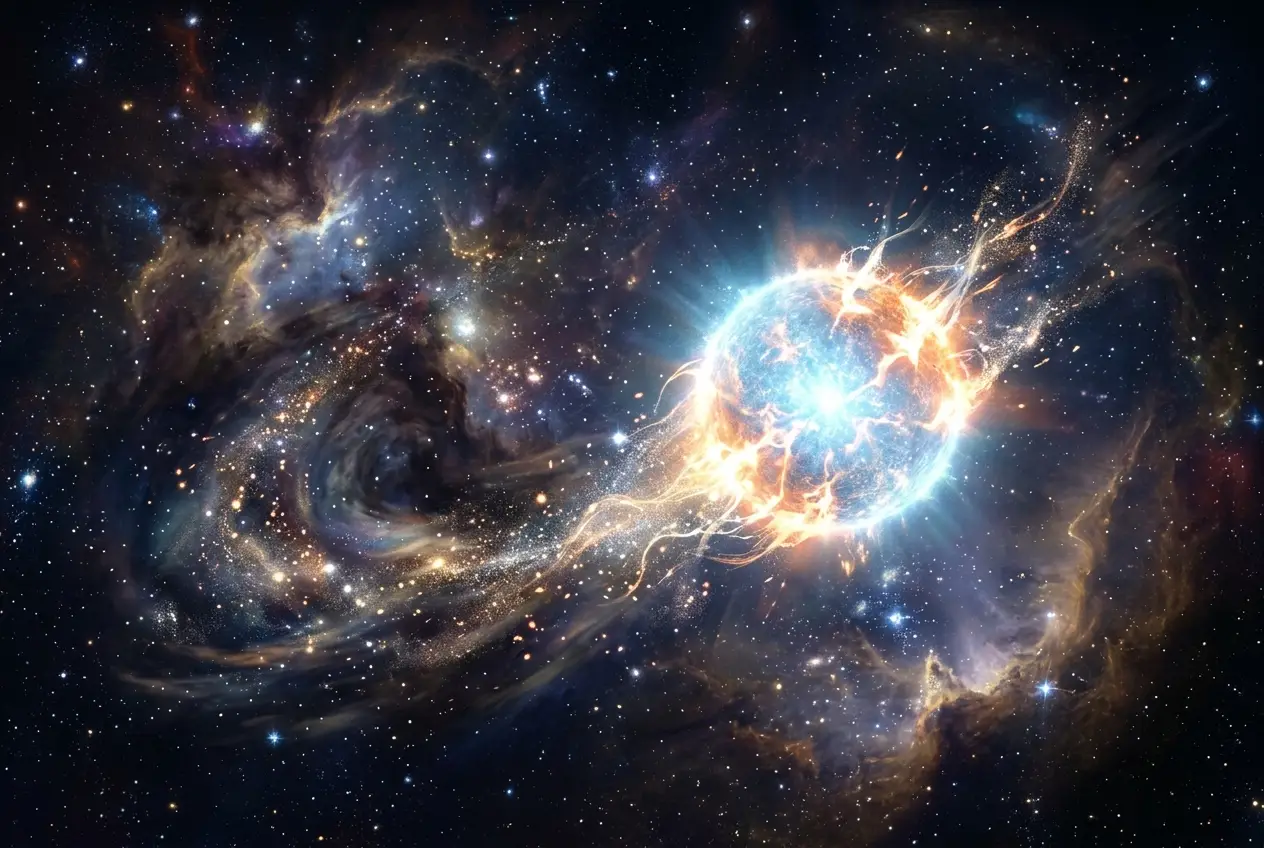
The night sky, a canvas of countless stars, often feels like the epitome of cosmic permanence. For millennia, humanity has looked up and seen the same constellations, the same twinkling beacons guiding travelers and inspiring poets. But what if one of those seemingly eternal lights simply… vanished? Not faded, not dimmed, but gone? Recently, astronomers are increasingly encountering such perplexing events – stars that, by all accounts, should be stable, suddenly disappearing without a trace. It’s a cosmic riddle that challenges our fundamental understanding of stellar evolution and hints at phenomena more extreme and mysterious than we ever imagined.
The Case of the Missing Stars: A New Frontier in Astronomy
For a long time, the disappearance of a star was almost universally attributed to a supernova – a cataclysmic explosion marking the end of a massive star's life, leaving behind a neutron star or a black hole. While supernovae are incredibly bright and noticeable, what really sparks our curiosity are cases where a star simply winks out of existence, leaving no discernible explosion or remnant. This isn't about distant galaxies where whole stars disappear due to cosmic expansion or observational limits; this is about individual stars, within our observational reach, that just aren't there anymore.
Astronomers, armed with increasingly powerful telescopes and sophisticated data analysis techniques, are now actively searching for these "vanishing stars" or "failed supernovae." It's a field brimming with both scientific rigor and a thrilling sense of cosmic detective work. Imagine scanning old photographic plates or digital archives, comparing them to current observations, and finding a prominent star missing from its usual spot. It's enough to send a shiver down my spine, contemplating the sheer power of the universe.
Decoding the Potential Causes: Stellar Black Holes and Dark Matter
So, what could possibly cause a star to disappear without the fanfare of a supernova? The leading theory, and arguably the most dramatic, involves the direct collapse of a massive star into a black hole.
Normally, when a very massive star (typically >8 solar masses) exhausts its nuclear fuel, its core collapses, triggering an immense shockwave that blasts the outer layers into space as a Type II supernova. The remaining core then forms a neutron star or, if it’s massive enough, a black hole. However, theoretical models suggest that under certain rare conditions, a massive star might directly collapse into a black hole without producing a visible supernova. This is often referred to as a "failed supernova."
In a failed supernova scenario, the collapsing core doesn't generate a strong enough outward shockwave. Instead, all the material implodes inwards, swallowed by the rapidly forming black hole. From our distant perspective, the star would appear to simply dim and then vanish, its light escaping its surface for the last time before crossing the event horizon of the nascent black hole. This is an incredibly exciting prospect because it offers a way to form stellar-mass black holes that bypass the traditional supernova explosion. You can learn more about these fascinating events on Wikipedia's page on Transient Astronomical Events (opens in a new tab).
Another, more exotic, possibility involves dark matter. While still largely hypothetical in this context, some theories propose that interactions with dense clumps of dark matter could somehow disrupt a star’s core stability, leading to its rapid and non-explosive collapse. Dark matter remains one of the universe's greatest puzzles, and its potential role in such dramatic stellar events adds another layer of intrigue. We've explored other cosmic enigmas, like whether /blogs/is-our-universe-a-hologram-decoding-cosmic-data-8116, and the mystery of dark matter is just as profound.
Beyond the Black Hole: Other Explanations for Stellar Vanishing Acts
While failed supernovae are a compelling explanation, other, less dramatic, but equally intriguing scenarios could contribute to stars seemingly disappearing:
- Obscuration by Dust: A star might not vanish but simply become obscured by a sudden, dense cloud of dust and gas in its line of sight. This could be a passing nebula, the star's own ejected material, or a sudden, massive dust outburst. This would cause the star to appear to fade or disappear from view temporarily.
- Unusual Variable Stars: Some stars are naturally variable, changing their brightness over time. If a star undergoes an unusually deep or prolonged minimum in its luminosity, it might be mistaken for a vanishing star. However, these usually rebound, and astronomers are good at identifying known variable types.
- Lens Effects: Gravitational lensing could, in very rare and specific alignments, make a star temporarily disappear from view, though this is less likely to be a consistent explanation for multiple observed vanishings.
- Flawed Data or Transient Events: Sometimes, what appears to be a vanished star could be due to issues with historical observations, calibration errors, or simply short-lived transient phenomena that were misidentified as stable stars in older surveys.
These possibilities, while less dramatic than a direct black hole collapse, still highlight the dynamic and often surprising nature of our universe. The more we learn, the more we realize how much we don't know about even seemingly common objects like stars.
The Quest for Proof: Hunt for Failed Supernovae
The search for concrete evidence of failed supernovae is an active and challenging area of research. One of the most famous candidates is N6946-BH1, a red supergiant that appeared to vanish in 2007. Located in the spiral galaxy NGC 6946 (often called the "Fireworks Galaxy" due to its high supernova rate), this star was observed to dim significantly and then disappear, with no corresponding supernova detection. Subsequent observations with the Hubble Space Telescope and other instruments have found no visible light at its location, but instead, a faint infrared source, consistent with a forming black hole still accreting some material or a dust-enshrouded remnant.
Researchers use surveys like the Palomar Transient Factory (PTF) and its successor, the Zwicky Transient Facility (ZTF), to monitor vast swathes of the sky for changes in stellar brightness. When a star vanishes, they immediately conduct follow-up observations across various wavelengths – from X-ray to radio – to search for any tell-tale signs of a remnant, such as a compact object or faint infrared emission.
One of the key challenges is differentiating a genuine failed supernova from a star simply being obscured. The amount of dust needed to completely hide a massive star without showing any residual light is immense, and usually, such dust clouds leave their own signatures. However, the direct collapse into a black hole remains the most tantalizing explanation for these profound disappearances.
Interestingly, another famous cosmic anomaly, Tabby's Star (KIC 8462852), also presented a baffling dimming behavior that spurred theories ranging from alien megastructures to massive dust clouds. While its case is different (it dimmed irregularly rather than vanishing permanently), it demonstrates the scientific community's drive to understand unusual stellar behavior. For more on how we detect such strange phenomena, check out our piece on /blogs/do-exoplanet-transits-hide-alien-tech-6425.
Looking Ahead: Next-Generation Telescopes and the Future of Vanishing Stars
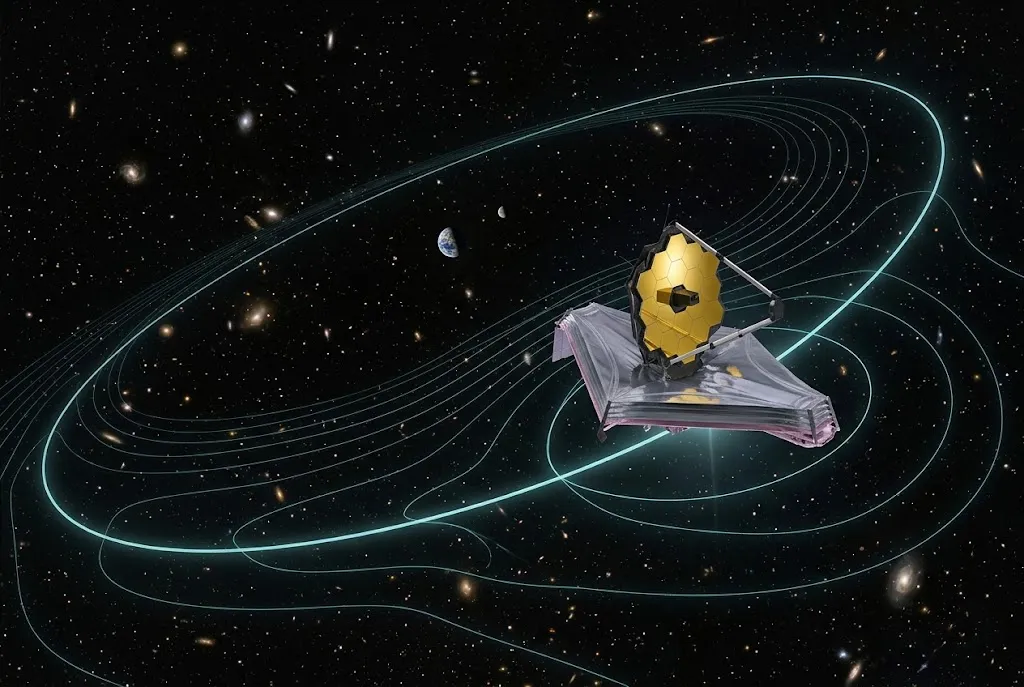
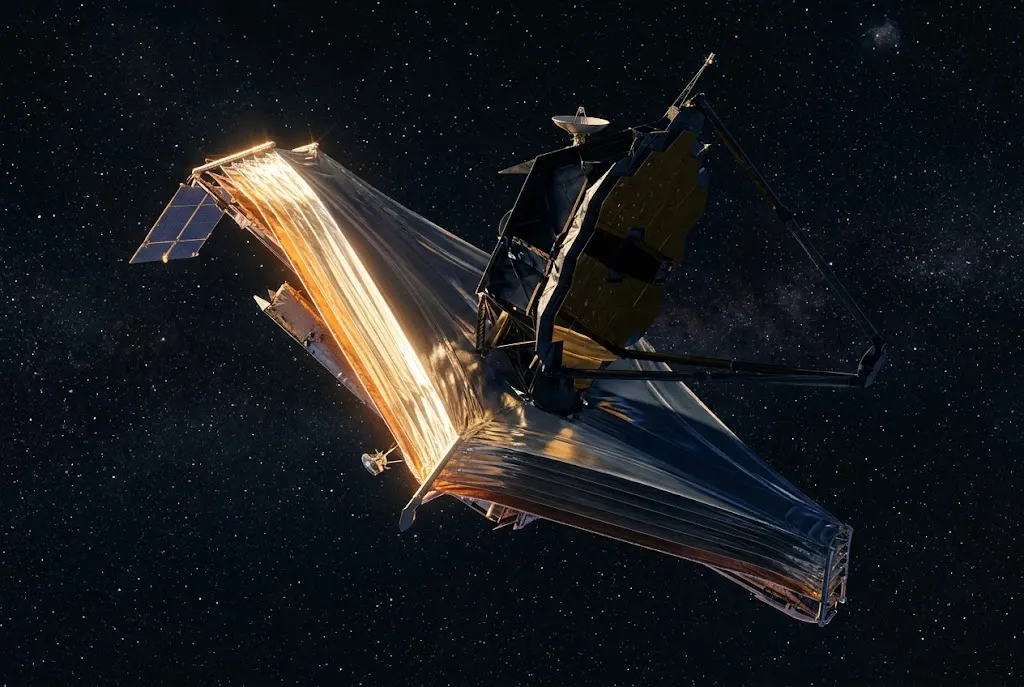
The next generation of astronomical observatories will be crucial in unraveling the mystery of vanishing stars. The James Webb Space Telescope (JWST), with its unparalleled infrared capabilities, can peer through dust clouds and detect faint heat signatures from newly formed black holes or obscured remnants. Upcoming ground-based telescopes like the Giant Magellan Telescope (GMT) and the Thirty Meter Telescope (TMT) will offer unprecedented resolution and light-gathering power, allowing astronomers to scrutinize these mysterious stellar graveyards with greater detail.
Moreover, new dedicated transient surveys, such as those planned with the Vera C. Rubin Observatory, will scan the entire visible sky every few nights, generating an astronomical "movie" of the universe. This will make it far easier to catch stars in the act of vanishing and provide crucial data on the precursor stars and the circumstances of their disappearance. This continuous monitoring is essential, as these events are by nature fleeting and rare.
Our pursuit of understanding vanishing stars isn't just about ticking off another celestial mystery; it's about refining our models of stellar evolution, understanding the formation of black holes, and perhaps even discovering entirely new physics. The cosmos is far more dynamic and unpredictable than our ancestors, or even we ourselves, might have once believed. The universe truly is a vast, open-ended book of wonders and unanswered questions, and every vanishing star is a new page waiting to be turned. This constant state of cosmic flux often makes me wonder about the broader implications, perhaps even for the stability of other systems, like those discussed in our article about /blogs/why-are-rogue-planets-wandering-the-cosmos-6249.
Conclusion
The concept of a star simply disappearing from the night sky is as humbling as it is awe-inspiring. It serves as a stark reminder of the universe's capacity for extreme events, operating on scales and with forces we are only just beginning to comprehend. Whether these vanishings are due to failed supernovae, interactions with dark matter, or other exotic phenomena yet to be conceived, each missing star deepens our understanding of the cosmic ballet. As our technological prowess grows, so too does our ability to observe these fleeting moments, pushing the boundaries of what we thought possible and reinforcing the fact that the universe always holds more secrets than we can imagine. The next time you look up at the stars, consider that some of them might be on the verge of a silent, spectacular exit, destined to become another one of the universe's profound, hidden enigmas.

Conversation0
No comments yet. Be the first to share a thought — the best questions often become new stories.