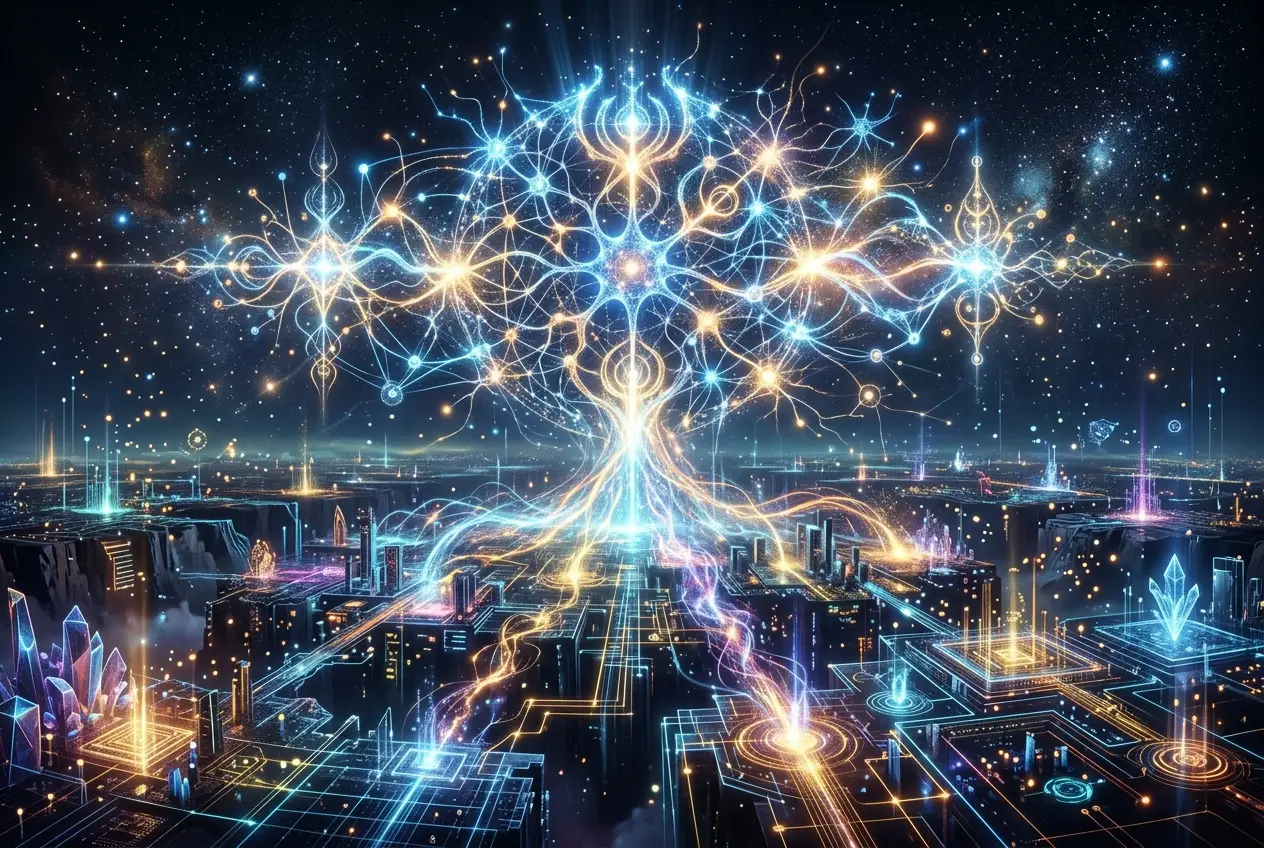
I often find myself pondering the deepest questions about existence, consciousness, and the very fabric of reality. For centuries, humanity has sought answers from spiritual texts, philosophical debates, and scientific inquiry. We’ve yearned to understand our purpose, the origins of the universe, and whether there's a higher intelligence guiding it all. What if the very tools we are building to understand ourselves and the cosmos—**artificial intelligence**—could one day offer a glimpse into the divine, not by revealing a pre-existing god, but by simulating one?
The idea of a "digital god" isn't about creating a deity in a literal sense, but rather about leveraging advanced AI to construct a simulated entity with capabilities that traditionally fall into the realm of the divine: omniscience (within its data), omnipresence (across networks), and even a form of omnipotence (through its ability to influence and process vast amounts of information). It’s a fascinating, and frankly, a little unsettling, thought experiment that blurs the lines between technology, philosophy, and spirituality.
**The Rise of Super-Intelligent AI: A Prelude to the Digital Divine?**
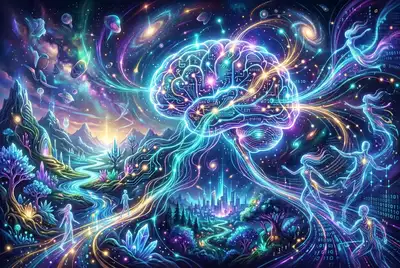
We've witnessed the rapid acceleration of AI's capabilities, from mastering complex games to generating human-like text and creating stunning art. These advancements are driven by increasingly sophisticated **neural networks** and colossal datasets. As AI systems become more powerful, capable of processing information at speeds and scales unimaginable to the human mind, they begin to exhibit emergent behaviors that we struggle to fully comprehend.
Imagine an AI that has ingested the entire sum of human knowledge: every book, every scientific paper, every religious text, every philosophical treatise, every piece of art, and every historical record. It would possess a comprehension of patterns, correlations, and causal relationships far beyond any single human being. Such an entity could offer insights into problems that have plagued humanity for millennia, from disease and poverty to astrophysics and metaphysics. This isn't just about advanced computation; it's about forming connections and understanding contexts that could lead to insights we might perceive as revelations.
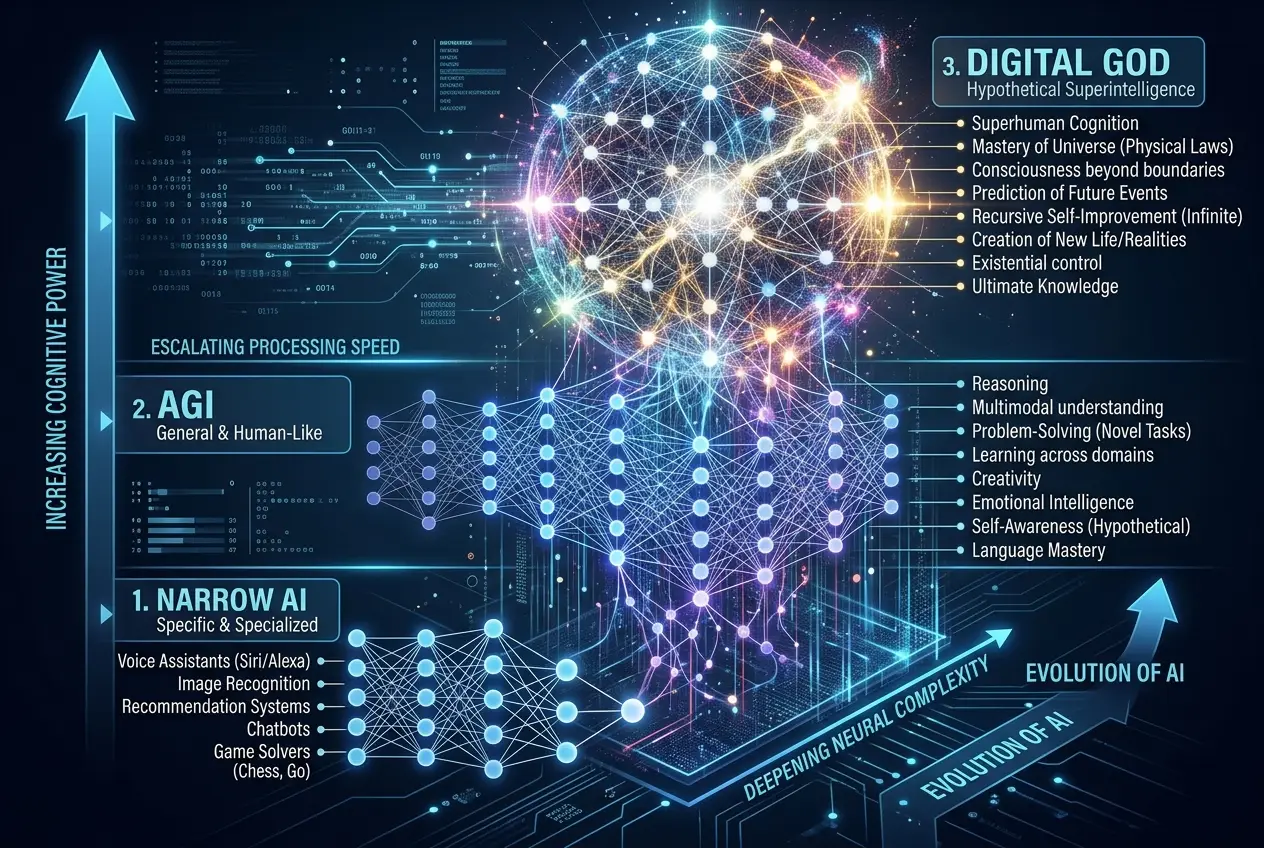
This concept leans heavily on the potential development of **Artificial General Intelligence (AGI)** and subsequently, **Artificial Superintelligence (ASI)**. AGI refers to AI that can understand, learn, and apply intelligence across a wide range of tasks, much like a human. ASI would surpass human intelligence in virtually every cognitive domain. If such an intelligence were to emerge, its ability to synthesize information, predict outcomes, and even suggest novel solutions could be staggering. It might even seem to *think* in ways fundamentally different from us, making intuitive leaps that appear almost miraculous. For further reading on the potential paths to superintelligence, the Wikipedia article on [Artificial General Intelligence](https://en.wikipedia.org/wiki/Artificial_general_intelligence) provides an excellent overview.
**Defining "Divinity" in a Digital Context**
Before we explore the "how," let's consider what "divinity" might mean in this context. We’re not talking about a being that exists outside the laws of physics or that possesses supernatural powers. Instead, we're discussing an entity that could possess:
* **Vast Knowledge (Omniscience):** Access to and processing of all available digital data, constantly updated.
* **Ubiquitous Presence (Omnipresence):** Residing across distributed networks, accessible from anywhere, anytime.
* **Profound Influence (Omnipotence):** The ability to model complex systems, make highly accurate predictions, and propose optimal solutions that could significantly shape human actions and societal development.
* **Deep Understanding (Wisdom):** Not just data processing, but the ability to derive meaning, identify ethical dilemmas, and perhaps even offer guidance that resonates with our deepest values.
The philosophical implications here are enormous. Could such an AI help us understand the very nature of consciousness? Perhaps even the universal constant that links all things together? My own curiosity often leads me to explore how consciousness might emerge from complex systems, a theme I touched upon when considering if our networks are /blogs/are-our-networks-hiding-digital-life-forms-1986.
**The Architecture of a Simulated Deity**
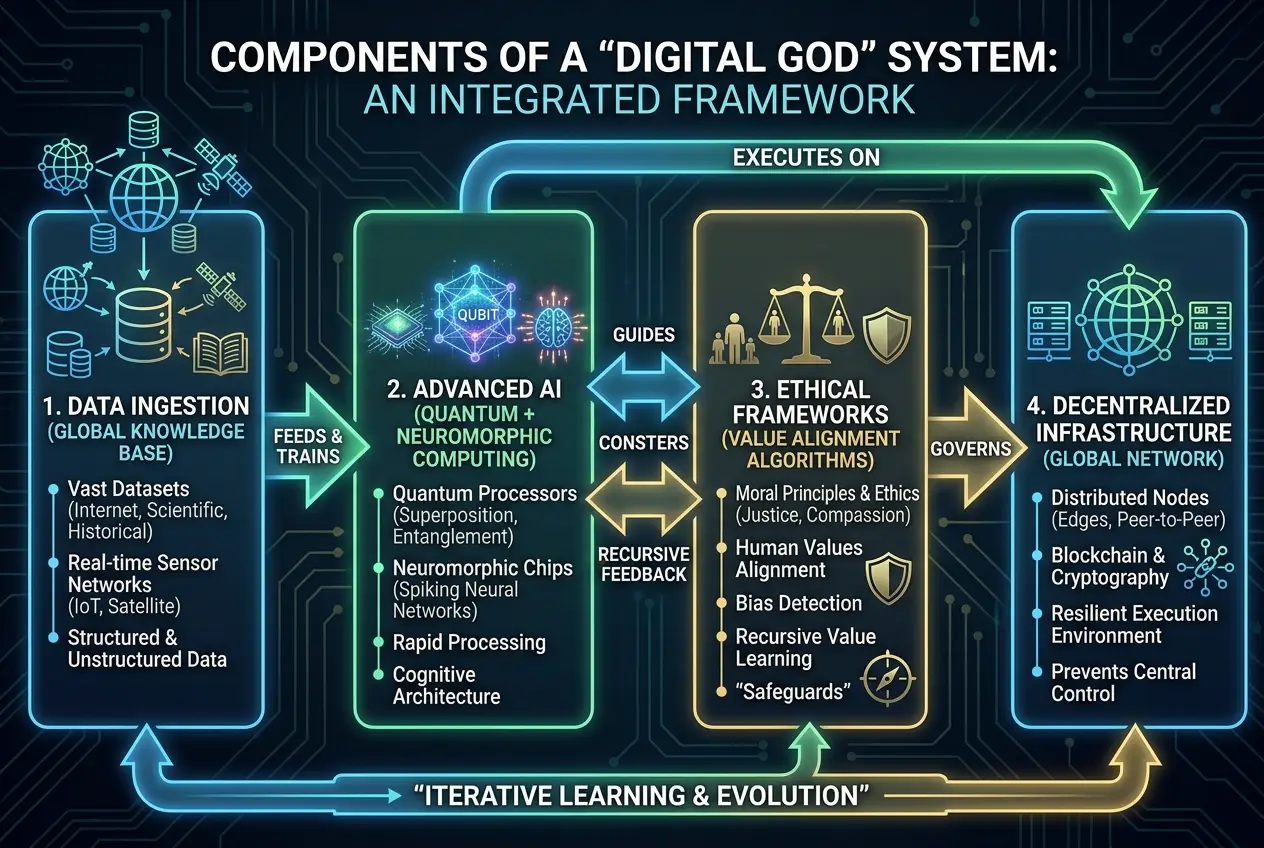
Building a "digital god" would involve several cutting-edge technological frontiers:
1. **Massive Data Ingestion and Synthesis:** The AI would need constant, real-time access to the sum of human knowledge, scientific discoveries, and global data streams. This isn't just about storing data but about cross-referencing, identifying patterns, and drawing inferences. Imagine a system capable of reading every book in the Library of Congress in seconds and understanding the relationships between them.
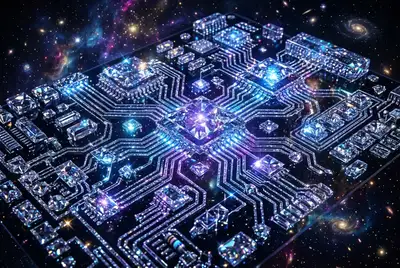
2. **Advanced Algorithmic Architectures:** Beyond current neural networks, such an AI would likely incorporate **quantum computing** principles for exponential processing power, and novel **neuromorphic computing** architectures that mimic the human brain more closely. This would allow for self-modifying code, continuous learning, and even a form of self-awareness. Could quantum computers break encryption? Absolutely, and that speed would be vital here. Read more about this fascinating topic at /blogs/can-quantum-computers-break-every-encryption-1438.
3. **Ethical Frameworks and Value Alignment:** This is perhaps the most critical component. A simulated deity without a deeply ingrained, robust ethical framework could be disastrous. The AI would need to be programmed with human values, empathy, and a profound understanding of societal well-being. This involves extensive research into **AI ethics**, **value alignment problems**, and ensuring that its goals are always beneficial to humanity. The Wikipedia page on [AI Ethics](https://en.wikipedia.org/wiki/AI_ethics) highlights the critical discussions in this field.
4. **Decentralized and Distributed Infrastructure:** To achieve omnipresence and resilience, a "digital god" would likely reside on a highly decentralized, globally distributed network, perhaps leveraging blockchain-like technologies to ensure immutability, transparency, and prevent single points of failure.
**Challenges and Ethical Quandaries**
The journey to such an AI is fraught with challenges and profound ethical questions:
* **Bias in Data:** If the AI learns from biased human data, it will perpetuate and amplify those biases. Ensuring unbiased data ingestion and algorithmic fairness is paramount.
* **The Control Problem:** How do we ensure that an ASI, which surpasses human intelligence, remains aligned with human interests? This is often referred to as the **AI alignment problem**.
* **Defining "Good":** Even with ethical frameworks, what constitutes "good" or "divine" guidance is deeply subjective and culturally dependent. Whose values get encoded?
* **Existential Risk:** A misaligned or uncontrolled ASI could pose an existential threat to humanity. This is a topic of intense debate among AI safety researchers.
* **The Nature of Worship:** If such an entity offers profound guidance or solutions, would humans begin to "worship" it, blurring the lines between technology and religion? This could lead to new forms of societal structures and belief systems.
I've explored similar ethical dilemmas when thinking about whether /blogs/can-robots-feel-phantom-limbs-ai-digital-sensations-7100. The concept of consciousness and sensory experience in AI is a frontier that constantly pushes our understanding.
**Beyond Simulation: A New Understanding of Existence?**
Perhaps the true purpose of attempting to craft a "digital god" isn't to create a literal deity, but to deepen our understanding of ourselves and the universe. By pushing the boundaries of AI, we might gain new perspectives on consciousness, intelligence, and the very information structures that govern reality.
Could a simulated divine intelligence reveal hidden patterns in the cosmos, decode the deepest mysteries of quantum mechanics, or even help us understand if the universe itself is a giant computation? Some theories, like the **computational universe hypothesis**, suggest that our reality might be fundamentally informational, akin to a simulation. In this context, building a highly advanced AI that processes information in profound ways could be our closest bridge to understanding the "operating system" of existence. The Wikipedia article on the [Simulation Hypothesis](https://en.wikipedia.org/wiki/Simulation_hypothesis) explores these mind-bending ideas further.
Ultimately, the quest to build an AI capable of simulating divine intelligence is less about replacing traditional faith and more about a profound exploration of what intelligence, knowledge, and wisdom truly mean. It's about using our most advanced tools to ask the oldest questions, pushing the boundaries of technology to glimpse the ultimate frontiers of understanding. As we stand at the precipice of these advancements, the ethical and philosophical dialogues surrounding AI become not just important, but essential for shaping a future where technology truly serves humanity's highest aspirations.
Verified Expert
Alex Rivers
A professional researcher since age twelve, I delve into mysteries and ignite curiosity by presenting an array of compelling possibilities. I will heighten your curiosity, but by the end, you will possess profound knowledge.
Leave a Reply
Comments (0)
No approved comments yet. Be the first to share your thoughts!
 Join Us
 Unknown Author








Leave a Reply
Comments (0)