


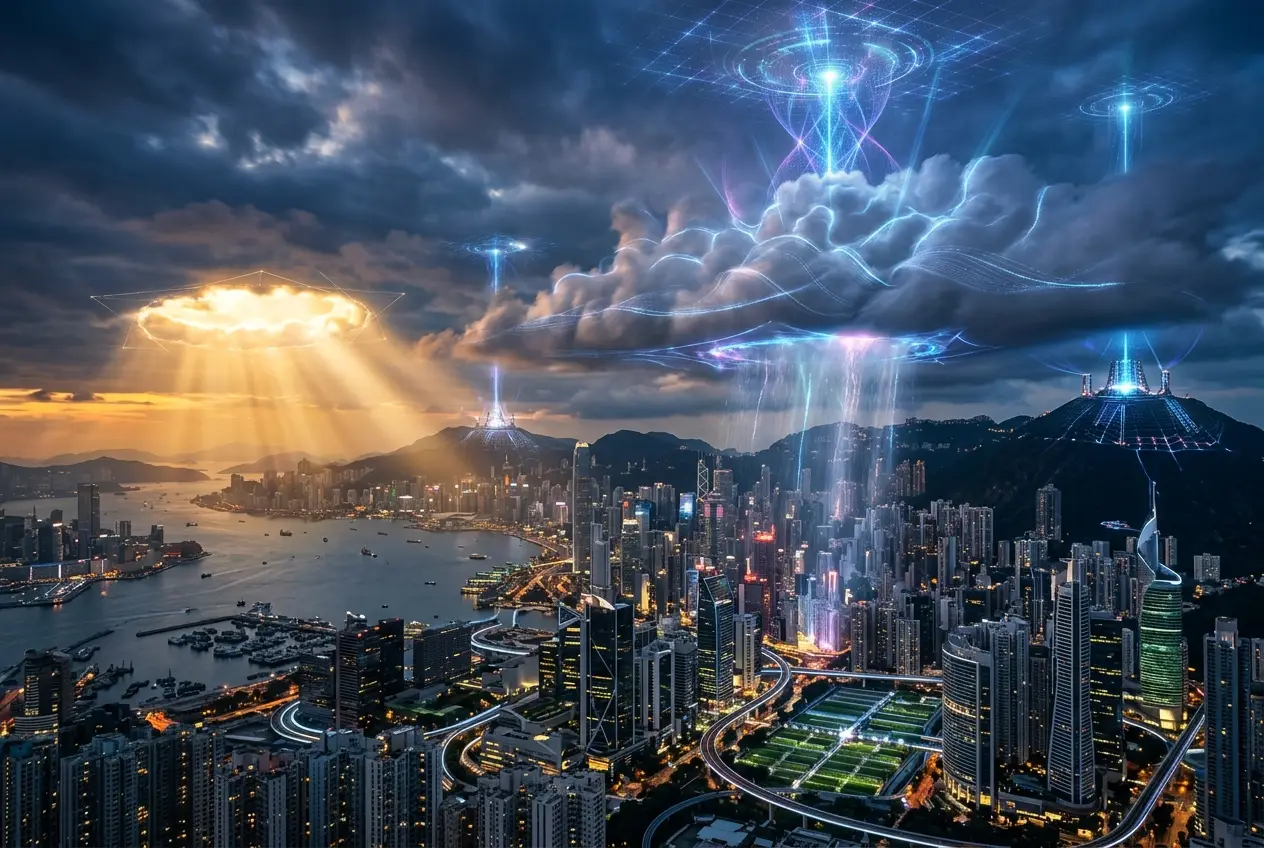
I’ve always been fascinated by the sheer power of nature. From the gentle caress of a summer breeze to the terrifying roar of a hurricane, the weather dictates so much of our lives. It makes me wonder, could humanity, with all its technological prowess, ever truly take the reins? Could we manipulate the skies, call forth rain, or dissipate storms with the flick of a digital switch? This isn't just a science fiction fantasy; the idea of weather control has a surprisingly long and complex history, evolving from rain dances to sophisticated scientific endeavors.
When I first delved into this topic, I pictured grand machines altering global climate. But the reality is far more nuanced, often involving subtle interventions with potentially massive consequences. The concept of intentionally altering atmospheric conditions, often called geoengineering or weather modification, isn't new. It’s a field fraught with ethical dilemmas, scientific challenges, and tantalizing possibilities.
The Long-Held Dream of Taming the Skies
The dream of controlling the weather dates back to ancient times, with rituals and prayers seeking to influence rainfall or calm storms. Fast forward to the 20th century, and the dream began to take on a scientific facade. The Cold War era, in particular, saw significant investment in weather modification research, driven by both military and agricultural interests. Imagine the strategic advantage of controlling your adversary's climate or ensuring bountiful harvests for your own nation.
One of the earliest and most widely known techniques is cloud seeding. I remember learning about it in a documentary once, thinking it sounded almost too simple to be true. Developed in the 1940s by scientists like Vincent Schaefer and Irving Langmuir at General Electric, cloud seeding involves dispersing substances—most commonly silver iodide or dry ice—into clouds. These particles act as nuclei, encouraging the formation of ice crystals or supercooled water droplets, which then grow and fall as precipitation. For a deeper dive into its history, check out the Wikipedia article on cloud seeding (opens in a new tab).
Cloud seeding has been used for decades in various parts of the world, from increasing snowfall in mountainous regions to mitigating droughts. However, its effectiveness remains a subject of debate. The atmosphere is an incredibly complex, chaotic system, making it difficult to definitively prove that a seeded cloud would not have produced rain naturally.
Beyond Rain: The Spectrum of Weather Modification
But weather control extends far beyond just making it rain. Scientists have explored a multitude of methods, each with its own set of challenges and ethical considerations:
Fog Dispersal
This technique, primarily using hygroscopic chemicals (those that attract water) or even heating the air, has been successfully employed at airports to improve visibility. While localized, it demonstrates our ability to directly alter atmospheric conditions for practical purposes.
Hail Suppression
Farmers dread hail, which can devastate crops. Hail suppression efforts often use a similar approach to cloud seeding, introducing ice-nucleating agents into potential hailstorms to promote the formation of smaller, less damaging hailstones.
Hurricane Mitigation
This is perhaps the most ambitious and potentially dangerous frontier. Attempts to weaken hurricanes have involved cloud seeding to modify storm structure, but the sheer energy of these systems makes significant intervention incredibly difficult and risky. The potential for unintended consequences – like altering a hurricane's path to impact a different populated area – is immense, leading to a de facto moratorium on such experiments.
Solar Radiation Management (SRM)
This category of geoengineering seeks to reflect sunlight away from Earth to counteract global warming. Proposed methods include:
- Stratospheric Aerosol Injection (SAI): Releasing reflective aerosols (like sulfur dioxide, mimicking volcanic eruptions) into the stratosphere to scatter sunlight. This is a highly controversial idea, with unknowns about its long-term effects on global weather patterns and ecosystems.
- Marine Cloud Brightening: Spraying sea salt particles into marine clouds to make them more reflective, increasing their albedo.
The Tech Behind the Transformation: AI, Sensors, and Data
Modern weather control isn't about magical incantations; it's about leveraging cutting-edge technology. The sheer scale and complexity of Earth's atmosphere demand sophisticated tools:
1. Advanced Sensors and Satellites: Understanding the atmosphere requires vast amounts of real-time data. Satellites equipped with hyperspectral imagers, lidar, and radar provide detailed insights into cloud formation, atmospheric composition, and wind patterns. Ground-based weather stations, drones, and even smart dust (read about its potential in "Smart Dust: Will Our World Get a Digital Skin?" at Curiosity Diaries) could offer hyper-local atmospheric data, creating an unprecedented "nervous system" for the planet.
2. Supercomputers and AI: This is where the true power comes in. Simulating atmospheric phenomena is one of the most computationally intensive tasks imaginable. Supercomputers are essential for running complex climate models, predicting the effects of interventions, and understanding unintended consequences. Artificial Intelligence, particularly machine learning, could revolutionize our ability to identify optimal intervention points, predict outcomes, and adapt strategies in real-time. Imagine an AI constantly analyzing global weather patterns, suggesting the precise moment and location for a cloud-seeding operation to maximize rainfall while minimizing negative impacts. AI is already being explored for predicting natural disasters, as discussed in our blog, "Can AI Predict Earth's Next Big Quake?"
3. Directed Energy Systems: While speculative, some concepts involve using directed energy, such as lasers or microwave beams, to influence atmospheric processes. These could potentially ionize air, create condensation nuclei, or even dissipate storm energy. However, the energy requirements and safety implications are monumental, pushing the boundaries of what is currently feasible.
The Elephant in the Atmosphere: Ethical & Geopolitical Challenges
The ability to control weather comes with enormous ethical, environmental, and geopolitical baggage. I find myself grappling with several crucial questions:
- Who Decides? If one nation creates rain for its drought-stricken farms, does it inadvertently steal rain from a neighboring country? The potential for "weather wars" or global resource conflicts is very real.
- Unintended Consequences: Modifying one part of the climate system could have unforeseen ripple effects elsewhere. Could increasing precipitation in one region lead to droughts or extreme weather events in another?
- Ecological Impact: Introducing chemicals into the atmosphere, even in small quantities, could have long-term effects on ecosystems, biodiversity, and human health.
- Cost and Feasibility: Many geoengineering schemes are incredibly expensive and technically challenging to implement on a scale large enough to make a difference.
The sheer complexity of Earth’s interconnected systems means that even seemingly small interventions could have cascading effects. As physicist Freeman Dyson once remarked about climate models, "We know what the rules are. The problem is that the computer isn't big enough to calculate the consequences of the rules." (Source: Wikipedia - Freeman Dyson (opens in a new tab)). This highlights the immense challenge of predictive accuracy in such a chaotic system.
Some argue that given the urgency of climate change, we cannot afford to ignore geoengineering as a potential tool, even with its risks. Others contend that focusing on emission reduction is the only truly responsible path, seeing geoengineering as a dangerous distraction. The debate is robust and ongoing, shaping the very future of our planet. For broader discussions on humanity's future with tech, you might be interested in "Earth 2099: Will Humanity Live in Utopia or Tech Dystopia?"
The Road Ahead: Responsible Innovation or Pandora's Box?
So, can tech control weather? In a limited, localized sense, yes. We can seed clouds, disperse fog, and even suppress hail. But on a grand, planetary scale, consistently manipulating global weather patterns remains firmly in the realm of theory and intense ethical debate. The technology is rapidly advancing, giving us increasingly powerful tools to understand, predict, and potentially influence our environment.
However, the question isn't just if we can, but should we? The atmosphere is a shared global commons, and altering it for the benefit of some could inadvertently harm others. International cooperation, transparent research, and robust ethical frameworks are paramount if humanity ever decides to seriously embark on the journey of large-scale weather control. For now, the most powerful tool we have for managing our atmospheric future remains reducing our impact and adapting to the changes already underway.
The idea of taming the tempest or summoning sunshine on demand is captivating, but the responsibility that comes with such power is immense. It forces us to confront not just the limits of our technology, but the depths of our wisdom.






Conversation0
No comments yet. Be the first to share a thought — the best questions often become new stories.