



The cosmos is a vast, silent ocean, and for generations, humanity has peered into its depths, hoping to catch a glimpse of another ship sailing by. When I first started following the hunt for alien life, the focus was always on "biosignatures" – the tell-tale chemical signs of biological processes. Think oxygen, methane, water vapor. If a planet has these in the right combination, we might be looking at a world teeming with life, much like our own Earth. It’s a compelling idea, one that fuels the imagination and drives monumental scientific endeavors.
But recently, I’ve found myself pondering a different, perhaps more sobering, question: what if we're not looking for life itself, but for the byproducts of life that has advanced, perhaps even to its own detriment? What if, instead of pristine, life-sustaining atmospheres, we should be searching for signs of alien pollution? It’s a concept that shifts the search from "biosignatures" to "technosignatures" – the indicators of advanced technology, or even, dare I say, advanced industry.
The Standard Playbook: Hunting for Biosignatures
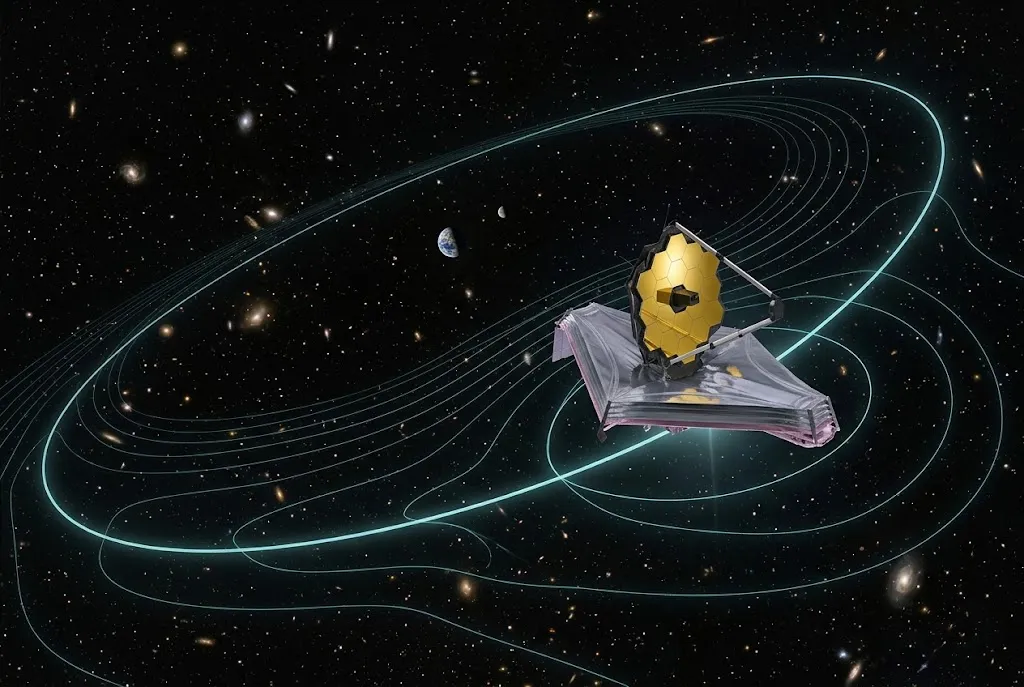
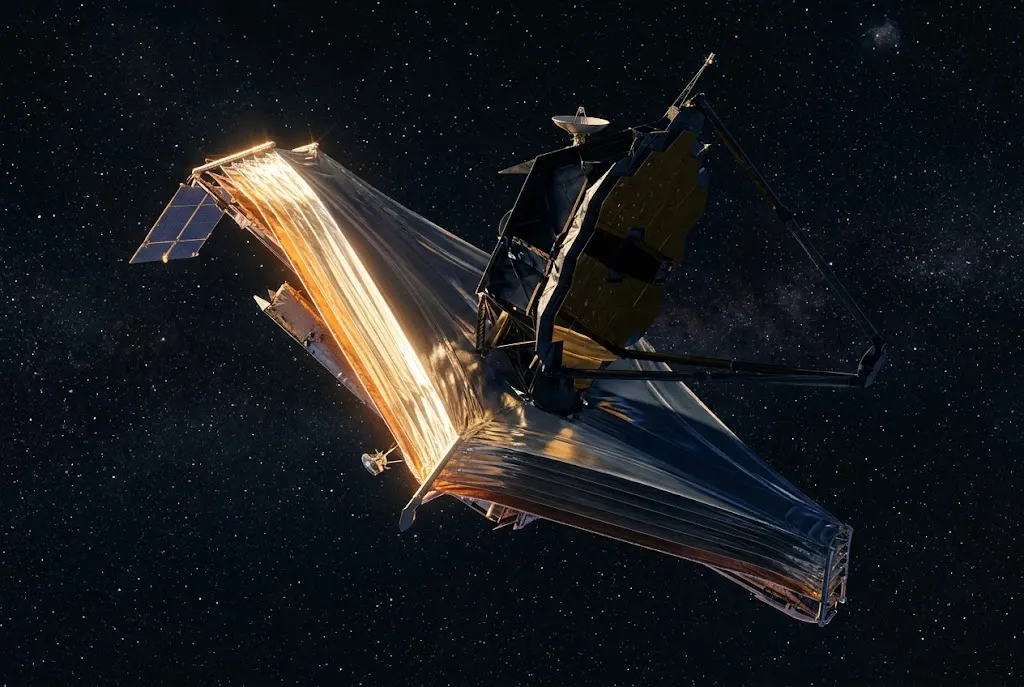
For decades, the search for extraterrestrial intelligence (SETI) largely revolved around listening for radio signals, a classic technosignature. But with the advent of powerful telescopes like the Hubble Space Telescope and, more recently, the James Webb Space Telescope (JWST), our gaze has shifted to characterizing the atmospheres of exoplanets. Our current strategy, refined over years, involves looking for specific chemical imbalances in an exoplanet's atmosphere that are strongly indicative of biological activity.
For instance, the presence of large amounts of oxygen is often considered a strong biosignature. On Earth, oxygen is highly reactive; it rapidly combines with other elements and would disappear from our atmosphere if not constantly replenished by photosynthetic life. Similarly, methane, another potential biosignature, is also a relatively unstable molecule. If we find both oxygen and methane in significant quantities on a distant exoplanet, it suggests an active biological process is continuously producing them, battling against natural chemical reactions that would otherwise eliminate them. This imbalance is key.
As I’ve observed the discussions among astrobiologists, the excitement around finding these biomarkers is palpable. It would be profound proof that life isn't unique to Earth. But what if there's another path to discovery, one that reflects a more advanced, and perhaps more relatable, stage of planetary evolution? For more on the search for life in our own solar system, you might find our blog on Is Europa's Ocean Hiding Alien Life? Decoding Icy Moons interesting.
Technosignatures: Beyond Life's First Breath
A technosignature, by definition, is any measurable property or phenomenon that provides scientific evidence for extraterrestrial technology. While radio signals are the classic example, the concept extends far beyond. These could include massive artificial structures like Dyson spheres – megastructures built around stars to harness their energy – or even artificial lights on the night side of a planet. (We've even explored the concept of Can We Build a Dyson Sphere? Taming a Star for Power in a previous post.)
But the most tantalizing new frontier in technosignature research, one that truly captivates my curiosity, is the search for atmospheric pollution. Imagine a civilization that has progressed to an industrial age, much like Earth did in the last few centuries. Such a civilization would undoubtedly leave chemical fingerprints in its atmosphere. These aren't biosignatures; they are techno-signatures – a kind of "alien smog" that could be detectable across interstellar distances.
"The detection of technosignatures would be a scientific revolution, regardless of whether that technology is active or abandoned." — Sara Seager, MIT planetary scientist, via Wikipedia (opens in a new tab)
The idea isn’t as far-fetched as it might sound. On Earth, human industrial activity has dramatically altered our atmospheric composition, introducing molecules that wouldn't naturally exist in such quantities. These are exactly the kind of anomalies we could search for on distant worlds.
Alien Smog: The Chemical Fingerprints of Industry
What specific pollutants might we look for? Researchers have identified several compounds that are produced almost exclusively by industrial processes and have very few, if any, known natural pathways for formation in significant quantities. These include:
- Chlorofluorocarbons (CFCs): These are perhaps the "poster child" for alien pollution. On Earth, CFCs were widely used as refrigerants and propellants before their detrimental effects on the ozone layer were discovered. They are entirely artificial, highly stable, and have strong spectral features that could be detected through atmospheric spectroscopy. Finding CFCs in an exoplanet's atmosphere would be a monumental discovery, almost undeniable proof of an advanced technological civilization. You can read more about their history and impact on Wikipedia (opens in a new tab).
- Nitrogen Dioxide (NO2): While NO2 does have natural sources (like lightning), large concentrations are a hallmark of combustion processes, such as those from power plants and vehicles. If observed at high, sustained levels in an exoplanet atmosphere, especially one without strong natural geological activity, it could be a clue.
- Other Industrial Gases: Ammonia (NH3) or sulfur dioxide (SO2) could also be indicators if found in unusual concentrations or combinations, far exceeding what natural volcanic activity or other geological processes might produce. Heavy metals in aerosols could also be a fascinating, though challenging, target.
The detection method would primarily involve atmospheric spectroscopy – analyzing the light that passes through an exoplanet's atmosphere. Different chemicals absorb and emit light at specific wavelengths, creating unique spectral "fingerprints." By studying these fingerprints, astronomers can deduce the composition of the atmosphere. This technique has revolutionized our understanding of exoplanets and is fundamental to the search for both biosignatures and technosignatures. Learn more about the science of light and atmospheres on Wikipedia (opens in a new tab).
The Challenges of Detecting Distant Pollution
Even with advanced telescopes, this is no easy task. The signals would be incredibly faint, requiring instruments with unprecedented sensitivity.
- Distance: Exoplanets are light-years away. Detecting trace gases in their atmospheres is like trying to spot a single grain of sand on a beach while standing on another continent.
- Mimicry: Nature is incredibly complex. Some natural geological or chemical processes could potentially mimic industrial pollution, making definitive identification difficult. Robust scientific investigation would be crucial to rule out natural explanations.
- Faint Signals: Industrial gases might only constitute a tiny fraction of an exoplanet's atmosphere. Our current telescopes are primarily designed to detect major atmospheric components, not trace pollutants. However, advancements in spectral analysis, perhaps even leveraging AI to sift through complex data, could make this more feasible in the future. We've explored how Can AI Uncover Hidden Cosmic Anomalies?
The James Webb Space Telescope and Beyond
The JWST has already proven its incredible capability to peer into exoplanet atmospheres, detecting water vapor, carbon dioxide, and other molecules with exquisite detail. While it wasn't specifically designed to hunt for trace industrial pollutants, its sensitivity and infrared capabilities open up possibilities for initial screenings. Future generations of telescopes, perhaps giant ground-based instruments with adaptive optics or even space-based interferometers, could be specifically designed with the resolution and spectral range needed to hunt for these subtle technosignatures.
Imagine the day when a team of astronomers announces the detection of CFCs in the atmosphere of an exoplanet orbiting a distant star. It wouldn't just be a scientific discovery; it would be a profound moment for humanity, confirming that we are not alone in developing industry, and perhaps, that we are not alone in facing its consequences.
The Ethical Quagmire: To Announce or Not to Announce?
If we were to detect incontrovertible evidence of alien industrial activity, it would trigger one of humanity's most significant ethical and philosophical debates. Do we try to make contact? Do we announce our presence? The "Dark Forest" hypothesis, for example, suggests that the universe is a dangerous place where advanced civilizations remain silent to avoid attracting the attention of potentially hostile predators. Would broadcasting our discovery – or even our existence – be a reckless move? The implications of such a discovery are enormous, raising questions not just about science, but about our place in the cosmos and the future of our own civilization. You can delve into the complexities of this theory on Wikipedia (opens in a new tab).
Conclusion: A New Lens on Our Cosmic Search
The search for alien life is evolving. From simple single-celled organisms to advanced, technological civilizations, the spectrum of possibilities is vast. By expanding our search to include atmospheric technosignatures, we’re not just looking for life; we’re looking for evidence of other intelligent species that have perhaps trodden a similar path to our own, reshaping their planetary environment in ways both creative and destructive.
I find this pivot incredibly exciting. It’s a reminder that the universe holds surprises far beyond our current imaginings, and that the signs of intelligent life might not be pristine and perfect, but rather, imperfect and profoundly recognizable. The hunt for alien smog is a testament to our enduring curiosity, a quest that could redefine our understanding of existence and our responsibilities as stewards of our own planet.
Conversation0
No comments yet. Be the first to share a thought — the best questions often become new stories.