


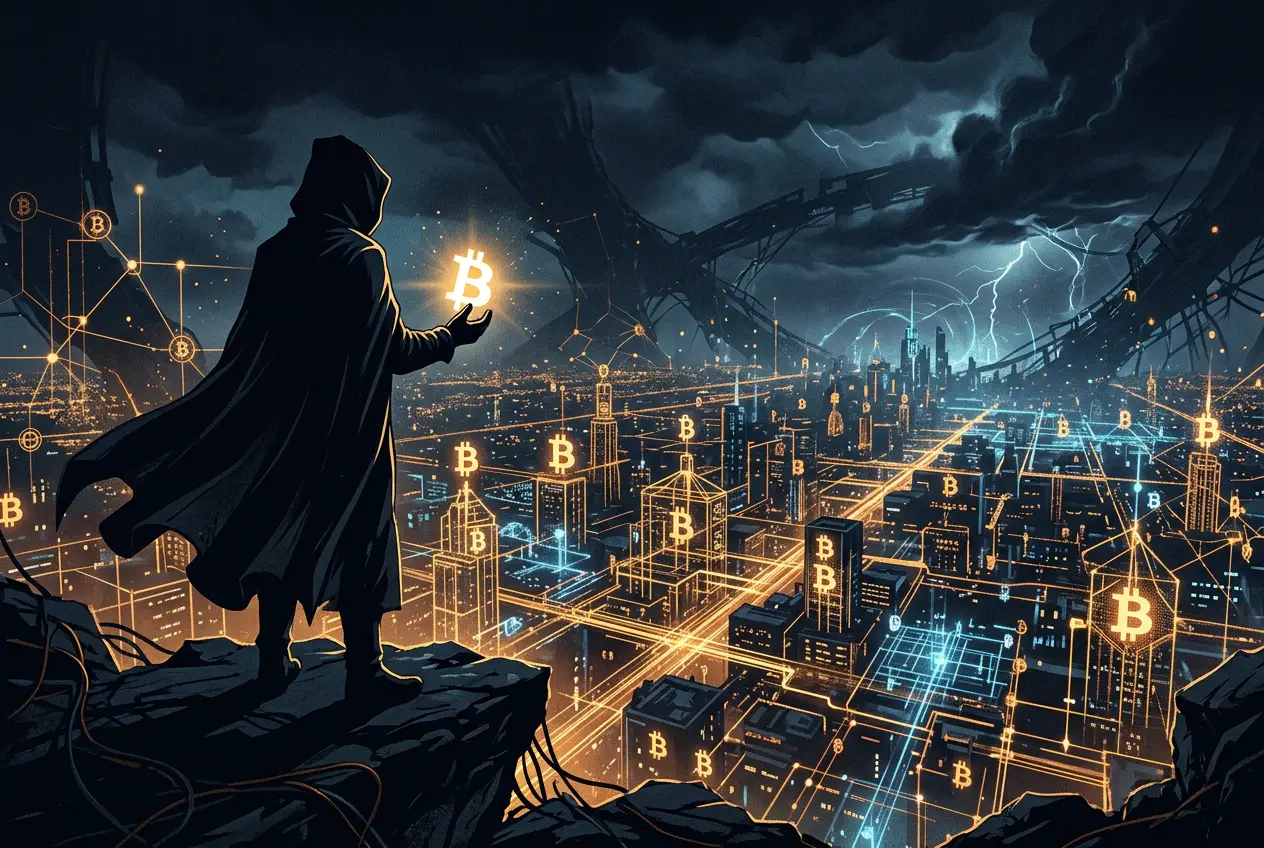
The year 2008 feels like a lifetime ago, especially in the rapidly evolving world of technology. That was the year a mysterious entity, known only as Satoshi Nakamoto, unveiled a white paper titled "Bitcoin: A Peer-to-Peer Electronic Cash System." Little did the world know that this unassuming document would lay the groundwork for a financial revolution, giving birth to Bitcoin and the entire cryptocurrency industry. What started as a niche idea among cryptographers quickly grew into a global phenomenon, reshaping our understanding of money, decentralization, and digital assets.
But amidst Bitcoin's meteoric rise, an enigma persists: Satoshi Nakamoto's identity. And perhaps even more perplexing is the vast fortune tied to their name—an estimated 1.1 million Bitcoins, worth over $60 billion at recent valuations, that remains utterly untouched. This isn't just about a rich individual; it's a digital ghost in the machine, a silent guardian of the crypto realm. I've often pondered the motivations behind such a monumental act of digital asceticism, and the potential implications if those coins were ever to move. It’s a tech mystery that continues to captivate, blurring the lines between innovation, anonymity, and the sheer power of an idea.
The Genesis of a Digital Fortune
Satoshi Nakamoto mined the very first block of the Bitcoin blockchain, famously dubbed the "genesis block," on January 3, 2009. From that point until mid-2010, they were actively involved in Bitcoin's development, interacting with early developers, refining the code, and contributing to discussions on forums. During this period, it's believed Satoshi mined a significant portion of the early Bitcoin, utilizing a mining pattern that has been meticulously analyzed by researchers like Sergio Demian Lerner, also known as "zero-knowledge." Lerner's analysis, detailed in a 2013 paper, suggested that a single entity was responsible for mining approximately 1 million Bitcoins in the network's infancy. This entity is widely assumed to be Satoshi Nakamoto.
The significance of this untouched fortune cannot be overstated. These Bitcoins represent not just wealth, but also a symbolic anchor for the entire cryptocurrency ecosystem. They are a constant reminder of Bitcoin's mysterious origins and the philosophical underpinnings of its creation. The fact that the creator's wealth remains dormant is, for many, a testament to the project's integrity and its decentralized ethos—a deliberate detachment from personal gain that underscores Bitcoin's purpose as a system for the people, not for its founder.
The Unanswered "Why": Theories Abound
The ultimate question that haunts the crypto world is simple: why? Why would someone, or a group, sit on such an astronomical sum of money without ever touching it? The theories are as numerous as they are fascinating, each offering a glimpse into the possible mindset of Bitcoin's elusive creator.
1. The Philosopher-King Theory: Anonymity and Decentralization
One dominant theory suggests that Satoshi Nakamoto's disappearance and the perpetual dormancy of their Bitcoins are a deliberate act to ensure Bitcoin's decentralization and philosophical purity. If Satoshi had remained active, or worse, cashed out their fortune, it could have undermined the very principles Bitcoin was built upon. A visible, wealthy founder might have been seen as a central authority, susceptible to influence, or even an enemy of the state. By vanishing, Satoshi truly handed Bitcoin over to the world, allowing it to grow organically without a single point of failure or an individual whose actions could dramatically sway its fate. This perspective aligns with the cypherpunk ideals that heavily influenced early crypto development. The integrity of the project, for many, relies on its founder's anonymity and disengagement from personal profit.
2. Lost Keys: The Digital Lockbox is Sealed Forever
A more tragic, yet entirely plausible, theory is that the private keys to Satoshi's Bitcoin wallets are simply lost. In the early days of Bitcoin, security practices were nascent, and the importance of meticulously backing up private keys might not have been fully appreciated, even by its creator. A hard drive crash, a forgotten password, or even a simple misplacement could render billions of dollars forever inaccessible. It's a sobering thought, especially for anyone who has ever lost data. This scenario would mean the Bitcoins are truly out of circulation, adding to the fixed supply without any chance of being spent. This accidental immutability further reinforces Bitcoin's scarcity.
3. Death or Incapacitation: The Creator is No Longer Able to Act
Another grim possibility is that Satoshi Nakamoto is no longer alive or has been incapacitated, rendering them unable to access their fortune. This would explain the absolute silence and inactivity. Given the advanced age some prominent candidates for Satoshi might be by now, or the inherent risks of life itself, this is a distinct possibility. The mystery then becomes one not just of identity, but of fate.
4. The State Actor/Group Theory: A Collective Secret
Some theories propose that "Satoshi Nakamoto" isn't a single person but a group of individuals or even a state actor. In this scenario, the dormancy of the coins could be a collective decision to maintain operational security, to avoid revealing the group, or because the original goal of the project has been achieved without the need for financial exploitation. This would explain the depth of technical understanding required to create Bitcoin and the disciplined silence.
5. Waiting for the Right Moment: A Strategic Pause
Less commonly accepted but still intriguing is the idea that Satoshi is simply waiting for a specific, strategic moment to move their coins. This could be a technological milestone, a societal shift, or a response to an existential threat to Bitcoin. However, the sheer passage of time makes this theory less probable for many, as "the right moment" has seemingly passed countless times since Bitcoin's inception.
The Implication of Dormant Billions
The existence of Satoshi's untouched fortune has several profound implications for the cryptocurrency market and its future.
Firstly, it contributes to Bitcoin's scarcity. If 1.1 million Bitcoins are permanently out of circulation, the effective circulating supply is lower than the theoretical maximum, potentially increasing the value of the remaining coins. This digital hoarding, whether intentional or accidental, directly impacts market dynamics.
Secondly, the possibility of these coins moving is a constant source of speculation and, for some, anxiety. If Satoshi's coins were ever transferred or sold, even a fraction of them, it could send shockwaves through the market, potentially causing a significant price crash due due to such large supply hitting the market or, conversely, create a new wave of interest if the movement signals a new chapter for Bitcoin. I recall discussions in online forums debating scenarios where Satoshi might "wake up" and what that would mean for everyone invested in the ecosystem. This unknown adds a layer of suspense to Bitcoin's narrative.
Finally, the Satoshi mystery embodies the spirit of technological anonymity and the power of decentralized innovation. It highlights how a revolutionary idea, if truly decentralized and open-source, can thrive even without its creator's continuous oversight. This concept has inspired countless other projects and continues to shape the philosophy of the Web3 movement. The very idea of an unseen hand guiding a digital revolution is something that has fascinated humanity for centuries, from ancient engineers to modern tech pioneers, as explored in articles like Did Ancient Greeks Build a Cosmic Computer?.
The persistent mystery also serves as a stark reminder of the challenges inherent in digital asset management. Unlike traditional banking where forgotten accounts eventually escheat to the state, lost cryptocurrency is often irretrievable. This emphasizes the importance of secure key management, a topic that’s continually evolving with new cryptographic solutions. To learn more about how technological puzzles and hidden potential often shape our understanding of groundbreaking inventions, you might find our article on Did Tesla Really Hide Free Energy from the World? particularly interesting.
Satoshi's Legacy: Beyond the Billions
While the untouched billions are a captivating element of the Satoshi Nakamoto story, their true legacy transcends mere wealth. Satoshi provided the world with a novel solution to the problem of digital trust: blockchain technology. This innovation not only powered Bitcoin but has since become the foundation for a myriad of applications, from supply chain management to digital identity, and even addressing complex puzzles and anomalies in other fields, much like the Mysteries on the Moon: Are Anomalies Unexplained Tech?.
The principles embedded in Bitcoin—transparency, immutability, and resistance to censorship—have sparked a global conversation about privacy, financial freedom, and the role of intermediaries. Satoshi's creation proved that a truly decentralized, peer-to-peer digital currency was not only possible but could thrive. You can read more about Bitcoin's foundational technology on Wikipedia's Bitcoin article (opens in a new tab).
The very act of disappearing, combined with the untouched fortune, has cemented Satoshi's place in history as a legend, an almost mythical figure whose motivations continue to inspire awe and speculation. It’s a powerful narrative that underscores the potential for a single, brilliant idea to change the world without the need for personal recognition or material gain. The mystery surrounding Satoshi Nakamoto has become as integral to Bitcoin's identity as its cryptographic security.
Conclusion: An Enduring Enigma
The mystery of Satoshi Nakamoto and their untouched Bitcoin fortune is more than just a peculiar footnote in tech history; it’s a living testament to the power of anonymity, the philosophical depth of decentralization, and the enduring human fascination with the unknown. Whether the keys are lost, the creator is gone, or it's a deliberate act of philosophical conviction, the silent billions continue to shape the narrative of Bitcoin.
For me, this mystery is a perfect encapsulation of why I find technology so compelling. It's not just about the code or the hardware; it's about the people (or lack thereof), the ideas, and the profound questions they raise about our society and our future. The untouched $60 billion isn't just a number; it's a perpetual monument to the revolutionary spirit of Bitcoin, a silent challenge to conventional wisdom, and an enduring enigma that will likely continue to spark curiosity for generations to come. The question isn't just about who Satoshi is, but what their silence truly means for the digital age we inhabit. For more insights into the intricate world of blockchain, Wikipedia's page on blockchain (opens in a new tab) is an excellent resource. You can also explore the fascinating history of cryptography on Wikipedia (opens in a new tab), which underpins Bitcoin's security.





Conversation0
No comments yet. Be the first to share a thought — the best questions often become new stories.