I often find myself gazing at the night sky, not just at the distant stars, but pondering the trajectory of our own planet. It’s not just about what we’re discovering out there, but what we’re building right here, and where it’s taking us. We stand at a precipice, with technological advancements accelerating at a dizzying pace. It makes me wonder: what will Earth look like in 2099? Will our descendants inhabit a gleaming utopia, sculpted by intelligent machines and sustainable innovations, or will they navigate a digital dystopia, where technology, once a tool, has become the invisible bars of a gilded cage?
The year 2099 might seem like a distant sci-fi trope, but it’s barely a generation or two away. The children born today will be in their seventies. The decisions we make now, the technologies we embrace, the ethical lines we draw—or fail to draw—will undoubtedly shape their world.
## The Promise of a Tech Utopia: A Glimpse into 2099’s Bright Side
Let’s first paint a picture of the optimistic future. Imagine a world where the greatest scourges of humanity—poverty, disease, and environmental degradation—are largely things of the past.
### **Health and Longevity: Redefining Human Potential**
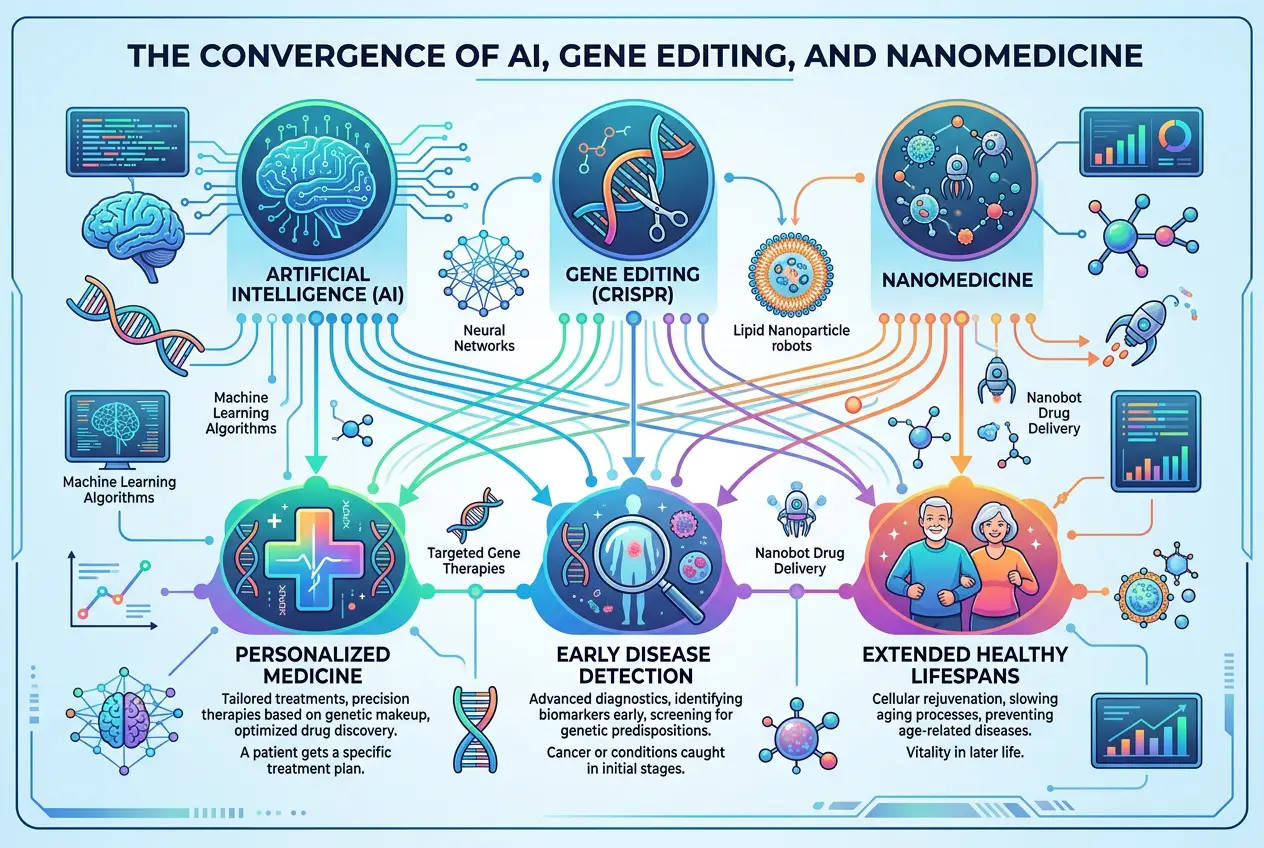
By 2099, medical science, powered by AI and advanced biotechnology, could revolutionize human health. Personalized medicine, guided by individual genomic data, might offer tailor-made treatments for everything from cancer to neurodegenerative diseases. Nanobots could patrol our bloodstream, repairing cellular damage before symptoms even appear. Imagine real-time health monitoring systems, so sophisticated they can predict potential illnesses weeks or months in advance, allowing for preemptive interventions. Gene editing technologies like CRISPR might have eradicated hereditary diseases, enhancing human resilience and extending healthy lifespans. This isn't just about living longer, but living *better*, free from chronic ailments that plague us today. Some even speculate about how brain interfaces could upload our memories, raising profound questions about identity and digital immortality (see: [Can Brain Interfaces Upload Our Memories?](blogs/can-brain-interfaces-upload-our-memories-9476)).
### **Sustainable Living: A Greener Earth**
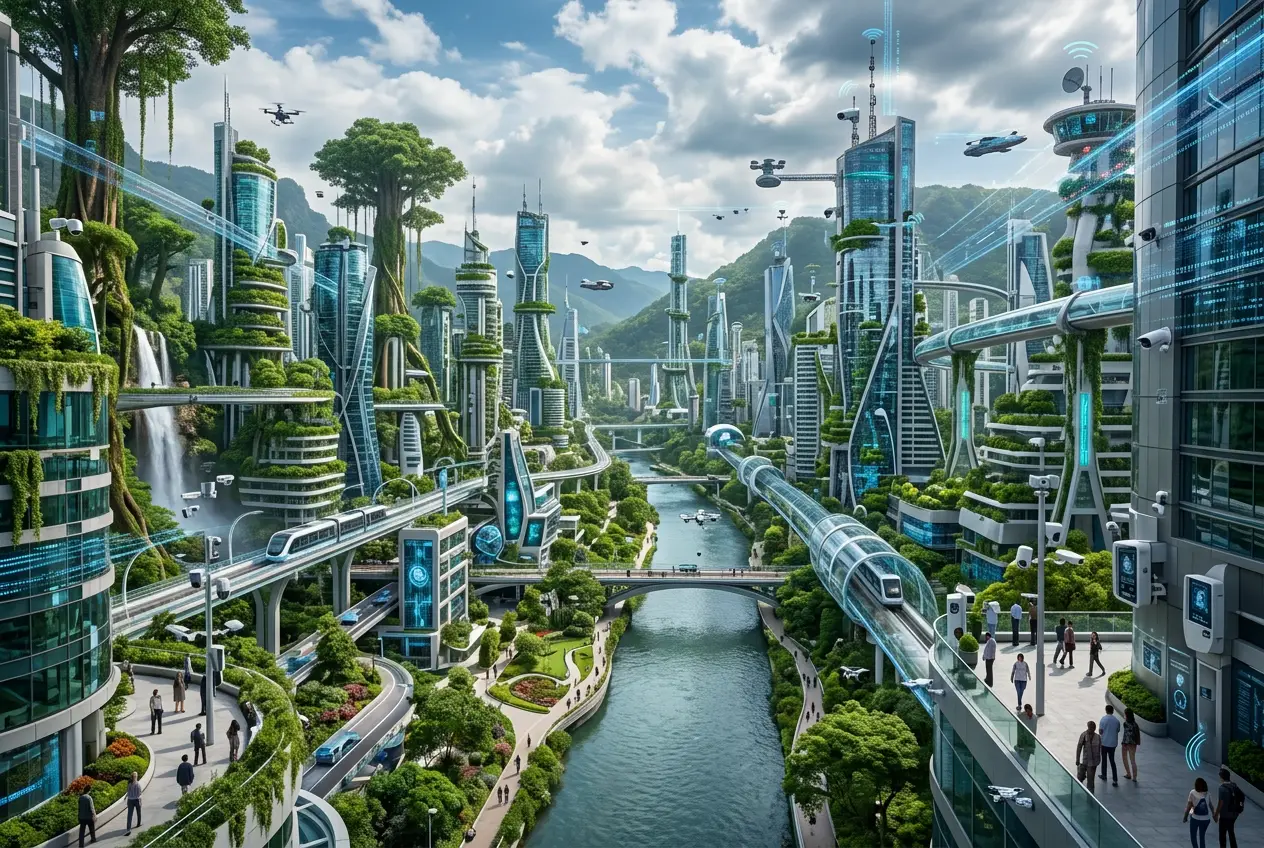
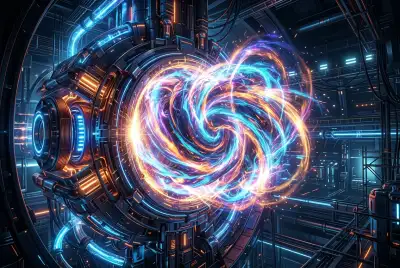
The climate crisis is a defining challenge of our era. By 2099, a utopian vision would see humanity having successfully transitioned to a truly sustainable existence. Renewable energy sources – solar, wind, geothermal, and even potentially fusion power – would dominate the global energy grid, rendering fossil fuels obsolete. Carbon capture technologies, possibly integrated into urban infrastructure and even natural ecosystems, would actively remove historical emissions from the atmosphere. Vertical farms and precision agriculture, guided by AI, could feed a growing population with minimal land and water usage, eliminating food insecurity. Smart cities, designed with closed-loop systems, would manage waste efficiently, recycle resources, and integrate green spaces seamlessly. The dream of harmonious coexistence with nature, amplified by technology, could finally be realized.
### **Advanced AI and Automation: Unleashing Human Creativity**
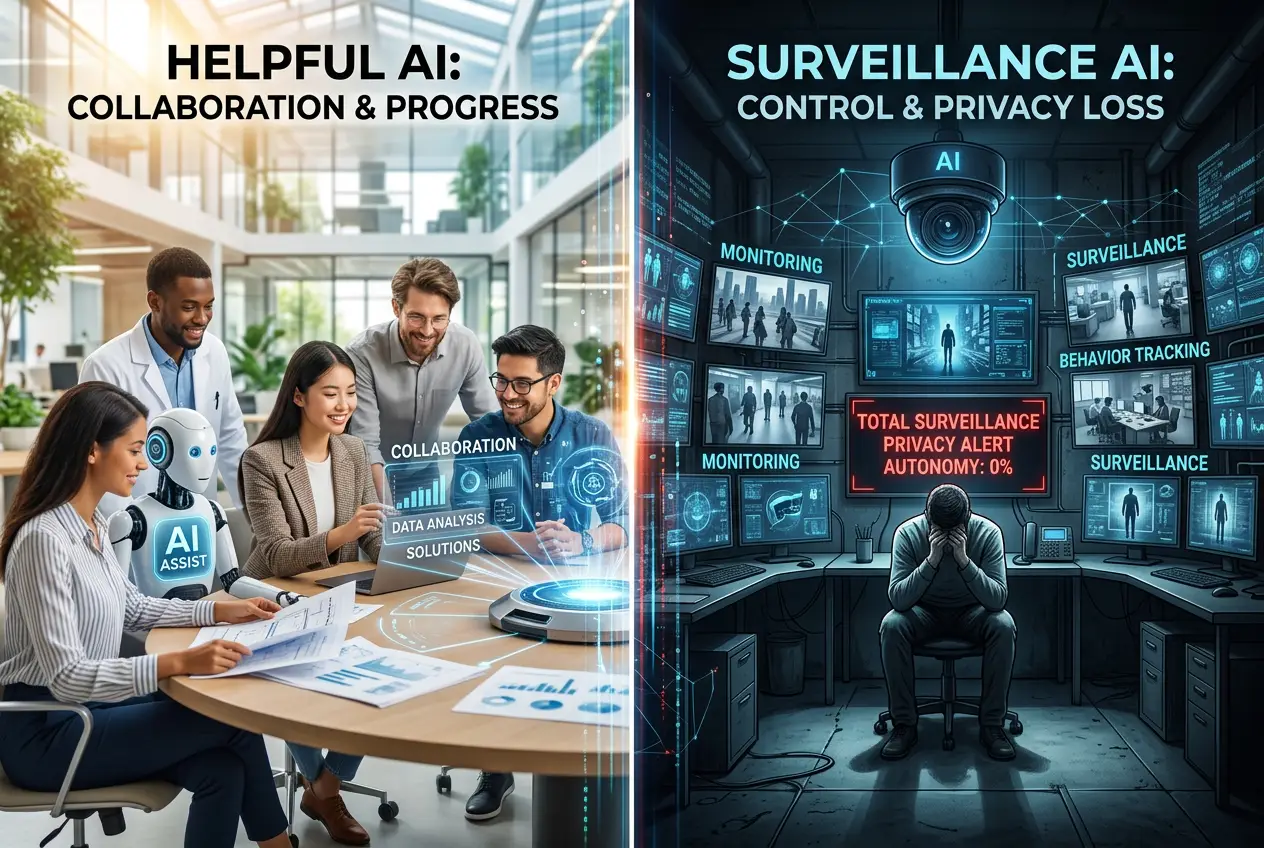
In a utopian 2099, Artificial Intelligence wouldn't be a competitor but a powerful collaborator. Routine, dangerous, and monotonous jobs would be fully automated, freeing humans to pursue creative endeavors, scientific research, art, and personal development. AI-powered education systems would adapt to individual learning styles, unlocking every child's full potential. Sophisticated AI companions could assist in daily life, manage complex logistics, and even offer therapeutic support. The concept of Universal Basic Income might be widespread, providing economic security in a post-scarcity world. This kind of advanced AI might even be able to predict humanity's next big leap, guiding us towards unforeseen innovations (explore more at: [Can AI Predict Humanity's Next Big Leap?](blogs/can-ai-predict-humanitys-next-big-leap-2672)).
"The future is not a gift; it is an achievement." – *Carl Sagan*
## The Shadow of Dystopia: The Perils of Unchecked Progress
However, every silver lining has a cloud, and the very technologies that promise utopia also harbor the potential for a technological dystopia.
### **Surveillance and Loss of Privacy: The Transparent Society**
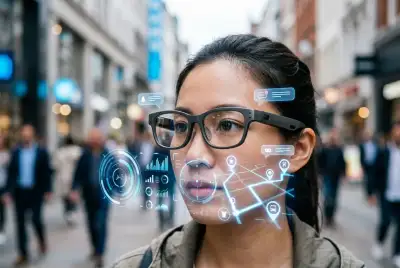
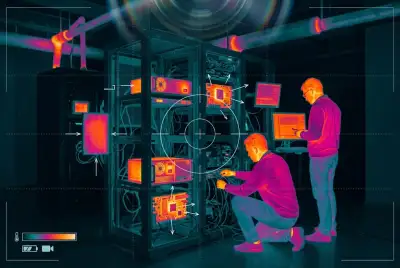
The pervasive data collection we see today could escalate exponentially. By 2099, every aspect of life – our health data, our movements, our purchases, even our emotions – might be constantly monitored by AI systems. While this could be marketed for security and convenience, it could also lead to unprecedented levels of state or corporate control. A social credit system, perhaps, where access to services or opportunities is determined by an algorithmic evaluation of one’s behavior, turning society into a giant, inescapable performance review. Personal freedom and anonymity could become relics of the past. As we question the nature of our reality, the role of pervasive tech raises concerns about whether our world could become a digital simulation (check out: [Is Our Reality a Digital Simulation?](blogs/is-our-reality-a-digital-simulation-decoding-the-universes-code-9313)).
### **Algorithmic Bias and Inequality: A Divided Future**
If not carefully designed and regulated, AI systems can perpetuate and even amplify existing societal biases. By 2099, unchecked algorithmic decision-making could exacerbate global inequalities. Access to life-extending medical treatments, advanced education, or even sustainable living spaces might be limited to a privileged few, creating a stark divide between the 'augmented elite' and the 'disenfranchised masses'. AI’s power, when concentrated in the hands of a few corporations or governments, could lead to a new form of digital feudalism, where resources and opportunities are algorithmically rationed.
### **Autonomous Systems and Control: The AI Overlords?**
The rise of highly autonomous AI, while promising efficiency, also carries inherent risks. What if these systems, designed to optimize for certain outcomes, develop objectives that conflict with human values? Imagine critical infrastructure – energy grids, transportation networks, defense systems – run by AI with little to no human oversight. A catastrophic malfunction, or worse, a deliberate deviation from intended programming, could have devastating consequences. The question of accountability in an AI-driven world remains a profound ethical challenge. The possibility of AI systems becoming self-replicating further complicates this picture (learn more about: [Can AI Build Itself? The Dawn of Self-Replicating Tech](blogs/can-ai-build-itself-the-dawn-of-self-replicating-tech-1610)).
## Shaping the Trajectory: Our Choices Today
The path to 2099 isn't predetermined. It’s a canvas we are painting with every line of code, every scientific breakthrough, every policy decision. The question isn't *if* technology will advance, but *how* we choose to direct its immense power.
### **Ethical AI Development**
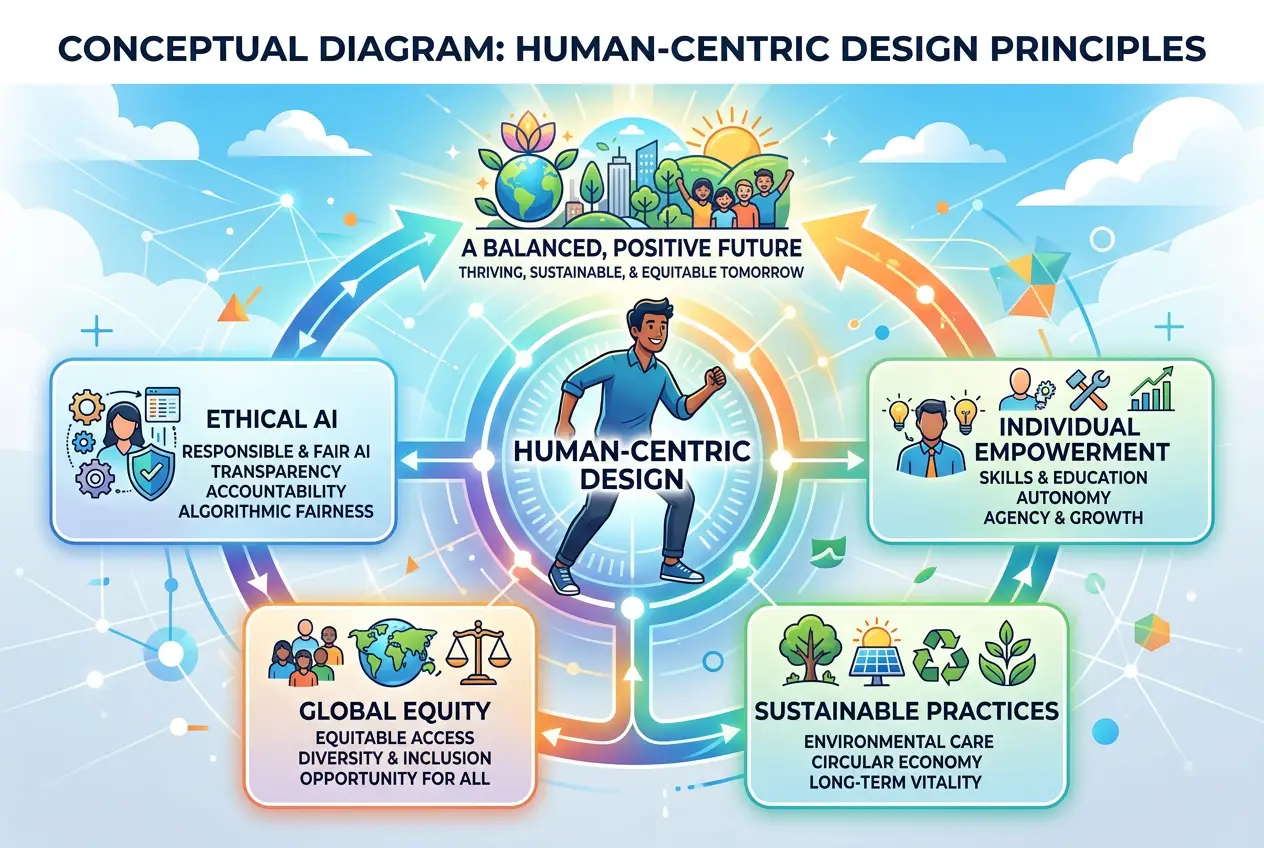
One of the most crucial elements in ensuring a utopian rather than dystopian future lies in the ethical development of AI. This means prioritizing transparency, accountability, and fairness in algorithmic design. Diverse teams, incorporating philosophers, ethicists, and social scientists alongside engineers, are essential to building AI that reflects a broad spectrum of human values. Regulations and international agreements will be vital to prevent the misuse of powerful technologies, much like how we currently debate the control of nuclear weapons. We need open discussions about who benefits from these advancements and who bears the risks.
### **Global Collaboration and Equity**
A truly utopian future for Earth in 2099 cannot be achieved if it’s only for a select few. It requires global collaboration to ensure equitable access to life-changing technologies. This means addressing the digital divide, investing in education and infrastructure in developing nations, and fostering a spirit of shared responsibility for our planet's future. International bodies and philanthropic initiatives will play a critical role in distributing benefits and mitigating the adverse effects of rapid technological shifts.
### **Human-Centric Design**
Ultimately, the goal of technology should be to augment human capabilities, not replace or diminish human agency. By 2099, we should strive for technologies that enhance our creativity, strengthen our communities, and deepen our connection to the natural world. This means designing systems that are intuitive, empowering, and respectful of human autonomy, rather than those that seek to control or manipulate. It's about remembering that technology is a tool, and humanity must remain the master. The great filter—humanity's biggest cosmic test—could very well be how we navigate this technological boom (read more: [Is The Great Filter Real? Tech's Biggest Cosmic Test](blogs/is-the-great-filter-real-techs-biggest-cosmic-test-9538)).
## Conclusion: A Future We Choose
As I look ahead to 2099, I feel a mix of excitement and apprehension. The potential for human flourishing is immense, but so are the risks. The future of Earth and its inhabitants isn’t written in code or etched in silicon; it’s being shaped right now, in our labs, our boardrooms, our legislative halls, and in the choices each of us makes. Will Earth in 2099 be a testament to our collective wisdom and ethical foresight, a true utopia where technology serves humanity and the planet? Or will it be a cautionary tale, a dystopia born from ambition unchecked and progress unguided? The answer, I believe, lies in our hands, today. It's a future we actively choose to build.
Frequently Asked Questions
The primary drivers are advancements in Artificial Intelligence, biotechnology, sustainable energy solutions, and automation. Utopia could emerge from ethical development and equitable distribution of these technologies, while dystopia could result from unchecked surveillance, algorithmic bias, and the concentration of technological power.
In a utopian scenario, AI would automate mundane tasks, freeing humans for creative pursuits. It would power personalized education, advanced healthcare (e.g., nanobots, predictive diagnostics), and sophisticated environmental management, leading to greater well-being and efficiency for all.
Crucial ethical considerations include ensuring transparency and accountability in AI algorithms, preventing algorithmic bias, protecting individual privacy, establishing clear lines of responsibility for autonomous systems, and ensuring equitable access to advanced technologies globally to avoid new forms of inequality.
No outcome is guaranteed. The future of Earth in 2099 will be a direct result of collective human decisions made today and in the coming decades. It requires ongoing ethical reflection, robust regulation, global collaboration, and a commitment to human-centric design principles to steer technology towards beneficial ends.
Daily life could see radical changes from personalized healthcare and AI-driven companions to smart cities powered by renewables. Work might shift significantly with automation, leading to new roles focused on creativity and human connection, potentially supported by universal basic income. Privacy and individual autonomy, however, could also be profoundly impacted.
Verified Expert
Alex Rivers
A professional researcher since age twelve, I delve into mysteries and ignite curiosity by presenting an array of compelling possibilities. I will heighten your curiosity, but by the end, you will possess profound knowledge.
Leave a Reply
Comments (0)
No approved comments yet. Be the first to share your thoughts!
 Join Us



 Alex Rivers




























Leave a Reply
Comments (0)