


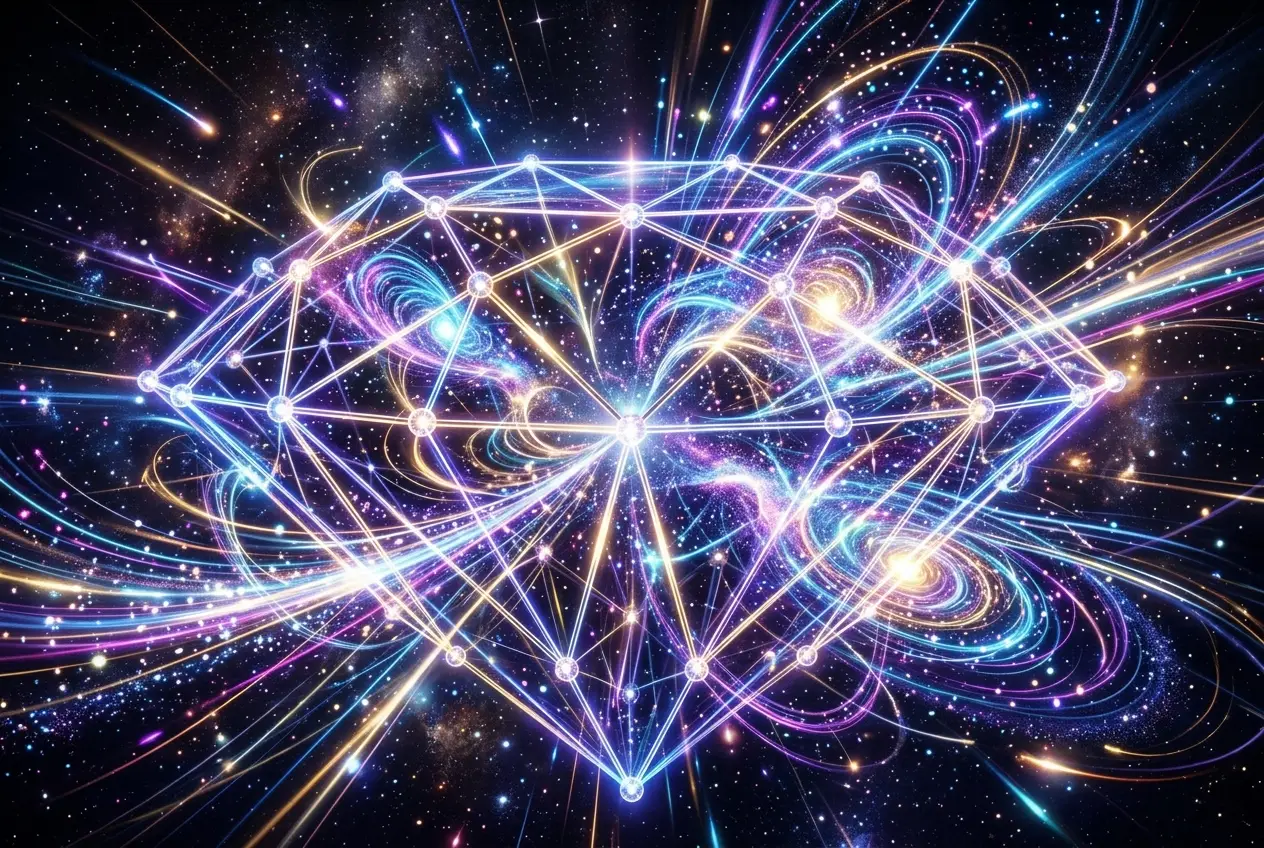
I've always been fascinated by how the natural world holds secrets far beyond our immediate perception. For centuries, diamonds have captivated humanity with their unparalleled brilliance and hardness, gracing crowns and engagement rings. But what if I told you that beneath their sparkling façade, these precious stones might harbor a secret far more profound than any treasure – the potential to revolutionize technology at a quantum level? It’s a concept that sounds almost like science fiction, yet the science is very real, and it’s opening doors to incredible innovations.
Beyond the Bling: Diamonds as Quantum Powerhouses
When we think of diamonds, our minds usually drift to carat weight and clarity. But for a growing number of scientists, diamonds are less about status and more about their unique atomic structure. A diamond is essentially a lattice of carbon atoms, incredibly strong and stable. However, occasionally, during the formation process, an impurity can sneak in. One such impurity, a nitrogen-vacancy (NV) center, is what turns an ordinary diamond into a quantum marvel.
An NV center is formed when two adjacent carbon atoms in the diamond lattice are replaced: one by a nitrogen atom, and the other by a vacant site, an empty space. This seemingly tiny defect creates a quantum system with extraordinary properties. Think of it as a microscopic quantum laboratory embedded within the diamond itself. These NV centers have electron spins that can be precisely controlled and read using light and microwaves, acting as stable qubits – the fundamental building blocks of quantum computers.
The Quantum Bit (Qubit) in a Diamond
Unlike classical bits in traditional computers, which represent either a 0 or a 1, a qubit can exist in both states simultaneously, thanks to a quantum phenomenon called superposition. It’s this ability to hold multiple states at once that gives quantum computers their immense processing power. The challenge, however, is finding stable qubits that can maintain their quantum state (coherence) for long enough to perform calculations, especially at room temperature. Most quantum systems require extreme cooling to near absolute zero, making them impractical for widespread use. This is where diamonds shine, quite literally.
The NV center in a diamond offers a remarkably stable environment for its electron spin. Encased within the rigid carbon lattice, these qubits are shielded from external noise and disturbances, allowing them to maintain their quantum coherence even at room temperature. This is a game-changer. Imagine a quantum computer that doesn't need a cryostat the size of a car, but could operate in a lab at ambient temperatures. This stability makes diamonds a prime candidate for next-generation quantum technologies. As Wikipedia explains, "Nitrogen-vacancy centers are point defects in the diamond lattice, consisting of a substitutional nitrogen atom next to a carbon vacancy, which is one of the most studied defects in diamond because of its potential applications in quantum information processing, spintronics, and quantum sensing." You can read more about it here: Nitrogen-vacancy center in diamond (opens in a new tab).
Applications Beyond Computing: Unlocking Sensing Superpowers
While quantum computing is a monumental goal, the unique properties of NV centers in diamonds extend far beyond it. Their sensitivity to magnetic fields, electric fields, and temperature makes them exceptional candidates for quantum sensing.
-
Ultra-Sensitive Magnetometers: NV diamonds can detect extremely subtle magnetic fields. This has profound implications for medicine, allowing for more precise brain imaging (e.g., magnetoencephalography) or early detection of diseases by identifying minuscule magnetic signatures from biological samples. In materials science, these sensors could map the magnetic properties of new materials at the nanoscale, revealing insights crucial for developing advanced electronics.
-
Quantum Thermometers: The spin state of an NV center is also sensitive to temperature changes. This means diamonds can act as highly localized thermometers, capable of measuring temperatures within individual cells or even within integrated circuits with unprecedented precision. Such capability could help optimize chip performance and develop better cooling solutions for future microprocessors.
-
Biosensing and Imaging: Because diamonds are biocompatible, NV diamond sensors can be introduced into biological systems without toxicity. Researchers are exploring their use for tracking drug delivery, monitoring cellular processes, and even detecting disease markers within living organisms. Imagine tiny diamond sensors navigating your bloodstream, providing real-time data on your health. This reminds me of the discussions around how biological systems themselves might leverage quantum phenomena, as explored in articles like Could Quantum Biology Unlock Life's Deepest Secrets? (opens in a new tab).
The Road Ahead: Challenges and Breakthroughs
Developing diamond-based quantum technologies isn't without its hurdles. One primary challenge is creating diamonds with a high density of precisely engineered NV centers. While natural diamonds contain these defects, synthetic diamonds allow for greater control over their creation and distribution. Researchers are constantly refining techniques to produce high-quality synthetic diamonds with tailored NV centers.
Another challenge is scalability. To build a practical quantum computer or a comprehensive sensor array, we need to be able to couple and control multiple qubits effectively. This involves intricate laser and microwave engineering to read and manipulate the spin states of individual NV centers without disturbing their neighbors. Significant progress has been made in this area, with laboratories demonstrating entanglement between distant NV centers and even between NV centers and nuclear spins within the diamond, creating multi-qubit systems.
I find it fascinating to consider how these cutting-edge quantum advancements push the boundaries of what we thought possible, much like the theoretical concepts discussed in Is Empty Space a Quantum Computer? (opens in a new tab). The parallels, though abstract, highlight the universal nature of quantum mechanics.
Spintronics: Beyond Charge, Harnessing Spin
Beyond direct quantum applications, the ability to control electron spins in diamonds is also paving the way for a field called spintronics. Traditional electronics rely on the charge of electrons; spintronics, however, utilizes their intrinsic spin. Think of electron spin as a tiny magnet, capable of being oriented "up" or "down." This spin state can carry information, offering a new paradigm for data storage and processing that could be far more energy-efficient and faster than current charge-based electronics.
Diamonds, with their robust NV centers, are ideal platforms for spintronic devices. The long coherence times of NV electron spins mean that information encoded in spin can persist for longer, making them excellent candidates for quantum memory or even new types of transistors. This could lead to a revolution in computing, where devices not only consume less power but also perform calculations at speeds currently unimaginable.
From Jewelry to High-Tech Labs: A Diamond's Evolution
The journey of diamonds from coveted gemstones to foundational elements of quantum technology is a testament to scientific curiosity and ingenuity. It underscores that sometimes, the most extraordinary breakthroughs come from understanding the subtle imperfections and anomalies within seemingly familiar materials. The very defects that might reduce a diamond's monetary value as a jewel are precisely what make it invaluable for quantum science.
As I reflect on this, I realize the potential of diamonds isn't just about faster computers or more sensitive sensors; it's about fundamentally changing our interaction with the physical world. From medical diagnostics to environmental monitoring, and from unbreakable encryption to new forms of artificial intelligence, diamond-based quantum technologies promise to be a cornerstone of the future. The next time you see a diamond, remember its hidden quantum heart—a tiny universe of possibilities, waiting to be unlocked.
Conclusion
The humble diamond, once a symbol of everlasting love and luxury, is rapidly transforming into a cornerstone of the quantum revolution. Its unique NV centers offer an unprecedented platform for stable, room-temperature qubits and ultra-sensitive quantum sensors. While challenges remain in scalability and precision engineering, the potential rewards—from next-generation computing to revolutionary medical diagnostics—are immense. We are on the cusp of a diamond age, not of glittering jewels, but of quantum-powered innovation that will redefine our technological landscape.



Conversation0
No comments yet. Be the first to share a thought — the best questions often become new stories.