


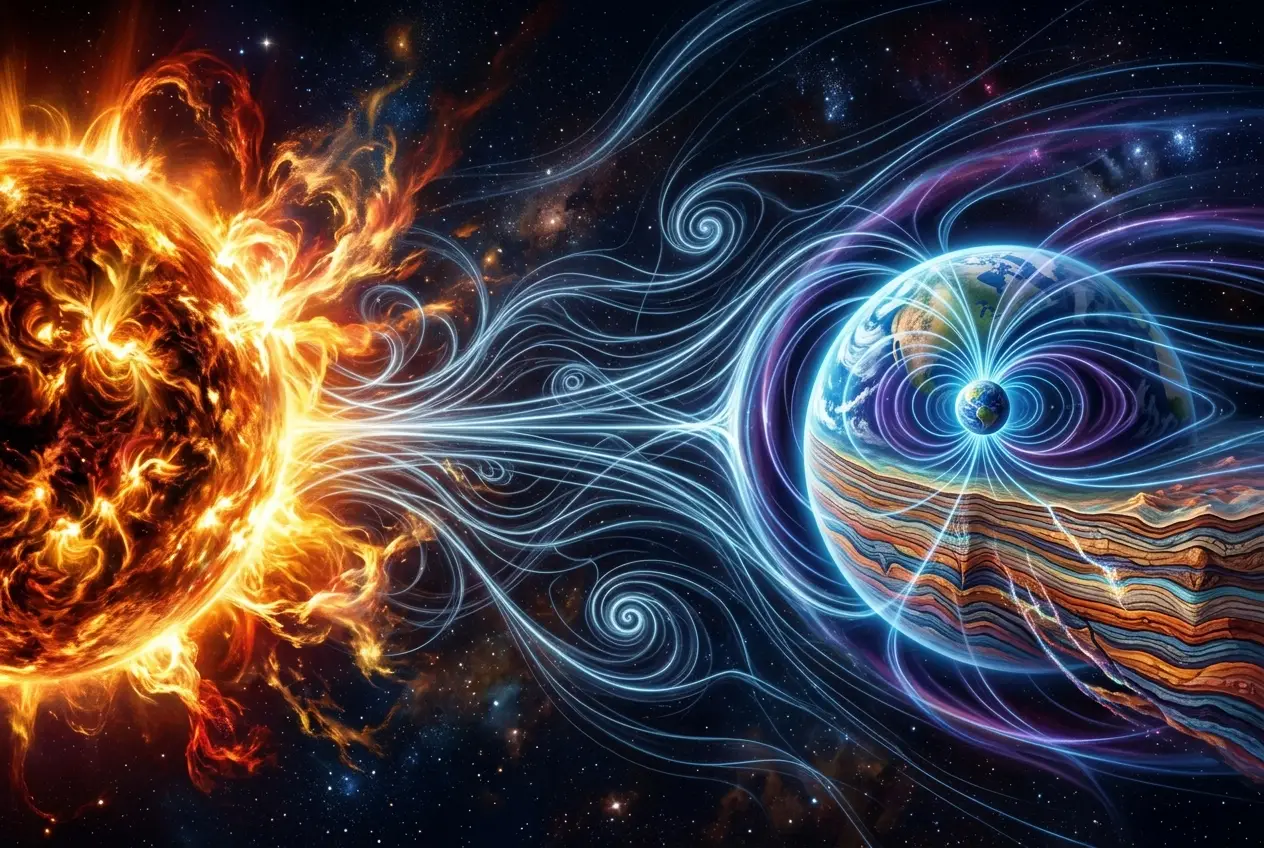
I was recently watching a documentary about ancient civilizations and their reliance on natural phenomena for survival and understanding. It got me thinking, if modern technology is so vulnerable to solar flares and geomagnetic storms, what about the silent, invisible records etched into the very rock of our planet over millennia? Could these powerful cosmic events subtly, or even dramatically, rewrite Earth’s own deep history, erasing or distorting the information stored within its ancient magnetic fields?
It’s a question that’s both fascinating and a little unnerving. We often hear about how solar flares can disrupt our satellites, knock out power grids, or even influence internet connectivity. But what if these colossal outbursts from our Sun have been doing something far more fundamental, reaching back into geological time and impacting the very memory of our planet? I believe this question delves into a unique intersection of astrophysics, geology, and even the philosophy of information itself.
The Sun's Fiery Breath: A Cosmic Force
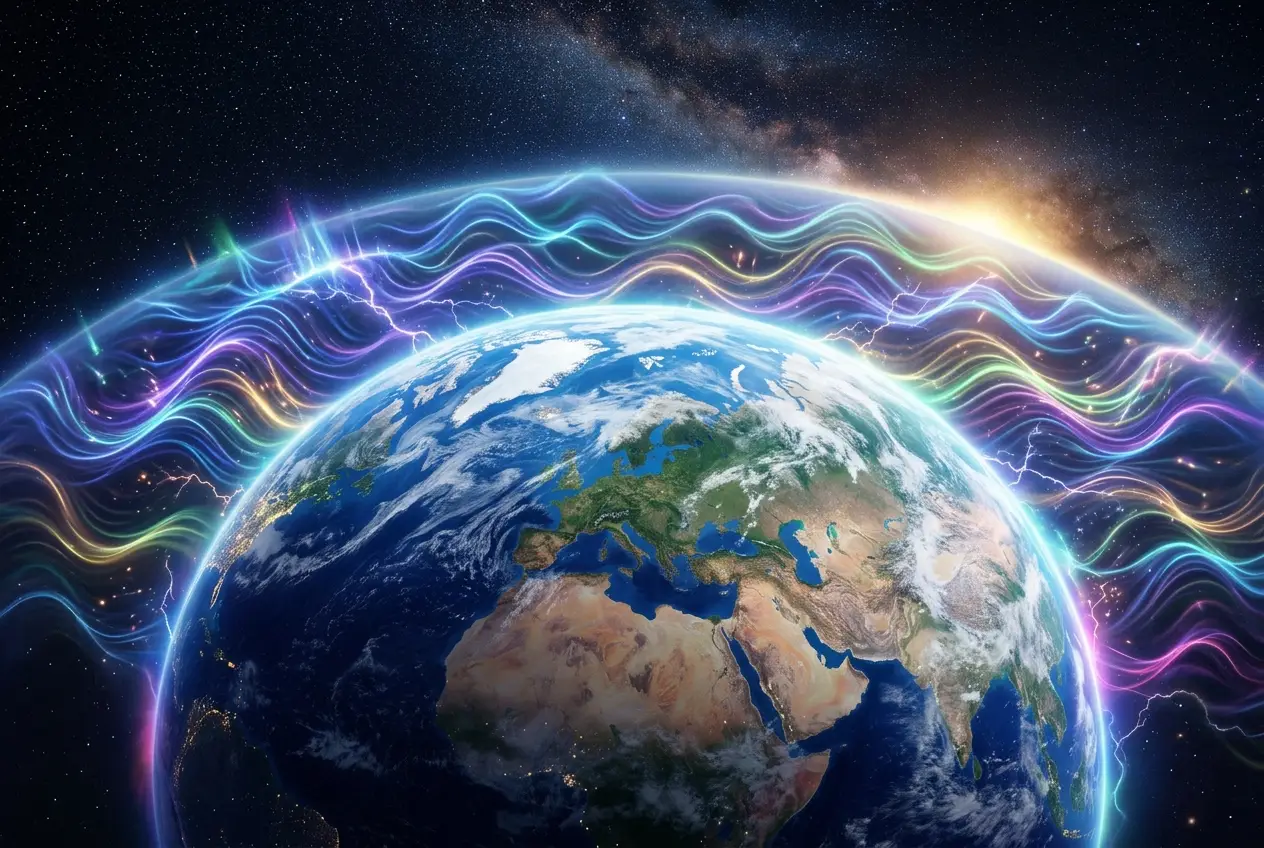
Our Sun is a dynamic, volatile star, constantly spitting out charged particles and powerful electromagnetic radiation into space. These events range from relatively minor solar flares to massive Coronal Mass Ejections (CMEs) – colossal bursts of plasma and magnetic field that hurtle through the solar system at incredible speeds. When these CMEs impact Earth's magnetosphere, they cause geomagnetic storms. You might have heard about them creating spectacular auroras, but their effects go far beyond a beautiful light show.
These geomagnetic storms induce currents in power lines, disrupt radio communications, and pose a threat to orbiting satellites. I often wonder, if these events are strong enough to affect our modern, robust infrastructure, what impact do they have on the far more delicate, passively recorded data embedded within Earth’s crust?
Earth's Memory: A Magnetic Archive
The Earth itself acts like a giant, ancient hard drive, constantly recording its history in magnetic minerals within rocks. As volcanic lava cools or sediments settle, tiny magnetic particles within them align with Earth’s prevailing magnetic field at that specific moment in time. This process, called paleomagnetism, creates a fossilized record of the planet's magnetic field, including its direction and intensity. Scientists study these "fossil magnets" to reconstruct Earth's geological past, track continental drift, understand ancient climates, and even date archaeological sites. You can learn more about how this incredible process works on Wikipedia's page on Paleomagnetism (opens in a new tab).
This magnetic archive is invaluable, providing insights into billions of years of Earth's history. It helps us understand phenomena like magnetic pole reversals, which have occurred numerous times over geological timescales. The problem is, this archive, while robust, isn't entirely immutable.
The Threat of Geomagnetic Storms to Ancient Records
Here’s where the intriguing possibility of data erasure comes in. Intense geomagnetic storms, particularly those of extreme magnitude (often referred to as "superstorms" or "Carrington-level events" after the 1859 Carrington Event, the most powerful solar storm on record), generate powerful electric fields and currents within Earth's crust and mantle. These currents can heat rocks and minerals, and in some cases, might even be capable of physically altering the magnetic alignment of certain minerals.
"The greatest known solar superstorm, the 1859 Carrington Event, caused telegraph systems to fail globally, shocking operators and igniting fires. Such an event today could have catastrophic implications for our digitally dependent world," noted a recent report on space weather hazards.
Imagine a localized area where a particularly strong, ancient magnetic signature is preserved. If a superstorm hits and induces significant heating or magnetic flux changes in that region, it could potentially demagnetize or re-magnetize the rock, effectively corrupting or overwriting the original paleomagnetic signal. This wouldn't be like deleting a file from a computer; it would be more akin to a hard drive suffering a severe physical shock, rendering data unreadable or scrambled.
While the primary mechanisms of paleomagnetic recording are stable over long timescales, scientists are beginning to explore the subtle ways that intense external forces, such as those from extreme space weather, could interfere. Research into the stability of magnetic records suggests that under certain conditions, a combination of thermal effects and induced magnetic fields from extreme geomagnetic storms could potentially lead to partial remagnetization of rocks, especially those with lower coercivity minerals or those at shallower depths.
Evidence and Future Research
So, do we have direct evidence of ancient solar storms erasing Earth's records? The answer is complex. Directly observing such an event from the deep past is, by its nature, incredibly challenging. However, scientists are increasingly aware of the powerful effects of solar activity on Earth. We know, for instance, that Earth’s magnetic field acts as a shield, but during geomagnetic reversals, this shield weakens significantly. During these periods, the planet is far more exposed to cosmic radiation and solar particles, potentially making paleomagnetic records more vulnerable to external influences.
I find it fascinating that the very conditions that allow us to read Earth's magnetic history – the stability of magnetic minerals – are also the focus of studies on how that history might be subtly altered. For example, some studies investigating rock magnetism (the subfield of geophysics and geology that deals with the magnetic properties of rocks) consider the impact of thermal events and external magnetic fields on the stability of remanent magnetization. While naturally occurring heating (like from volcanic activity or metamorphism) is a well-known cause of remagnetization, the specific effects of geomagnetically induced currents (GICs) from solar storms on ancient magnetic records are a newer area of inquiry.
For a deeper dive into the physics of how Earth's magnetic field and solar activity interact, check out the Wikipedia article on Geomagnetic Storms (opens in a new tab).
It's not about outright deletion across the entire planet, but rather the potential for localized data corruption or subtle shifts in recorded data that could lead to misinterpretations of Earth's ancient magnetic field behavior. This could affect our understanding of past climate, the timing of geomagnetic reversals, or even the movement of continents. For instance, if you're interested in how Earth's magnetic field changes over time, you might find our blog post on whether our magnetic field shift is impacting our minds an interesting read: Does Earth's Magnetic Field Affect Our Minds?
The Interplay of Cosmic and Planetary History
The potential for solar storms to "erase" or "corrupt" ancient magnetic records isn't about some malicious cosmic intent, but rather the sheer power and pervasive nature of our Sun's influence. It forces us to consider the fragility of even the most seemingly permanent archives. As we push the boundaries of paleomagnetic research, integrating data from different geological eras and geographical locations, understanding these subtle potential biases becomes crucial.
Could the mysterious variations in paleomagnetic data from certain periods be partially attributed to particularly intense and prolonged periods of solar activity? This is a question I believe will drive future research, requiring sophisticated modeling of geomagnetic storm effects on various rock types and depths. It's a reminder that the universe is constantly interacting with our planet in profound and often unseen ways, continually shaping its present and, perhaps, subtly rewriting its past.
For more on the Earth's long-term magnetic field changes, including pole reversals, you might be interested in Earth's Pole Shift Imminent: Cosmic Reversal?. This ongoing dance between our dynamic Sun and our protective, yet sometimes vulnerable, Earth continues to offer profound insights into the intricate workings of our solar system. Another interesting read could be about the ancient technologies that detected cosmic phenomena, check out our blog post about Megalithic Tech: Did Ancients Sense Cosmic Rays?.
Ultimately, while the evidence for widespread erasure is still under investigation, the question itself highlights the incredible interconnectedness of cosmic phenomena and planetary history, urging us to look closer at the silent battles waged between stellar power and terrestrial archives.



Conversation0
No comments yet. Be the first to share a thought — the best questions often become new stories.