


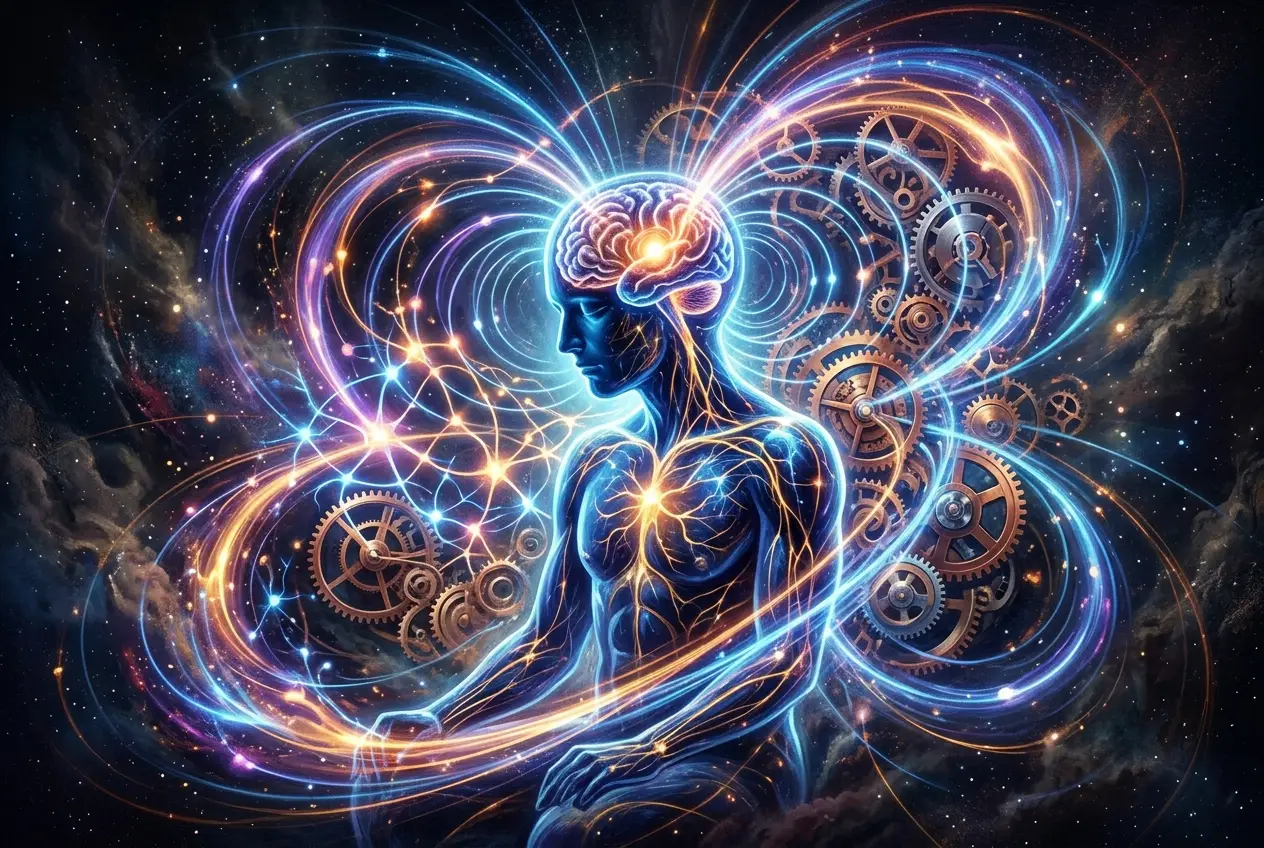
I've always been fascinated by the invisible forces that shape our world, the subtle energies we often take for granted. Recently, I found myself pondering something truly intriguing: could the very magnetic fields that envelop our planet, and even those we generate with our technology, have the power to subtly rewrite our internal biological clocks? It’s a question that delves into the heart of biology, physics, and what it means to be a living organism on a dynamic planet.
Imagine waking up one morning feeling utterly out of sync, despite getting your usual eight hours of sleep. Your body feels like it's on a different time zone, even though you haven't left your bed. Could it be stress, diet, or perhaps something more fundamental—an invisible hand tugging at your internal rhythm? I remember a friend once swore that whenever a major solar storm hit, he'd experience inexplicable insomnia and vivid dreams. At the time, I dismissed it as anecdotal, but as I’ve delved deeper, I've realized there might be more to these connections than meets the eye. We often talk about how our devices might be hiding alien echoes, or how /blogs/do-our-bodies-harbor-hidden-quantum-clocks-3312 could function, but what about the omnipresent fields around us?
The Unseen Orchestra: Earth's Magnetic Field
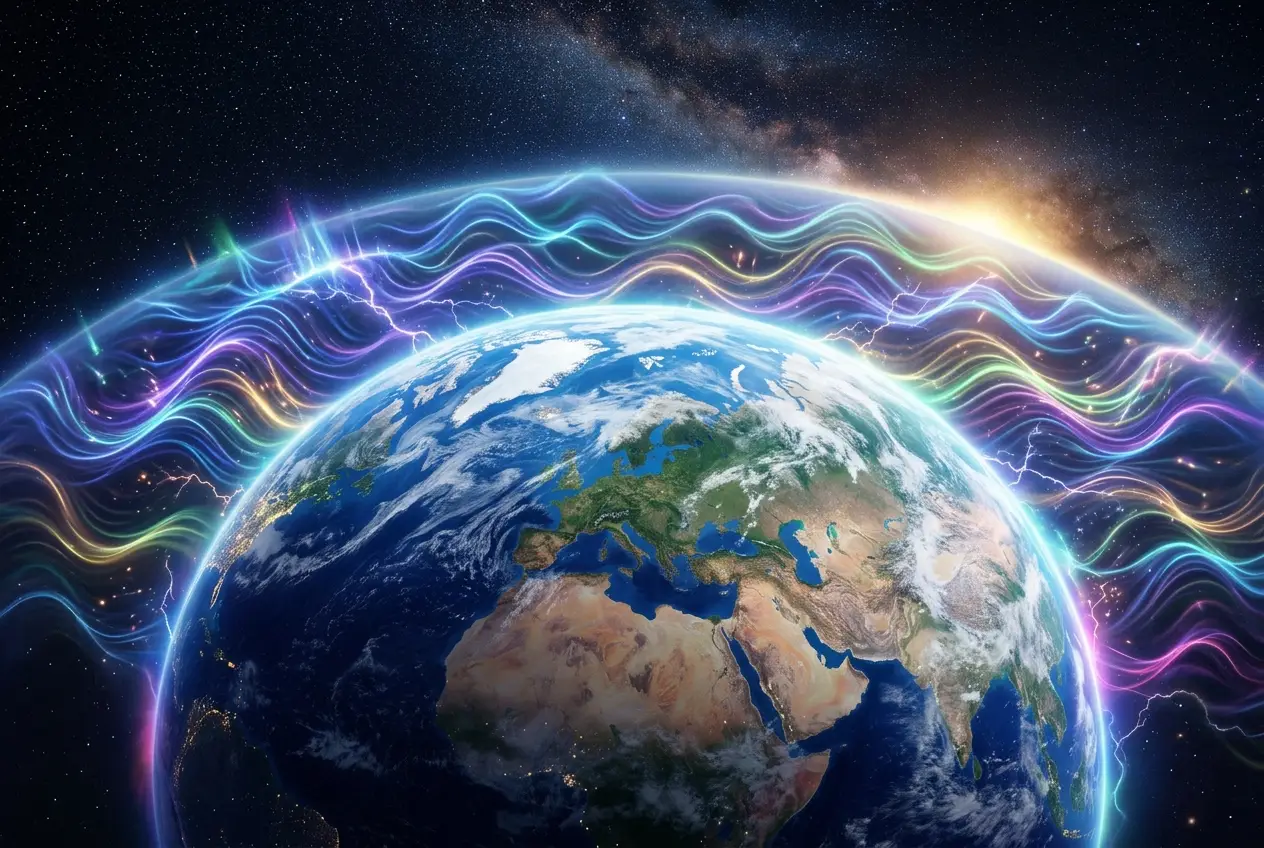
From the moment life emerged on Earth, it has been bathed in a symphony of magnetic fields. Our planet itself acts like a giant magnet, generating a geomagnetic field that shields us from harmful cosmic radiation and guides compasses. Beyond this colossal natural force, we are increasingly surrounded by artificial magnetic fields from power lines, electronic devices, and wireless communication. These fields are often imperceptible to our standard five senses, yet their influence on biological systems has become a subject of intense scientific scrutiny.
Our bodies are complex electrochemical systems. Every nerve impulse, every muscle contraction, involves electrical signals. It stands to reason that external magnetic fields, which interact with electrical currents, could potentially influence these delicate biological processes. The question isn't if they interact, but how, and to what extent they can alter something as fundamental as our internal clocks.
The Body's Master Conductor: Circadian Rhythms
At the core of this discussion are circadian rhythms, the roughly 24-hour cycles that govern almost every aspect of our biology. From sleep-wake cycles and hormone release to body temperature regulation and metabolic processes, these rhythms are essential for health and well-being. The primary external cue for synchronizing these clocks is light, particularly the blue light spectrum, which our eyes detect and relay to the brain's "master clock" – the suprachiasmatic nucleus (SCN) in the hypothalamus.
However, research suggests that light isn't the only synchronizing force. Other "zeitgebers" (time-givers) like social cues, food intake, and temperature can also influence our internal timing. But what if an even more fundamental, subtle environmental factor—like magnetic fields—also plays a role, perhaps even a primitive one predating sophisticated light perception?
Early Clues: Nature's Compass and Internal Clocks
The idea that magnetic fields could influence living organisms isn't new. For decades, scientists have studied magnetoreception in animals – the ability to sense magnetic fields for navigation. Birds, turtles, salmon, and even some insects use Earth's magnetic field to orient themselves during migration. These creatures possess an innate "magnetic compass," suggesting highly evolved biological mechanisms for detecting and responding to magnetic information. For more on how animals perceive their environment, you might find this article on /blogs/can-tech-augment-our-senses-see-sound-taste-color-4378 interesting.
If animals can sense magnetic fields for direction, could they also use these fields, or changes within them, as a subtle cue for timekeeping? Some early studies, particularly with nocturnal animals like bats and migrating birds, hinted at a connection between geomagnetic changes and activity patterns. For instance, disturbances in the Earth's magnetic field due to solar activity have been correlated with changes in the navigational behavior of pigeons, as discussed in some early ornithological journals.
Decoding the Mechanism: How Might It Work?
The exact biological mechanisms by which magnetic fields could influence circadian rhythms are still being unraveled, but several theories are gaining traction:
-
Cryptochromes: These photoreceptor proteins, found in plants and animals (including humans), are sensitive to blue light and play a crucial role in circadian rhythm regulation. Intriguingly, cryptochromes are also believed to be involved in magnetoreception in birds. They function by forming radical pairs, whose chemical reactions can be influenced by weak magnetic fields. If magnetic fields can alter the kinetics of cryptochrome-dependent reactions, they could subtly shift the timing of our internal clocks. This concept touches upon a deeper level of biological computing, where /blogs/can-living-organisms-compute-the-rise-of-biocomputing-5626 could be influenced by external stimuli.
-
Melatonin Production: Melatonin, often called the "sleep hormone," is produced by the pineal gland and plays a central role in regulating sleep-wake cycles. Studies have explored whether exposure to specific magnetic fields, particularly extremely low frequency (ELF) fields, can affect melatonin levels. While results have been mixed and often controversial, some research suggests that certain magnetic field exposures might suppress melatonin production, thereby disrupting sleep and potentially altering circadian timing. For instance, a review published in the Journal of Pineal Research examined the cumulative evidence on ELF fields and melatonin, highlighting the complexity and variability of findings (Source: https://en.wikipedia.org/wiki/Melatonin (opens in a new tab)).
-
Ion Channels and Neuronal Activity: Magnetic fields can exert forces on charged particles (ions). Given that neuronal signaling relies heavily on the flow of ions across cell membranes, it's plausible that magnetic fields could subtly alter the activity of neurons in the SCN or other brain regions involved in circadian regulation. While direct evidence in humans is challenging to obtain, in vitro studies have shown that magnetic fields can influence ion channel activity in various cell types.
Human Connection: Studies and Observations
The human response to magnetic fields and their potential impact on biological clocks is perhaps the most captivating and contentious area of research. While the idea might seem like science fiction, a growing body of scientific inquiry is exploring these links.
Geomagnetic Activity and Human Health
Historically, some researchers have looked at correlations between geomagnetic activity (disturbances in Earth's magnetic field, often caused by solar flares and coronal mass ejections) and human health outcomes. This builds upon the concept that /blogs/does-earths-magnetic-field-affect-our-minds-6923. For example, some studies have reported correlations between increased geomagnetic activity and:
- Sleep Disturbances: Anecdotal reports and some small-scale studies have suggested that periods of heightened geomagnetic activity might lead to restless sleep, increased awakenings, and a general feeling of fatigue, aligning with the "off-sync" feeling I mentioned earlier.
- Mood and Mental Health: A few intriguing (though often debated) studies have explored links between geomagnetic storms and an increase in hospital admissions for depression, anxiety, and even psychiatric disturbances. The precise mechanism remains unclear, but it hints at a potential influence on brain chemistry and neural pathways involved in mood regulation, which are themselves intertwined with circadian rhythms.
- Cardiovascular Events: Some controversial research has even suggested a statistical link between severe geomagnetic storms and an uptick in cardiovascular events, such as heart attacks. This could be indirectly related if circadian disruption impacts the autonomic nervous system and cardiovascular stress responses.
It's crucial to note that many of these studies are correlational, and establishing a direct causal link is incredibly difficult due to the multitude of confounding factors in human health. However, the persistence of these observations across different populations and methodologies warrants further investigation.
Artificial Magnetic Fields and Their Influence
Beyond natural geomagnetic fluctuations, our modern world exposes us to a pervasive landscape of artificial magnetic fields. Power lines, household appliances, Wi-Fi routers, and smartphones all generate electromagnetic fields (EMFs) of varying frequencies and intensities. The health effects of these "electrosmog" fields are a subject of ongoing debate and research.
One area of particular interest is the impact of EMFs on sleep. With our bedrooms often filled with charging devices, smart alarms, and Wi-Fi signals, some scientists are investigating whether chronic, low-level EMF exposure can interfere with melatonin production or disrupt the brain's electrical activity during sleep, thus subtly reshaping our biological clocks. A significant review on the topic from the World Health Organization and other health bodies consistently calls for more research to fully understand the long-term biological effects (Source: https://en.wikipedia.org/wiki/Electromagnetic_field (opens in a new tab)).
The Tech Angle: Intentional Manipulation?
If magnetic fields can influence our biological clocks, the next question naturally arises: could we harness this knowledge for therapeutic or performance-enhancing applications? This is where the intersection of science and technology truly sparks my curiosity.
Imagine a future where:
- Targeted Sleep Therapies: Devices emitting precisely calibrated magnetic fields could help individuals with circadian rhythm disorders (like shift workers or those with jet lag) resynchronize their clocks more effectively than current light-based therapies.
- Enhanced Cognitive Function: Could specific magnetic field exposures be used to optimize wakefulness or improve cognitive performance by fine-tuning neural oscillators? This moves beyond simple sleep regulation into broader brain function, a fascinating area of neurological research.
- Space Travel Adaptation: Astronauts in space face extreme challenges to their circadian rhythms due to the absence of a natural 24-hour light-dark cycle. Could controlled magnetic fields provide an artificial "zeitgeber" to maintain healthy circadian timing, crucial for long-duration missions to Mars or beyond? This is a cutting-edge area, with implications for ensuring that humans can thrive in environments where natural rhythms are absent.
Research into Transcranial Magnetic Stimulation (TMS) already demonstrates the ability of magnetic fields to modulate brain activity, primarily for treating depression and other neurological conditions (Source: https://en.wikipedia.org/wiki/Transcranial_magnetic_stimulation (opens in a new tab)). While TMS uses much stronger, localized fields, it provides a proof-of-concept that magnetic energy can indeed interact meaningfully with the human brain. The leap to influencing circadian clocks with weaker, ambient fields is considerable, but the principle of interaction is established.
Challenges and The Road Ahead
Despite the intriguing possibilities, understanding the precise relationship between magnetic fields and biological clocks is fraught with challenges.
- Weak Interactions: The biological effects of weak magnetic fields are often subtle and difficult to measure consistently. Many studies suffer from small sample sizes or lack robust replication.
- Complexity of Biology: Circadian rhythms are regulated by an intricate network of genes, proteins, and environmental cues. Isolating the effect of a single factor like magnetic fields from this complex web is a monumental task.
- Individual Variability: Human sensitivity to magnetic fields likely varies significantly from person to person, making it hard to draw universal conclusions.
Nevertheless, the pursuit of this knowledge is vital. As our world becomes ever more technologically saturated, and as we venture further into space, understanding all the environmental factors that shape our biology, including invisible magnetic forces, becomes paramount. It's not about fearing the unknown but embracing the challenge of scientific discovery. The potential to unlock new therapies, optimize human performance, and deepen our understanding of life itself is a compelling call to action for researchers across disciplines.
Conclusion
The idea that magnetic fields could reshape our biological clocks is a frontier where science and wonder converge. While definitive answers remain elusive, the evidence from magnetoreception in animals, the proposed cryptochrome mechanism, and correlations with human health events paint a fascinating picture. We are not just biological beings reacting to light and sound; we are also inextricably linked to the electromagnetic fabric of our planet and beyond. As I look at my smartphone, silently emitting its own tiny field, I can't help but ponder the invisible dances happening within me, perhaps choreographed by forces I'm only just beginning to comprehend. The exploration into these subtle influences is a testament to the fact that even in our highly technological age, there are still profound mysteries waiting to be decoded within ourselves and the cosmos.



Conversation0
No comments yet. Be the first to share a thought — the best questions often become new stories.