


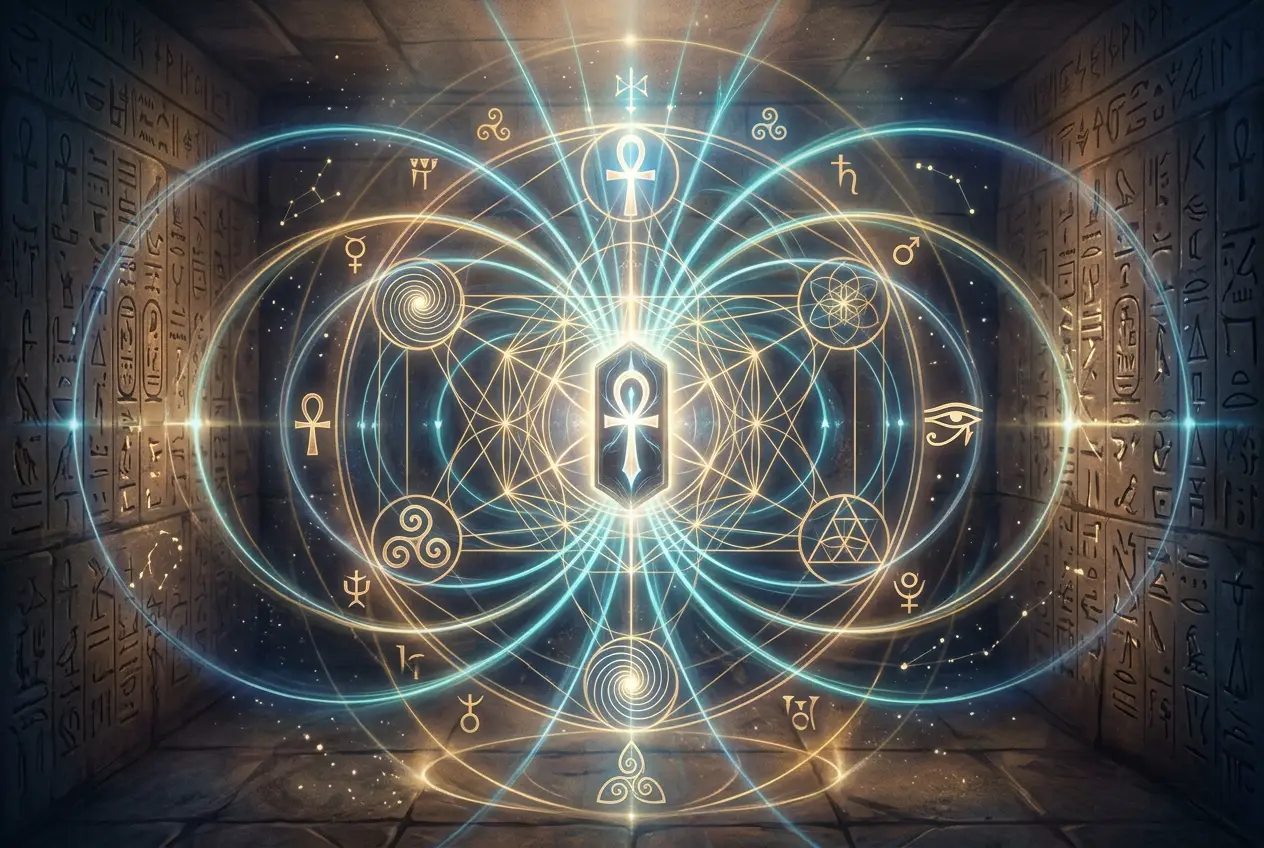
I remember standing in front of an ancient artifact at a museum, a humble lodestone, and wondering about its journey. It struck me then: for millennia, humanity has been fascinated by the invisible force of magnetism. We trace its practical application back to the compass in China, helping mariners navigate vast oceans. But what if our ancestors didn’t just understand magnetism for simple direction-finding? What if some ancient cultures had a deeper, more sophisticated grasp of magnetic principles, hinting at a lost technology or scientific insight we’re only now beginning to uncover?
It’s a thought that gnaws at the edges of conventional history. We celebrate the scientific revolution for demystifying forces like gravity and electromagnetism, yet every so often, an archaeological find or an obscure text whispers of an earlier, enigmatic understanding. I find myself constantly drawn to these historical tech anomalies, where the line between myth and advanced knowledge blurs.
The Allure of the Lodestone: More Than Just a Compass?
For thousands of years, the naturally occurring magnetic mineral lodestone (magnetite) was the primary source of magnetic phenomena known to humans. Its ability to attract iron and, more importantly, to align itself with the Earth’s magnetic field, was nothing short of miraculous to early observers. The ancient Greeks, particularly Thales of Miletus around 600 BCE, are credited with some of the earliest observations of magnetism, noting its peculiar attraction to iron. The word "magnet" itself derives from Magnesia, an area in ancient Greece where lodestones were found.
But was this understanding merely observational, or did it extend to applications beyond the rudimentary? When I look at the intricate carvings and complex engineering of ancient civilizations, I can't help but ask: could such brilliant minds have stopped at just observing a rock?
Beyond Navigation: Whispers of Magnetic Applications
While the compass is the most well-known magnetic invention from antiquity, primarily attributed to the Chinese between the 4th century BCE and 11th century CE, the possibility of other applications lingers. The Chinese used magnetic needles for geomancy and fortune-telling before adapting them for navigation. This suggests a broader understanding of magnetic interaction with the environment, not just as a pointer.
One area of particular intrigue for me is the potential connection between magnetism and ancient healing. Various ancient texts, from Egyptian papyri to Ayurvedic scriptures, mention the use of magnetic stones or "magnetic water" for therapeutic purposes. While modern science often dismisses these as folk remedies, the placebo effect is powerful, and the underlying principles might have been rooted in subtle biological interactions we're still researching. Could ancient healers have observed biological responses to magnetic fields that are now being explored in areas like magnetotherapy or transcranial magnetic stimulation? It’s a leap, but one worth considering in the context of their holistic approaches to medicine.
Another fascinating, albeit more speculative, avenue involves large-scale architectural design. Some researchers propose that certain ancient megalithic structures, such as those found at Stonehenge or the Egyptian pyramids, might have been deliberately aligned or even constructed using principles that interacted with the Earth’s natural magnetic fields. While there's no definitive proof, the precision of these alignments and the choice of specific stone types have led some to wonder if they possessed a lost understanding of geomagnetism. I once read an intriguing theory suggesting that some structures could have acted like giant resonant cavities, potentially even amplifying or channeling natural energies. This idea resonates with previous discussions on our site about whether megaliths tapped Earth's geomagnetic grid.
Unexplained Phenomena and Lost Knowledge
The historical record offers tantalizing, if incomplete, clues. Accounts from Pliny the Elder in his Natural History describe a "stone which attracts iron, called magnet." He also mentioned stories of mountains made entirely of lodestone that could pull nails from ships—a clear exaggeration, but one that reflects a popular awe and possibly a rudimentary understanding of magnetic strength and interaction.
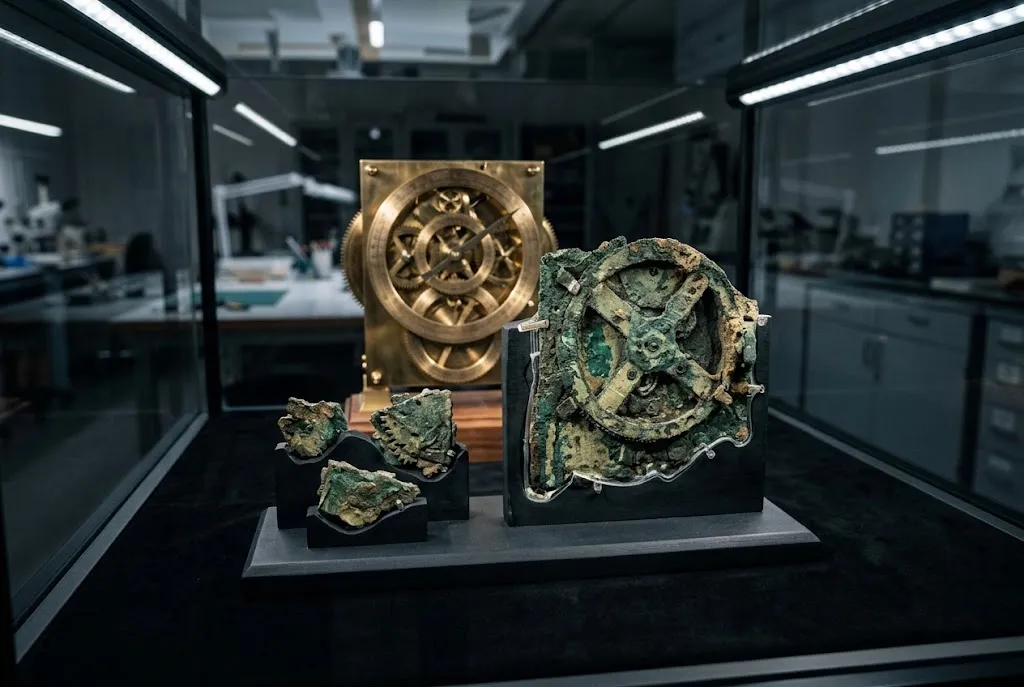
The concept of "impossible artifacts" often resurfaces when we talk about lost ancient technology. I’m thinking of various anomalies that don't quite fit the established timeline of technological development. Could some of these impossible artifacts be clues to lost ancient tech, perhaps even involving magnetic principles? Imagine if ancient civilizations, through generations of observation and experimentation, stumbled upon ways to create strong artificial magnets or manipulate magnetic fields in ways we’ve only recently rediscovered.
Consider the potential for ancient civilizations to understand Earth's magnetic field on a broader scale. We know that some ancient cultures, like the Maya and Egyptians, were astute astronomers, tracking celestial bodies with remarkable accuracy. If they could chart the stars and even predict events like eclipses, as discussed in "Did Ancient Maps Predict Continental Drift?", did ancient maps predict continental drift it's not a stretch to imagine them meticulously observing and documenting terrestrial phenomena like geomagnetic variations. Could they have used this knowledge for more than just finding north?
Magnetic Propulsion or Levitation? Pure Speculation, or a Hint of Truth?
This is where the discussion often ventures into the realm of speculative fiction, but I believe it's essential to allow our curiosity to push boundaries. Could ancient cultures have envisioned, or even experimented with, magnetic levitation or propulsion? Tales of flying machines (like the Vimana in ancient Indian texts) often involve advanced, unexplained forces. While we have no direct archaeological evidence of ancient magnetic propulsion systems, the human imagination is a powerful engine for innovation.
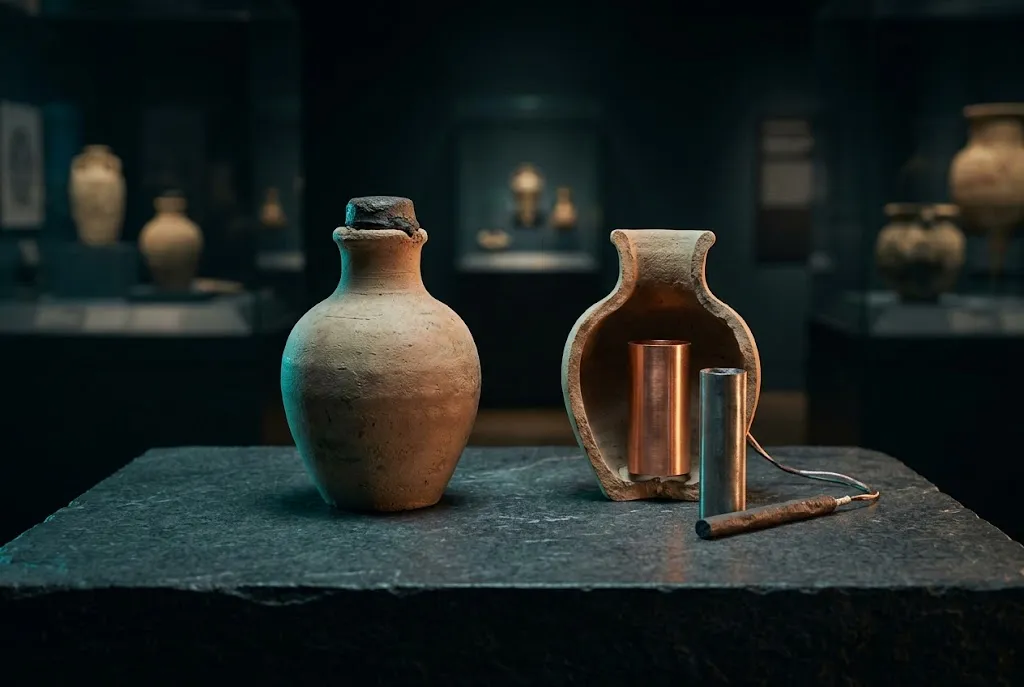
The concept of a "magnetic battery" or a way to store magnetic energy could also be an area to explore. We’ve seen the intriguing case of the Baghdad Battery, did ancient Iraqis power a lost civilization, which suggests a rudimentary understanding of electrochemistry. If they were exploring electrical phenomena, it’s not unreasonable to think they might have also experimented with magnetic fields in conjunction with it. Electromagnetism, as we know, is the unified force. Perhaps they glimpsed this connection without a full theoretical framework. For a deeper dive into how this relates to other ancient mysteries, one might recall the ancient cultures that seemingly crafted immortal lamps, hinting at advanced material science or energy sources.
Bridging the Gap: Modern Research and Ancient Wisdom
Today, research into biomagnetism and the effects of magnetic fields on living organisms is a vibrant field. We're discovering that many animals, from birds to turtles, possess a "magnetic sense" that aids in navigation and migration. Could ancient peoples, through keen observation of nature, have tapped into similar sensitivities or developed practices that leveraged these subtle interactions?
The idea that ancient cultures had a more profound understanding of magnetism than we currently credit them with is not about denying the progress of modern science. Instead, it encourages us to approach history with an open mind, recognizing that knowledge can be lost, rediscovered, and interpreted in different ways across civilizations. Our ancestors were not primitive; they were highly intelligent, observant, and innovative, often working with different tools and frameworks than our own.
As I look at the future of technology, with magnetic levitation trains, MRI machines, and quantum computing, I’m struck by the continuous evolution of our understanding of this fundamental force. Perhaps the "lost magnetic tech" of the ancients wasn't about complex machinery but a deep, intuitive wisdom about the Earth's natural energies and how to live in harmony with them. We might not find a magnetic supercomputer buried in a pyramid, but the echoes of a deeper understanding could still be waiting to be heard.
The journey to uncover these mysteries is ongoing, constantly challenging our assumptions about the past and inspiring new avenues for scientific inquiry. What else are we missing?



Conversation0
No comments yet. Be the first to share a thought — the best questions often become new stories.