


I remember a hiking trip a few years ago where my old analog compass, usually a reliable guide, started behaving erratically. It wasn’t a dead battery or a faulty device; it was pointing slightly off from what my GPS indicated. At the time, I brushed it off as a localized anomaly, perhaps some geological magnetism. But recently, I’ve been diving deep into the science behind Earth's magnetic field, and I realized my compass wasn't entirely wrong. It was, in its own primitive way, sensing a profound, ongoing cosmic dance: the slow, relentless shifting of our planet's magnetic poles. And this isn't just a minor curiosity; it’s a dynamic process that has happened many times throughout Earth's history, raising a fascinating and somewhat unsettling question: is Earth's next major pole shift, a full-blown geomagnetic reversal, imminent?
This isn't a doomsday prediction, nor is it about the planet literally "flipping over" like a pancake. Instead, it’s a look into the incredible, often invisible forces that shape our world, protect us from the harsh realities of space, and underpin much of our modern technology. The idea of a geomagnetic reversal might sound like something out of science fiction, but it's a very real phenomenon, deeply embedded in our planet's geological record and under intense scientific scrutiny today.
Earth's Invisible Shield: The Dynamo Effect
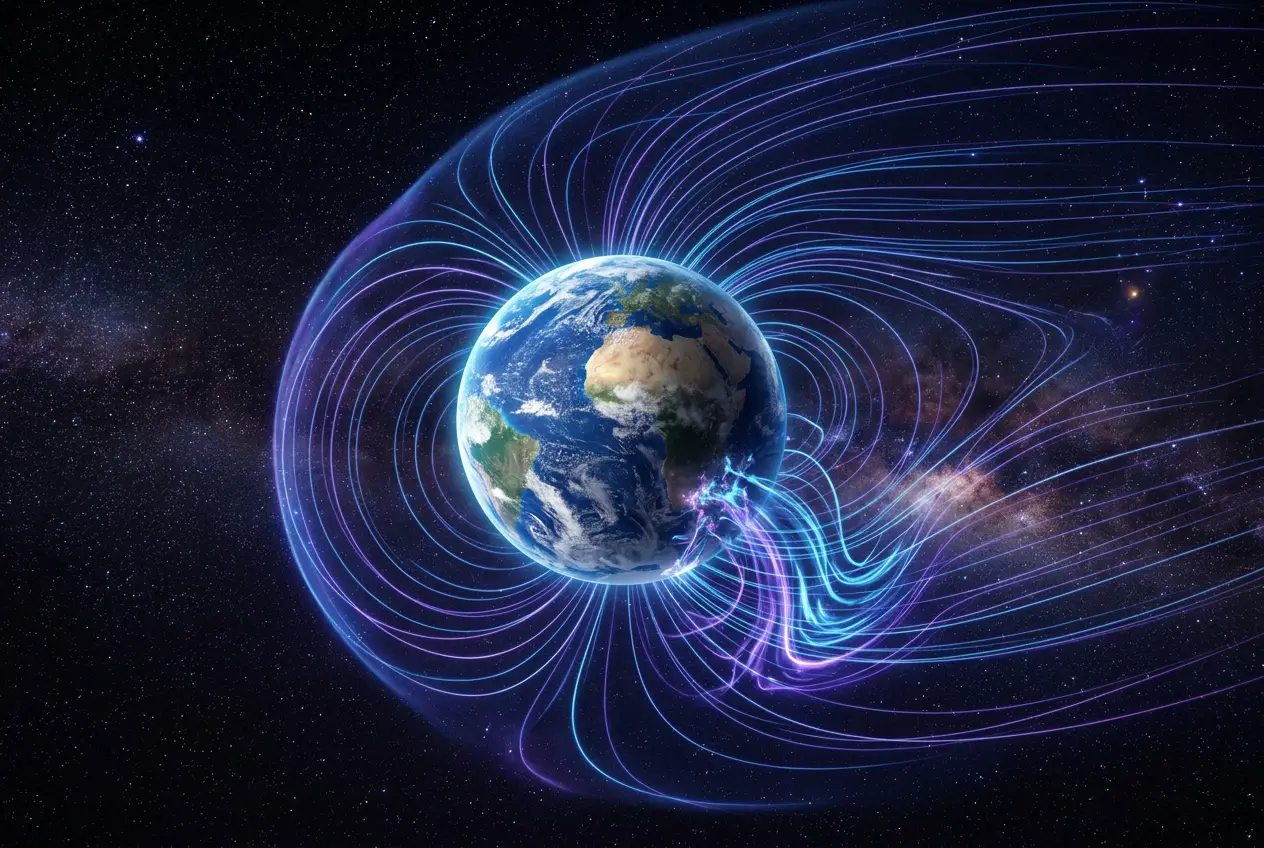
To understand a pole shift, we first need to appreciate what the Earth's magnetic field is and where it comes from. Imagine a massive, invisible bubble surrounding our planet, constantly deflecting harmful solar radiation and cosmic rays. That’s our magnetosphere, and it's generated by the Earth's magnetic field. This field isn't a permanent magnet embedded deep within the planet; rather, it’s a dynamic product of what scientists call the geodynamo.
Deep within Earth's core lies a swirling ocean of superheated, molten iron and nickel. As the planet rotates and the lighter, hotter material rises while cooler, denser material sinks, convection currents are created. This movement of electrically conductive liquid metal, coupled with the Coriolis effect from Earth's rotation, generates electric currents. These currents, in turn, produce a magnetic field. It's an intricate, self-sustaining system, much like an electric generator, but on a planetary scale. This incredible shield is vital for life on Earth, protecting our atmosphere and preventing charged particles from stripping it away, much like Mars's thinner atmosphere, which lacks a strong global magnetic field. You can read more about the Earth's magnetic field on Wikipedia (opens in a new tab).
The Wandering Poles: More Than Just a Compass Quirk
Our planet's magnetic poles are not static. The North Magnetic Pole, for instance, has been famously on the move. For centuries, it hovered around northern Canada. But since the early 2000s, its movement has dramatically accelerated, shifting at a rate of up to 50-60 kilometers per year towards Siberia. This rapid migration forced scientists to update the World Magnetic Model, which underpins all navigation systems—from Google Maps to military applications—more frequently than anticipated.
This isn't a pole shift in the sense of a complete reversal, but rather a geomagnetic excursion, a period of instability and rapid movement that can sometimes precede a full reversal. The phenomenon of the wandering pole highlights the dynamic nature of the geodynamo and underscores that our planet's magnetic shield isn't as constant as we might assume. It's like a cosmic dance, with the poles twirling faster, hinting at larger choreography yet to come.
Geomagnetic Reversals: A Deep Dive into Earth's History
So, what exactly is a geomagnetic reversal? It's when the Earth's magnetic north and south poles effectively swap places. The magnetic field doesn't just flip instantly; it weakens significantly, sometimes to less than 10% of its current strength, before eventually re-establishing itself with reversed polarity. During this transition period, the field becomes more complex, often showing multiple poles or areas of very low intensity.
Scientists know these reversals have happened many times throughout Earth's history, thanks to the geological record. As molten rock erupts from volcanoes or mid-ocean ridges and then cools, magnetic minerals within it align themselves with the Earth's magnetic field at that time. These "fossil magnets" act like tiny compasses, preserving a record of the field's direction and intensity. By studying these magnetic signatures in layers of rock, geologists have mapped out a detailed timeline of geomagnetic reversals.
The last full reversal, known as the Brunhes-Matuyama reversal, occurred approximately 780,000 years ago. Before that, reversals happened, on average, every few hundred thousand years, though the timing is irregular. We've been in a stable period for quite some time, leading to the natural question: are we due for another?
Is a Reversal Imminent? The Science Says… Maybe, Eventually.
The increase in the North Magnetic Pole's drift and a noticeable weakening of the overall magnetic field strength, particularly in the South Atlantic Anomaly region, certainly suggest that the geodynamo is undergoing changes. Some estimates suggest the field has weakened by about 10-15% over the last 150 years.
However, "imminent" in geological terms is very different from "imminent" in human terms. While the magnetic field is indeed weakening and moving, the scientific consensus is that a full reversal is likely still thousands of years away, perhaps even longer. These processes unfold over millennia. The weakening we observe now could be part of a longer-term trend that eventually leads to a reversal, or it could be a fluctuation that corrects itself. Scientists constantly monitor the magnetic field using a network of ground observatories and satellites like ESA's Swarm mission. This ongoing research is critical for understanding these complex processes. For more information on geomagnetic reversals, see the Wikipedia article on Geomagnetic Reversal (opens in a new tab).
Potential Impacts: Beyond Just Compass Headaches
Even if a full reversal is distant, the period of a weakened field during a transition could have significant consequences.
Navigation & Technology
The most immediate and obvious impact would be on our navigation systems. Compasses would become unreliable, and GPS systems, while not relying on Earth's magnetic field directly, would need constant recalibration as magnetic models become outdated faster. Satellites and aircraft systems that use magnetic field data for orientation would also face challenges. We've already seen how the rapidly moving North Magnetic Pole has necessitated more frequent updates to global navigation models.
Power Grids & Communications
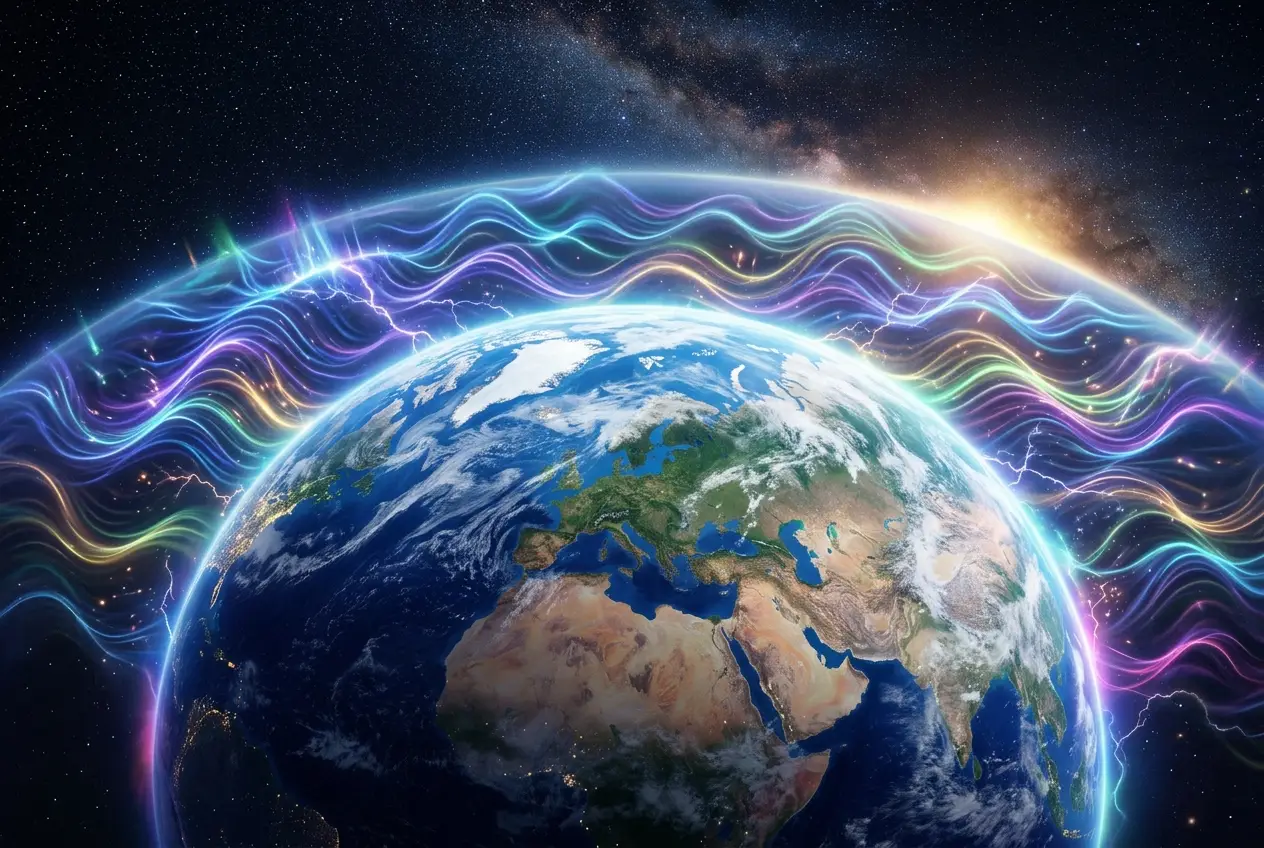
A weaker magnetosphere means less protection from solar wind and solar flares. These bursts of charged particles from the Sun can induce massive electrical currents in power grids, potentially causing widespread blackouts. They can also disrupt radio communications, particularly those that rely on the ionosphere. While Earth's field currently protects us from most severe solar events, a weakened field would make us far more vulnerable. This ties into discussions about the potential impact of solar flares, as explored in our blog: Do Solar Flares Trigger Earthquakes? Unpacking Cosmic Links.
Satellites & Astronauts
Our critical satellite infrastructure, which powers everything from weather forecasting to global communication, would be at greater risk. Satellites and astronauts in space would be exposed to higher levels of radiation, potentially damaging electronics and posing health risks. The South Atlantic Anomaly (SAA), an area where the Earth's magnetic field is unusually weak, already causes issues for satellites passing through it, leading to increased exposure to energetic particles. A global weakening would effectively turn the entire planet into a larger SAA.
Climate?
While direct, dramatic climate change due to a pole shift is not supported by current science, some theories suggest a weakened magnetosphere could allow more cosmic rays to reach the atmosphere. Some research indicates a potential link between cosmic rays and cloud formation, which could subtly influence weather patterns. However, this is a complex and highly debated area, and most scientists agree that the impact on climate would be far less significant than human-induced greenhouse gas emissions.
Animal Kingdom
Many animals, from birds to turtles, use Earth's magnetic field for navigation during migration. A rapidly shifting or weakening field could disorient them, potentially affecting their survival rates. While animals have shown remarkable adaptability to environmental changes throughout history, a fast-paced magnetic transition could pose new challenges. Our understanding of how animals "sense" the magnetic field is still evolving, with some theories even involving quantum mechanical effects in the brain.
Preparing for the Unseen: Monitoring and Research
The good news is that scientists are actively monitoring Earth's magnetic field with increasing precision. Missions like the European Space Agency's (ESA) Swarm satellites provide unprecedented data on the field's strength, direction, and changes. This data helps refine our understanding of the geodynamo and improve predictions of future shifts.
Understanding these cosmic processes is not just about preparing for potential disruptions; it’s about deepening our appreciation for the dynamic, living planet we inhabit. It reminds us that even the most fundamental aspects of our world are in constant flux, a grand experiment played out over geological timescales. The mysteries of our universe extend from the smallest quantum particles to the vastness of space, and sometimes, the most profound enigmas lie just beneath our feet, or rather, deep within our planet's fiery heart. Just as we ponder the silent universe in discussions like Why is the universe so quiet? Decoding the Fermi Paradox, we must also understand the active, unseen forces shaping our own cosmic neighborhood.
In conclusion, while the complete flip of Earth's magnetic poles isn't a phenomenon that will happen overnight, the ongoing shifts and weakening of our magnetic field are a compelling testament to the Earth's dynamic nature. It highlights the intricate interplay between our planet's molten core, its rotation, and the protective shield it casts into space. It also serves as a potent reminder of our reliance on a stable planetary environment for our advanced technology and, indeed, for the very ecosystem that sustains us. As our technological footprint grows, so does our vulnerability to these natural cosmic rhythms. Staying curious and supporting scientific exploration into these deep Earth mysteries is how we equip ourselves for whatever cosmic reversal lies ahead.



Conversation0
No comments yet. Be the first to share a thought — the best questions often become new stories.