


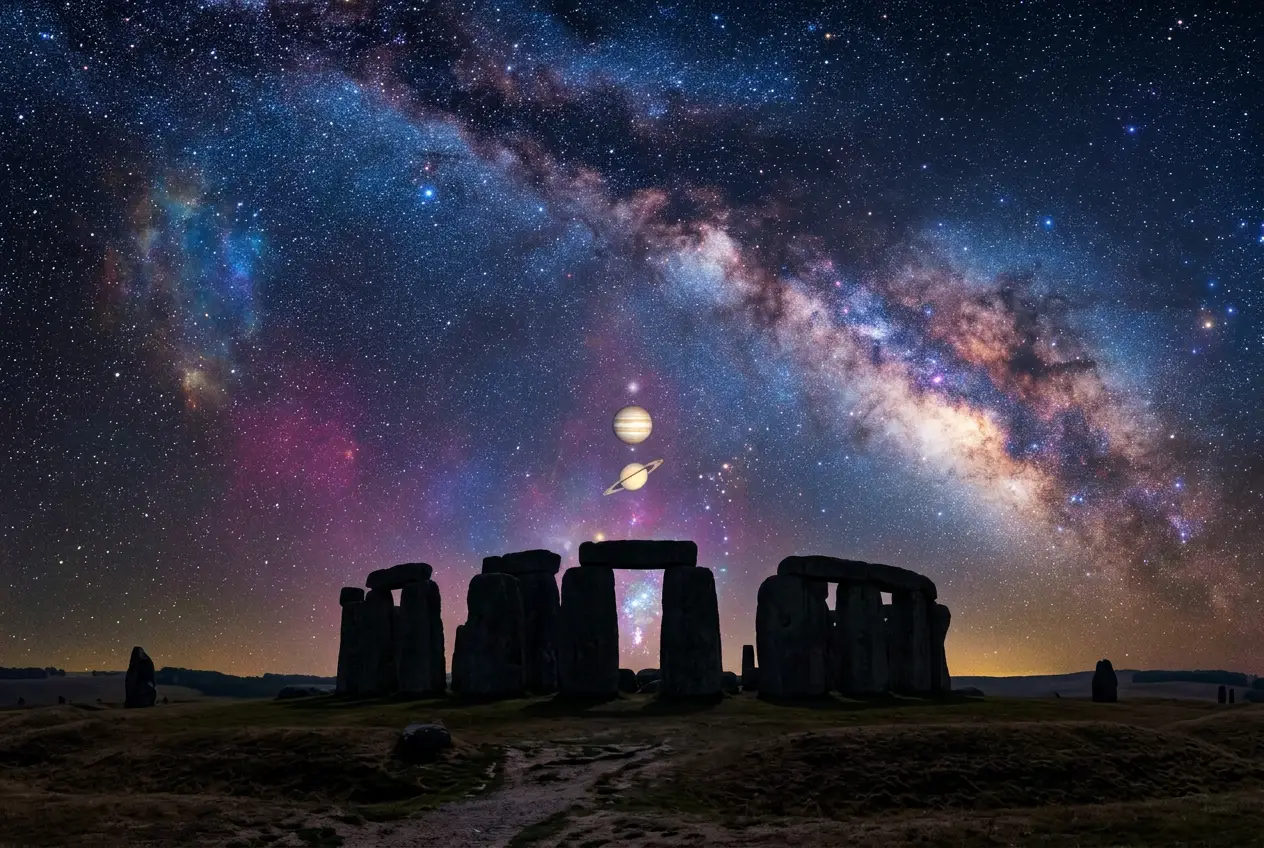
I recently found myself staring up at the night sky, much like our ancestors must have, albeit with the stark contrast of a city glow battling the distant starlight. It's a humbling experience, realizing the vastness of the cosmos and our tiny place within it. But then I started thinking: what if our ancestors, without telescopes or advanced computing, understood the heavens in ways we're only just beginning to appreciate? What if they didn't just observe the stars, but built their world around them, embedding cosmic calendars and celestial observatories into the very foundations of their civilizations?
For millennia, humans have gazed skyward, tracing patterns among the stars and noting the predictable rhythms of the sun and moon. But some ancient structures around the globe go beyond mere observation. They suggest an intimate, profound understanding of celestial mechanics, raising a fascinating question: did ancient civilizations possess a sophisticated, perhaps even "cosmic," knowledge that allowed them to align massive structures with pinpoint accuracy to astronomical events? I believe the evidence points to a resounding "yes," hinting at a lost science of the heavens.
Echoes of the Cosmos: The Science of Archaeoastronomy
The study of how ancient people understood and used celestial phenomena in their cultures, known as archaeoastronomy, is a rapidly evolving field. It blends archaeology, anthropology, and astronomy to decode the cosmic blueprints left behind by our predecessors. It’s not just about noticing that a building faces east; it's about discerning deliberate, precise alignments to solstices, equinoxes, lunar standstills, or specific stars that held cultural or practical significance.
Imagine living in a world where the changing positions of the sun, moon, and stars dictated everything from agricultural cycles to religious ceremonies. Understanding these cycles wasn't just practical; it was essential for survival and spiritual well-being. And to do that with monumental stone, without modern surveying equipment, required an advanced level of observational skill and engineering. It makes me wonder if they had a shared, perhaps globally disseminated, knowledge system that allowed for such impressive feats.
Global Markers: When Stone Met Starlight
Across continents, from the misty plains of England to the scorching deserts of Egypt and the dense jungles of Mesoamerica, monumental architecture stands as a testament to this ancient celestial wisdom. These aren't random occurrences; they are often engineered with stunning precision.
Stonehenge: Britain's Cosmic Clock
Perhaps the most famous example is Stonehenge in Wiltshire, England. This prehistoric monument, built between 3000 and 2000 BC, is meticulously aligned with the summer solstice sunrise and the winter solstice sunset. On these pivotal days, the sun’s rays perfectly penetrate the monument’s central axis, illuminating specific stones. This isn't coincidence; it's deliberate design. Researchers have found alignments to lunar standstills as well, suggesting an even deeper understanding of celestial cycles.
The effort required to quarry, transport, and erect these massive sarsen stones, some weighing up to 30 tons, speaks volumes about the importance placed on these cosmic connections. It wasn't just a place of worship; it was a sophisticated calendar and perhaps even an astronomical observatory. As Mike Parker Pearson, a leading archaeologist, noted, "It seems to have been designed to celebrate the winter and summer solstices, the crucial points in the seasonal calendar for prehistoric people" (Source: https://en.wikipedia.org/wiki/Stonehenge (opens in a new tab)). This deep connection to the earth's cycles resonates with the intriguing question of whether ancient civilizations could manipulate unseen forces for construction, as explored in "Unseen Forces: Did Sound Energy Build Ancient Megaliths?" (See: /blogs/unseen-forces-did-sound-energy-build-ancient-megaliths-7946).
The Great Pyramids: Cosmic Guides in the Desert
Moving south to the sands of Egypt, the Great Pyramids of Giza present an equally astounding celestial puzzle. The three main pyramids are almost perfectly aligned to true north, with an astonishing degree of accuracy that still baffles modern engineers. Furthermore, some theories suggest that the layout of the three Giza pyramids on the ground mirrors the three stars of Orion's Belt, a constellation deeply significant in ancient Egyptian mythology, associated with the god Osiris and rebirth.
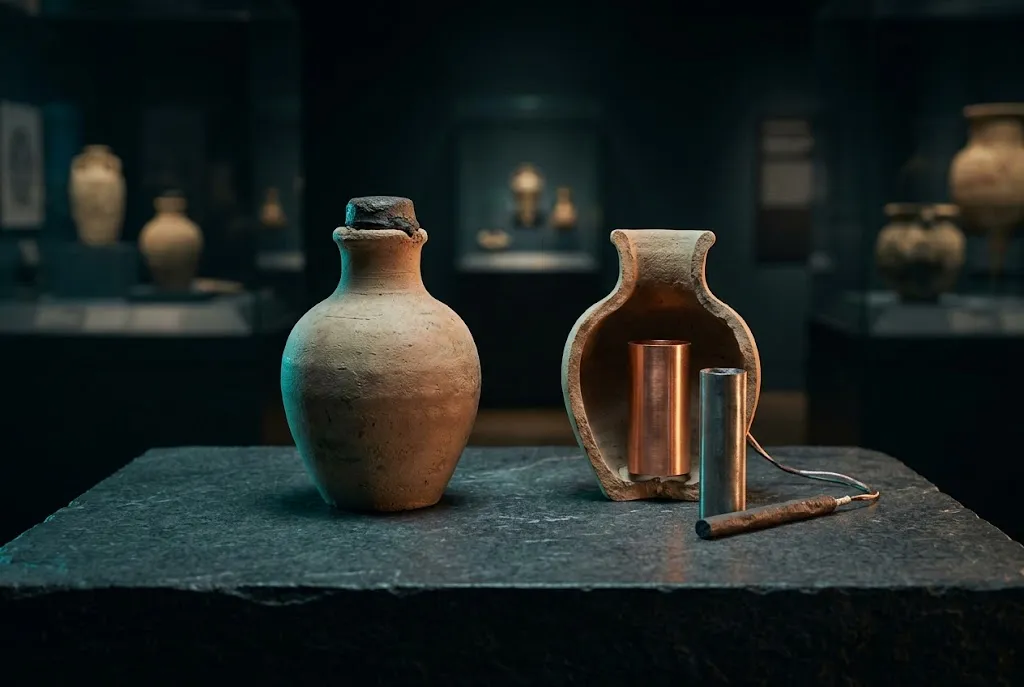
This precision implies an advanced understanding of astronomy and surveying. How did they achieve such exact alignment without magnetic compasses or GPS? It speaks to a profound observational astronomy and geometry that we often underestimate when thinking about ancient cultures. The meticulous planning involved in these colossal structures makes me consider other ancient technological marvels, like the infamous Baghdad Battery (See: /blogs/the-baghdad-battery-did-ancient-iraqis-power-a-lost-civilization-9975), and how much more "advanced" some ancient societies truly were than our history books suggest. For more on the Pyramids' alignments, you can consult: https://en.wikipedia.org/wiki/Egyptian_pyramids#Alignment (opens in a new tab).
Chichen Itza: The Serpent of Light
Across the Atlantic, in the Yucatán Peninsula of Mexico, the Maya civilization left behind their own stunning celestial marvel: El Castillo at Chichen Itza. During the spring and autumn equinoxes, the setting sun casts a shadow that creates the illusion of a serpent (Kukulkan, the feathered serpent deity) slithering down the pyramid's staircase. This effect, visible for only a few hours on two days a year, requires an incredibly precise orientation and architectural design.
The Maya were renowned for their sophisticated astronomical observations and complex calendrical systems. Their understanding of celestial cycles was interwoven with their religious beliefs, agricultural practices, and societal structure. El Castillo isn't just a pyramid; it's a giant sundial and a living calendar, a testament to their deep cosmological insight. The deliberate construction of such a phenomenon is mind-boggling, showcasing a mastery of light and shadow that predates many European architectural feats. More details on El Castillo can be found here: https://en.wikipedia.org/wiki/El_Castillo,_Chichen_Itza (opens in a new tab).
The "How": Unpacking Ancient Techniques
The "what" is awe-inspiring, but the "how" remains one of the greatest mysteries. How did ancient builders achieve such incredible precision without modern tools?
- Naked-Eye Astronomy: Our ancestors had unobstructed views of the night sky, free from light pollution. They meticulously tracked stars, planets, and lunar phases over generations, accumulating vast amounts of data through persistent observation.
- Simple Surveying Tools: While not modern, they likely used plumb bobs, water levels, gnomons (shadow-casting sticks), and precise alignment with natural features. The use of ropes and simple geometry could have laid out vast temple complexes with surprising accuracy.
- Cultural Transmission: Knowledge was not just individual; it was passed down through generations, often enshrined in religious texts, oral traditions, and the training of specialized astronomers and architects. This suggests a highly structured and disciplined approach to knowledge transfer.
I’m particularly fascinated by the idea of ancient master builders who weren't just engineers but also high-ranking priests or astronomers, blending scientific observation with spiritual understanding. It’s a holistic approach to science that we often compartmentalize today. It reminds me of the complexity of ancient mapping, where seemingly impossible details appear, as discussed in the Piri Reis Map mystery (Read: /blogs/piri-reis-map-secrets-of-an-antarctic-coastline-7148).
More Than Just Calendars: Cosmic Computers?
Could these alignments be more than just giant calendars or observatories? Some researchers propose that they represent a form of "cosmic computer," a way to model and predict celestial events over long periods. By observing patterns and marking them in stone, they created a durable, physical representation of their astronomical calculations.
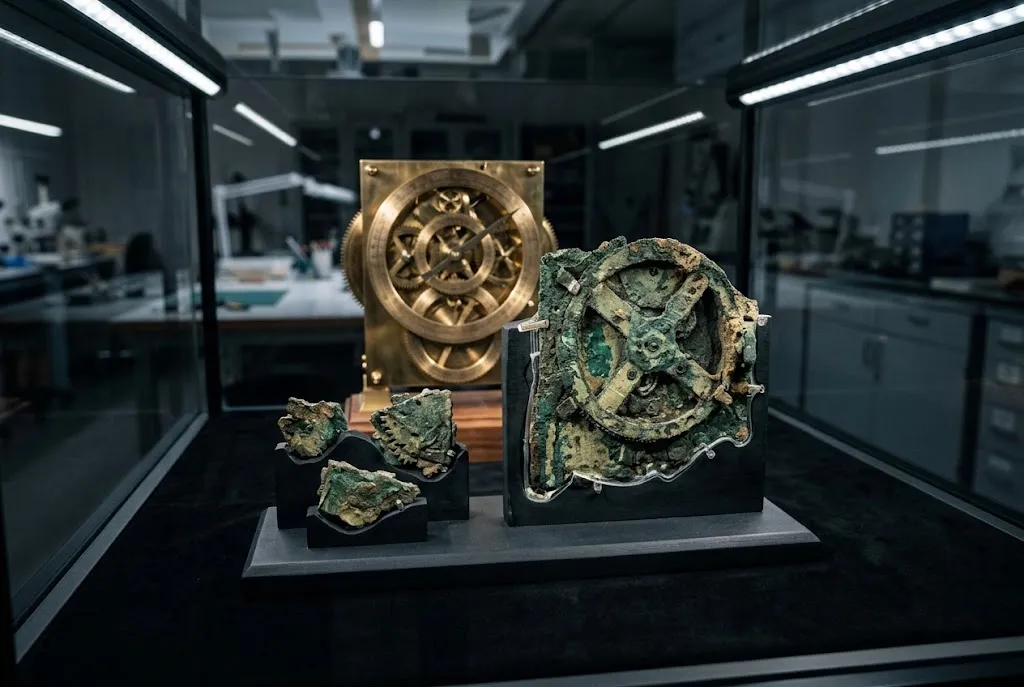
Consider the hypothetical scenario where ancient peoples used these monumental sites to predict solar or lunar eclipses, or even track the precession of the equinoxes (a very slow wobble of the Earth's axis that changes the star visible at the equinox over millennia). Such knowledge would have granted immense power and prestige, solidifying the authority of those who could "read" the heavens. The idea of such an ancient "computer" isn't entirely far-fetched, given the complexity of the Antikythera mechanism (a Greek analog computer) and other advanced artifacts that defy their presumed era. It makes me question our very understanding of ancient intelligence and what defines "technology." It might even make you reconsider the very nature of reality, as explored in "Could Our Reality Be a Simulation?" (Explore: /blogs/could-our-reality-be-a-simulation-decoding-the-matrix-hypothesis-4299).
The Enduring Mystery
The precision of ancient celestial alignments continues to be a source of wonder and ongoing research. While we have many theories, the full extent of their astronomical knowledge and the exact methods they employed remain partly shrouded in the mists of time. Each discovery, each deciphered alignment, offers another piece of the puzzle, revealing sophisticated minds at work long before the advent of modern science.
As I look at the stars now, I can't help but feel a profound connection to those ancient builders who, armed with little more than their intellect and an unyielding curiosity, etched the cosmos into the very fabric of our planet. They were, in their own right, cosmic engineers, leaving us a legacy of stone and starlight that continues to inspire awe and questions. Perhaps their greatest lesson is that the universe has always been our ultimate teacher, and that by looking up, we can find answers not only about the stars but about ourselves.



Conversation0
No comments yet. Be the first to share a thought — the best questions often become new stories.