I've always been captivated by the idea of technology that seems to defy the laws of physics, pushing the boundaries of what we currently understand. Imagine a computer that could compute through solid rock, immune to electromagnetic interference, or transmit data across light-years without signal degradation. Sounds like pure science fiction, doesn't it? Yet, as I delve deeper into the mysteries of the universe, I keep circling back to one of the most enigmatic particles known to science: the neutrino. Could these elusive "ghost particles" actually hold the key to our next generation of computing and communication?
For decades, neutrinos have been the bane of physicists' existence – tiny, almost massless, and famously non-interactive. They stream through us, through Earth, and through entire galaxies as if nothing were there. Billions of them pass through your fingertip every second, courtesy of the Sun, and you'd never know it. But what if this very aloofness, this incredible ability to penetrate matter, isn't a limitation but a profound advantage, one that could revolutionize our digital world?
## What Exactly Are These Ghost Particles?
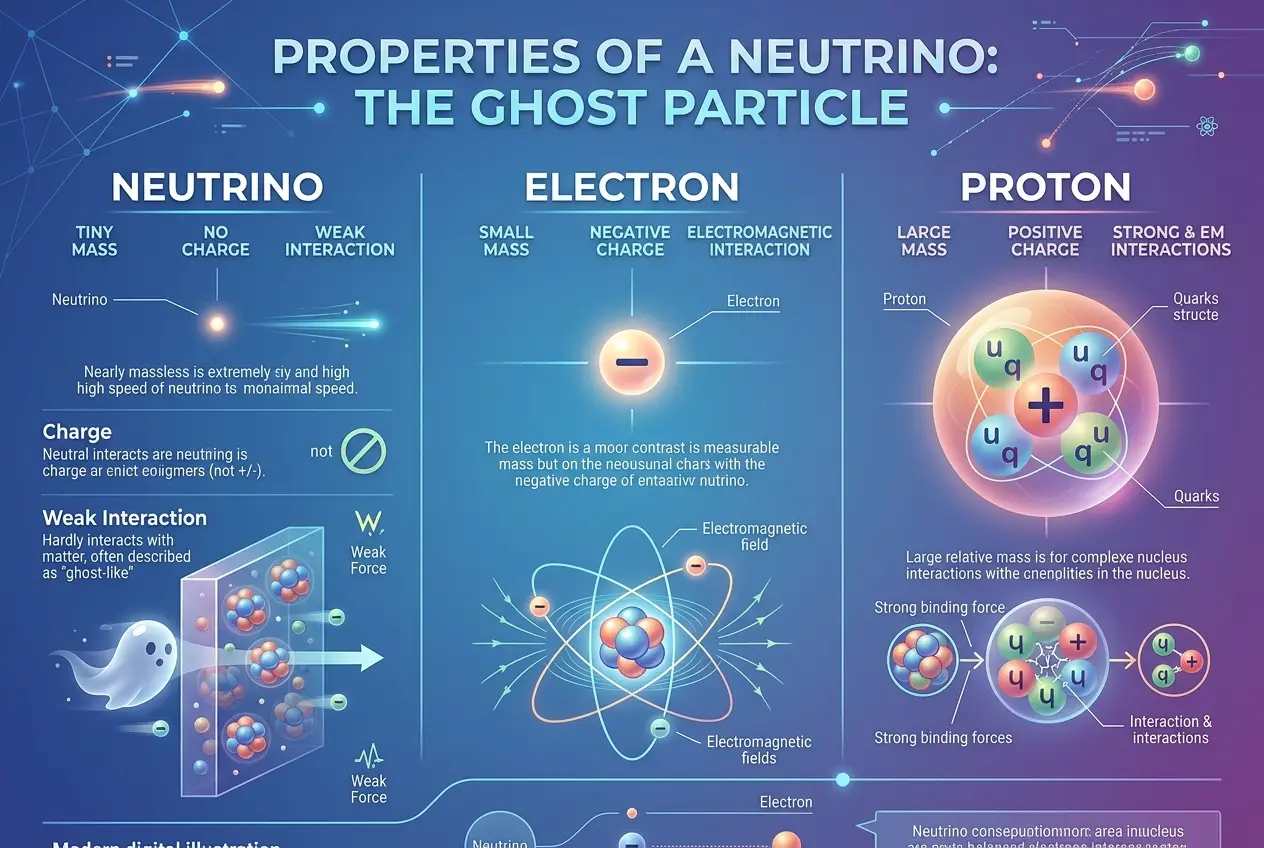
To appreciate the potential of neutrino technology, we first need to understand what neutrinos are. They are elementary subatomic particles, much like electrons, but with a critical difference: they possess an incredibly small mass (so small it was once thought to be zero) and absolutely no electric charge. This lack of charge means they don't interact with the electromagnetic force, which governs light, radio waves, and all electrical circuits. Instead, they interact only through the weak nuclear force and gravity, both of which are exceptionally feeble at the particle level.
Born from powerful cosmic events like supernovae, nuclear reactions in stars (our Sun is a massive neutrino factory), and even radioactive decay here on Earth, neutrinos are everywhere. Their journey across the cosmos is largely unimpeded; they rarely "hit" anything. This makes them incredibly difficult to detect, requiring massive, often underground, observatories filled with specialized detectors, often deep underground, to catch even a handful of interactions. To learn more about these fascinating particles, you can explore their detailed profile on [Wikipedia's Neutrino page](https://en.wikipedia.org/wiki/Neutrino).
## The Allure of Neutrino Computing: A Paradigm Shift
If we could somehow coerce neutrinos into interacting in a controlled manner, the implications for technology would be nothing short of revolutionary. Imagine the possibilities:
### Immunity to Electromagnetic Interference
Traditional electronics are highly susceptible to electromagnetic interference (EMI). A strong magnetic field, a burst of radio waves, or even cosmic rays (a topic we've explored in "Cosmic Rays: Secretly Glitch Our Tech?") can wreak havoc on data integrity and system operation. Because neutrinos are electrically neutral, they are completely immune to EMI. This inherent resilience makes neutrino-based computers ideal for environments where conventional electronics fail: deep space, beneath planetary crusts, in highly radioactive zones, or even in military applications demanding unjammable systems.
### Ultra-Dense & Through-Matter Computing
Their incredibly small size and minimal interaction cross-section offer theoretical avenues for extreme miniaturization. If we could encode and process information using individual neutrinos or controlled neutrino streams, we might be able to create computing devices far denser and more powerful than anything silicon can offer. Furthermore, the ability of neutrinos to pass through virtually any material means a computer wouldn't need to be physically connected by wires to its peripherals or even its power source. Computation could theoretically occur "through" matter, opening up entirely new architectural designs.
### Unparalleled Penetration for Communication
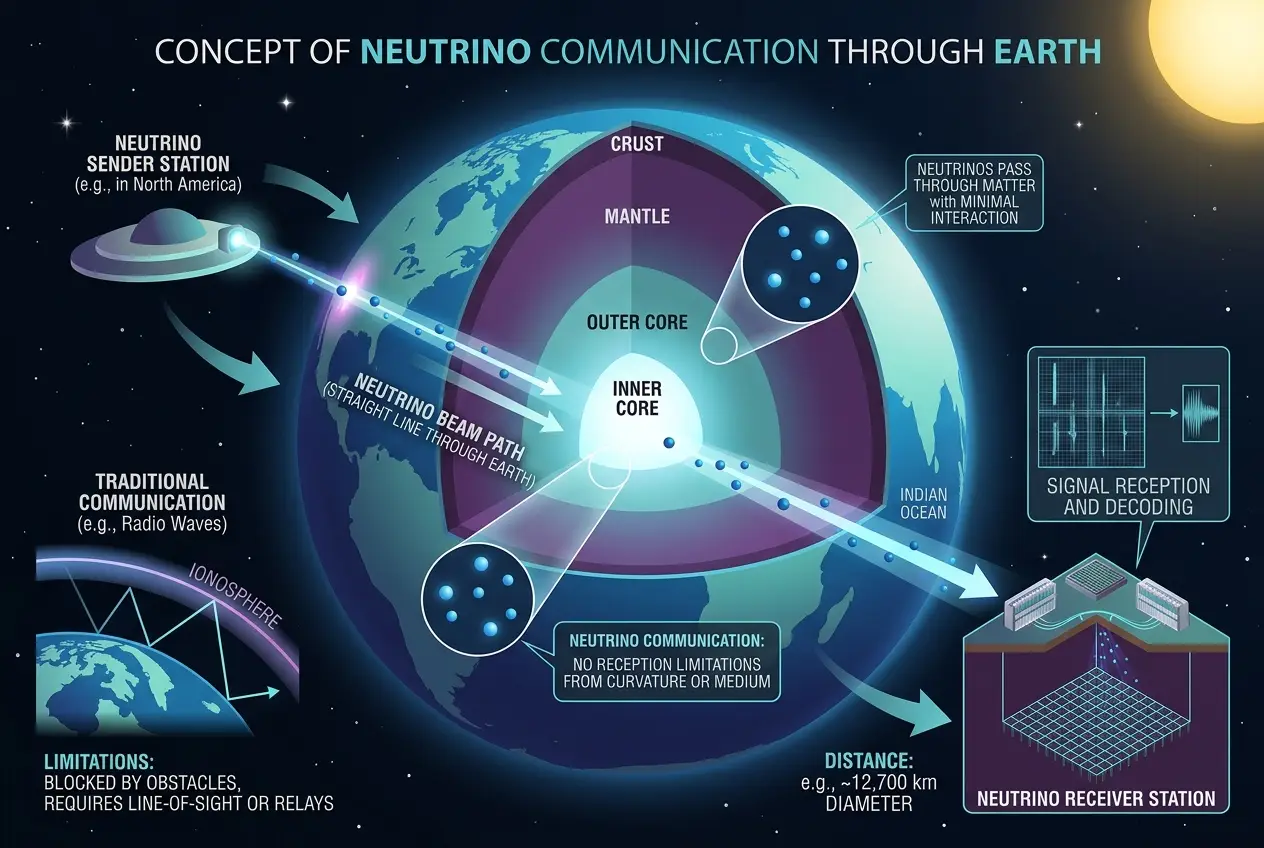
While the primary focus here is computing, the concept extends naturally to communication. Imagine sending data packets that tunnel through the Earth's core, reaching the other side of the planet instantly, or transmitting messages across interstellar distances, unaffected by nebulae or stellar radiation. Traditional communication, whether radio or optical, faces significant attenuation and scattering in dense mediums. Neutrinos, however, laugh at such obstacles. This makes the prospect of neutrino communication for secure, global, or even interstellar links incredibly enticing. We've previously discussed related concepts in ["Do Neutrinos Carry Hidden Cosmic Messages?"](https://curiositydiaries.com/blogs/do-neutrinos-carry-hidden-cosmic-messages-6956), but here, we're considering active, engineered communication.
## The Quantum Neutrino Enigma
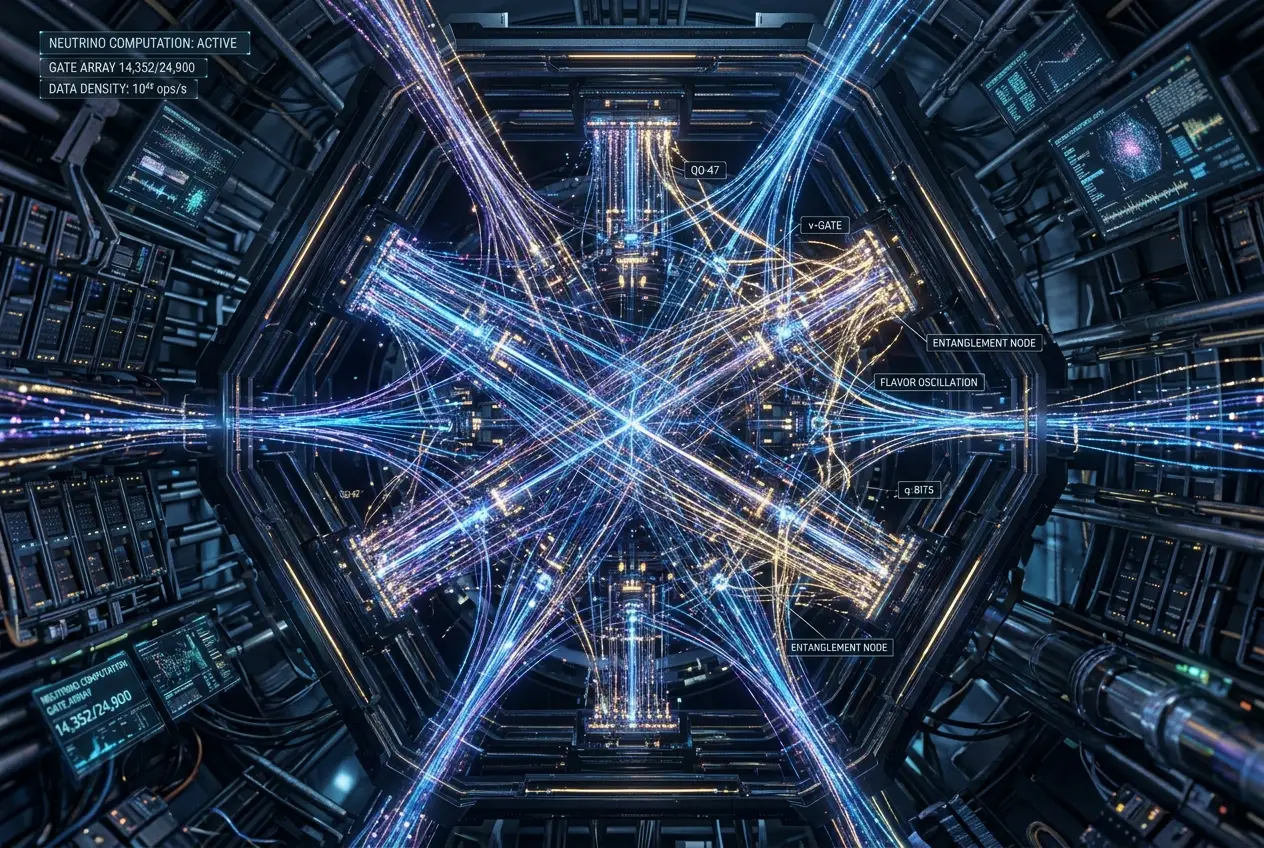
The true power of neutrino computing might lie in the realm of quantum mechanics. Neutrinos, like all quantum particles, possess quantum properties such as spin and flavor (electron, muon, tau). If we could manipulate these quantum states, perhaps we could develop "quantum neutrino computers" that harness phenomena like superposition and entanglement.
Imagine a computational device where a single neutrino's quantum state could represent a qubit, potentially processing vast amounts of information simultaneously. This is highly theoretical, but the idea connects with broader research into quantum computing and its revolutionary potential, which we delved into in our blog ["Can Quantum Computers Break Time's Rules?"](https://curiositydiaries.com/blogs/can-quantum-computers-break-times-rules-2969). The challenge, of course, is that the very property that makes neutrinos so appealing – their weak interaction – also makes controlling their quantum states an unimaginable feat with current technology.
## Current Challenges: The Herculean Task
While the vision is breathtaking, the practical challenges are monumental.
### The Interaction Problem
The biggest hurdle is their incredibly weak interaction with matter. For a neutrino to carry information, it must be made to interact reliably and predictably. Currently, detecting a neutrino requires massive detectors, often tons of purified water or ice, instrumented with photodetectors. Think of the IceCube Neutrino Observatory at the South Pole – a cubic kilometer of ice used to detect the faint light produced by a neutrino interaction. To use them for computing, we would need to induce interactions at a microscopic scale, millions of times per second, in a controlled environment. This is a scientific and engineering puzzle of epic proportions. You can learn more about the current state of neutrino detection on [Wikipedia's Neutrino Detector page](https://en.wikipedia.org/wiki/Neutrino_detector).
### Modulation and Detection
How would you "write" information onto a neutrino? How would you "read" it? This requires a mechanism to precisely modulate neutrino beams and a detector sensitive enough to register these modulated signals at the scale necessary for computation. We currently lack any such technology. The weak force, explained further on [Wikipedia's Weak Interaction page](https://en.wikipedia.org/wiki/Weak_interaction), is precisely why this is so difficult.
## A Glimpse into the Future: Cosmic Computers?
Despite the immense difficulties, the pursuit of neutrino-based technology embodies humanity's relentless quest for the next frontier. If realized, neutrino computers wouldn't just be faster or smaller; they would represent a fundamental shift in how we build and operate technology. They could be the ultimate "cosmic computers," tapping into the universe's most abundant yet elusive particles to process information. This idea of the universe itself as a computational entity resonates with theories we've explored, such as in ["Is the Universe a Giant Neural Network?"](https://curiositydiaries.com/blogs/is-the-universe-a-giant-neural-network-2907).
Imagine AI systems running on neutrino processors deep within planetary bodies, safe from any surface disaster or external interference. Or interstellar probes communicating with unprecedented speed and security across vast cosmic distances. This isn't just about faster calculations; it's about enabling entirely new realms of technological possibility that are currently beyond our grasp.
The dream of neutrino computing remains firmly in the realm of theoretical physics and distant speculation. But the very existence of these ghost particles, constantly streaming through everything, compels us to ask: are we merely scratching the surface of their potential? The universe is full of hidden processes and untapped energies, and perhaps one day, we will learn to tame the neutrino, transforming it from a cosmic curiosity into the backbone of our digital future. It's a grand challenge, but one that promises rewards beyond our wildest imagination.
Frequently Asked Questions
Neutrinos are called 'ghost particles' because they have no electric charge and interact extremely weakly with other matter. Billions pass through us and the Earth every second without detection, making them incredibly elusive and difficult to observe.
Neutrino computing could be superior due to its immunity to electromagnetic interference (EMI), allowing for operation in harsh environments. It also offers potential for ultra-dense computing due to neutrinos' tiny size, and through-matter communication, enabling data transfer through solid objects or vast cosmic distances without degradation.
The biggest challenge is the extremely weak interaction of neutrinos with matter. For computing, neutrinos need to interact reliably and controllably at a microscopic level, which is currently an immense scientific and engineering hurdle given how difficult they are to even detect using massive observatories.
Yes, theoretically. Because neutrinos can pass through dense matter and vast cosmic distances without significant attenuation or scattering, they are an ideal candidate for interstellar communication, offering a way to send messages that would bypass the limitations of traditional radio or optical signals.
Currently, there are no functional prototypes of neutrino computers or practical communication devices. The concept remains largely theoretical, primarily due to the technological challenges of inducing and controlling neutrino interactions at the necessary scale. Research is still in its very early, foundational stages.
Verified Expert
Alex Rivers
A professional researcher since age twelve, I delve into mysteries and ignite curiosity by presenting an array of compelling possibilities. I will heighten your curiosity, but by the end, you will possess profound knowledge.
Leave a Reply
Comments (0)
No approved comments yet. Be the first to share your thoughts!
 Join Us




 Unknown Author






























Leave a Reply
Comments (0)