


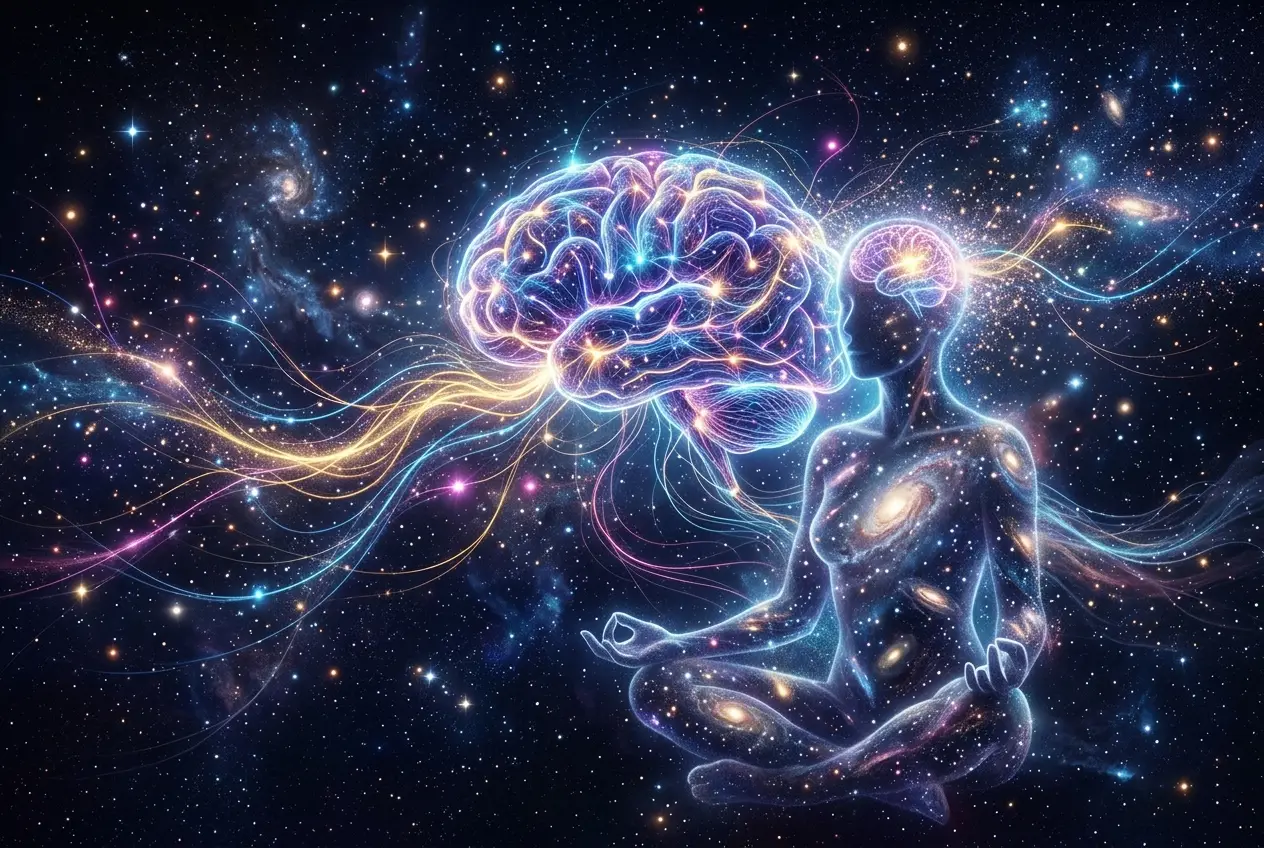
I’ve often wondered about those inexplicable moments when you just feel something. Not an emotion, but a subtle shift in your awareness, a premonition, or even a sudden intuition that seems to come from nowhere. We attribute many such feelings to psychology or coincidence, but what if there's more to it? What if our sophisticated biological systems are, in fact, tuning forks for the universe, capable of sensing subtle cosmic signals that science is only just beginning to acknowledge?
It sounds like something out of science fiction, yet a growing body of research, particularly in the emerging field of quantum biology, suggests that our bodies might be far more sensitive to the subtle energies and forces of the cosmos than we currently understand. This isn't about astrology or pseudoscience; it's about exploring the very real, albeit incredibly faint, physical interactions between our biological machinery and the vast, energetic tapestry of space.
The Mystery of the Unseen Senses
For centuries, humans have looked up at the stars and felt a profound connection, often attributing influences on mood, health, and even destiny to celestial movements. While many of these ancient beliefs lack empirical support, they hint at a persistent human intuition: that we are not isolated from the cosmos, but intricately woven into its fabric. Today, modern science offers intriguing pathways to reconsider this ancient idea through a new lens—one where our very cells might act as delicate biological sensors.
Consider the remarkable abilities of many animals. Birds, for instance, undertake epic migrations spanning continents, navigating with astonishing precision even on cloudy nights when celestial cues are hidden. How do they do it? The answer, scientists believe, lies in their ability to detect Earth's magnetic field – a sense known as magnetoreception. It’s not just birds; monarch butterflies, sea turtles, even foxes use this ability to find their way.
The mechanism behind this is fascinating and deeply rooted in quantum mechanics. In the eyes of certain migratory birds, specific proteins called cryptochromes are thought to undergo quantum entanglement when exposed to light. This entanglement makes them sensitive to subtle changes in the Earth’s magnetic field, allowing the bird to "see" a magnetic compass. You can delve deeper into the specifics of this incredible biological compass on Wikipedia's page on Cryptochrome (opens in a new tab). If animals can harness quantum effects to sense a fundamental force of nature, what about humans?
Do Humans Possess a Sixth Sense for Magnetism?
The idea that humans might also possess a form of magnetoreception has been largely debated. Early studies yielded mixed results, often dismissed as noise. However, recent, more rigorous experiments have started to turn the tide. A groundbreaking study published in eNeuro in 2019 demonstrated that human brains do respond to changes in magnetic fields. Participants showed distinct brainwave patterns (alpha-band activity) when exposed to specific magnetic field shifts, suggesting an unconscious sensing mechanism. While we don't consciously perceive magnetic fields like we see light or hear sound, our brains appear to be registering them.
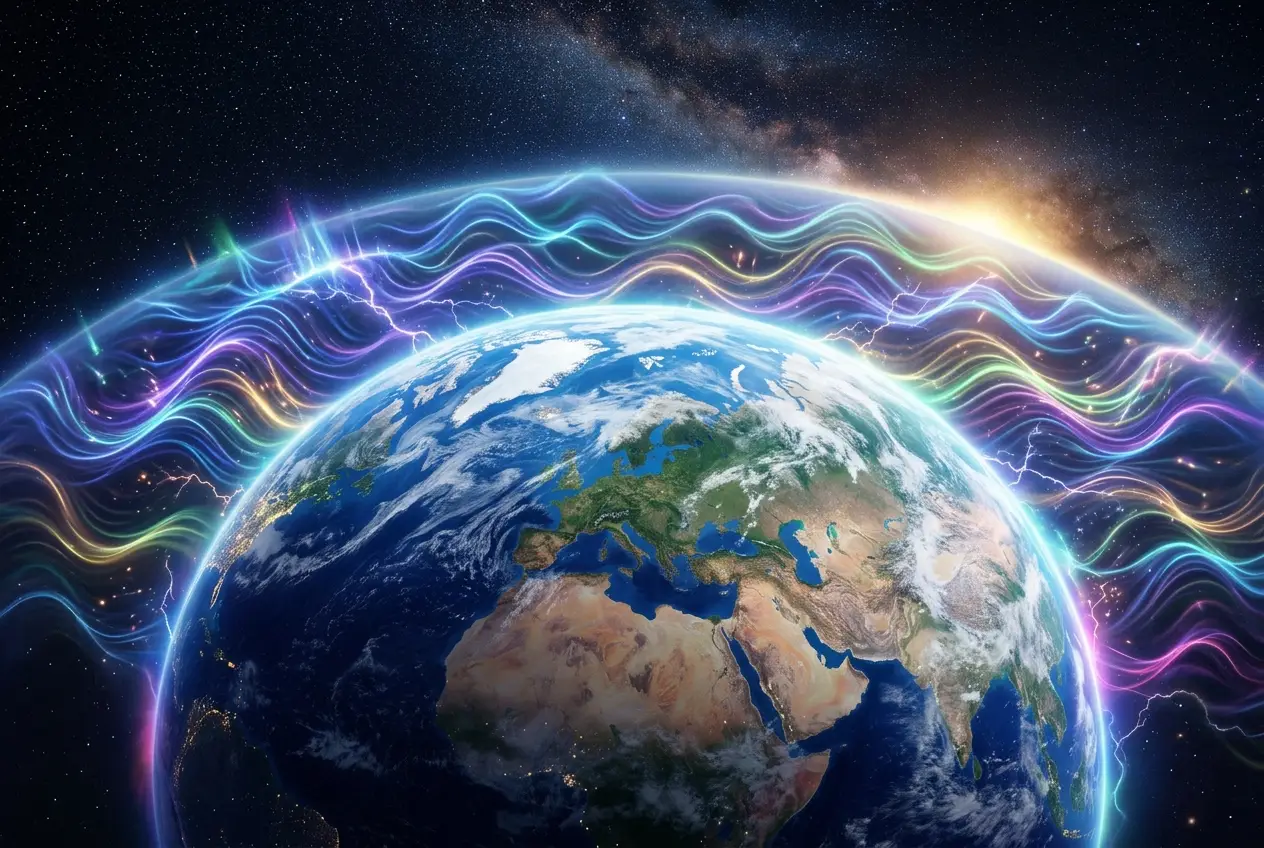
This latent ability might be a vestige of an older, more primal sense, or perhaps something we utilize subconsciously. The Earth’s magnetic field is a powerful shield against solar radiation, but it’s not static. It fluctuates, shifts, and even undergoes complete reversals over geological timescales. Could our brains, evolved over millions of years, be subtly influenced by these geomagnetic shifts? Some researchers even hypothesize that these subtle shifts could influence our mood, cognitive functions, or even our physical well-being. This aligns with earlier discussions on whether our planet's magnetic field might impact our cognition, as explored in a previous Curiosity Diaries post: "Does Earth's Magnetic Field Affect Our Minds?" (/blogs/does-earths-magnetic-field-affect-our-minds-6923).
Cosmic Rays: A Constant Shower of Energy
Beyond magnetic fields, our planet and everything on it is constantly bathed in a shower of high-energy particles known as cosmic rays. These are streams of highly energetic atomic nuclei and other particles, originating from the sun, distant supernovae, and even other galaxies. They travel through space at nearly the speed of light, colliding with Earth's atmosphere and creating secondary particles that reach the ground. Learn more about cosmic rays on Wikipedia (opens in a new tab).
While the atmosphere shields us from the most harmful radiation, a continuous, albeit weakened, stream of these particles penetrates to the surface. We can't see them, feel them, or hear them, but they are constantly passing through our bodies. The question then becomes: do these omnipresent cosmic particles have any detectable effect on our biology?
For years, the focus on cosmic rays in biology has primarily been on their potential for DNA damage and cancer risk, especially for astronauts. However, what about more subtle, non-damaging interactions? Could these particles, with their immense energy, trigger micro-events within our cells, altering protein structures, affecting neuronal firing, or even influencing quantum-level processes within our intricate biological machinery?
Some studies hint at correlations between cosmic ray flux and biological phenomena, though these are often controversial and difficult to prove definitively due to the myriad of other environmental factors. Could the mysterious "glitches" observed in electronics, often attributed to cosmic rays, have a biological parallel? We’ve seen how cosmic rays can impact technology, as discussed in "Do Cosmic Rays Secretly Glitch Our Tech?" (/blogs/do-cosmic-rays-secretly-glitch-our-tech-3330). It stands to reason that our organic systems, far more complex and delicately balanced than microchips, might also be susceptible to such subtle, energetic nudges.
The Quantum Biology Connection
The emerging field of quantum biology is revolutionizing our understanding of life itself. It explores how quantum mechanical phenomena—such as superposition, entanglement, and tunneling—might play a crucial role in fundamental biological processes, from photosynthesis and enzyme catalysis to smell and even bird navigation. This field suggests that biology isn't just classical chemistry; it leverages the strange rules of the quantum world to achieve extraordinary efficiencies and sensitivities. Wikipedia provides a comprehensive overview of Quantum Biology (opens in a new tab).
If life can exploit quantum mechanics for essential functions, it opens the door to the possibility that our bodies might also utilize these principles to sense external stimuli beyond our classical five senses. Imagine a biological system where cells or even biomolecules are in a delicate quantum state, making them exquisitely sensitive to minute fluctuations in electromagnetic fields, gravitons, or even exotic particles that form the "dark" components of our universe.
While highly speculative, this framework provides a theoretical basis for how living systems could detect subtle cosmic signals. It suggests that our intuition, our inexplicable sense of wonder under a starry sky, or even our unexplained mood shifts might not just be random psychological phenomena, but echoes of a deeper, subconscious connection to the cosmic environment. As we further explore the mysteries of life, we might find that the boundary between our inner world and the outer cosmos is far more porous than we ever imagined. The deep connection between quantum mechanics and life's secrets is a fascinating journey, much like the one explored in "Could Quantum Biology Unlock Life's Deepest Secrets?" (/blogs/could-quantum-biology-unlock-lifes-deepest-secrets-6147).
Challenges and the Path Forward
Proving that humans can sense unseen cosmic signals is an immense scientific challenge. The signals are incredibly weak, the human body is incredibly complex, and separating genuine effects from background noise, placebo effects, or other environmental variables is exceedingly difficult. Researchers need:
- Advanced Sensory Technologies: To precisely measure and manipulate subtle cosmic inputs in controlled environments.
- Interdisciplinary Collaboration: Bringing together physicists, biologists, neuroscientists, and psychologists.
- Robust Experimental Designs: Moving beyond anecdotal evidence to replicable, statistically significant results.
The potential implications, however, are profound. If we discover that humans possess a dormant or subconscious capacity to sense cosmic energies, it could revolutionize our understanding of human perception, consciousness, and even our health. It might provide new insights into unexplained phenomena, offer novel approaches to well-being, and deepen our appreciation for the intricate connection between humanity and the universe.
Conclusion: Are We Cosmic Antennae?
The idea that our bodies are more than just self-contained biological machines, but intricate systems capable of subtly sensing the vast cosmic environment, is a thought that truly ignites the imagination. From the quantum compass in a bird's eye to the constant shower of cosmic rays passing through our cells, the universe is full of unseen influences. While the scientific journey to unequivocally prove human sensitivity to these subtle cosmic signals is long and complex, the early evidence from magnetoreception and the advancements in quantum biology paint a compelling picture.
Perhaps those moments of inexplicable intuition or a sudden shift in mood are indeed our biological systems registering a whisper from the cosmos. As science continues to unravel the deeper mysteries of life and the universe, we might just discover that we are, in a very real and profound sense, living cosmic antennae, constantly interacting with the unseen forces that shape our reality. Keep your curiosity alive, for the greatest discoveries often begin with the most intriguing questions.




Conversation0
No comments yet. Be the first to share a thought — the best questions often become new stories.