


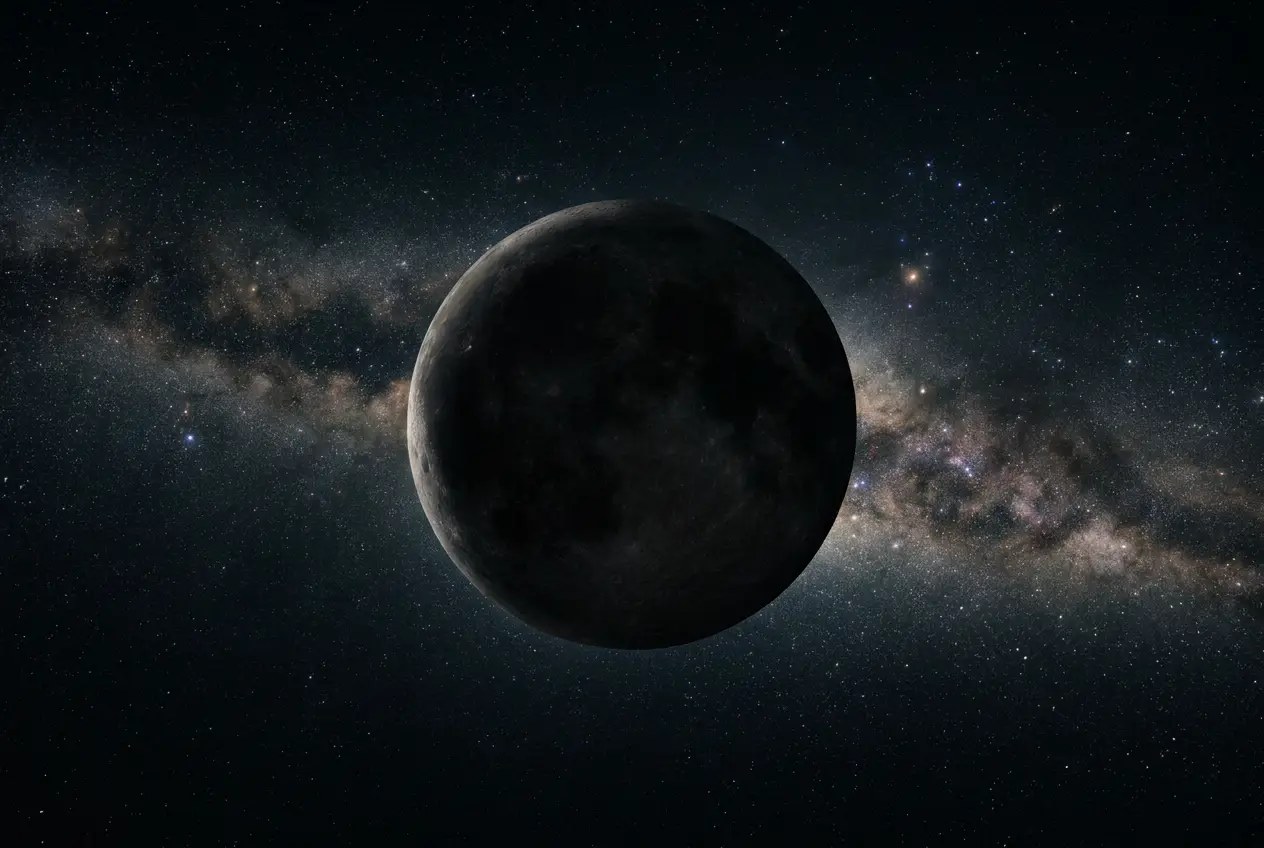
I recently found myself staring up at the night sky, a vast canvas of glittering stars, and it struck me how orderly it all seems from our perspective. Planets orbit stars, moons orbit planets, and everything appears to follow a predictable cosmic dance. But what if I told you there are billions, perhaps even trillions, of planets out there that don't play by those rules? Planets that roam the dark, frigid depths of interstellar space, untethered to any star, like cosmic orphans wandering the universe. These are rogue planets, and their very existence challenges our understanding of planetary formation and the potential for life.
The idea of planets without a sun once seemed like science fiction. How could a planet form and survive without the gravitational embrace of a star? Yet, observational evidence and theoretical models now strongly suggest that these free-floating worlds are not only real but also remarkably common. Estimates vary wildly, but some studies propose there could be 100,000 times more rogue planets than stars in our galaxy alone. Imagine that — a cosmic ocean teeming with unseen worlds!
The Birth of a Wanderer: How Planets Go Rogue
So, how do these celestial bodies end up adrift in the cosmic void? The most accepted theories point to two primary mechanisms: ejection from a nascent planetary system or direct formation outside a star's influence.
1. Gravitational Ejection
The most common scenario for a planet turning rogue involves a violent, chaotic beginning within a protoplanetary disk. Picture a young star, surrounded by a swirling disk of gas and dust – the birthplace of planets. As embryonic planets grow, they gravitationally interact with each other and with the massive central star. These interactions can become incredibly intense, especially in systems with multiple large planets.
Think of it like a cosmic game of billiards. When planets grow massive enough, their gravitational pulls can slingshot smaller, less fortunate siblings out of the system entirely. I can imagine the sheer force required to overcome the star's immense gravity, flinging a world into the cold, dark embrace of interstellar space. This turbulent period of planetary formation, often called dynamic instability, is believed to be the primary driver behind the vast population of rogue planets. For more on how planets form and systems evolve, you might find this Wikipedia article on protoplanetary disks (opens in a new tab) fascinating.
2. Formation in Isolation
A less common, but equally intriguing, hypothesis suggests that some rogue planets might form directly in isolation, much like stars do. In extremely dense regions of molecular clouds, pockets of gas and dust could collapse under their own gravity to form planetary-mass objects without ever having a star to call their own. These objects would never have been "planets" in the traditional sense, but rather "sub-brown dwarfs" or "planemos" (planetary-mass objects) from birth. This process relies on a different kind of gravitational instability, where dense clumps form directly from the collapsing cloud.
Detecting the Undetectable: The Hunt for Hidden Worlds
Finding a rogue planet is no easy feat. Unlike orbiting planets that periodically transit their stars or cause their stars to wobble, rogue planets don't emit their own light, nor do they reflect a star's light. They are essentially invisible in the vast darkness. So, how do we find them?
The primary method scientists use is gravitational microlensing. This ingenious technique relies on Einstein's theory of general relativity. When a massive object (like a rogue planet) passes directly in front of a distant background star, its gravity acts like a cosmic magnifying glass, bending and brightening the light from the background star. We don't see the planet itself, but we detect its gravitational signature. The duration and intensity of the brightening event can tell us about the mass of the lensing object.
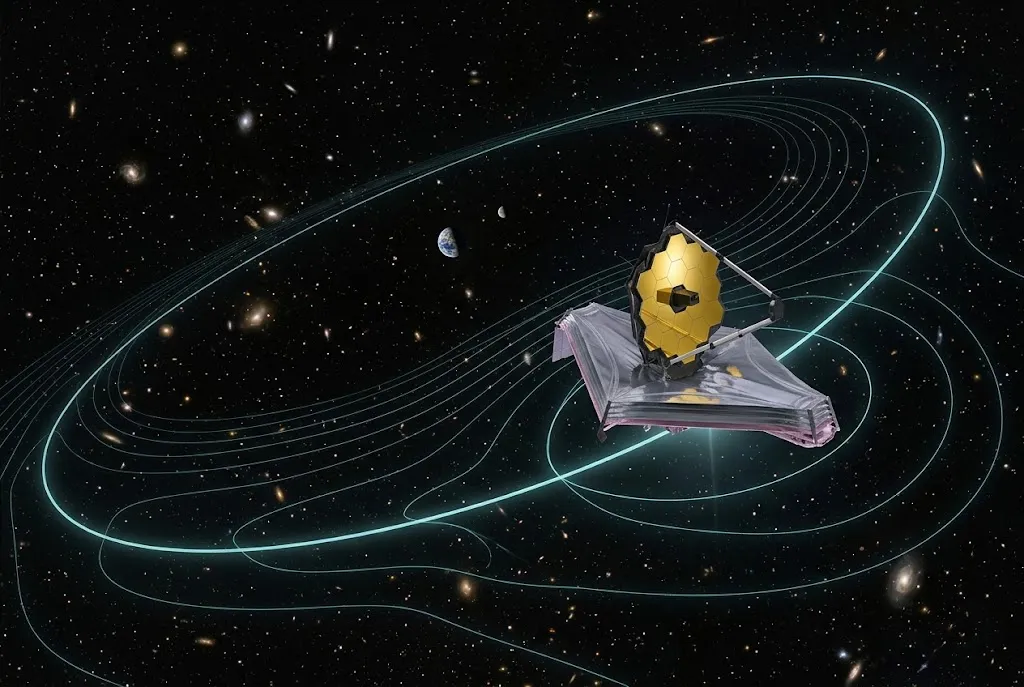
I find it incredible that we can detect entire planets by merely observing the distortion of light from something millions of light-years away. Missions like the upcoming Nancy Grace Roman Space Telescope (formerly WFIRST) are designed to survey vast swathes of the sky for these microlensing events, promising to dramatically increase our census of rogue planets. This field is rapidly advancing, and you can learn more about it here: Gravitational microlensing (opens in a new tab).
A Glimmer of Life? The Habitability Question
The discovery of rogue planets immediately sparks one of humanity’s most profound questions: Could they host life? At first glance, the answer seems a resounding "no." Without a star, these worlds are plunged into perpetual darkness and extreme cold, far colder than anything on Earth. Surface temperatures would plummet to hundreds of degrees below zero, making liquid water impossible.
However, scientists are increasingly considering some fascinating possibilities.
1. Geothermal Heat
Planets generate internal heat through their cores, often from radioactive decay. On Earth, this geothermal energy drives plate tectonics and volcanism. A sufficiently massive rogue planet could maintain a molten core and significant geothermal activity for billions of years. This internal heat could warm a subsurface ocean, much like Jupiter’s moon Europa, which is thought to harbor a vast ocean beneath its icy crust. If you're curious about other icy moons and their potential for life, I encourage you to read our post on Is Europa's Ocean Hiding Alien Life? (opens in a new tab)
2. Thick Atmospheres
A rogue planet with a very thick atmosphere could trap enough internal heat to maintain a habitable temperature, at least theoretically. A dense hydrogen-helium atmosphere, possibly primordial, could act as a potent greenhouse blanket. However, this is a more speculative scenario.
3. Rogue Exomoons
Perhaps the most compelling possibility for life on a rogue world lies not with the planet itself, but with its moons. If a rogue gas giant were ejected from its system, it might retain one or more large moons. These rogue exomoons could experience tidal heating from their gas giant parent, similar to how Jupiter's gravity heats Io or Europa. This tidal heating, combined with geothermal energy from the moon's own core, could create conditions conducive to subsurface liquid water.
Imagine a world, eternally dark on its surface, where life thrives in a hidden ocean, warmed by internal forces. This shifts our understanding of habitable zones beyond the narrow band around stars, opening up the entire galaxy as a potential cradle for life. The sheer number of rogue planets means that even if a tiny fraction are habitable, the galaxy could be teeming with such hidden ecosystems. For a broader look at cosmic questions, you might enjoy our article on Why is the Universe So Quiet? Decoding the Fermi Paradox (opens in a new tab).
Implications for Our Understanding of the Universe
The study of rogue planets has profound implications for several areas of astrophysics:
- Planetary Formation Models: Their abundance helps us refine our models of how planetary systems form and evolve, especially the chaotic early stages.
- Dark Matter Search: While unrelated to dark matter directly, the techniques used to detect rogue planets (microlensing) were once considered for detecting hypothetical dark matter particles like MACHOs (Massive Compact Halo Objects). Speaking of dark matter, we have a fascinating piece on Does Dark Matter Hide a Universe We Can't See? (opens in a new tab)
- Interstellar Exploration: Rogue planets represent the ultimate interstellar objects. Understanding their prevalence and characteristics could inform future missions aiming to explore beyond our solar system. Oumuamua, an interstellar visitor, sparked similar questions about what might be out there. You can read more about it in our post, Is Oumuamua Alien Tech? Deciphering Interstellar Visitors (opens in a new tab).
- Cosmic Geography: They paint a picture of a galaxy that is not just stars and orbiting planets, but also a vast, dark realm populated by unseen worlds, far more complex and dynamic than we once imagined.
The universe is constantly revealing its secrets, and rogue planets are a prime example of its incredible diversity and unpredictability. These cosmic wanderers, once considered a theoretical oddity, are now emerging as a fundamental component of our galaxy's population. Their silent journey through the void prompts us to reconsider where and how life might arise, pushing the boundaries of what we thought possible.
As I look at the stars now, I don't just see organized systems. I see the vast, dark tapestry between them, filled with hidden possibilities, a silent ballet of rogue worlds drifting into eternity. What other cosmic mysteries await our discovery?


Conversation0
No comments yet. Be the first to share a thought — the best questions often become new stories.