The dream has fascinated generations: a device that can conjure any object out of thin air, or more accurately, from a simple pile of atoms. For many, this vision is encapsulated by the "Replicator" from *Star Trek*, capable of materializing food, tools, and complex machinery with a mere voice command. I’ve often caught myself imagining such a device in my own kitchen, eliminating grocery runs and manufacturing delays. But is this just science fiction, or are we, in the 21st century, genuinely on the path to building something akin to a real-life replicator?
The scientific pursuit of this concept falls under the umbrella of **molecular nanotechnology** and **atomically precise manufacturing (APM)**. This isn't about giant 3D printers; it's about engineering at the fundamental level of atoms and molecules. The idea is to arrange atoms in any desired configuration, thereby creating materials and objects with unprecedented precision and properties.
The Grand Vision: Richard Feynman to Eric Drexler
The seeds of molecular manufacturing were planted by Nobel laureate physicist Richard Feynman in his seminal 1959 lecture, "There's Plenty of Room at the Bottom." He theorized about the possibility of manipulating individual atoms and molecules to build structures. Feynman famously posed the challenge: "The problems of chemistry and biology can be greatly helped if our ability to see what we are doing, and to do things on an atomic level, is ultimately developed — a development which I think cannot be avoided." This was a bold prediction in an era where the electron microscope was still in its infancy. For more on Feynman's maverick contributions, you can explore blogs like [Richard Feynman: Maverick Who Danced with Quantum Reality](/blogs/richard-feynman-maverick-who-danced-with-quantum-reality-7693).
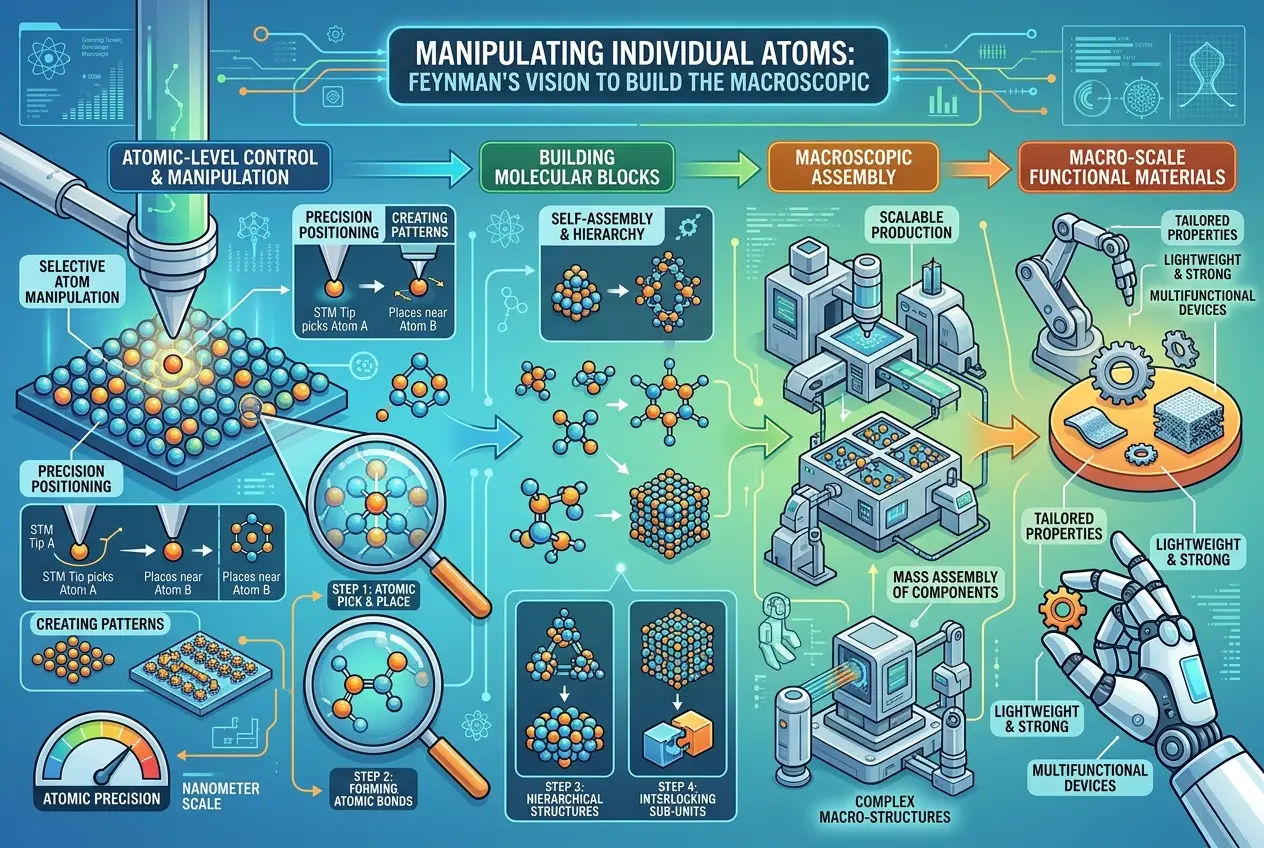
Decades later, engineer and futurist K. Eric Drexler popularized the term "nanotechnology" in his 1986 book, "Engines of Creation." Drexler laid out a detailed theoretical framework for **molecular assemblers** – hypothetical nanoscale machines capable of guiding chemical reactions by positioning reactive molecules with atomic precision. These assemblers, he argued, could build virtually any object atom by atom, creating everything from diamondoids (super-strong materials made entirely of carbon) to microscopic computers. His vision included "universal assemblers" – versatile nanobots that could construct almost anything imaginable, a true precursor to the *Star Trek* replicator.
Drexler's work sparked both immense excitement and intense debate within the scientific community. Critics argued that his vision was overly optimistic, perhaps even physically impossible due to factors like sticky atoms, thermal noise, and the sheer complexity of such self-replicating systems. However, proponents countered that while the path is challenging, the fundamental principles are sound. The debate helped solidify nanotechnology as a legitimate field of scientific inquiry, driving significant research and investment.
Current State of the Art: Baby Steps Towards Replication
While we are far from Star Trek's instantaneous matter generation, significant progress has been made in several key areas that form the building blocks of molecular manufacturing:
**1. Nanoscale Fabrication:**
Modern tools like the **Scanning Tunneling Microscope (STM)** and **Atomic Force Microscope (AFM)** allow scientists to image and even manipulate individual atoms. In a famous experiment, IBM researchers spelled out "IBM" using 35 xenon atoms on a nickel surface in 1990. While a proof-of-concept, it showed that direct atomic manipulation, however painstaking, was possible. This kind of precise control is foundational to the replicator dream.
**2. Self-Assembly:**
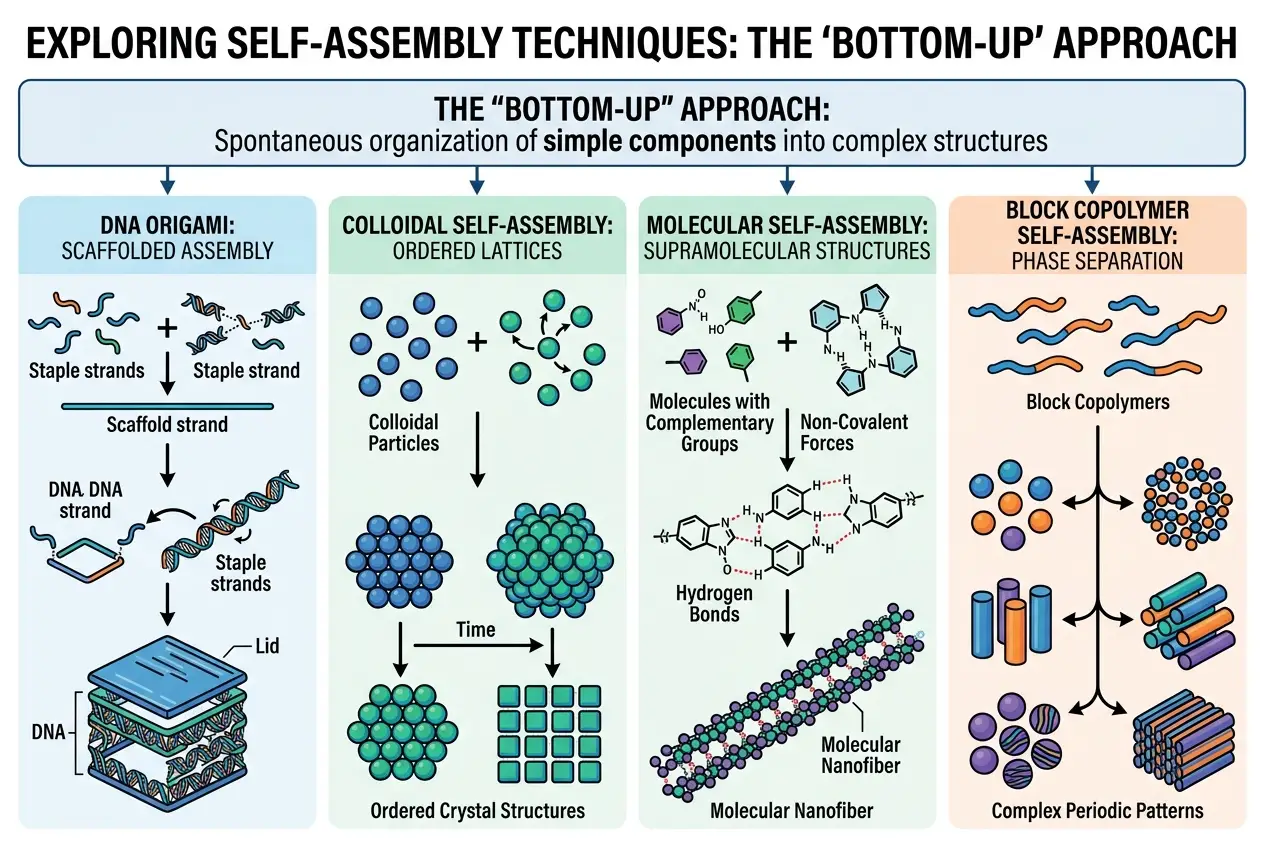
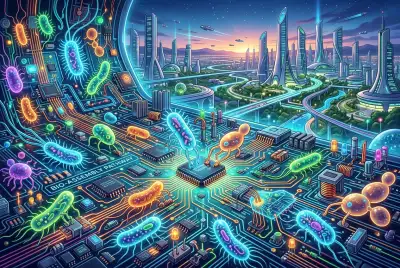
Nature is the ultimate molecular assembler. Cells spontaneously construct complex proteins, DNA, and organelles through intricate self-assembly processes. Scientists are now learning to mimic these biological strategies. DNA origami, for example, uses DNA's self-pairing properties to create nanoscale 2D and 3D shapes. Researchers have built DNA robots that can walk, transport cargo, and even perform rudimentary computations. This "bottom-up" approach is crucial because it allows complex structures to form without direct human intervention at every step. This concept is closely tied to ideas like [Can Synthetic Cells Build Our Future Tech?](/blogs/can-synthetic-cells-build-our-future-tech-1730).
**3. Advanced Materials and Programmable Matter:**
The development of new materials with custom properties is a critical step. Graphene, carbon nanotubes, and other nanomaterials offer incredible strength, conductivity, and unique optical properties. Imagine a future where we could program these materials to change shape, color, or even function on demand – a concept explored in [Programmable Matter: Will Anything Be Solid in the Future?](/blogs/programmable-matter-will-anything-be-solid-in-the-future-8475). This is where the replicator comes into play, not just fabricating existing materials but potentially creating entirely new ones tailored for specific applications.
One of the most promising avenues is **additive manufacturing**, or 3D printing. While current 3D printers work at the macro or micro scale, researchers are pushing towards nanoscale 3D printing, using techniques like two-photon polymerization to create incredibly small, intricate structures. The ultimate goal is to move from printing in layers to printing at the atomic level.
The Hurdles: Why We Don't Have Replicators (Yet)
Despite the progress, several immense challenges stand between us and a Star Trek-esque replicator:
* **Atomic Precision and Scale:** Manipulating billions of billions of atoms (a mole of atoms) individually is an astronomical task. Even with self-assembly, directing such a vast number of reactions to build a macroscopic object perfectly remains an unsolved puzzle. The sheer number of operations required makes direct atomic placement impractical for anything beyond minuscule structures.
* **Energy Requirements:** Breaking and forming chemical bonds requires energy. For a replicator to build complex objects, the energy cost would be enormous, potentially making it inefficient compared to traditional manufacturing.
* **Thermal Noise:** At the nanoscale, thermal energy causes atoms to vibrate randomly. This "Brownian motion" makes precise positioning and assembly incredibly difficult, like trying to build a LEGO castle during an earthquake.
* **Complexity and Control:** Designing molecular assemblers capable of performing a wide variety of tasks, and then programming them to build complex objects without errors, is an engineering nightmare. Imagine the software complexity for coordinating trillions of tiny robots! The role of AI in orchestrating such processes is paramount, as discussed in [Can AI Forge New Matter? Unpacking Digital Alchemists](/blogs/can-ai-forge-new-matter-unpacking-digital-alchemists-9478).
* **The "Grey Goo" Scenario:** A popular sci-fi trope and a concern raised by some critics, the "grey goo" scenario posits that self-replicating nanobots could consume all biomass on Earth to build more of themselves. While highly speculative and largely dismissed by mainstream nanotechnology researchers as a remote threat with proper safeguards, it highlights the ethical and safety considerations that must accompany such powerful technology.
The Future: When Will It Arrive?
Most scientists agree that a true "universal replicator" remains decades, if not centuries, away. However, the incremental steps toward **atomically precise manufacturing** are already yielding benefits. We're seeing advancements in targeted drug delivery (nanobots for medicine, akin to those discussed in [Could Nanobots Repair Our Bodies From Within?](/blogs/could-nanobots-repair-our-bodies-from-within-3681)), novel materials with enhanced properties, and more efficient catalysts.
Instead of a single, all-purpose replicator, the future likely holds specialized molecular manufacturing systems. Imagine:
* **Medical nanobots** that repair tissues or fight diseases at a cellular level.
* **Desktop fabricators** that can print custom electronics, perfectly tailored to your needs.
* **Smart materials** that autonomously adapt to their environment or self-repair damage.
* **In-space manufacturing** where raw elements are processed into spacecraft components, reducing launch costs.
The journey to building a real replicator isn't just about creating a cool gadget; it's about mastering the fundamental laws of matter itself. As we continue to unlock the secrets of self-assembly and nanoscale control, the line between science fiction and scientific reality blurs, inching us closer to a future where we might truly order "tea, Earl Grey, hot" from a machine.
"The problems of chemistry and biology can be greatly helped if our ability to see what we are doing, and to do things on an atomic level, is ultimately developed — a development which I think cannot be avoided."
— Richard Feynman, "There's Plenty of Room at the Bottom"
"The ultimate goal of nanotechnology is to build systems that can manipulate individual atoms and molecules with great precision."
— K. Eric Drexler, "Engines of Creation"
As I ponder the possibilities, I realize that the elegance of the replicator isn't just in its output, but in the profound understanding of the universe required to create it. It’s a testament to human curiosity and our relentless drive to push the boundaries of what's possible.
 Join Us



 Unknown Author






























Leave a Reply
Comments (0)