


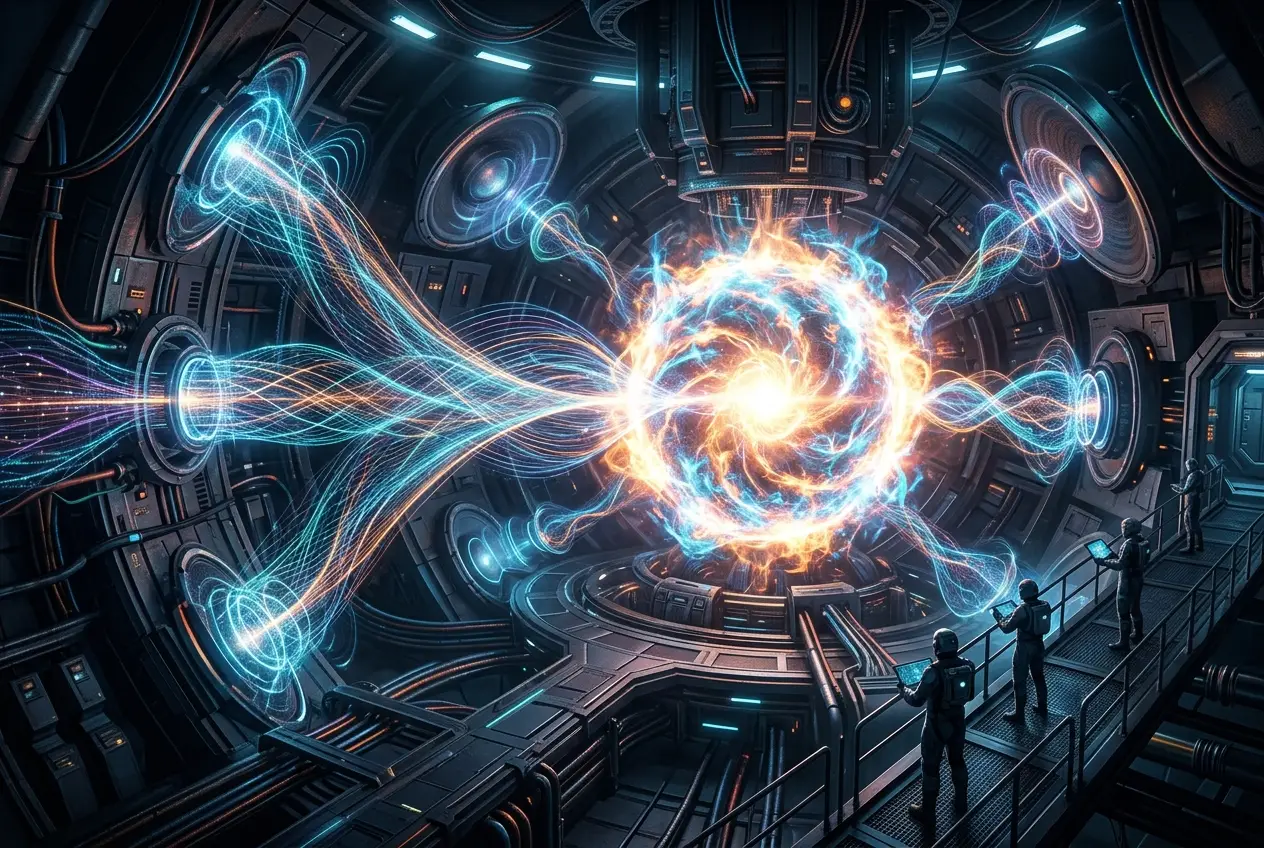
I've always been captivated by the hidden power lurking in the most unexpected places. We often think of harnessing energy from the sun, wind, or even atomic reactions. But what if the very vibrations that fill our world—sound waves—could be sculpted into a source of immense power? It sounds like science fiction, a sonic forge straight out of a futuristic novel, but the cutting edge of physics is exploring something truly astonishing: the potential to extract energy from phenomena akin to "sonic black holes."
Imagine a world where the hum of a city, the rush of a river, or even the whisper of the wind could be transformed into usable energy. This isn't just a fantasy. Researchers are delving into the bizarre world of acoustic black holes, not as cosmic devourers of light, but as controlled environments where sound waves themselves get trapped, offering a tantalizing glimpse into novel energy solutions.
The Echoes of a Black Hole – In Sound, Not Space
When I first heard the term "acoustic black hole," my mind immediately jumped to the supermassive gravitational behemoths at the heart of galaxies. But the concept we're exploring here is vastly different, yet surprisingly analogous. An acoustic black hole (sometimes called a sonic black hole) is not a cosmic entity but a phenomenon created in specific physical systems, often in fluids or Bose-Einstein condensates, where sound waves cannot escape.
Think of it this way: a gravitational black hole is a region of spacetime where gravity is so intense that nothing, not even light, can escape. An acoustic black hole is an area where the flow of a medium (like water or a gas) becomes faster than the speed of sound within that medium. If a sound wave tries to travel against this super-sonic flow, it gets trapped, much like a swimmer trying to go upstream against a current faster than they can swim. It's an elegant demonstration of how fundamental physical principles can manifest across different domains, from the vastness of space to the microscopic dance of atoms in a laboratory. For a deeper dive into the concept, Wikipedia offers an excellent starting point on Acoustic Black Holes (opens in a new tab).
Scientists can create these acoustic analogs in highly controlled environments. One notable example involves using Bose-Einstein condensates, a state of matter where atoms are cooled to near absolute zero and behave as a single quantum wave. By manipulating these condensates, physicists can create regions where the "fluid" of atoms flows faster than sound, thereby creating an event horizon for sound waves. This isn't just a theoretical playground; it allows us to study black hole physics in a tangible, earthly setting, free from the crushing gravity and extreme distances of space.
The Energy Tapping Mechanism: More Than Just a Whistle
The real intrigue lies in how these phenomena might lead to power generation. In the realm of gravitational black holes, Stephen Hawking famously theorized "Hawking radiation," where black holes aren't entirely black but slowly radiate particles away. The acoustic analogue of this, known as acoustic Hawking radiation, has been observed in laboratory settings. This radiation carries energy, and theoretically, if we can control and enhance it, it could be a source of power.
However, acoustic Hawking radiation is usually extremely faint. The more promising avenues for energy extraction from sound waves often involve other principles, sometimes intertwined with the exotic conditions that create sonic black holes:
1. Cavitation and Sonoluminescence
Perhaps you've heard of sonoluminescence, a fascinating phenomenon where sound waves collapsing bubbles in a liquid create tiny flashes of light. This process generates extreme temperatures and pressures within those collapsing bubbles, high enough to emit light. If you want to know more about this amazing phenomenon, I recommend checking out our blog post on Can Sound Create Light? Unpacking Sonoluminescence. While not directly a "sonic black hole", sonoluminescence demonstrates the immense energy that can be concentrated and released from sound waves under the right conditions. The idea of using controlled cavitation or similar effects within a highly energetic acoustic field—perhaps one influenced by a sonic black hole's trapping mechanism—could be a pathway to harness this power.
2. Amplification and Resonance
Acoustic black holes aren't just traps; they can also be amplifiers. As sound waves approach the "event horizon," their frequency and amplitude can change dramatically. Imagine designing a system where incoming sound waves are not just trapped but are intensely amplified before their energy is harvested. This could involve resonant cavities specifically designed to maximize energy transfer from ambient sound into a usable electric current, perhaps through piezoelectric materials that convert mechanical stress into electrical energy. The sheer efficiency of such a system, coupled with the wave-trapping properties of an acoustic black hole, could lead to unprecedented levels of sound energy conversion.
3. Acoustic Levitation and Manipulation
We've explored the fascinating ability of sound to manipulate objects in blogs like Acoustic Levitation: Can Sound Build Future Cities?. While levitation itself isn't power generation, it demonstrates the precise control and significant force that concentrated sound waves can exert. If we can control sound waves to this degree, the next step is to direct their energy for work—for instance, driving micro-turbines or creating controlled pressure differentials that generate electricity.
From Lab to Lattices: Real-World Experiments and Challenges
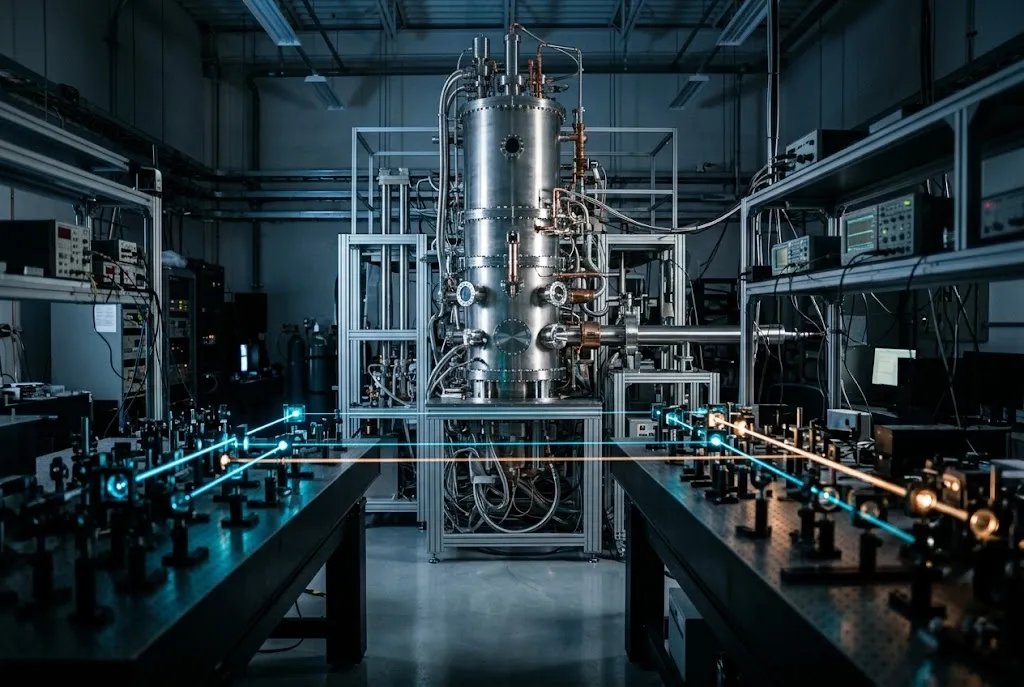
The journey from theoretical concept to practical application is always long and fraught with challenges. Currently, the creation of acoustic black holes is primarily confined to highly specialized laboratory settings. Researchers are exploring various mediums:
- Water and other liquids: By precisely controlling the flow of water, especially at high speeds, mini-acoustic black holes can be created.
- Superfluids: These exotic quantum fluids, like supercooled helium, flow without friction and can exhibit fascinating wave phenomena, making them ideal for studying acoustic analogs of black holes. You can find more information about superfluids on Wikipedia's Superfluidity page (opens in a new tab).
- Bose-Einstein Condensates: As mentioned, these ultra-cold atomic clouds provide a pristine environment for quantum simulations of gravitational phenomena, including acoustic black holes.
The primary challenge for energy generation is efficiency. The amount of energy we can currently extract from these phenomena is minuscule compared to the energy input required to create and maintain them. We're talking about fundamental physics experiments, not power plants. However, every major energy breakthrough started small. The first light bulb was inefficient, and the first solar cell barely produced enough power to register. The goal now is to understand the physics deeply enough to identify pathways for scaling and improved efficiency.
Moreover, managing the extreme conditions required – such as ultra-low temperatures for Bose-Einstein condensates or very high flow rates – presents significant engineering hurdles. But the allure of a new, potentially clean energy source, derived from the very fabric of sound, is a powerful motivator.
The Future Resonates: Potential Applications
If breakthroughs are made, the implications could be revolutionary.
- Silent Energy Generation: Imagine devices that quietly convert ambient noise or engineered sound fields into electricity, providing localized power without the need for large-scale infrastructure or noisy turbines. This could power remote sensors, low-power IoT devices, or even specialized medical implants.
- Novel Propulsion Systems: While highly speculative, the intense manipulation of sound waves could, in theory, contribute to advanced propulsion methods. Just as we look at exotic concepts like zero-point energy for future power, sonic manipulation could offer new ways to generate thrust or reduce drag.
- Advanced Sensor Technology: Even if not for power, understanding acoustic black holes could lead to incredibly sensitive sensors capable of detecting minute changes in fluid flow or sound fields, with applications in medicine, environmental monitoring, or even in exploring strange cosmic signals.
- Enhanced Sonar and Imaging: The ability to trap and amplify sound could revolutionize ultrasound imaging, making it far more precise and powerful for medical diagnostics or underwater exploration.
The Unseen Symphony of Power
The idea of harnessing energy from sound waves, particularly through the lens of phenomena like acoustic black holes, feels like stepping into a new frontier of physics and engineering. It's a testament to the universe's inherent elegance that principles governing astrophysical black holes can find their mirror in the humble vibrations of sound.
While a "sonic power plant" might still be decades away, the research into acoustic black holes and the broader field of sound-wave manipulation continues to unlock profound secrets about energy, matter, and the very nature of reality. It serves as a powerful reminder that our world is an unseen symphony of potential, just waiting for curious minds to compose the next grand opus of innovation. Perhaps one day, the whisper of the wind won't just be heard, but felt as a gentle surge of electricity, powering our future in ways we are only just beginning to imagine.





Conversation0
No comments yet. Be the first to share a thought — the best questions often become new stories.