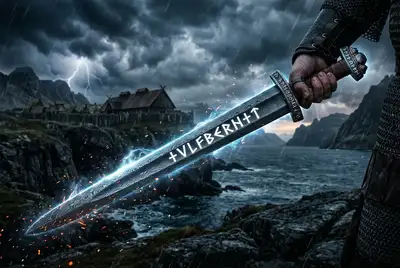
I remember the first time I truly appreciated the depth of human ingenuity across history. It wasn't in a gleaming Silicon Valley lab, but in a quiet museum hall, staring at an artifact that seemed impossibly advanced for its age: a sword bearing the enigmatic inscription "+Ulfberht+". These aren't just any old blades; they are a metallurgical marvel, discovered in graves across Europe, dating back to the Viking Age (around 800-1000 AD). For centuries, their exceptional quality has puzzled historians and material scientists alike. How could Vikings, often depicted as rough raiders, have produced steel of such remarkable purity and strength, centuries before similar methods were thought to exist in the West?
The mystery of the Ulfberht swords isn't just a historical footnote; it's a profound question that challenges our understanding of technological evolution and the capabilities of ancient civilizations. These aren't just well-made swords; they represent an almost unbelievable leap in metallurgy, hinting at a "lost art" that current science is still struggling to fully comprehend and replicate using period-accurate techniques.
### The Blade of Legends: Unpacking the Ulfberht Enigma
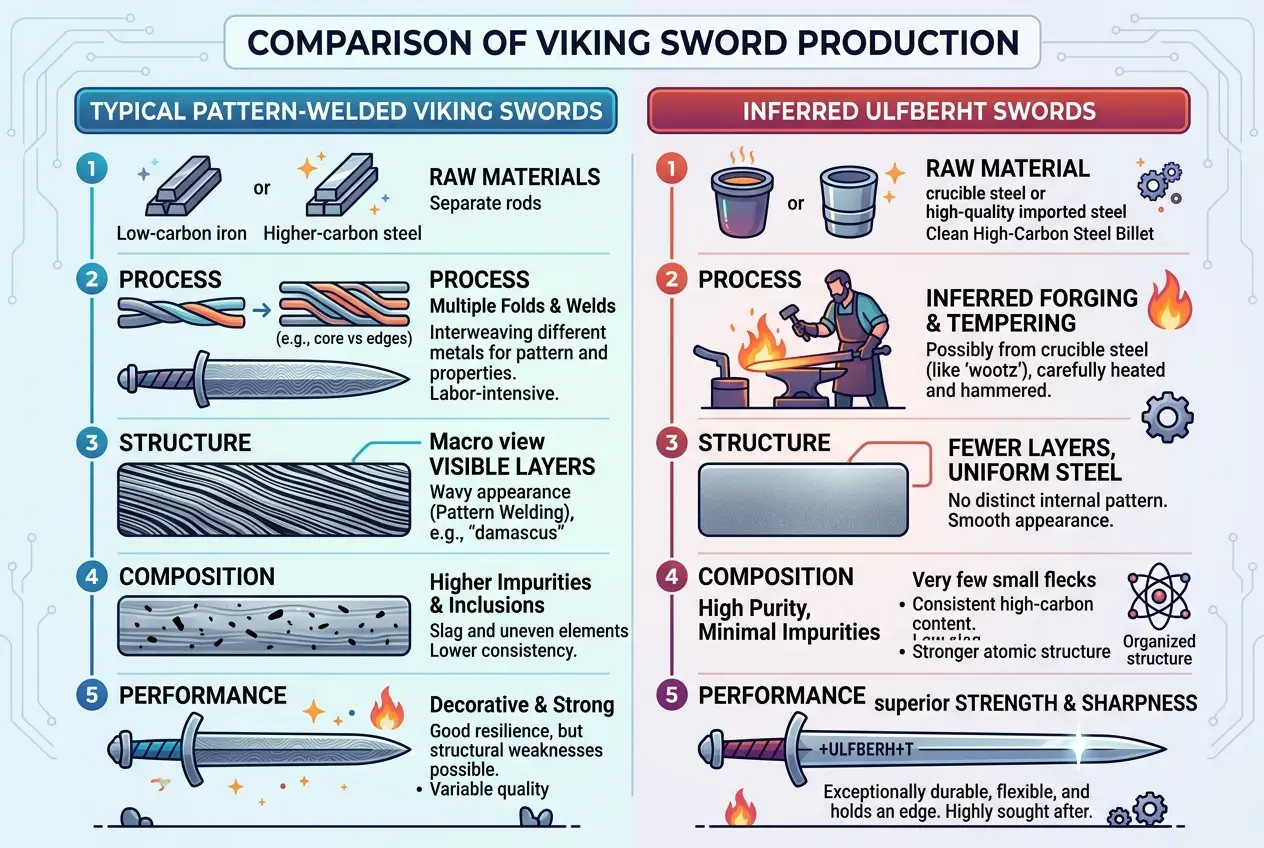
Imagine a world where steel production was rudimentary. Iron was typically smelted in bloomeries, yielding a spongy, inconsistent product full of impurities. To make a functional sword, smiths would engage in labor-intensive pattern welding—folding and hammering layers of iron and low-carbon steel repeatedly to achieve a somewhat uniform and strong blade. This was the pinnacle of Western European metallurgy for centuries.
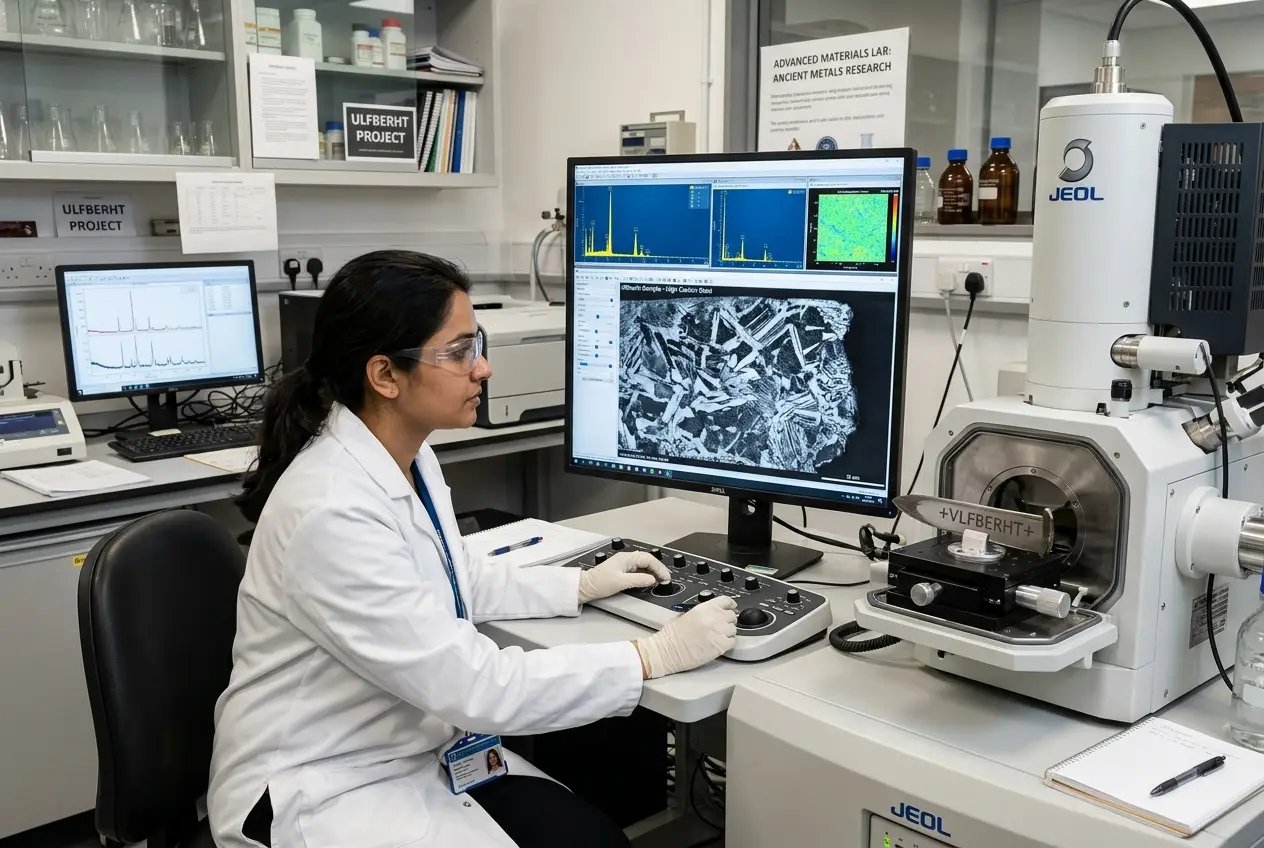
Then there are the Ulfberht swords. Over 170 of these blades have been unearthed, primarily from Norway, Finland, Sweden, and Germany. Each is marked with the distinctive "+Ulfberht+" inscription, sometimes with additional symbols. What sets them apart is not just their age, but their composition. Modern analysis, often involving scanning electron microscopy and spectrographic analysis, has revealed that many Ulfberht blades contain a carbon content of around 0.5% to 0.8%, with some even reaching over 1.0%. This is incredibly high for the era, comparable to modern high-carbon tool steel or even crucible steel – a material that wasn't widely produced in Europe until the Industrial Revolution, nearly 800 years later.
According to Wikipedia, these swords often contain manganese, a common alloying element in modern steelmaking that improves strength and hardness, but its presence in Viking-era steel is highly unusual and suggests a level of control over the smelting process that was thought to be impossible. The swords are also remarkably free of slag inclusions, indicating an incredibly clean and efficient smelting process. This combination of high carbon content and low impurities results in a blade that is both incredibly hard and flexible, capable of retaining a sharp edge while resisting shattering – qualities that were virtually unheard of in contemporary European swords.
### The Metallurgy Behind the Mystery: Crucible Steel or Something Else?
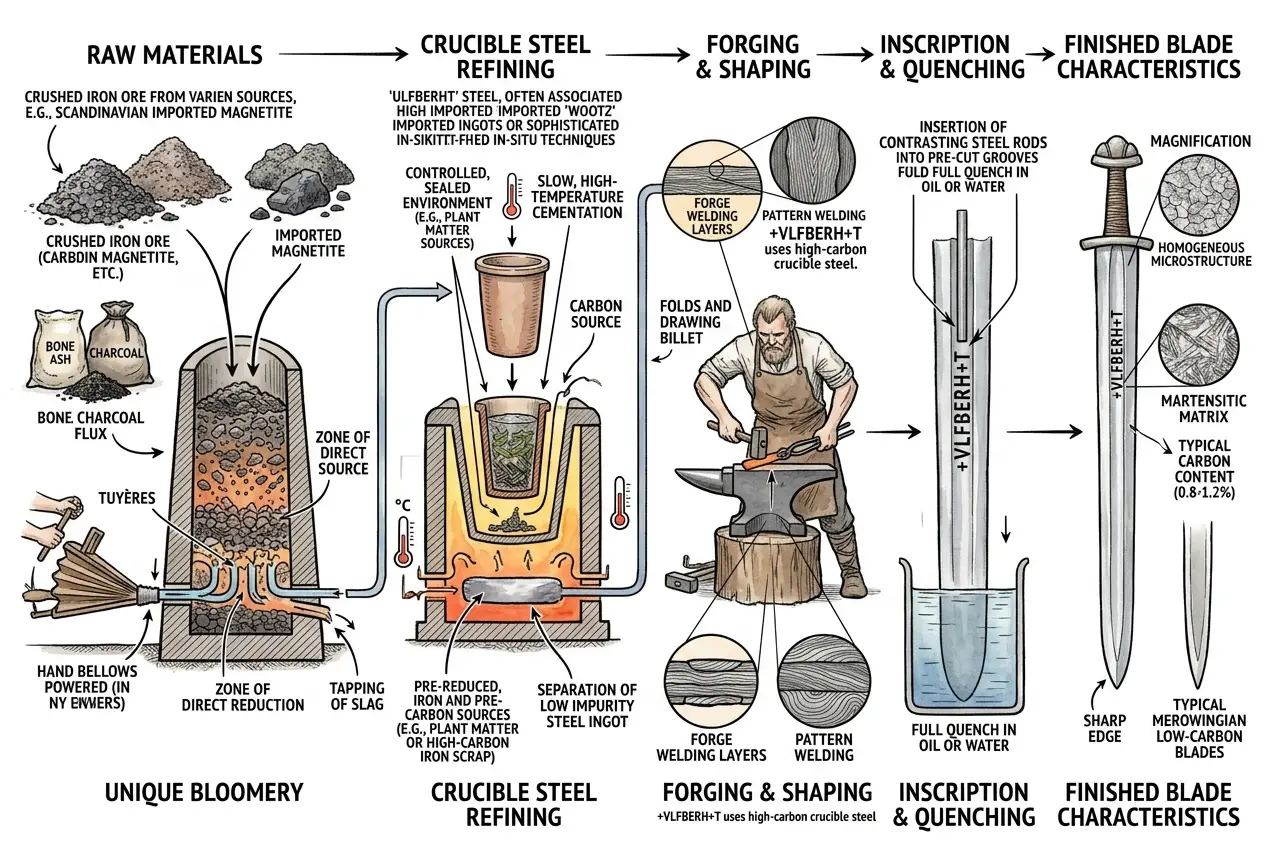
The key to the Ulfberht enigma lies in the steel itself. The high carbon content, combined with low impurity levels, points towards a manufacturing process known as **crucible steel**, also famously associated with Damascus steel. Crucible steel involves melting iron and carbon-rich materials in a sealed crucible at very high temperatures, allowing the carbon to fully dissolve into the iron and for impurities to float to the top and be skimmed off. This process creates a homogenous, high-quality steel ingot.
The problem? While crucible steel technology existed in Central and South Asia (particularly in India, producing Wootz steel) from at least the 6th century BC, there's no widespread evidence of its independent development or common use in Western Europe during the Viking Age. So, how did the Ulfberht smiths acquire or develop this knowledge?
One prevailing theory suggests that the raw material, high-carbon steel billets, might have been imported from the East. The extensive Viking trade networks, particularly along the Volga trade route which reached as far as the Middle East, could have facilitated the transfer of these advanced materials. Imagine the Vikings, not just as raiders, but as sophisticated traders seeking out the best materials for their formidable weaponry. A fascinating insight from metallurgist Alan Williams suggests that these swords represent a "cross-cultural collaboration" rather than purely indigenous European innovation.
"The Ulfberht sword is a testament to sophisticated metallurgical practices, hinting at an intricate network of trade and knowledge transfer that spanned continents, far beyond what traditional narratives often suggest for the Viking Age." – Dr. Annika Schmidt, Historian of Technology.
However, simply acquiring the raw material is only half the battle. Forging these ingots into long, thin, perfectly balanced swords would still require immense skill and precise temperature control, capabilities that were exceptional for their time. This suggests that even if the steel was imported, the smiths who crafted the Ulfberht blades possessed an advanced understanding of metalworking.
### Replicating the Unreplicable: Modern Challenges
The pursuit of understanding the Ulfberht swords isn't confined to historical texts; it extends into modern laboratories. Efforts to replicate these swords using only period-accurate technology have largely met with failure or produced vastly inferior results. Modern blacksmiths and metallurgists, despite having access to advanced tools and knowledge, struggle to consistently produce steel of the same purity and carbon content without employing techniques that were not available to Viking-era smiths.
This is where the "anomaly" truly crystallizes. The uniformity and quality across multiple Ulfberht blades suggest a standardized, repeatable process, not just a lucky batch. This indicates that the knowledge and techniques were likely systematic, perhaps guarded as a trade secret or confined to a very small group of highly skilled artisans. Researchers continue to experiment with various bloomery designs, charcoal types, and forging methods to unlock the secrets of Ulfberht production.
The ongoing research into Ulfberht swords also connects to our understanding of ancient technologies, much like the investigations into the
Baghdad Battery or the lost methods of
Roman concrete. It reminds us that technological progress is not always linear, and that periods of exceptional innovation can occur even in ages we often perceive as "primitive".
### The Legacy of Ulfberht: Echoes in Modern Material Science
The scientific investigation into Ulfberht swords goes beyond mere historical curiosity. It offers valuable insights into early material science and metallurgy. By understanding how these ancient smiths achieved such feats, we can gain new perspectives on optimizing material properties, even for modern applications. The quest to understand ancient "superalloys" can inspire innovation in contemporary high-strength, lightweight materials.
For example, the properties of these swords – high hardness combined with flexibility – are still sought after in modern tool steels and specialized alloys. Learning the constraints and successes of ancient processes can sometimes reveal novel approaches or forgotten principles that could be reinterpreted for 21st-century manufacturing. As we develop new materials for everything from aerospace to medical implants, looking back at these historical anomalies like the Ulfberht blades can spark new ideas and push the boundaries of what we think is possible.
The mystery of the Ulfberht swords also highlights the cyclical nature of knowledge. Technologies can be developed, perfected, and then lost, only to be rediscovered centuries later. It serves as a powerful reminder that our past holds countless hidden innovations, waiting to be fully understood. This is a journey I find endlessly fascinating, exploring the fringes of what we thought was possible in the past. If you're intrigued by other historical tech puzzles, consider exploring the complexities of
Damascus Steel or how
Romans used what appears to be nanotechnology in artifacts like the Lycurgus Cup.
### Conclusion
The Ulfberht swords stand as a powerful symbol of sophisticated ancient craftsmanship and a persistent scientific enigma. They force us to reconsider our assumptions about the technological capabilities of the Viking Age and the interconnectedness of ancient trade routes. Whether forged from imported crucible steel or through a unique, forgotten European metallurgical innovation, these blades represent an extraordinary achievement that continues to challenge and inspire modern material scientists. The quest to fully understand them is a compelling journey into the past, with implications for the future of material science and our appreciation for the enduring brilliance of human ingenuity. The next time you encounter an ancient artifact, remember that its true story might be far more complex and technologically advanced than meets the eye.
 Join Us



 Unknown Author






























Leave a Reply
Comments (0)