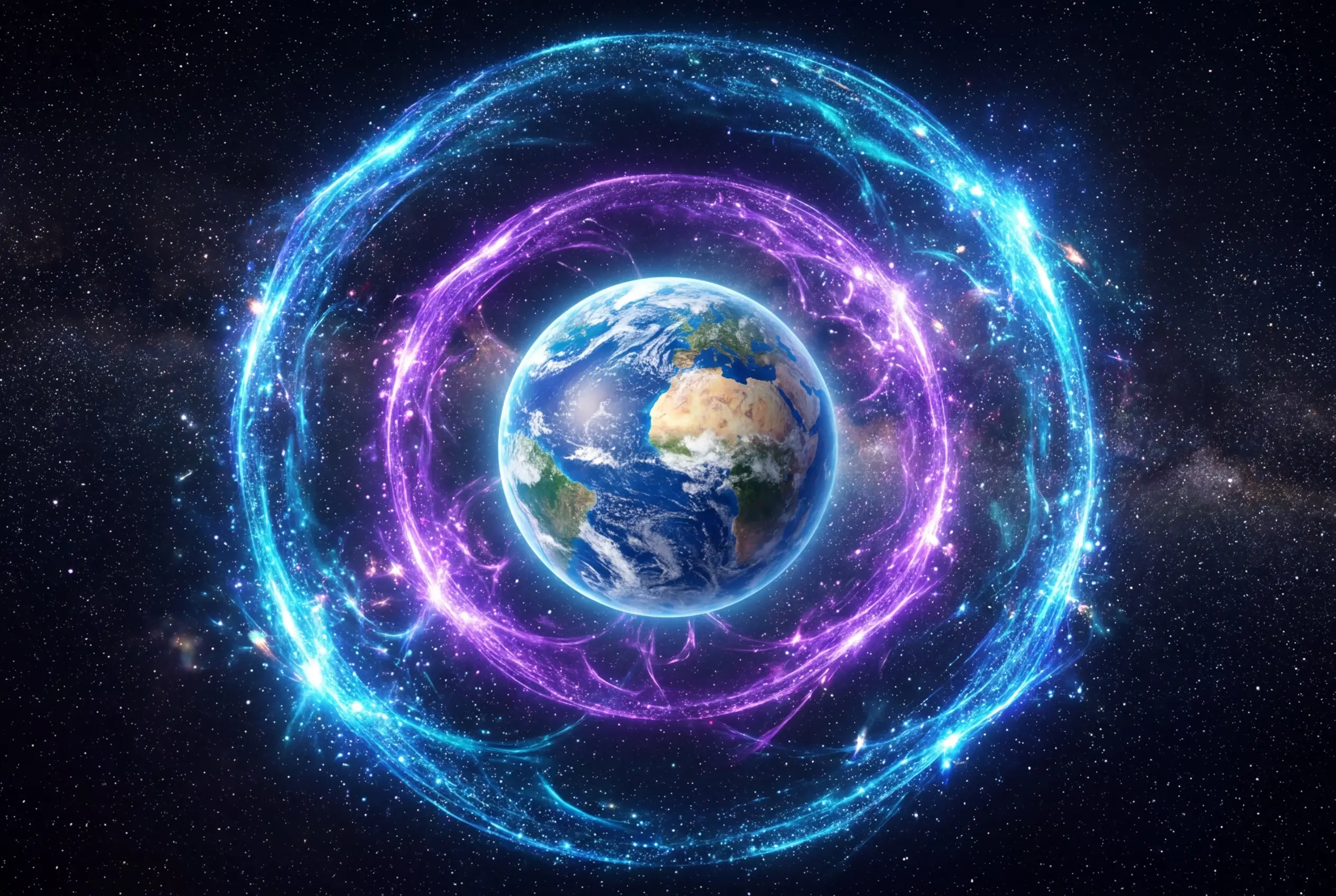
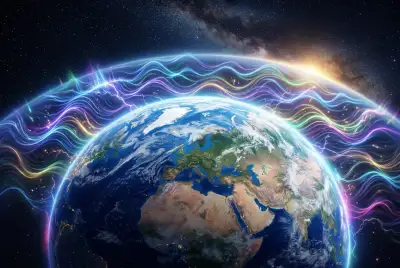
Imagine a silent, energetic barrier, constantly protecting our world from the harshest elements of space. It’s not a sci-fi force field, but a very real, intricate system of radiation belts that encircle Earth, known as the Van Allen Belts. For decades, scientists have studied these invisible shields, marveling at their ability to deflect harmful solar particles and cosmic rays, making life on our planet possible. But beyond their known protective role, I often wonder: do these powerful, dynamic structures harbor secrets we've yet to uncover? Could they be more than just passive deflectors, perhaps playing an active role in unknown cosmic processes, or even holding clues to phenomena we barely understand?
Our journey into these enigmatic shields began in 1958, with the launch of the Explorer 1 satellite. On board, a geiger counter, designed by Dr. James Van Allen, detected far more radiation than anticipated at high altitudes, revealing the existence of two immense, donut-shaped regions of energetic charged particles trapped by Earth's magnetic field. This discovery revolutionized our understanding of Earth's interaction with space, shifting our view from a simple, isolated planet to one constantly immersed in a dynamic cosmic environment.
## The Architecture of Earth’s Magnetic Embrace
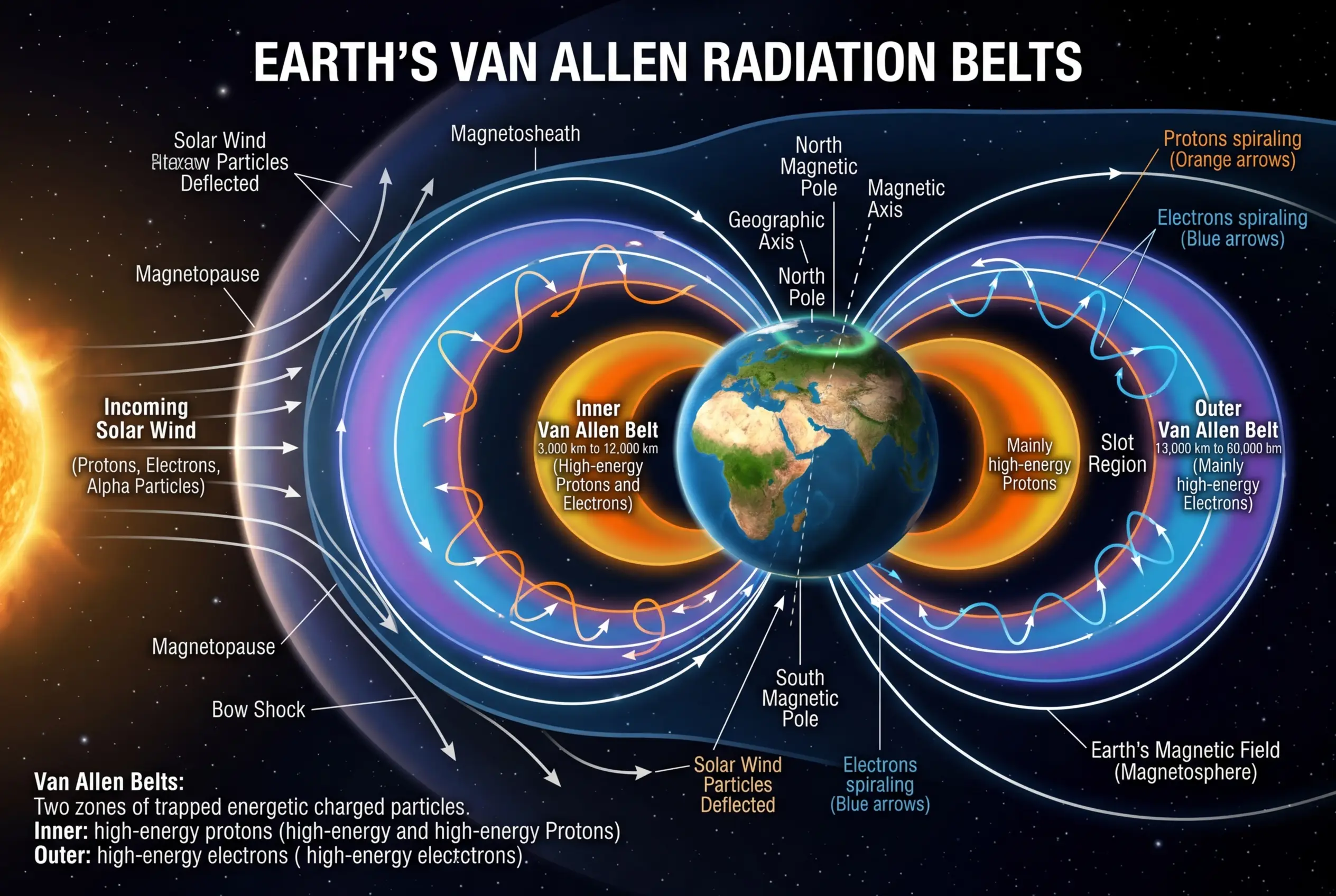
The Van Allen Belts are essentially two primary concentric rings, with a fluctuating third. The **inner belt** extends from about 600 to 6,000 kilometers above the Earth's surface and is predominantly composed of high-energy protons. These protons are incredibly stable, lingering for years. The **outer belt** is far more dynamic and expansive, ranging from approximately 13,000 to 60,000 kilometers in altitude. It’s primarily populated by high-energy electrons, whose flux can change dramatically within hours or days, influenced by solar activity and geomagnetic storms.
These particles don't just float randomly; they are trapped by Earth’s geomagnetic field, spiraling along magnetic field lines between magnetic poles. Picture them bouncing back and forth like tiny balls on a colossal, invisible string, constantly gaining and losing energy. This intricate dance is a testament to the sheer power and complexity of our planet's magnetic field, a force generated by the swirling molten iron in Earth's outer core. If you want to dive deeper into how our planet generates this crucial shield, I recommend reading about what fuels Earth’s core: [unpacking our living planet](/blogs/what-fuels-earths-core-unpacking-our-living-planet-4849).
### How These Belts Act as Our Cosmic Guardian
The primary known function of the Van Allen Belts is to shield Earth from destructive solar winds and cosmic rays. Without them, our atmosphere would be stripped away over time, and life would be exposed to lethal levels of radiation. This protective role is critical for the survival of complex life forms and the stability of our technological infrastructure.
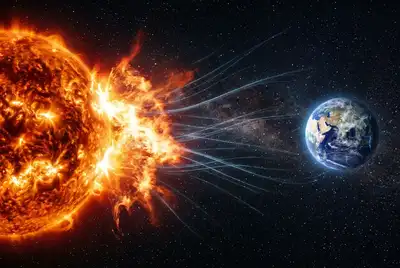
When solar flares or coronal mass ejections (CMEs) erupt from the Sun, they hurl a torrent of highly energetic particles towards Earth. Upon encountering Earth's magnetosphere, many of these particles are caught by the Van Allen Belts, where they are either trapped or deflected away. This process not only safeguards life on the surface but also protects our satellites, communication systems, and power grids from potential catastrophic damage. For instance, strong geomagnetic storms, if not mitigated by these belts, can induce powerful currents in long electrical conductors on Earth, leading to widespread power outages. This connection between solar activity and Earth's magnetic field is a fascinating area, and you can learn more about how [solar storms could ignite digital chaos](/blogs/could-solar-storms-ignite-digital-chaos-7077) on our blog.
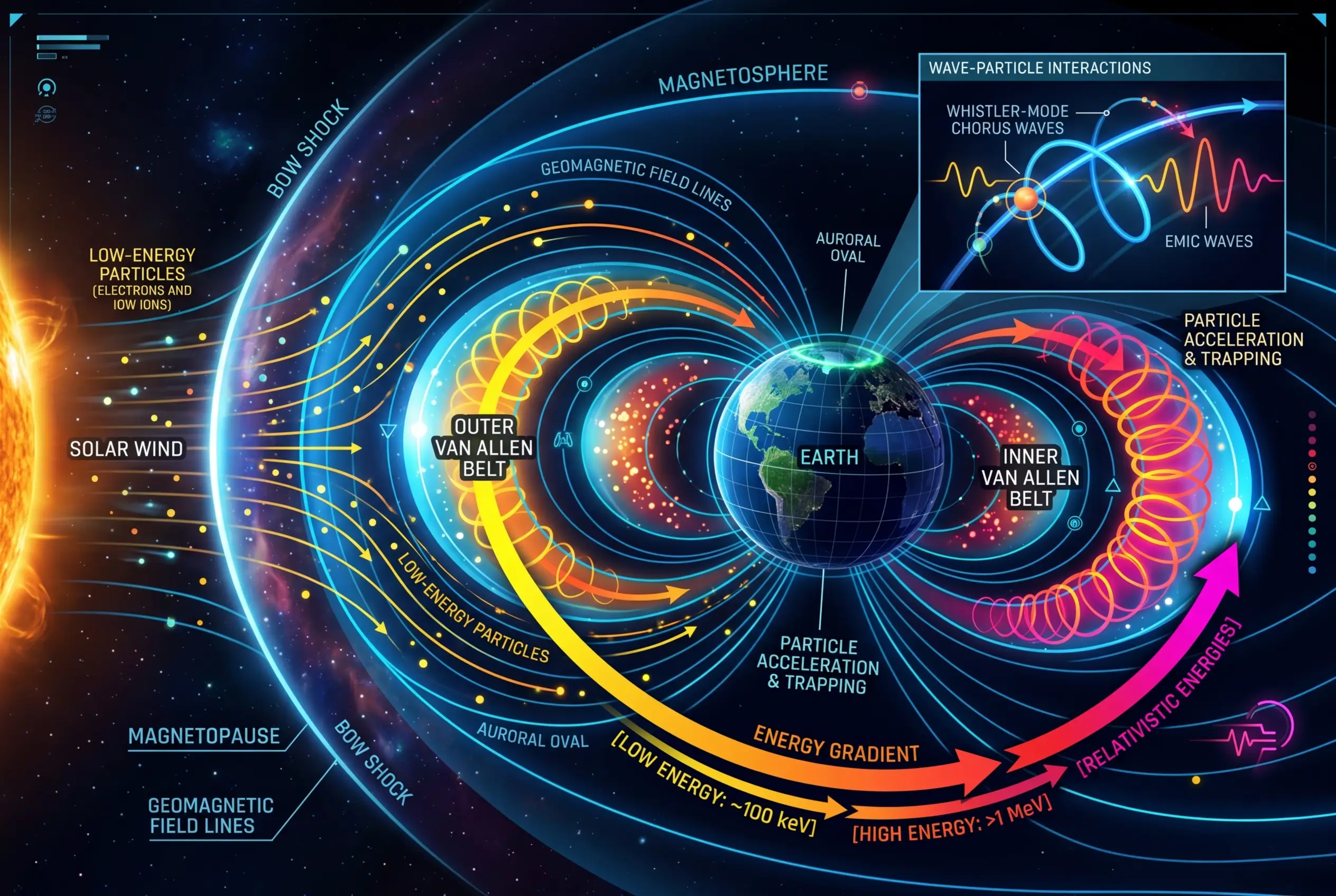
The dynamic nature of the outer belt is particularly intriguing. During intense solar events, the outer belt can swell, contract, and even temporarily disappear and reappear. This variability isn't just a passive response; it's a complex interaction involving electromagnetic waves, plasma waves, and particle acceleration mechanisms that scientists are still working to fully understand. This constant reshaping suggests a deeper, more active role in the magnetosphere’s overall defense strategy.
## Unseen Secrets: Beyond the Protective Shield
While their defensive capabilities are well-established, I often find myself pondering what else these cosmic structures might be doing, or what secrets they might hide. Could the Van Allen Belts be involved in more subtle, yet profound, cosmic phenomena?
### The "Killer Electron" Mystery
One of the long-standing mysteries revolves around the acceleration of "killer electrons" – electrons in the outer belt that reach ultra-relativistic speeds, capable of penetrating and damaging spacecraft. How these electrons gain such immense energy in such a short period, especially during geomagnetic storms, remains an active area of research. Theories range from wave-particle interactions, where electrons surf on specific types of plasma waves, to radial diffusion, where they are transported inward from distant regions of the magnetosphere. Understanding this mechanism is crucial for designing more resilient satellites and planning safer long-duration space missions. The ability to predict and potentially mitigate these electron surges would be a significant technological leap.
### A Natural Particle Accelerator?
Think about the largest particle accelerators on Earth, like the Large Hadron Collider. They are massive, complex machines designed to accelerate particles to incredible energies. The Van Allen Belts, however, are a naturally occurring system that does precisely this, on a planetary scale. The sheer energy involved is staggering. Could studying these natural accelerators offer new insights into fundamental physics, particle dynamics, or even exotic forms of energy generation that we haven't yet conceived? Perhaps the universe has its own "natural labs" performing experiments that defy our current understanding.
### Influence on Earth's Interior or Climate?
While highly speculative, some researchers have pondered if the intense energy within the belts could have any subtle, long-term feedback effect on Earth's interior processes or even climate. The magnetic field, generated by Earth's core, creates the belts. Is it a one-way street, or could the concentrated energy of the belts, in turn, influence the magnetic field's dynamics, perhaps impacting its intensity or even contributing to phenomena like
geomagnetic reversals? While direct evidence is scarce, the intricate interconnectedness of cosmic and planetary systems always leaves room for such possibilities.
### Unseen Data and Cosmic Communication?
Could the Van Allen Belts, in their dynamic dance with solar activity, be processing or even storing information in a way we don't recognize? The idea that complex natural systems might compute or store data is not entirely new; we've explored concepts like how the cosmic web might compute the universe's fate in
another blog post. The constant flux of particles, energy, and wave interactions within the belts represents an incredibly complex system. Could patterns within this chaos encode some form of cosmic data, perhaps a record of solar outbursts or interstellar phenomena, that we lack the tools or understanding to decode?
"The universe is not only stranger than we imagine, it is stranger than we *can* imagine." — J.B.S. Haldane. This quote resonates deeply when contemplating the Van Allen Belts. They operate on scales and with energies that dwarf our terrestrial experiments, constantly interacting with forces we are only beginning to grasp.
## Navigating the Belts: Challenges for Future Exploration
The Van Allen Belts are not just a scientific curiosity; they are a critical consideration for all space missions. Astronauts traveling beyond low Earth orbit (LEO), for instance, on journeys to the Moon or Mars, must traverse these radiation zones. Exposure to the high-energy particles within the belts can cause severe health risks, including radiation sickness, increased cancer risk, and damage to DNA. Spaceships need robust shielding, and mission trajectories are often carefully planned to minimize time spent in the most intense regions of the belts, particularly the inner belt and the heart of the outer belt.
Even satellites in LEO are affected. While generally below the main belts, their orbits often dip into the "South Atlantic Anomaly" (SAA), a region where the inner Van Allen belt dips closer to Earth's surface due to a weaker magnetic field in that area. This exposes satellites to higher radiation doses, leading to increased electronics degradation and the need for special precautions, like shutting down sensitive instruments when passing through the SAA. Understanding and predicting the behavior of the belts, therefore, is not merely an academic exercise but a practical necessity for advancing human space exploration. You can learn more about the challenges of protecting our tech from cosmic interference by exploring whether [cosmic dust interferes with our modern electronics](/blogs/does-cosmic-dust-interfere-with-our-modern-electronics-5130).
## The Future of Van Allen Belt Research
Several ongoing missions and future concepts aim to unlock more of the belts' secrets. NASA's
Van Allen Probes (formerly known as the Radiation Belt Storm Probes, launched in 2012 and concluded operations in 2019) provided unprecedented data on the belts' composition, dynamics, and the mechanisms by which particles are accelerated and lost. This mission greatly improved our understanding of space weather and its impact on Earth.
Future missions will likely build on this legacy, employing advanced sensors and multi-point observations to create a more comprehensive picture of this complex system. The goal is not just to understand the belts but to develop predictive models that can forecast space weather, much like we forecast terrestrial weather. Such capabilities would be invaluable for protecting astronauts, satellites, and terrestrial infrastructure from the capricious forces of our Sun and the wider cosmos.
As technology advances, perhaps we will even discover ways to leverage the belts themselves. Could their unique energetic properties be harnessed for future technologies, or might they reveal a new fundamental force or interaction we’ve yet to detect? The thought is certainly captivating.
In conclusion, Earth's Van Allen Belts are far more than just passive radiation shields. They are dynamic, energetic regions of our magnetosphere, constantly interacting with solar activity and cosmic particles. While their protective role is paramount, the mysteries surrounding particle acceleration, their potential influence on planetary processes, and the sheer complexity of their energetic dance suggest that these invisible guardians may indeed be guarding unseen secrets, waiting for our evolving science and technology to finally decode them.
 Join Us

 Unknown Author
















Leave a Reply
Comments (0)