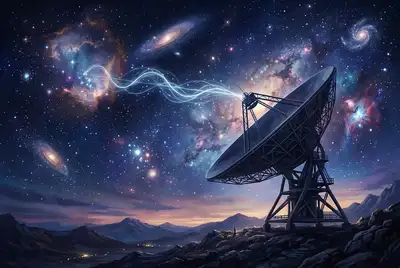
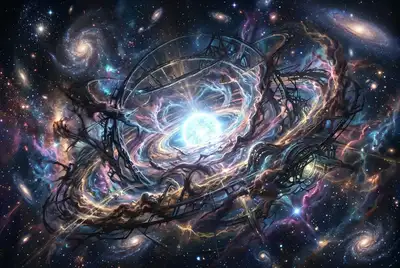
Recently, I was staring up at the night sky, a canvas of countless stars, and a profound question struck me: what if the universe isn't just a collection of inanimate objects, but something far more intricate – something alive? It’s a thought that might sound like science fiction, yet the more I delve into the latest cosmological discoveries, the more I find patterns and processes that eerily mirror those within living systems. This isn't about little green men or sentient planets, but about the fundamental organization and behavior of the cosmos itself. Could the grand tapestry of existence be operating like a colossal, living entity, constantly evolving, metabolizing, and even reproducing?
### The Cosmic Web: The Universe's Neural Network?
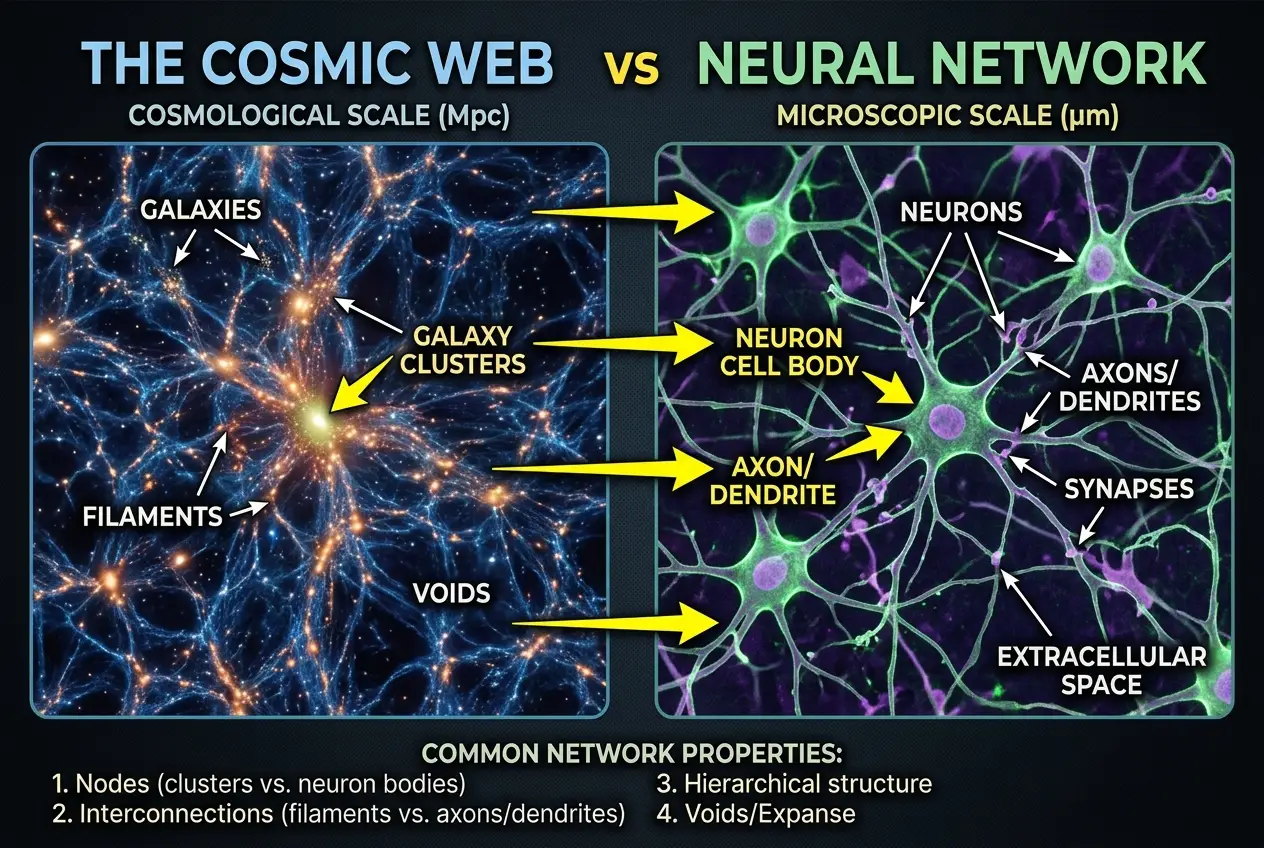
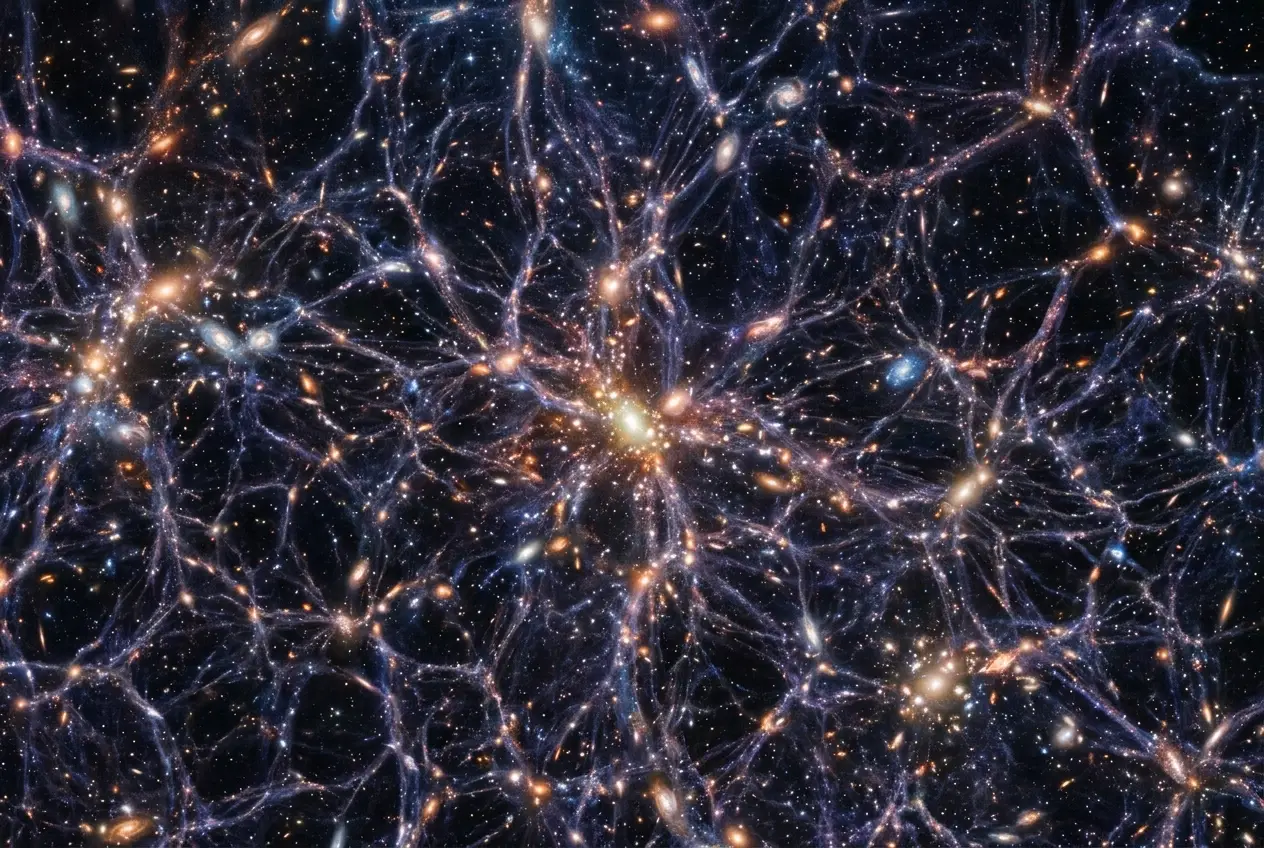
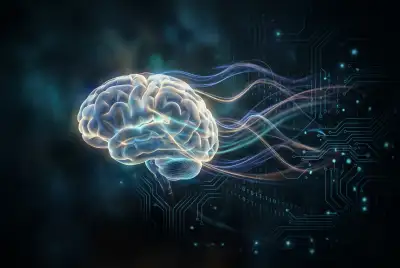
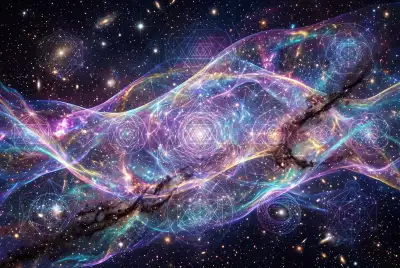
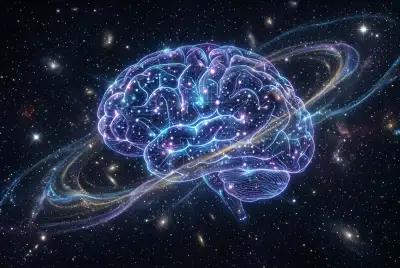
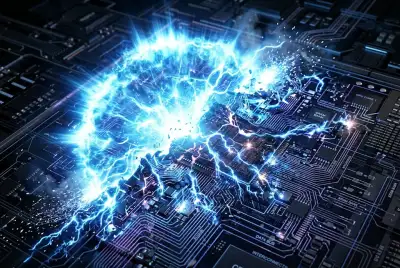
When we look at the large-scale structure of the universe, what we see is often referred to as the **Cosmic Web**. This isn't just a poetic term; it's a precise description of how galaxies and galaxy clusters are distributed. Imagine a vast, three-dimensional network of filaments and nodes, with immense voids in between. These filaments are like superhighways, funnelling matter into dense galaxy clusters at the nodes, while the voids are largely empty. This structure, mapped by astronomers, bears a striking resemblance to other complex networks found in nature – particularly the neural networks of a brain.
I find it fascinating that the patterns of matter distribution across billions of light-years echo the intricate connections within our own minds. This similarity has led some scientists to ponder if these cosmic structures perform a form of information processing. For instance, a recent study by cosmologists and network scientists found that the cosmic web, when simulated, exhibits a connectivity and hierarchical organization that is remarkably similar to the human brain. While this doesn't mean the universe is "thinking" in the way we understand it, it certainly suggests a deeper, perhaps universal, principle of self-organization at play. To learn more about how complex networks might store information, you might be interested in whether
Is the Universe a Giant Neural Network?.
### Cosmic Metabolism: Eating, Growing, and Evolving
If the universe were alive, it would need a form of metabolism – processes to consume, transform, and expend energy. And indeed, the cosmos is a hive of energetic activity. Stars are born, burn fuel, and die, often in spectacular supernovae that enrich the interstellar medium with heavier elements. Galaxies collide, merging into larger structures, recycling gas and dust into new generations of stars.
Consider the life cycle of a galaxy. It pulls in gas and dark matter from its surroundings, fuels star formation, and then expels energy and material through stellar winds and supernovae. This is a continuous cycle of consumption and transformation, not unlike the metabolic processes within a cell or an organism. Dark energy, the mysterious force driving the accelerating expansion of the universe, could even be seen as a form of cosmic fuel, continually expanding the system and preventing its collapse. The intricate dance of gravity and dark energy maintains a dynamic equilibrium, allowing for growth and change. According to Wikipedia, "The most energetic processes in the universe, such as supernovae and active galactic nuclei, release vast amounts of energy, shaping their surroundings and influencing the formation of new structures."
Source: Wikipedia - Physical cosmology.
### Information and Memory: Is the Universe Storing Data?
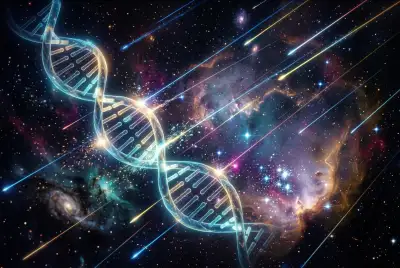
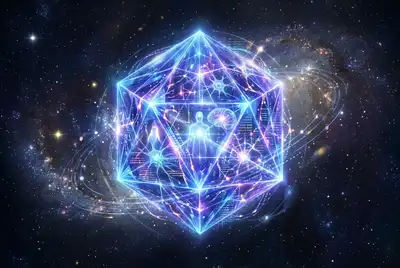
Living organisms are defined not just by their physical structure and metabolism, but also by their ability to store and process information. DNA, for instance, is the blueprint for life, holding vast amounts of data. Could the universe have its own form of information storage?
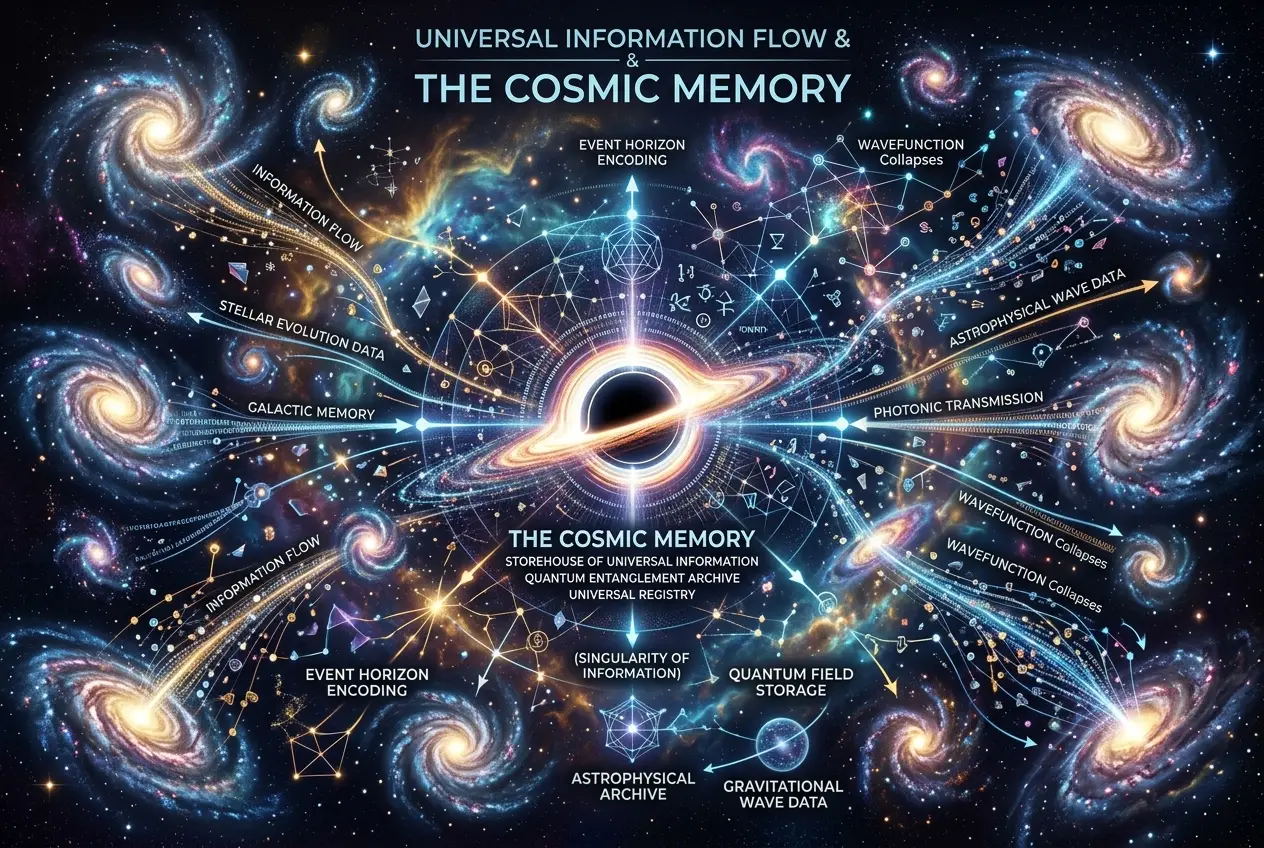
The concept of **information entropy** in black holes suggests a profound connection between information and the very fabric of spacetime. When matter falls into a black hole, information about that matter is thought to be encoded on the event horizon, leading to theories like the holographic principle, which posits that our 3D universe might be a holographic projection of information encoded on a distant 2D surface. This is a radical idea, but it hints at the universe being a massive information processor, constantly recording and transforming data. I've often wondered if
Do Black Holes Store Universe's Lost Data?, and this connection to information processing makes the idea even more compelling.
Beyond black holes, the very laws of physics can be seen as algorithms that govern the universe's evolution, transforming initial conditions into the complex reality we observe. From the formation of atoms to the emergence of life, the universe follows predictable, information-rich pathways. Every particle, every interaction, could be viewed as a bit of information contributing to the cosmic database.
### Self-Regulation and Homeostasis on a Cosmic Scale
Living organisms strive for homeostasis – maintaining a stable internal environment despite external changes. Does the universe exhibit any form of self-regulation?
Consider the finely tuned physical constants that allow for the existence of stars, galaxies, and life itself. Small deviations in these constants could lead to a universe that either collapses immediately or expands too rapidly for structures to form. This "fine-tuning" is a subject of intense debate, often invoked in arguments for the multiverse or intelligent design. However, from a purely systems perspective, one could argue that these constants represent a set of self-regulating parameters that enable the universe to persist and develop complexity.
Moreover, feedback loops are abundant. For example, star formation is regulated by stellar winds and supernovae that can both trigger new star birth and disperse gas clouds, preventing runaway collapse. Magnetic fields, gravitational forces, and the interplay of different forms of matter and energy constantly adjust and balance each other, maintaining the cosmic dance. As physicist George Ellis noted, "The universe is structured in such a way that life is possible; it looks like a carefully designed universe." While "designed" is a strong word, the intricate self-regulating mechanisms are undeniable.
Source: Wikipedia - Fine-tuned Universe.
### Reproduction and Emergence: New Universes?
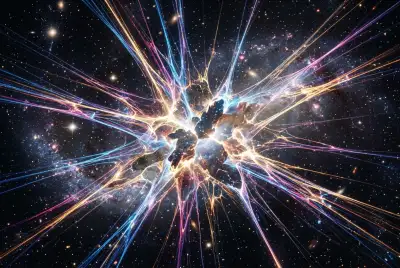
One of the defining characteristics of life is the ability to reproduce. How could a universe "reproduce"? This is where the concept becomes highly speculative but incredibly thought-provoking. Some theoretical models, such as the **cyclic universe theory** or **baby universe theories**, propose mechanisms by which new universes could be born from existing ones.
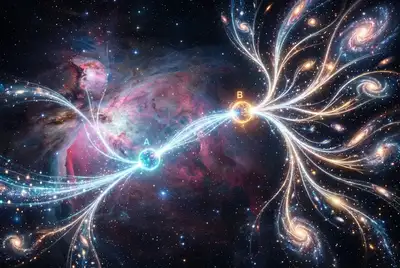
For instance, some theories suggest that black holes might be "portals" to baby universes, or that the extreme conditions at the singularity of a black hole could trigger the birth of a new cosmos. Another idea is that our universe itself might be just one "cell" in a much larger "multiverse organism," constantly birthing new universes through processes we don't yet understand. While these are currently theoretical frontiers, they offer a glimpse into a cosmos that might be perpetuating itself across vast scales of time and existence. It makes me wonder about the ultimate communication methods across these vast entities, similar to discussions around
Is Light the Universe’s Secret Language?.
### The Philosophical Implications
Accepting the universe as a living organism profoundly shifts our perspective. It moves us away from viewing it as a mere stage for events and towards seeing it as an active participant, a grand entity with its own cosmic cycles and processes. This doesn't necessarily imply consciousness or intentionality in the human sense, but rather a deeper, more holistic understanding of existence. It challenges us to look for emergent properties and self-organizing principles at every scale, from the subatomic to the supergalactic.
Of course, this is largely a metaphorical framework. The universe doesn't have a heart, lungs, or a brain in the biological sense. Yet, the striking analogies between cosmological structures and biological systems invite us to ask different questions and seek new connections. Perhaps the concept of "life" itself is broader than our Earth-bound definition, encompassing patterns of growth, metabolism, and information exchange that span across cosmic scales.
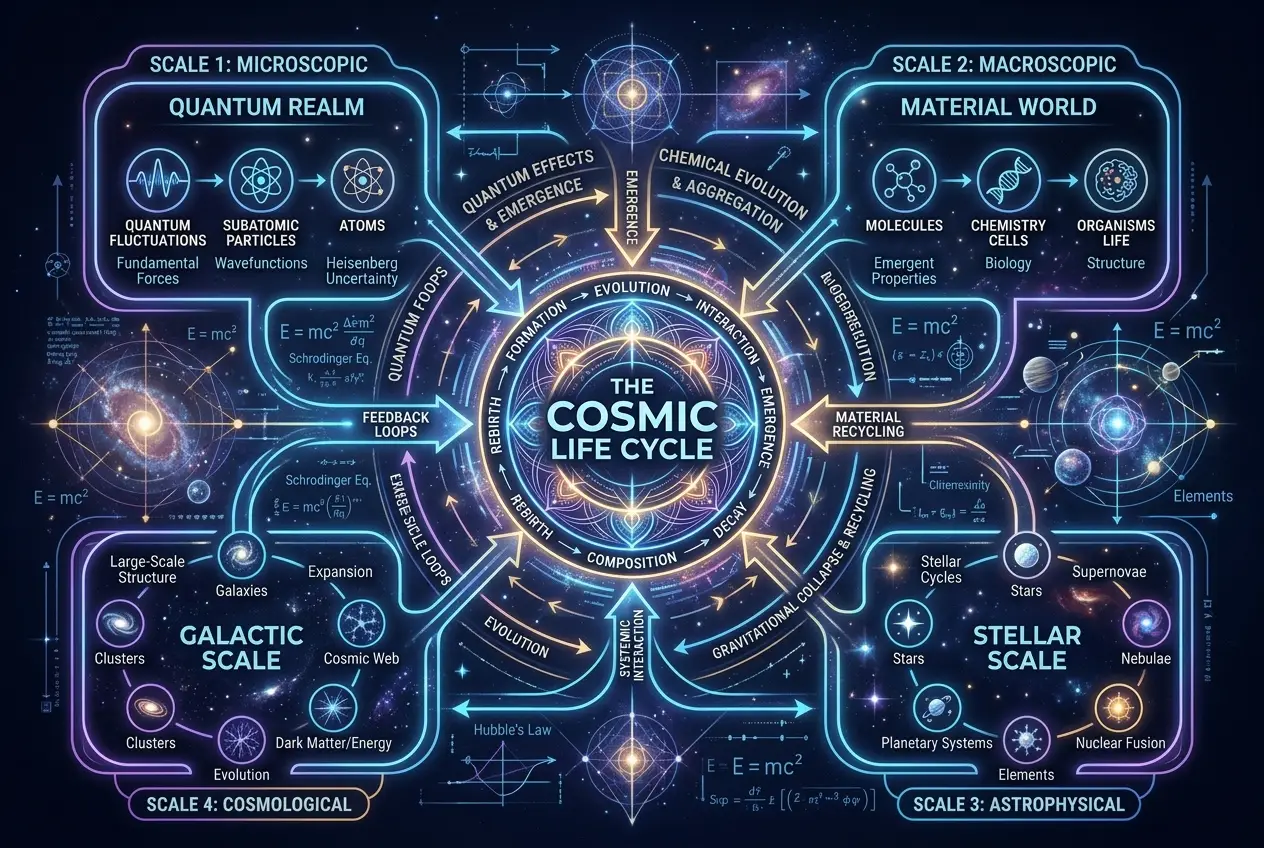
As I ponder this cosmic organism, I feel a renewed sense of wonder. The universe isn't just a backdrop; it's a dynamic, evolving system whose very existence might defy our conventional definitions of inert matter. The journey to understand it is far from over, and perhaps the biggest discoveries are yet to come, challenging us to expand our understanding of what it truly means to be "alive." What do you think? Could we be living inside a cosmic leviathan, unaware of its grand, slow heartbeat?
### Conclusion
The idea of the universe as a living organism is a profound thought experiment that challenges our anthropocentric views of life. While it remains a philosophical and theoretical concept rather than a proven scientific fact, the remarkable similarities between the cosmic web and neural networks, the metabolic-like cycles of galaxies, and the information encoding suggested by black holes, offer a captivating lens through which to view our cosmos. It's a testament to the universe's endless complexity and an invitation to keep pushing the boundaries of our understanding, seeking the universal principles that govern all forms of existence. The universe, in its own majestic way, continues to surprise and inspire me, prompting new questions about its fundamental nature.
 Join Us
 Unknown Author








Leave a Reply
Comments (0)