I vividly remember poring over an old atlas as a child, tracing the familiar contours of continents and islands. But every now and then, I’d stumble upon an entry that felt like a whisper from another world: "Sandy Island (Disputed)." Or a faint, erased outline where a named island once stood, now just blank ocean. These weren't mere cartographic errors to my young mind; they were mysteries. What if these vanishing islands weren't just mistakes or geological whims? What if, just perhaps, they hinted at something far more extraordinary – a clandestine technology, a hidden civilization, or a scientific marvel designed to elude our gaze?
The concept of phantom islands has captivated navigators, cartographers, and dreamers for centuries. These are landmasses that appear on maps for a time, only to vanish into the depths of historical obscurity, leaving behind a trail of unanswered questions. While many can be attributed to human error, optical illusions, or natural geological processes, the sheer persistence of some of these tales makes me wonder: could a few of these elusive landforms be more than just figments of imagination or misidentified icebergs? Could they be manifestations of a technology so advanced it could manipulate perception or even physical reality?
### The Cartographic Ghosts: A History of Vanished Lands
Throughout history, countless phantom islands have danced on and off the world's maps. From the mythical lands of Atlantis to the more recent "discoveries" that later proved non-existent, these geographical anomalies have shaped our understanding of the world, often leading explorers into fruitless quests. One of the most famous modern examples is **Sandy Island**, supposedly located off the coast of Australia near New Caledonia. It appeared on world maps, including Google Earth, for over a decade. Researchers aboard the R/V Southern Surveyor eventually sailed through its supposed location in 2012, finding nothing but open ocean thousands of meters deep. They confirmed, quite definitively, that Sandy Island did not exist. [Explore more about Sandy Island's curious case on Wikipedia](https://en.wikipedia.org/wiki/Sandy_Island_(New_Caledonia)).
Another intriguing case is **Sarah Ann Island**, which was mapped in the mid-19th century in the Pacific Ocean and was even claimed by the United States under the Guano Islands Act. It appeared on charts for decades before being officially de-listed in the early 20th century, likely never having existed at all. Similarly, **Croker Island** in the Arctic was mapped for years based on a supposed sighting, only to be found non-existent by later expeditions.
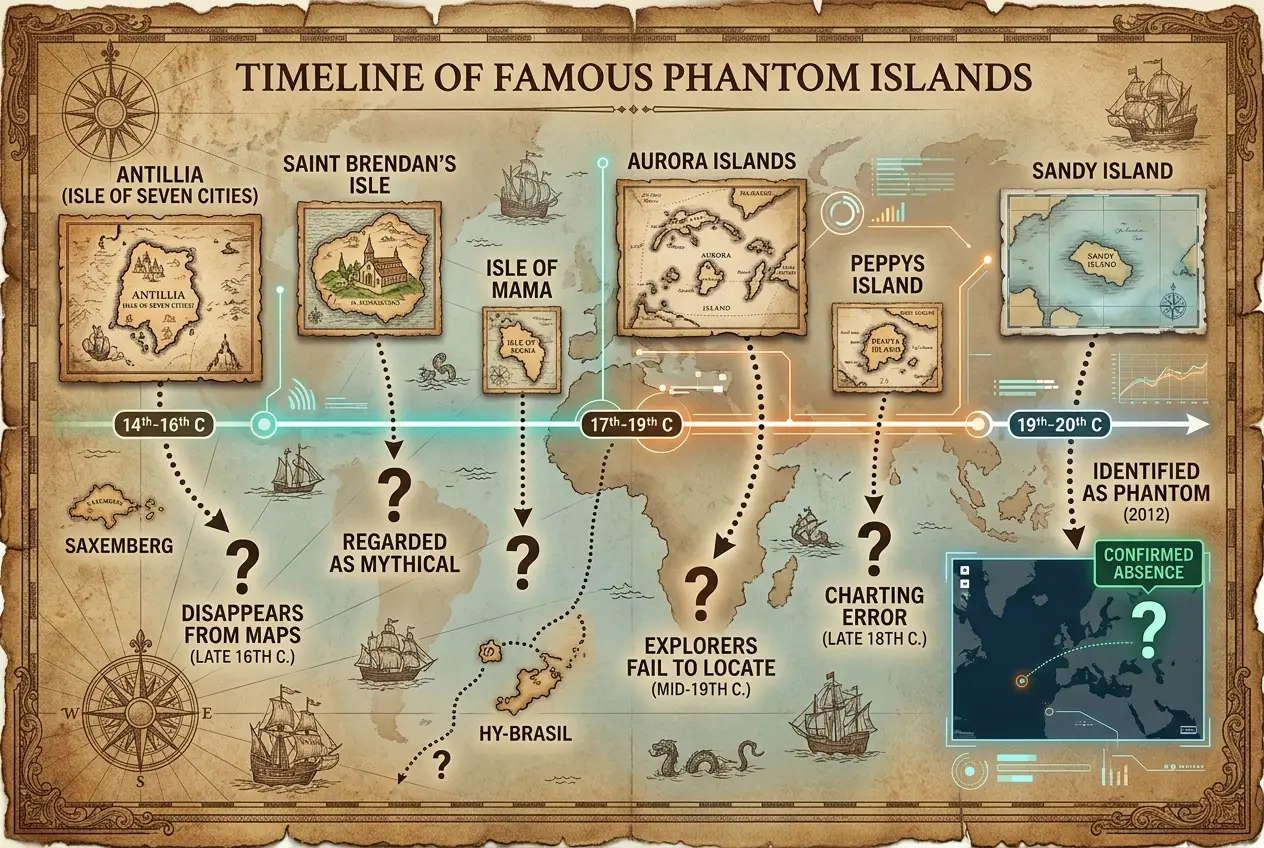
Most scientific explanations for these cartographic ghosts fall into a few categories:
* **Mapping Errors:** Simple mistakes in navigation, transcription, or interpretation of older records.
* **Volcanic Activity:** Islands formed by submarine volcanoes can be highly unstable and disappear rapidly due to erosion or collapse.
* **Icebergs:** Large icebergs or ice islands mistaken for land, especially in polar regions.
* **Optical Illusions:** Mirages, particularly superior mirages (Fata Morgana), can make distant landmasses appear distorted or even create images of land where none exists. This phenomenon is well-documented and can confuse even experienced navigators. [Learn more about the fascinating science of mirages on Wikipedia](https://en.wikipedia.org/wiki/Mirage).
* **Temporary Features:** Sandbanks, coral atolls, or accumulations of debris that are transient and not true islands.
These explanations are robust, yet a persistent part of me wonders if we are too quick to dismiss the truly anomalous.
### Beyond Mirage: Could Advanced Tech Be at Play?
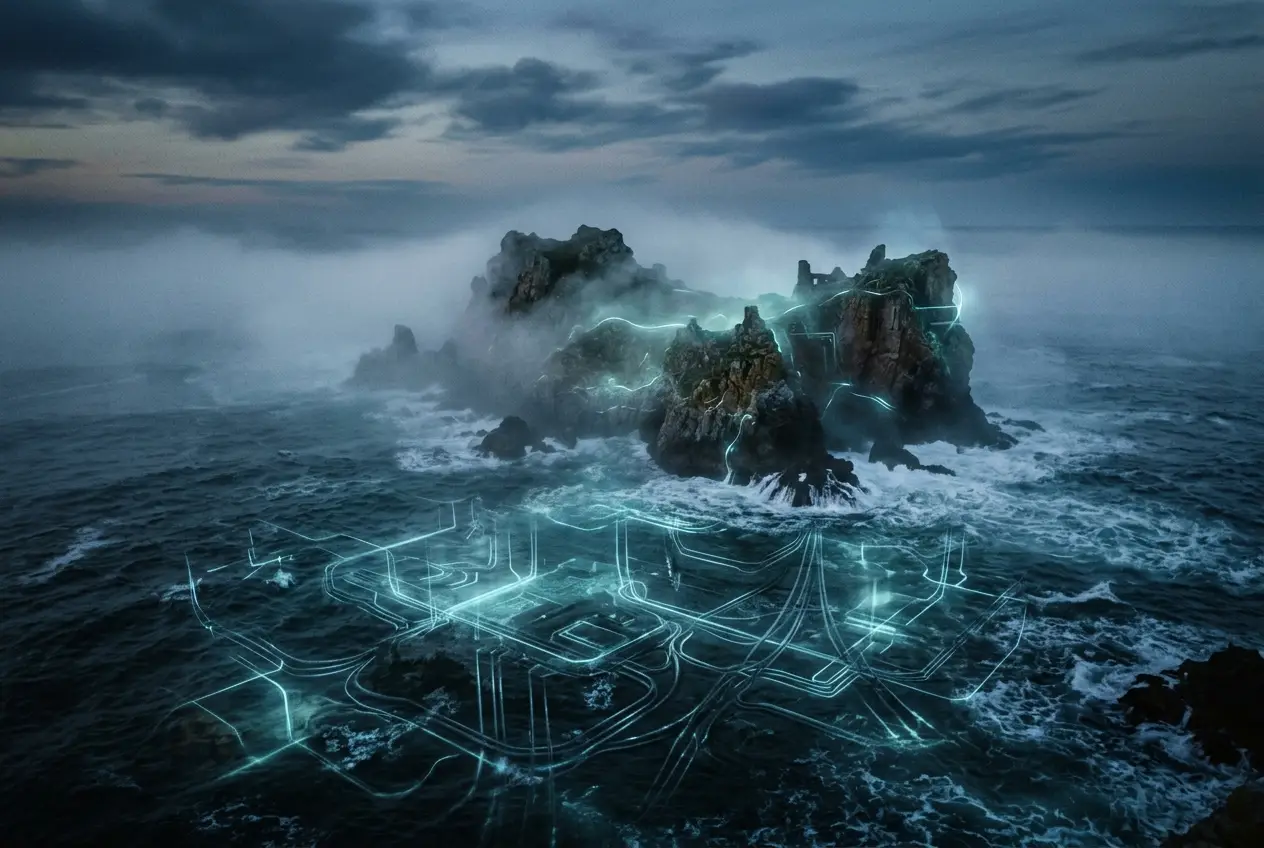
Now, let's step beyond conventional science and into the realm of speculative "what if." What if some of these vanishings aren't just natural phenomena or errors, but deliberate acts? Imagine a civilization, ancient or perhaps operating in secrecy even today, possessing technology so advanced it could manipulate light, sound, or even the very fabric of local space to render an island visible or invisible at will.
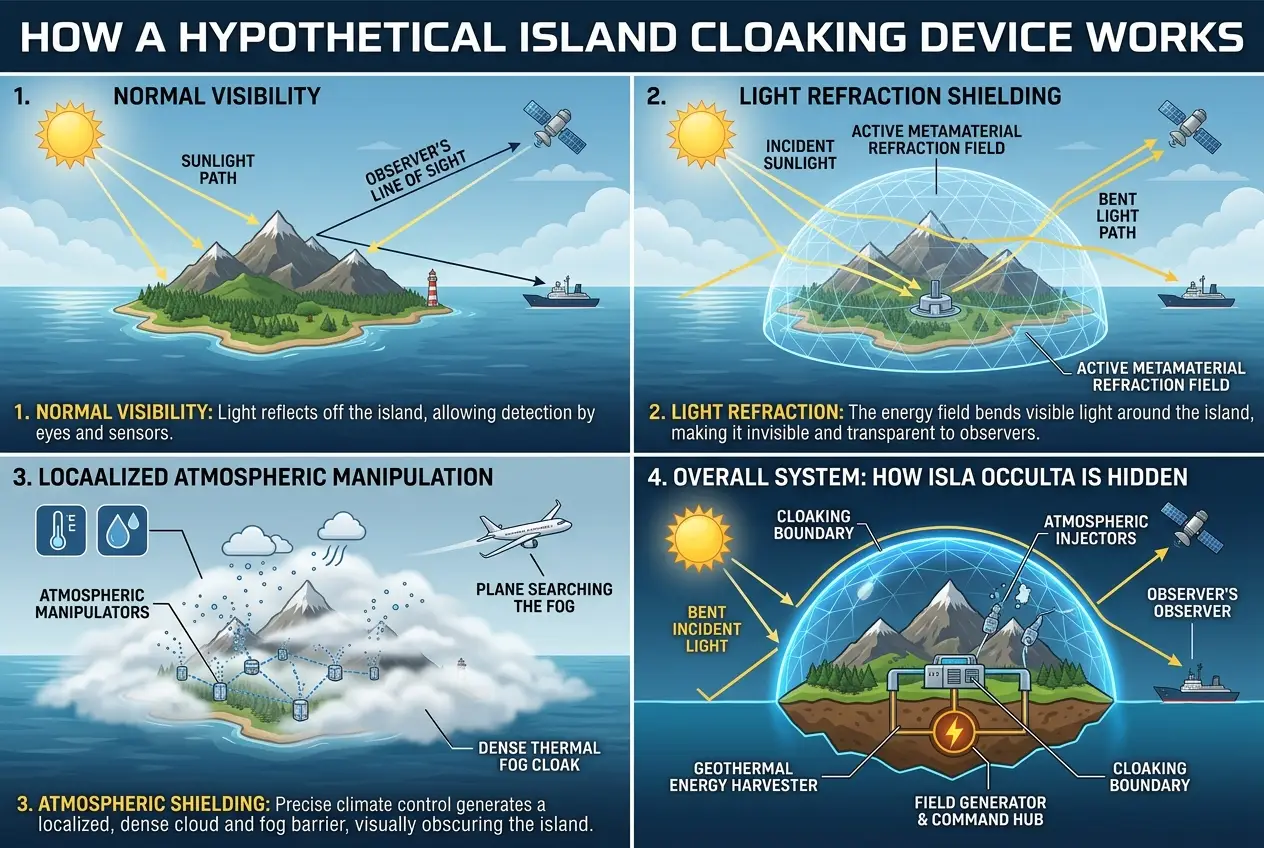
Could some phantom islands be hidden bases, protected by **advanced cloaking devices**? This idea resonates with science fiction, where starships vanish from sensors. On Earth, the concept of stealth technology already exists, albeit on a much smaller scale. Modern military aircraft and vessels use specialized designs and materials to reduce their radar, infrared, and acoustic signatures, making them difficult to detect. [Understand the principles of Stealth Technology on Wikipedia](https://en.wikipedia.org/wiki/Stealth_technology). What if an ancient, highly advanced civilization had mastered this art to such an extent that they could make entire landmasses disappear from view or appear only under specific conditions?
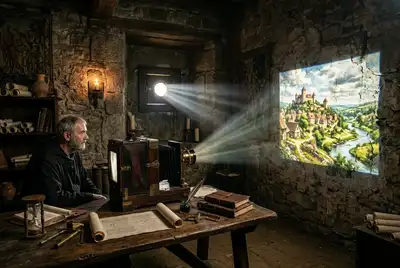
Perhaps the "vanishing" wasn't physical disappearance but a technological illusion. Think about how a strategically deployed **holographic projection** could create the appearance of an island, complete with vegetation and topographical features, only to be "switched off" or dissipate under changing atmospheric conditions. The ancients, often credited with incredible feats of engineering and astronomical knowledge, might have possessed a form of "proto-tech" that we don't fully understand. We have seen hints of ancient navigational prowess in the Piri Reis Map, which depicts Antarctica without ice – a cartographic anomaly that still baffles historians. You can dive deeper into that mystery in our blog: [Piri Reis Map: Did Ancients Map Antarctica Without Ice?](https://curiositydiaries.com/blogs/piri-reis-map-did-ancients-map-antarctica-without-ice-4790).
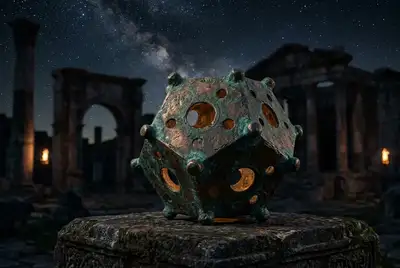
The idea that ancient civilizations might have employed advanced technologies isn't new. From the Roman concrete that self-heals to the intricate mechanisms of the Antikythera, history is dotted with examples that challenge our assumptions about ancient capabilities. If they could craft such marvels, what other secrets might the ancients have possessed, perhaps related to energy fields or manipulating materials at a fundamental level?
### Modern Echoes: Mimicking Vanishing Acts with Advanced Science
Our own burgeoning technologies offer glimpses into how such "vanishing acts" might be achieved in the future. Imagine **"smart materials"** that can change their reflective properties, becoming invisible against the ocean or sky. Researchers are already developing metamaterials that can bend light around objects, effectively making them transparent or invisible in certain wavelengths. While still in its infancy for macroscopic objects, the theoretical groundwork is being laid.
Beyond visual deception, consider acoustic manipulation. We've explored the fascinating potential of acoustic levitation, where sound waves can lift and move objects. What if sound could also be used to create an acoustic "cloaking field" around an island, distorting sonar or even influencing atmospheric conditions to generate mirages? Our blog on the topic, [Can Sound Build Future Cities?](https://curiositydiaries.com/blogs/acoustic-levitation-can-sound-build-future-cities-4674), hints at the power of sound beyond mere acoustics. Similarly, the concept of programmable matter, where objects can change their physical properties on demand, could allow for dynamic, transient landforms. Could entire structures be built and unbuilt at will, like digital pixels in the real world? This is a future we've explored in [Programmable Matter: Will Anything Be Solid in the Future?](https://curiositydiaries.com/blogs/programmable-matter-will-anything-be-solid-in-the-future-8475).
The question isn't just about making things disappear, but also about the ability to **create transient structures**. Could highly advanced civilizations, perhaps with an understanding of localized energy manipulation, temporarily solidify areas of the ocean floor or create landmasses that only exist for a specific purpose or duration? This ventures into speculative physics, but the core idea—that advanced tech could defy our current understanding of material permanence—is profoundly intriguing.
### The Deep Sea Connection: Submerged Secrets
Finally, let's consider the vast, unexplored depths of our oceans. What if the "vanishing" islands weren't vanishing at all, but simply receding into the abyssal plains? Tectonic activity can be volatile, with submarine volcanoes creating new land and then, just as quickly, submerging it. But what if there's more to it?
The ocean floor remains one of Earth's last great frontiers. We have mapped less of it than the surface of the moon. Could there be hidden, advanced structures beneath the waves, capable of projecting illusions onto the surface, or even rising to become temporary islands before submerging again? The idea of a hidden "ocean brain" or advanced civilization existing in the deep sea, influencing surface phenomena, is a tantalizing thought, touched upon in our blog: [Oceans Hidden Brain: Is the Seafloor a Natural Computer?](https://curiositydiaries.com/blogs/oceans-hidden-brain-is-the-seafloor-a-natural-computer-5039). Such a civilization might have reasons to conceal its existence, using sophisticated technology to maintain its anonymity.
The mystery of vanishing islands serves as a compelling reminder of how much remains unknown, both in our historical records and in the vastness of our planet. While logical explanations often prevail, the human mind thrives on the thrill of the unexplained, pushing the boundaries of what we consider possible. Whether these islands were geographical errors, natural phenomena, or fleeting glimpses of something truly extraordinary, they continue to fuel our curiosity and remind us that sometimes, the most intriguing stories are the ones that disappear right before our eyes.
What are your thoughts? Could technology, ancient or otherwise, be behind some of the world's most enduring cartographic mysteries? Share your theories in the comments below!
Frequently Asked Questions
A phantom island is a geographical landmass that appeared on maps for a period but was later found not to exist, often due to mapping errors, optical illusions, or the misidentification of temporary features like icebergs or volcanic activity.
Some notable examples include Sandy Island (off New Caledonia), Sarah Ann Island (Pacific Ocean), and Croker Island (Arctic). These were mapped for decades before being disproven or removed from charts.
Hypothetically, advanced technology could create vanishing islands through sophisticated cloaking devices that manipulate light and perception, holographic projections that create temporary illusions of land, or 'smart materials' that change properties to become invisible or transient. It could also involve hidden underwater bases that surface temporarily.
While direct evidence is absent, concepts like stealth technology, metamaterials for light manipulation, and even acoustic cloaking demonstrate our growing capacity to obscure objects. These modern advancements inspire speculative theories about what ancient or future civilizations might achieve.
Many phantom island theories originate from historical seafaring accounts, navigational errors, and the limitations of early cartography. However, the intriguing nature of some disappearances has led to more speculative theories involving unknown technologies or hidden civilizations.
Verified Expert
Alex Rivers
A professional researcher since age twelve, I delve into mysteries and ignite curiosity by presenting an array of compelling possibilities. I will heighten your curiosity, but by the end, you will possess profound knowledge.
Leave a Reply
Comments (0)
No approved comments yet. Be the first to share your thoughts!
 Join Us
 Unknown Author













Leave a Reply
Comments (0)