I often find myself lost in thought, imagining the possibilities of what the human mind can truly achieve. For centuries, the idea of controlling objects with mere thought — telekinesis — has been confined to the realm of science fiction and myth. But what if I told you that this once-fantastic notion is rapidly transitioning into scientific reality? What if the subtle electrical whispers of our brains could, in fact, command technology across a room, or even across the globe?
It sounds like something straight out of a futuristic blockbuster, doesn't it? Yet, the field of Brain-Computer Interfaces (BCI) is making astonishing strides, transforming neural signals into actionable commands for external devices. We’re not just talking about moving a cursor on a screen; we’re venturing into territory where thought alone could unlock doors, pilot drones, or even communicate complex ideas without uttering a single word. This isn't just about convenience; it's about fundamentally redefining human-machine interaction and unlocking new capabilities for people with limited mobility, transforming their lives.
## The Silent Language of the Brain: A Primer
Before we delve into the magic, let’s understand the science. Our brains are incredibly complex electrical machines. Billions of neurons fire continuously, generating electrical impulses that form patterns we call **brainwaves**. These waves vary in frequency and amplitude, correlating with different states of consciousness and mental activity.
### Decoding the Rhythms of Thought
Scientists categorize brainwaves into several distinct types, each associated with specific mental states:
* **Delta Waves (0.5-4 Hz):** The slowest waves, dominant during deep, dreamless sleep.
* **Theta Waves (4-8 Hz):** Associated with drowsiness, light sleep, meditation, and deep relaxation.
* **Alpha Waves (8-13 Hz):** Present when we are awake but relaxed, often with eyes closed. They signal a calm, reflective state.
* **Beta Waves (13-30 Hz):** Dominant during active thinking, problem-solving, alertness, and intense concentration.
* **Gamma Waves (30-100+ Hz):** The fastest waves, linked to higher-level cognitive functions, learning, memory, and heightened perception.
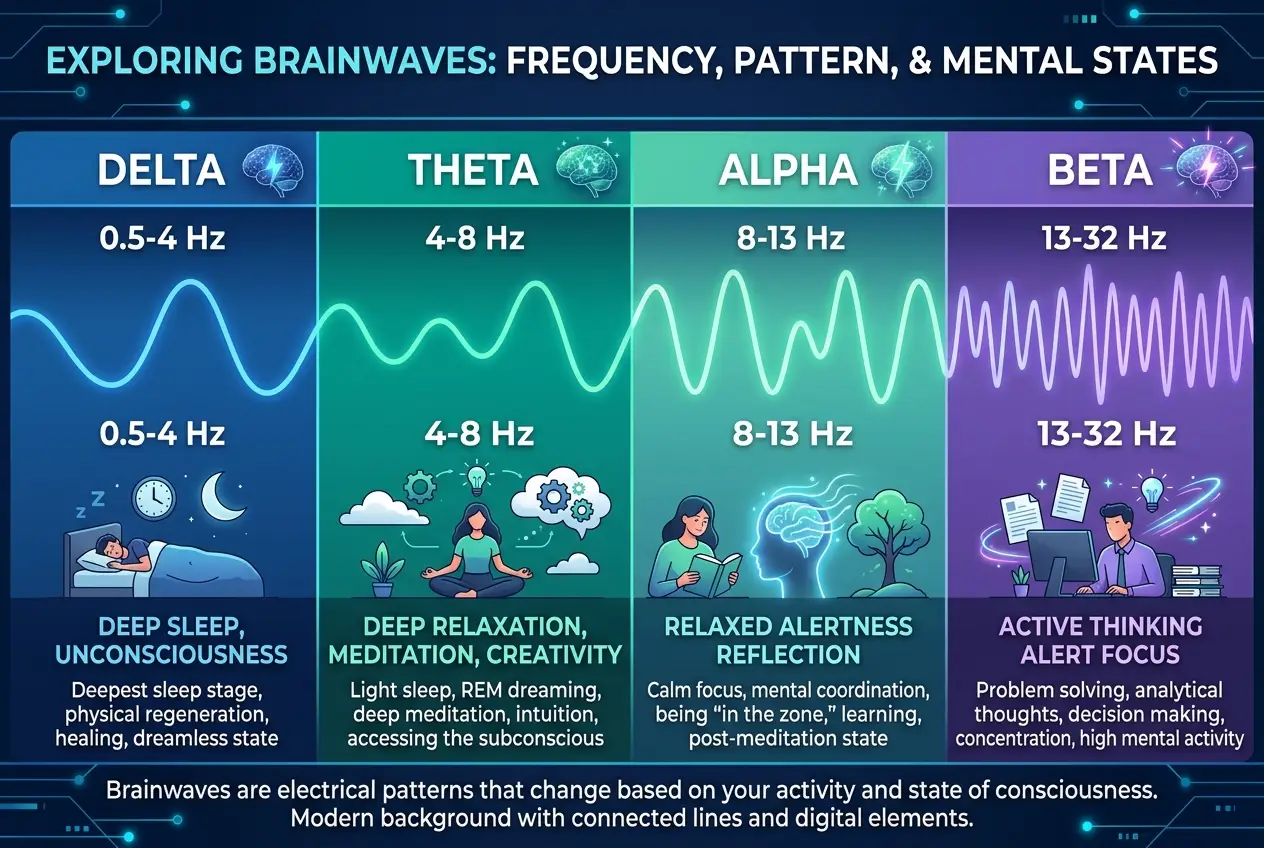
Brain-Computer Interfaces work by detecting and interpreting these electrical signals. While the concept might seem modern, the foundational discovery of brain electricity dates back to the late 19th and early 20th centuries. The first human electroencephalogram (EEG) was recorded by Hans Berger in the 1920s, laying the groundwork for reading the brain's electrical output. You can read more about the history and science of EEG on Wikipedia: [Electroencephalography](https://en.wikipedia.org/wiki/Electroencephalography).
## How Do BCIs Work? Bridging Mind and Machine
At its core, a BCI system establishes a direct communication pathway between the brain and an external device. This bypasses traditional muscular pathways, relying solely on neural activity. There are two primary types of BCIs:
1. **Non-Invasive BCIs:** These are the most common and involve external sensors, typically an **EEG cap**, placed on the scalp. EEG measures electrical activity through electrodes. It’s relatively safe, easy to use, but offers lower signal resolution due to interference from the skull and skin.
2. **Invasive BCIs:** These require surgical implantation of electrodes directly into the brain. While riskier, they provide much higher signal fidelity and allow for more precise control, detecting signals from individual neurons or small groups of neurons. Examples include electrocorticography (ECoG) or microelectrode arrays. For a deeper dive into invasive BCI technology, Wikipedia offers an excellent resource: [Brain–computer interface](https://en.wikipedia.org/wiki/Brain%E2%80%93computer_interface).
Regardless of the method, the process generally follows several steps:
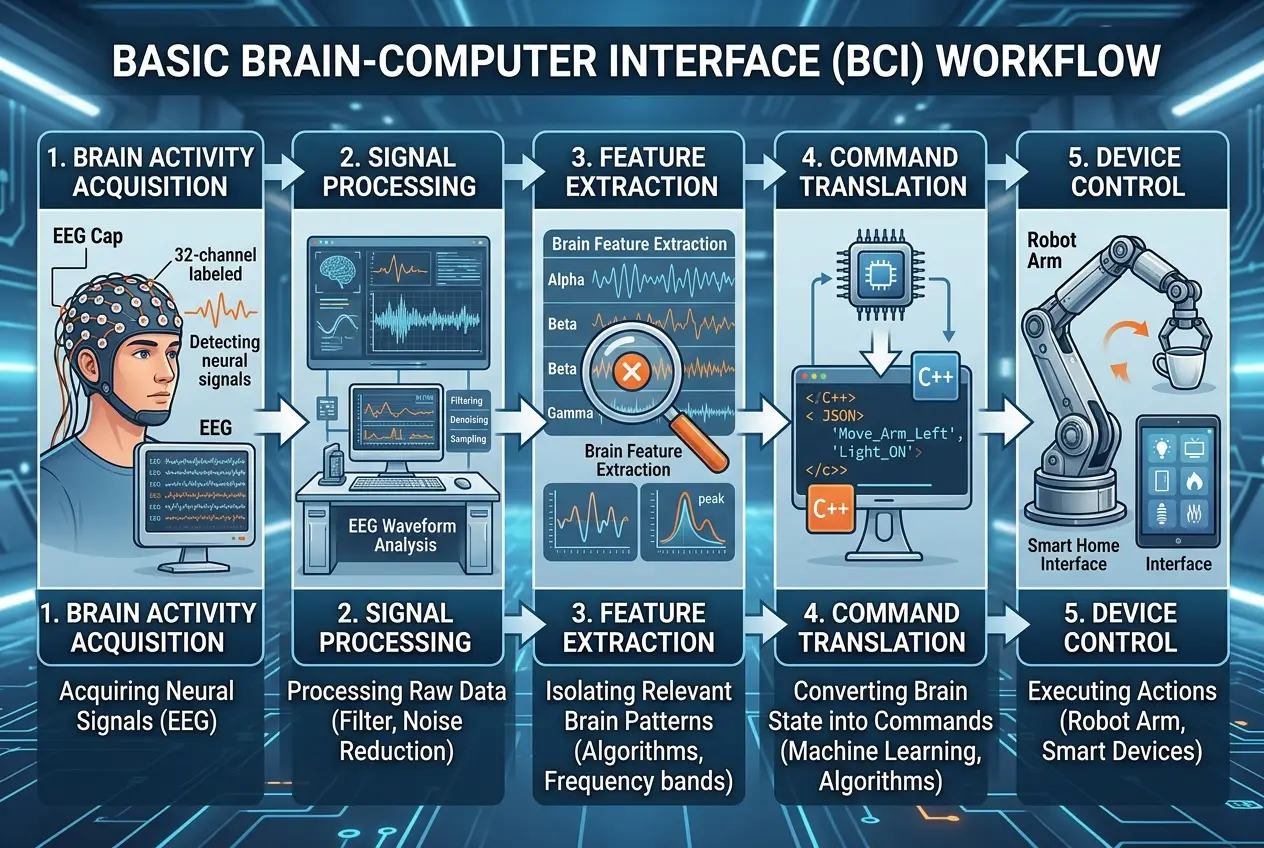
1. **Signal Acquisition:** Sensors detect electrical signals from the brain.
2. **Signal Processing:** Raw brainwave data is amplified and filtered to remove noise (e.g., muscle movements, eye blinks).
3. **Feature Extraction:** Specific patterns or features in the brainwaves that correlate with intended commands are identified. For example, imagining moving a hand might generate a distinct pattern in the motor cortex.
4. **Translation Algorithm:** Sophisticated algorithms translate these extracted features into digital commands that an external device can understand.
5. **Device Control:** The translated commands are sent to the device, initiating an action.
## The Reality of Remote Control by Thought
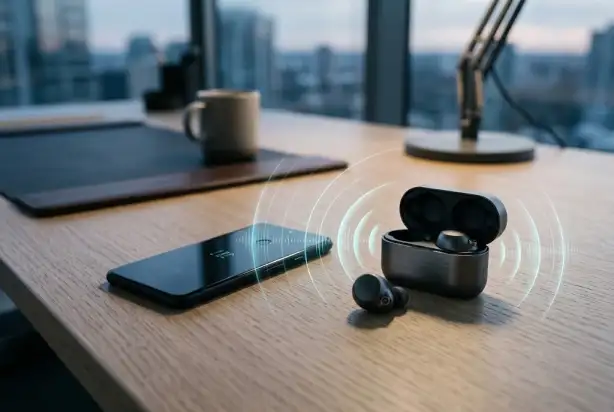
So, how "afar" can brainwaves control tech? The distance isn't the primary limitation; it's the wireless transmission of the *signal*. Once the brainwave data is digitized and processed, it can be sent via standard wireless protocols (Bluetooth, Wi-Fi, cellular networks) to any internet-connected device, theoretically anywhere in the world.
### Current Breakthroughs and Applications
I've seen some truly inspiring applications emerge from BCI research:
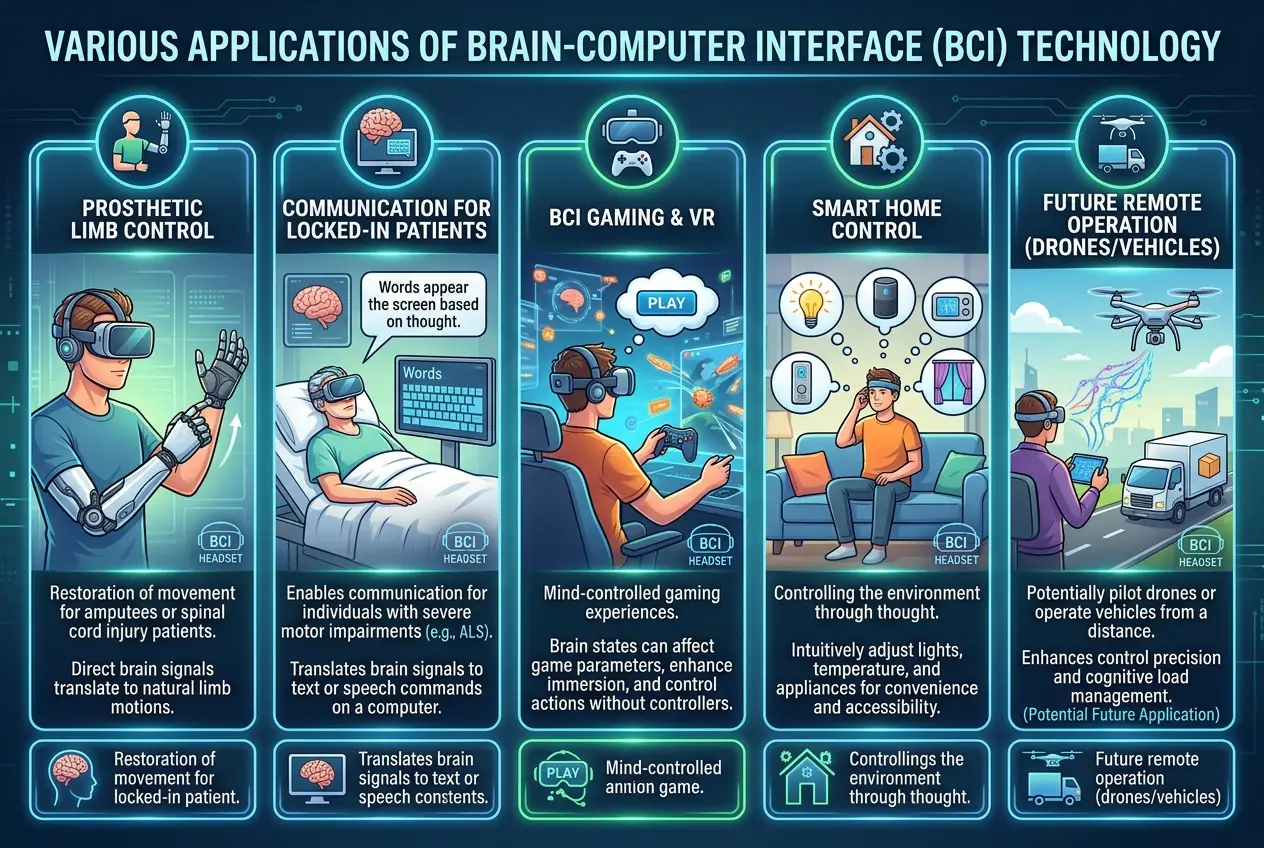
* **Prosthetic Limb Control:** Perhaps the most impactful application, individuals with paralysis or limb loss can control advanced robotic prosthetics with their thoughts. Imagine someone moving a robotic arm to pick up a cup of coffee, all by simply thinking about it. This dramatically improves independence and quality of life. For more on this, you might be interested in our blog about how [Can Brain-Computer Interfaces Read Your Dreams?](https://www.curiositydiaries.com/blogs/can-brain-computer-interfaces-read-your-dreams-7969), which explores another facet of BCI technology.
* **Communication for Locked-in Patients:** For those who cannot speak or move, BCIs offer a lifeline. Patients can select letters on a screen or convey simple "yes/no" answers by modulating their brain activity, restoring a crucial form of communication.
* **Gaming and Entertainment:** Early BCI games allowed users to control simple elements with focused thought, adding a new layer of immersion. While still in its infancy, the potential for mind-controlled gaming is immense.
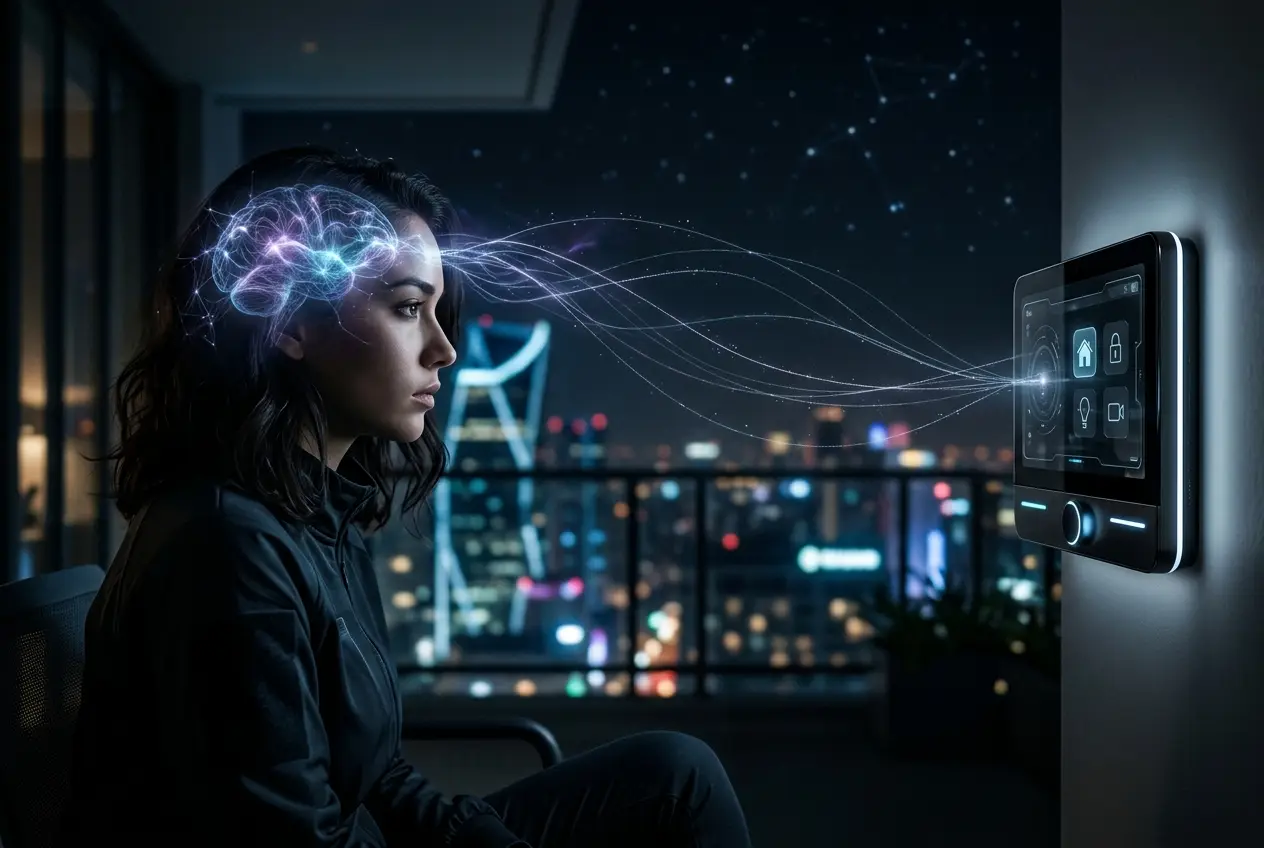
* **Smart Home Control:** Imagine dimming lights, adjusting thermostats, or even opening doors with a thought. This is an emerging area, promising ultimate hands-free convenience.
* **Drone and Robotics Control:** Researchers have demonstrated users controlling drones and other robots using BCI systems. This has implications for remote operations in dangerous environments, disaster relief, and even advanced manufacturing. Check out how advanced tech might lead to self-replicating systems in our article: [Can AI Build Itself? The Dawn of Self-Replicating Tech](https://www.curiositydiaries.com/blogs/can-ai-build-itself-the-dawn-of-self-replicating-tech-1610).
* **Neuro-feedback and Mental Well-being:** BCIs are also being used in therapy to help individuals train their brains. By providing real-time feedback on their brainwave activity, people can learn to control their focus, reduce anxiety, or improve meditation. More on this can be found at [Neurofeedback on Wikipedia](https://en.wikipedia.org/wiki/Neurofeedback).
## The Challenges and the Horizon
Despite these incredible advancements, the journey is far from over. Several hurdles remain:
* **Signal Noise and Variability:** Brain signals are notoriously noisy and vary greatly between individuals and even within the same person over time.
* **Bandwidth and Latency:** The speed and accuracy of command translation are critical. For real-time control, low latency is essential.
* **Training and Learning:** Users often need extensive training to effectively control BCI systems, learning to consciously modulate their brainwaves.
* **Ethical and Privacy Concerns:** As BCIs become more sophisticated, questions arise about data privacy, security, and the potential for misuse. Who owns your brain data? What if thoughts could be intercepted or manipulated? These are not trivial concerns. Our article on [Can Neuro-Dust Upload Our Minds? Digital Immortality](https://www.curiositydiaries.com/blogs/can-neuro-dust-upload-our-minds-digital-immortality-3545) explores some of the ethical landscapes of advanced neuro-tech.
* **Power and Portability:** Invasive BCIs require surgery, and even non-invasive ones often involve bulky headgear. Making them more discreet and energy-efficient is key to widespread adoption.
The future, however, looks immensely promising. I anticipate breakthroughs in miniaturization, AI-powered signal processing, and more intuitive training protocols. We might see BCIs seamlessly integrated into everyday life, becoming as common as smartphones, offering unparalleled control and communication capabilities. Imagine a world where human intuition and thought can directly interface with complex systems, not just on Earth, but potentially guiding future space exploration or even interacting with alien environments. The possibilities truly are limitless.
As we continue to explore the intricate relationship between consciousness and technology, the boundary between what is "human" and what is "machine" will become increasingly blurred. We are not just building tools; we are forging extensions of our very minds, preparing for an era where thought itself becomes a powerful, tangible force in the physical world.
Frequently Asked Questions
Yes, absolutely! While not yet ubiquitous, Brain-Computer Interface (BCI) technology is actively used to control prosthetic limbs, communicate for locked-in patients, and in some gaming and smart home applications. The level of control varies depending on the system's sophistication and the user's training.
The distance itself isn't the primary limitation. Once your brain's electrical signals are captured and converted into digital data by a BCI, that data can be transmitted wirelessly (via Bluetooth, Wi-Fi, or cellular networks) to a device potentially anywhere in the world, just like any other digital information.
For non-invasive BCIs (like EEG caps), risks are minimal, typically involving minor skin irritation from electrodes. Invasive BCIs (requiring surgery) carry the risks associated with any brain surgery, such as infection or tissue damage. Additionally, ethical concerns surrounding data privacy, security, and potential misuse of thought-controlled technology are ongoing discussions.
Current BCIs do not 'read' thoughts in the way we understand language or complex ideas. Instead, they detect specific patterns of electrical activity (brainwaves) that a user intentionally generates or that correlate with a specific, learned intention (e.g., imagining moving a hand to control a cursor). They are more about translating intent into command than deciphering complex internal monologues.
One of the biggest challenges is improving the signal-to-noise ratio and consistency of brainwave interpretation. Brain signals are inherently noisy and highly variable. Developing algorithms that can reliably and accurately translate diverse neural patterns into precise commands, quickly and consistently for every user, remains a significant hurdle. Also, making them more user-friendly and less cumbersome is crucial for broader adoption.
Verified Expert
Alex Rivers
A professional researcher since age twelve, I delve into mysteries and ignite curiosity by presenting an array of compelling possibilities. I will heighten your curiosity, but by the end, you will possess profound knowledge.
Leave a Reply
Comments (0)
No approved comments yet. Be the first to share your thoughts!
 Join Us



 Unknown Author






























Leave a Reply
Comments (0)