


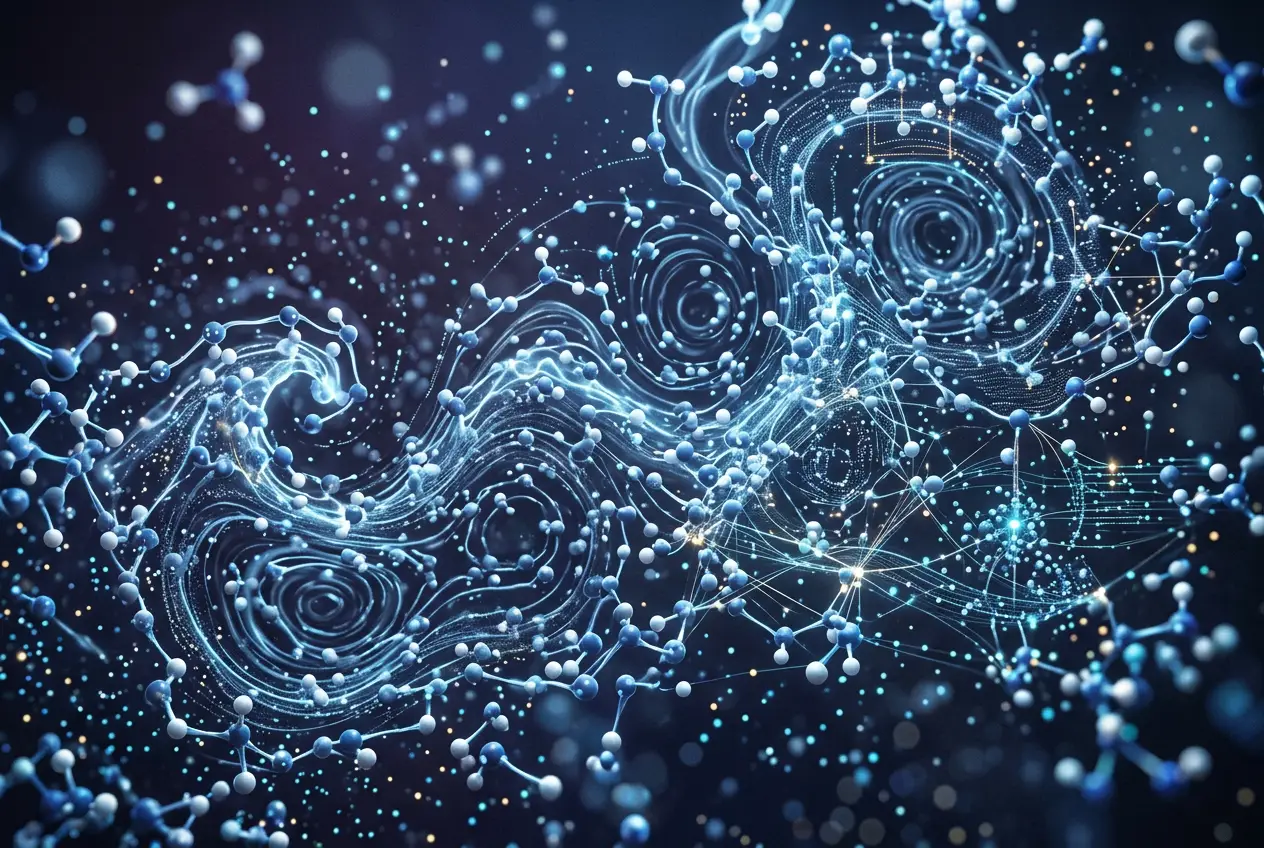
I remember a conversation from years ago that still echoes in my mind. We were discussing the most unusual properties of everyday substances, and someone brought up the idea of "water memory." At the time, I brushed it off as pure fantasy, a concept confined to fringe theories and alternative medicine. But recently, diving into the latest research, I’ve found myself asking: could there be more to it? Could water, this seemingly simple compound essential to all life, possess an ability to retain information, influencing everything from biological processes to future computing? This isn't just about homeopathy; it’s about a potential paradigm shift, hinting at what some call "hydrosol computing."
The idea feels almost rebellious against our conventional understanding of chemistry and physics. We're taught that water is H₂O, a molecule that constantly forms and breaks hydrogen bonds, a fluid medium that readily mixes and dilutes. Yet, the persistent whispers of water holding memory refuse to be silenced, sparking a fascinating debate at the intersection of science, technology, and sheer curiosity.
The Genesis of a Controversial Idea: Water Memory
The concept of water memory isn't new; its most famous (and controversial) proponent was French immunologist Jacques Benveniste in the late 1980s. He published research in Nature claiming that highly diluted solutions, where statistically no original solute molecules remained, still produced a biological effect. This phenomenon, which he attributed to water retaining a "memory" of the original substance's molecular structure, became the scientific underpinning for homeopathy.
The initial findings were met with immediate skepticism, and a subsequent Nature-commissioned investigation, including illusionist James Randi, famously discredited the experiments due to methodological flaws and unconscious bias. Despite the scientific community largely rejecting Benveniste's claims, the core idea — that water could somehow "remember" — continued to fascinate and inspire. It tapped into a deep human wonder about the hidden complexities of the natural world.
Beyond Dilution: Modern Perspectives on Water's Structure
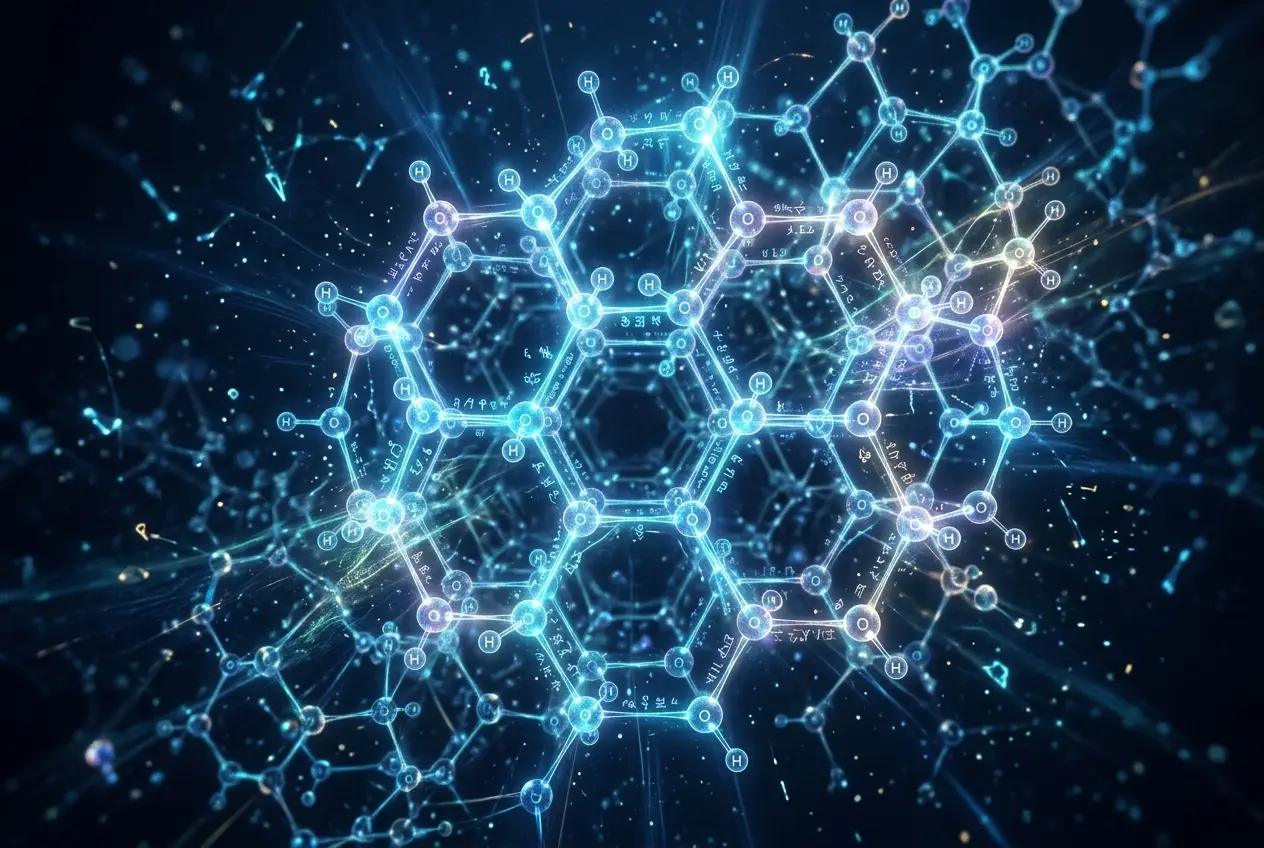
To truly understand the "water memory" debate, we need to look past the historical controversies and delve into the intricate world of water itself. It's not just a chaotic soup of H₂O molecules; water exhibits highly complex and dynamic structures. Scientists have long acknowledged that water molecules form temporary, ordered networks through hydrogen bonds, creating fleeting "clusters" and "nanobubbles" that constantly reconfigure.
Some researchers suggest that these dynamic structures might be influenced by dissolved substances or electromagnetic fields, retaining a "pattern" even after the original influence is removed. This isn't about individual molecules remembering; it's about the collective arrangement of water molecules forming transient, structured domains that could, hypothetically, encode information.
Dr. Martin Chaplin from London South Bank University, for instance, has extensively documented the various structures water can form, arguing that these structures are far more complex and stable than traditionally assumed. His work suggests the possibility of "structured water" domains that could persist for longer periods, potentially holding information in their unique arrangements. You can explore more about these structures on his dedicated website: Water Structure and Science (opens in a new tab).
This perspective moves the debate from "magic" to the realm of physical chemistry, asking if these structural changes could, under certain conditions, act as a form of non-traditional data storage. It's a leap, certainly, but one that encourages us to look at water with fresh eyes, much like how the idea of living crystals as computing's next frontier (opens in a new tab) challenges our silicon-based assumptions.
Hydrosol Computing: A Theoretical Framework
If water could hold information in its structural configurations, what would "hydrosol computing" even look like? The theoretical applications are mind-boggling. Imagine a computer where data isn't stored as binary electrical charges in silicon chips, but as intricate, temporary patterns within a water-based medium.
Possible mechanisms could include:
- Structural Imprinting: External forces (electromagnetic fields, specific frequencies, contact with molecules) could induce specific arrangements or super-structures within water.
- Resonance and Frequency: Instead of electrical signals, information could be transmitted and processed via subtle energy fields or resonant frequencies that interact with and alter water's structure. This ties into concepts like quantum biology, where subtle quantum effects are believed to play a role in biological processes, as explored in the question: Is Our Brain a Quantum Machine? (opens in a new tab)
- Self-Organizing Properties: Water's inherent ability to self-organize and adapt could be leveraged, allowing for highly parallel and adaptive computing architectures, unlike anything we currently have.
One speculative area draws parallels with how biological systems interact with water. Our bodies are over 60% water. Could the water within our cells play a role in information processing, memory, or even consciousness itself? This takes us into highly speculative territory, but the principle of biological systems harnessing emergent properties from simple components is well-established.
Table: Traditional vs. Hydrosol Computing (Conceptual)
| Feature | Traditional Computing (Silicon) | Hydrosol Computing (Conceptual) |
|---|---|---|
| Data Storage | Electrical states (0s and 1s) | Water molecular structural patterns |
| Processing Unit | Transistors, logic gates | Water clusters, resonant interactions |
| Energy Source | Electricity | Electromagnetic fields, subtle energies |
| Speed | Limited by electron movement | Potentially instantaneous (quantum effects?) |
| Medium | Solid-state (Silicon) | Liquid-state (Water) |
| Scalability | Miniaturization of circuits | Volume/structure of water |
Scientific Scrutiny and the Path Forward
It's crucial to acknowledge that the concept of water memory, especially as a data storage or computing medium, remains highly controversial and largely unsubstantiated by mainstream science. The challenges are immense:
- Reproducibility: The primary hurdle has always been the consistent, reproducible demonstration of water memory effects under rigorous scientific conditions.
- Mechanism: A clear, widely accepted physical mechanism for how water could robustly store and retrieve information is still lacking. How would the "memory" be encoded, maintained, and read without rapidly dissipating due to the chaotic nature of liquid water?
- Noise vs. Signal: Differentiating genuine informational patterns from random fluctuations and environmental noise in water is incredibly difficult.
However, the scientific landscape is always evolving. Research into the exotic properties of water continues. For example, studies on quantum effects in biological systems are showing us that sometimes, what seems impossible at a classical level, might have a quantum explanation. Could there be a form of "quantum water memory"? It's a speculative thought, but one that encourages deeper exploration.
I find it incredibly thought-provoking. If we could ever harness such a property, it might lead to profoundly energy-efficient, biologically compatible computing systems. Imagine sensors that "taste" information, or medical diagnostics that "read" the structural changes in bodily fluids with unprecedented sensitivity.
The pursuit of understanding unusual properties is not unique to water; remember the exploration into whether crystals can store consciousness (opens in a new tab)? The universe often hides its most profound secrets in plain sight, masquerading as the mundane.
The Future: A Liquid CPU?
While a "liquid CPU" made of water might sound like something out of a science fiction novel, the very discussion pushes the boundaries of our imagination. It compels us to question our assumptions about information, matter, and the fundamental nature of computing. Even if pure "water memory" as Benveniste envisioned it remains elusive, the ongoing research into water's complex structures could uncover other extraordinary properties that have implications for materials science, quantum biology, and perhaps, a new generation of bio-inspired technologies.
As I reflect on this, I realize that the most exciting scientific journeys often begin with a question that sounds a little bit crazy. Whether water truly holds memory or not, the pursuit of that answer leads us to a deeper appreciation of one of the universe's most vital and enigmatic compounds. Perhaps one day, the humble glass of water on your desk might be doing more than just hydrating you; it might be quietly processing information.
External Sources:



Conversation0
No comments yet. Be the first to share a thought — the best questions often become new stories.