I remember a time when getting tangled in headphone wires was just a daily ritual. Every morning, a battle against knots, every commute, a prayer that the jack wouldn't mysteriously disconnect. Fast forward to today, and most of us glide through our days with sleek, almost invisible devices tucked into our ears, delivering pristine audio with remarkable clarity. But have you ever stopped to wonder, **what exactly is the magic behind those tiny wireless earbuds** that makes your favorite podcast so crisp, your music so immersive, and your calls so clear?
It’s easy to take this seamless audio experience for granted, but beneath the surface of these miniature marvels lies a sophisticated blend of cutting-edge engineering, advanced algorithms, and brilliant design. It's not just about removing the wire; it's about reinventing how sound reaches our ears, battling interference, compressing data, and even actively silencing the world around us. Let’s dive into the intricate symphony of technologies that work in harmony to deliver that exceptional sound quality you've come to expect.
## The Invisible Bridge: How Bluetooth Carries Your Sound
At the core of virtually every wireless earbud experience is **Bluetooth technology**. This short-range wireless standard allows devices to communicate and exchange data over short distances using UHF radio waves in the ISM band. It’s what creates that invisible link between your smartphone and your earbuds.
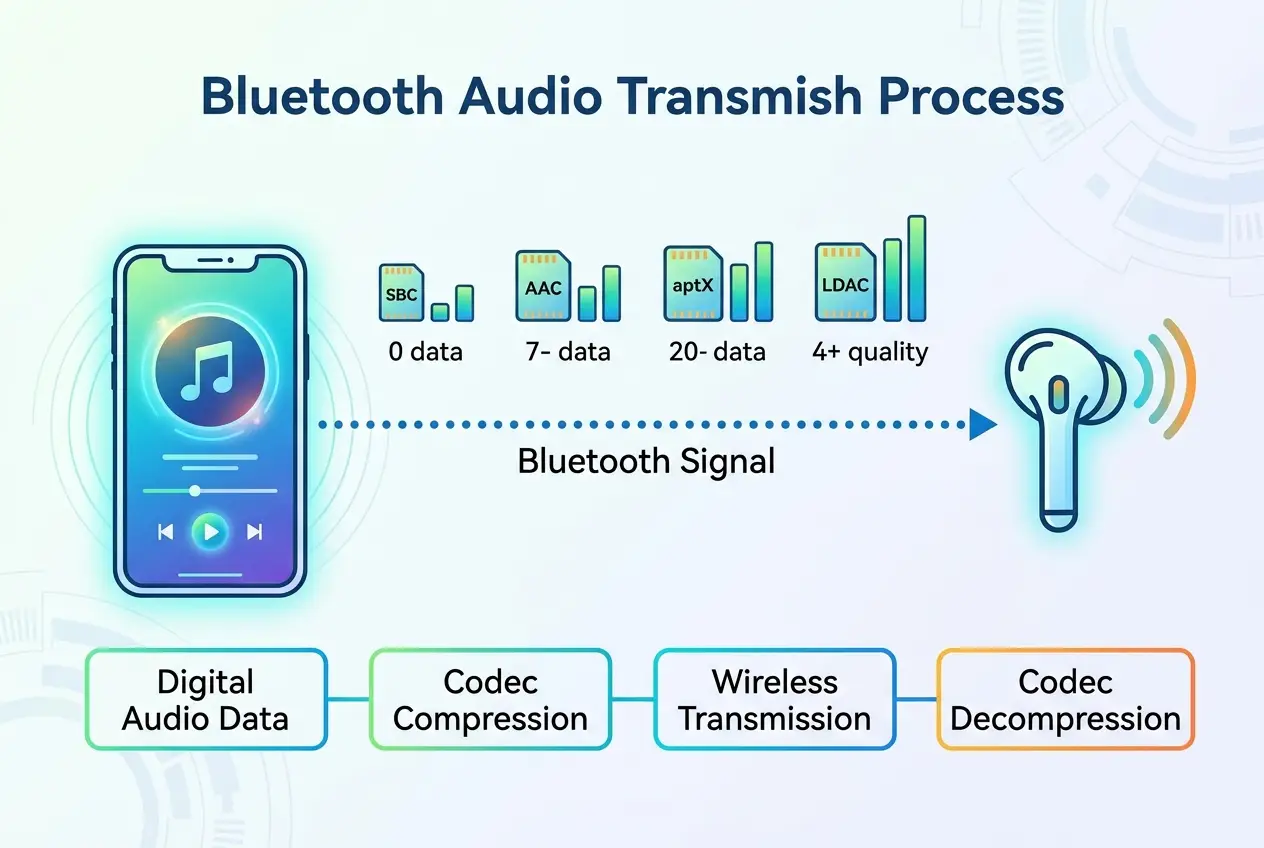
The journey of sound from your device to your earbud starts with digital audio data. Your phone converts the music file or voice call into a stream of binary data. This data then needs to be transmitted wirelessly. Bluetooth handles this by chopping the digital audio into small packets and sending them across the airwaves.
However, Bluetooth itself isn’t the only factor determining sound quality. Think of Bluetooth as the delivery truck – it gets the package from point A to point B. But what kind of package is it carrying, and how efficiently is it packed? That’s where **audio codecs** come into play.
### The Language of Sound: Understanding Audio Codecs
Imagine you’re sending a letter. You can write it out in full, or you can use shorthand to save space. Audio codecs are essentially the shorthand for digital audio. They are algorithms that **encode and decode** digital audio data, compressing it for efficient transmission and then decompressing it for playback. The better the codec, the more information it can preserve during compression, leading to higher fidelity sound.
Here are some common codecs you might encounter:
* **SBC (Subband Coding):** This is the baseline, mandatory codec for all Bluetooth audio devices. It’s widely compatible but offers only modest sound quality, often leading to noticeable compression artifacts, especially at lower bitrates. It's the "lowest common denominator" ensuring basic functionality.
* **AAC (Advanced Audio Coding):** Popular with Apple devices and widely used for streaming services, AAC generally offers better sound quality than SBC, especially at lower bitrates. It’s more efficient and intelligent in how it discards data, making it a good balance between compression and fidelity. Most iPhones and many Android phones support AAC, providing a noticeable step up in clarity.
* **aptX (Audio Processing Technology):** Developed by Qualcomm, aptX comes in several flavors (aptX, aptX HD, aptX Low Latency, aptX Adaptive). These codecs aim to deliver near CD-quality audio and significantly reduce latency, which is crucial for watching videos or gaming. aptX HD, for instance, supports 24-bit audio, offering a richer, more detailed sound experience for devices that support it. You can learn more about its technical specifications on [Wikipedia](https://en.wikipedia.org/wiki/AptX).
* **LDAC:** Developed by Sony, LDAC is one of the highest-quality Bluetooth audio codecs available, supporting high-resolution audio up to 24-bit/96kHz. It offers significantly higher bitrates than aptX HD, promising a truly premium listening experience, provided both your source device and earbuds support it.
The quality of your wireless audio depends heavily on the codec used, with better codecs retaining more of the original audio data, resulting in a clearer, more detailed sound.
## The Hardware Powerhouse: What's Inside Your Earbuds?
While Bluetooth and codecs handle the *transmission* of sound, the actual *reproduction* of sound relies on the intricate hardware packed into those tiny earbud shells.
### Drivers: The Heart of the Sound
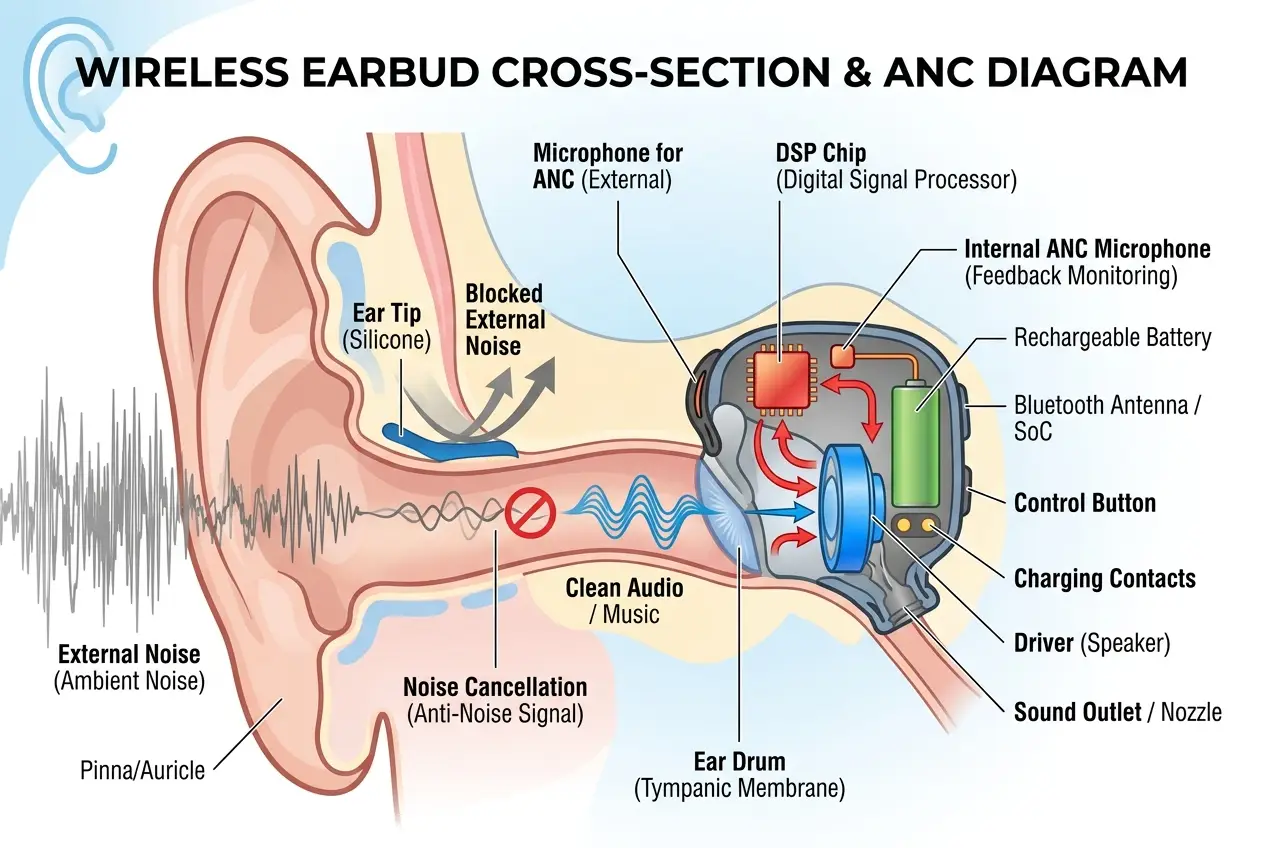
The **driver** is the miniature speaker inside your earbud that converts electrical signals back into audible sound waves. Its design and quality are paramount to the sound profile you experience.
* **Dynamic Drivers:** These are the most common type, working much like traditional loudspeakers. A voice coil attached to a diaphragm (a cone-shaped membrane) vibrates in response to electrical signals, creating sound. They are known for their ability to produce powerful bass and a natural soundstage. Many high-quality earbuds use large dynamic drivers to push air effectively, delivering a full, rich sound.
* **Balanced Armature Drivers:** Often smaller than dynamic drivers, balanced armature drivers are highly efficient and excel at reproducing specific frequency ranges with exceptional detail. They are commonly found in professional in-ear monitors and high-end consumer earbuds. To achieve a full range of sound, earbuds often incorporate multiple balanced armature drivers, each dedicated to highs, mids, or lows. This multi-driver approach helps create a more nuanced and accurate sound profile.
Some premium earbuds even feature **hybrid driver setups**, combining the best of both worlds – a dynamic driver for robust bass and balanced armatures for crisp mids and highs. The quality of materials used for the diaphragm (e.g., beryllium, graphene) and the precision of the coil and magnet assembly all contribute significantly to how faithfully the sound is reproduced.
### Digital Signal Processing (DSP): The Brain Behind the Sound
Once the sound signal is decoded, it doesn’t immediately hit the driver. Instead, it often goes through a powerful component called a **Digital Signal Processor (DSP)**. Think of the DSP as the intelligent brain of your earbuds, constantly refining and optimizing the audio in real-time.
The DSP performs a multitude of tasks to enhance sound clarity and quality:
* **Equalization (EQ):** It can adjust frequency responses, boosting bass, sharpening treble, or flattening the response to create a neutral sound signature. This allows manufacturers to fine-tune the sound profile, correcting any imperfections in the drivers or compensating for the earbud's physical acoustics.
* **Dynamic Range Compression:** This helps prevent distortion at high volumes and makes quieter passages more audible.
* **Active Noise Cancellation (ANC):** A significant portion of the DSP's power can be dedicated to ANC, which we'll explore next. The complex calculations required to generate anti-noise signals are handled by the DSP.
* **Spatial Audio:** Increasingly, DSPs are enabling spatial audio features, creating a 3D sound experience that makes it feel like sound is coming from all around you, enhancing immersion in music and movies.
* **Voice Clarity:** For calls, DSPs can isolate your voice, remove background noise, and ensure you sound clear to the person on the other end. This intricate processing of audio signals can be likened to how advanced AI might decipher complex data streams, much like in the blog post about how artificial intelligence deciphers complex patterns in phenomena like [gravitational waves](https://curiositydiaries.com/blogs/can-ai-decipher-gravitational-waves-secret-language-8845).
## Silencing the World: Active Noise Cancellation (ANC)
One of the most remarkable features contributing to perceived sound clarity in modern earbuds is **Active Noise Cancellation (ANC)**. It doesn’t just make your music sound better; it makes everything *else* disappear, allowing the nuances of your audio to shine through.
ANC works by using microphones to pick up ambient noise (like engine hums, chatter, or air conditioning). The DSP then analyzes these incoming sound waves and generates an "anti-noise" wave that is precisely out of phase with the incoming noise. When these two waves meet, they cancel each other out, effectively silencing the external world. This relies on rapid, precise calculation and output, an incredible feat for such small devices. Without the intrusion of external distractions, your ears can focus purely on the audio coming from the drivers, enhancing the subjective experience of clarity.
## The Unsung Heroes: Fit and Form Factor
While the tech inside is crucial, the physical design and fit of your earbuds play a more significant role in sound quality than many realize.
* **Passive Noise Isolation:** A good, snug fit with the right ear tips creates a seal in your ear canal, passively blocking out a significant amount of external noise. This is called **passive noise isolation**. It works in conjunction with ANC (or as the sole noise-blocking mechanism in non-ANC earbuds) to keep unwanted sounds out, allowing you to hear your audio more clearly at lower volumes.
* **Driver Positioning:** The precise angle and depth at which the driver sits in your ear can influence how sound waves travel to your eardrum, affecting bass response and treble clarity.
* **Comfort and Stability:** Earbuds that are uncomfortable or constantly shifting require you to readjust, disrupting your listening experience. A stable, comfortable fit ensures consistent sound delivery. Finding the right ear tips for your unique ear shape is paramount; most earbuds come with multiple sizes and materials (silicone, foam) to achieve the best seal.
In essence, a perfect fit means the sound produced by the drivers reaches your ears uncompromised, allowing you to fully appreciate the clarity and detail. The way our devices can enhance or even create our sensory experiences is a fascinating frontier, similar to discussions on how [technology can augment our senses](https://curiositydiaries.com/blogs/can-tech-augment-our-senses-see-sound-taste-color-4378).
## The Future of Wireless Audio: Even Clearer Horizons
The journey towards pristine wireless audio is far from over. Manufacturers are constantly pushing boundaries:
* **Lossless Bluetooth:** While codecs like LDAC push the limits, true lossless audio over Bluetooth remains a challenge due to bandwidth limitations. New standards are emerging to address this, promising bit-perfect audio transmission without any data compression.
* **Advanced AI Integration:** Expect AI to play an even larger role in adaptive audio. Imagine earbuds that intelligently adjust EQ based on your environment, learning your listening preferences, or even providing real-time audio augmentation. The ability of electronics to "hold" and process complex data for these tasks is ever-increasing, making one wonder about the subtle ways [our electronics might hold secret data](https://curiositydiaries.com/blogs/do-our-electronics-hold-secret-dark-data-3980).
* **Personalized Sound:** Earbuds might soon map your ear canal acoustics and hearing profile, creating a truly personalized sound experience tailored to your unique anatomy.
* **Longer Battery Life and Smaller Form Factors:** Continued advancements in battery technology and miniaturization will lead to even smaller, lighter earbuds with extended listening times, without compromising on sound quality.
## Conclusion
The exceptional sound clarity of modern wireless earbuds isn’t the result of a single breakthrough, but a harmonious collaboration of diverse technologies. From the invisible radio waves of Bluetooth and the intelligent algorithms of audio codecs to the precision engineering of drivers and the real-time wizardry of Digital Signal Processing, every component plays a crucial role. Add to this the ingenious science of Active Noise Cancellation and the often-overlooked importance of a perfect fit, and you have a technological marvel that transforms how we experience sound. The next time you pop in your earbuds and lose yourself in your favorite track, take a moment to appreciate the complex dance of science and engineering making that crystal-clear sound possible.
Frequently Asked Questions
While many factors contribute, the combination of a high-quality audio codec (like LDAC or aptX HD), well-designed drivers, and effective Digital Signal Processing (DSP) for sound optimization are arguably the most crucial for delivering superior sound clarity.
Generally, yes. Higher-priced earbuds typically incorporate more advanced codecs, superior driver technology (e.g., hybrid setups), more powerful DSPs, and better materials, which collectively lead to improved sound quality, durability, and features like ANC. However, personal fit and sound preference also play a significant role.
You cannot physically upgrade the hardware (drivers, DSP) or the built-in Bluetooth codec support of your existing earbuds. However, ensuring your source device (smartphone, tablet) supports the highest-quality codec your earbuds offer, using high-resolution audio files, and getting the best possible ear tip fit can maximize their current performance.
Choppy audio or cut-outs are often due to Bluetooth interference. This can be caused by physical obstructions (walls, body parts), distance from the source device, or other wireless signals in the area (like Wi-Fi, other Bluetooth devices). Low battery levels or outdated firmware can also contribute to instability.
Historically, wired audio offered superior quality due to direct, uncompressed signal transmission. However, with advancements in high-fidelity Bluetooth codecs (like LDAC and aptX Adaptive) and sophisticated DSP, the gap is narrowing significantly. For most casual listeners, high-end wireless earbuds can now provide an audio experience comparable to, or even exceeding, that of many wired setups, especially when convenience is considered.
Verified Expert
Alex Rivers
A professional researcher since age twelve, I delve into mysteries and ignite curiosity by presenting an array of compelling possibilities. I will heighten your curiosity, but by the end, you will possess profound knowledge.
Leave a Reply
Comments (0)
No approved comments yet. Be the first to share your thoughts!
 Join Us



 Unknown Author



































Leave a Reply
Comments (0)