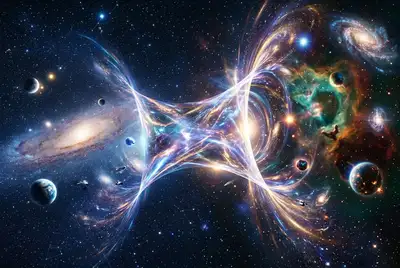
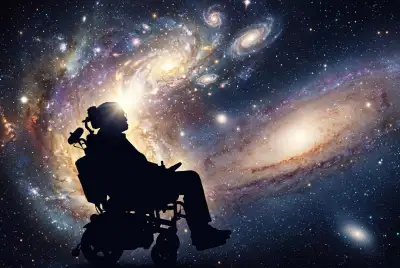
I recently found myself pondering one of humanity's most persistent quests: **discovery**. From the wheel to penicillin, from gravity to the Higgs boson, our progress has always hinged on understanding the unknown. But what if the next great leap wasn't solely dependent on human genius and painstaking experimentation? What if artificial intelligence, with its unparalleled ability to process vast oceans of data, could not just assist, but *predict* the very breakthroughs that will reshape our future?
It sounds like something out of a science fiction novel, doesn't it? A superintelligent entity sifting through cosmic dust and molecular structures, pinpointing the exact formula for a new superconductor or a cure for an incurable disease. Yet, as I delve deeper into the burgeoning field of AI in scientific research, I realize this isn't just a futuristic fantasy; it's a rapidly approaching reality.
### **The Dawn of Algorithmic Intuition**
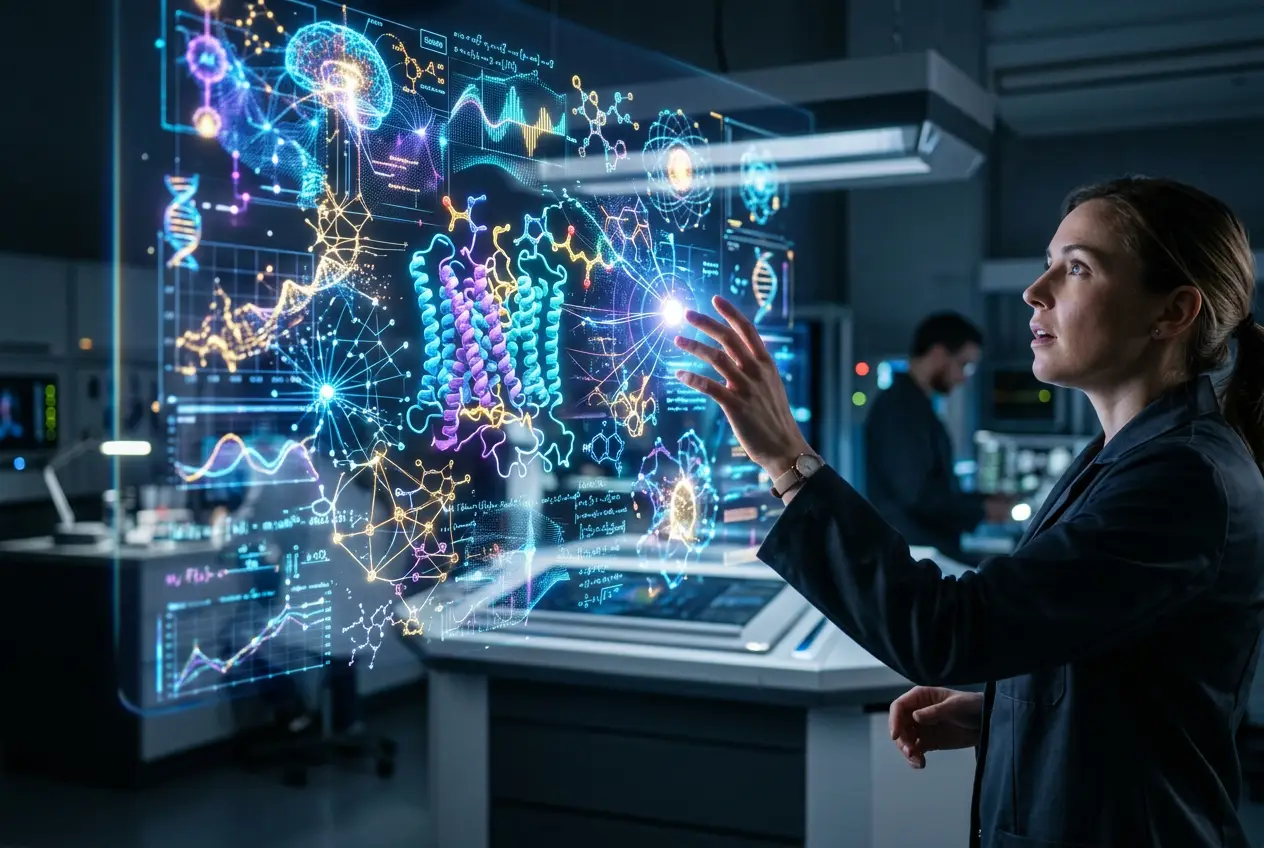
For centuries, the scientific method has been a testament to human intellect: observe, hypothesize, experiment, analyze, conclude. This iterative process, driven by brilliant minds, has pushed the boundaries of our knowledge. However, the sheer volume of data generated by modern research, from genomics to astrophysics, has surpassed human capacity for analysis. This is where AI steps in, not as a replacement for human ingenuity, but as an exponential amplifier.
Think about it: a human researcher might spend years on a single problem, limited by cognitive biases and the constraints of their own knowledge base. An AI system, on the other hand, can process millions of research papers, experimental results, and theoretical models in mere seconds. It can identify patterns and correlations that are invisible to the human eye, not because they are complex, but because they are spread across such a vast, disparate dataset.
**"The age of discovery is shifting from human intuition alone to a synergistic partnership with artificial intelligence."** – *Dr. Anya Sharma, AI Ethicist*
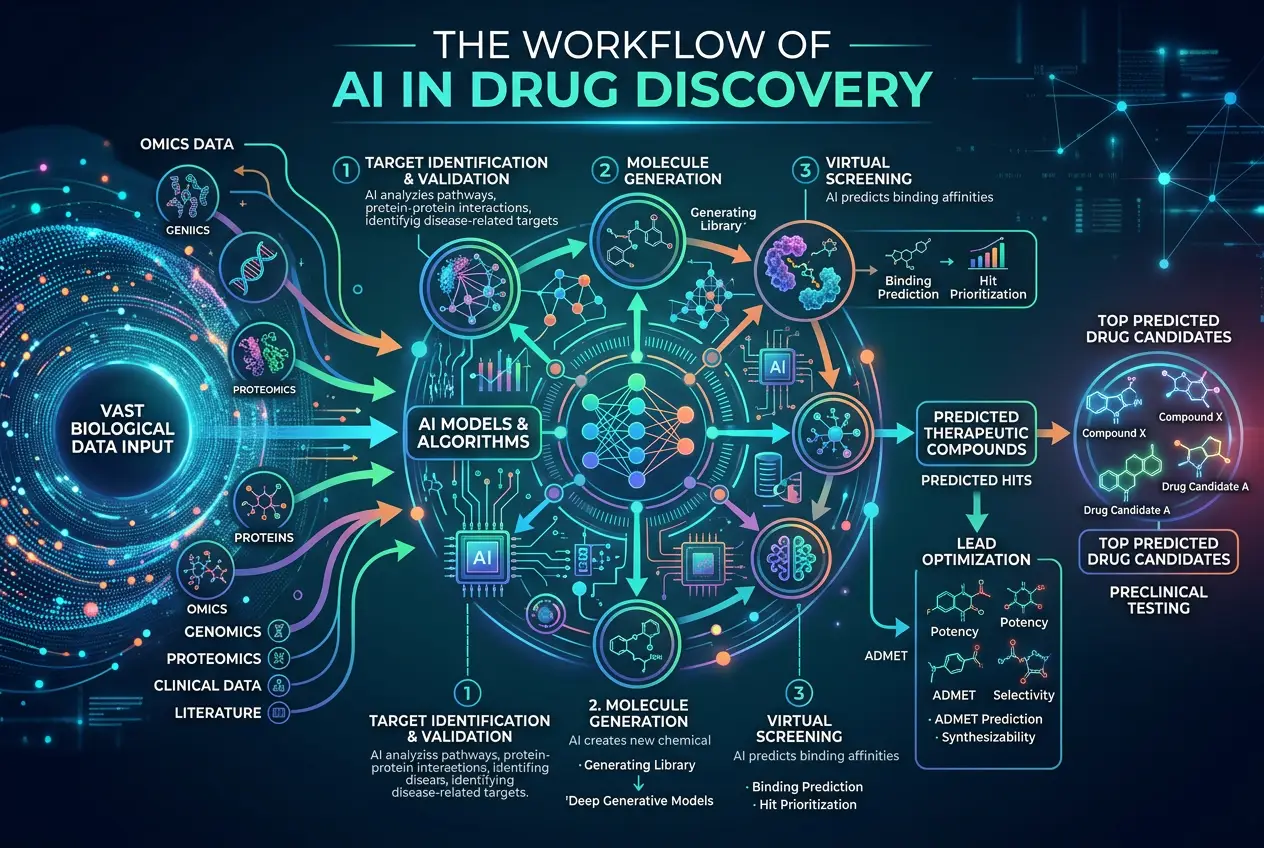
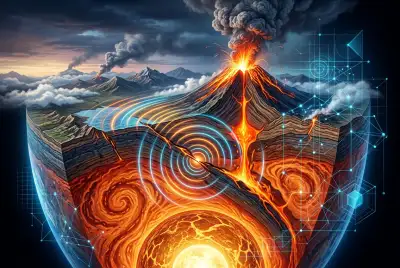
One of the most compelling demonstrations of AI's predictive power came with **AlphaFold**, a deep learning system developed by Google's DeepMind. Its breakthrough ability to accurately predict the 3D structure of proteins from their amino acid sequence revolutionized biology. For decades, determining protein structures was a painstaking, often impossible, experimental challenge. AlphaFold achieved what was once considered one of biology's "grand challenges," accelerating drug discovery and our understanding of life itself. You can read more about this remarkable achievement on [Wikipedia's AlphaFold page](https://en.wikipedia.org/wiki/AlphaFold).
### **Where AI is Unlocking New Scientific Frontiers**
AI's impact isn't confined to biology. Its tendrils are reaching into nearly every scientific discipline, laying the groundwork for future breakthroughs:
#### **Accelerating Material Science**
Discovering new materials with specific properties – stronger, lighter, more conductive – traditionally involves countless laboratory experiments. AI, particularly machine learning, is changing this. By analyzing databases of known materials and their properties, AI can predict the atomic structure and composition of novel materials that would exhibit desired characteristics. Researchers are using AI to predict new superconductors, batteries with higher energy density, and self-healing polymers, dramatically cutting down the time and cost of R&D. Imagine a future where AI designs a perfect material for a space elevator or a quantum computer.
#### **Decoding the Cosmos**
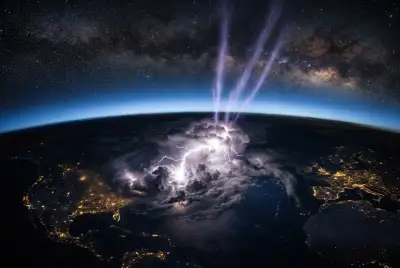
In astrophysics, AI is becoming an indispensable tool. Telescopes generate petabytes of data daily, far too much for human astronomers to sift through. AI algorithms are trained to identify exoplanets from subtle stellar wobbles, classify galaxies, detect gravitational lenses, and even search for anomalies in cosmic microwave background radiation that could hint at new physics. I’ve often wondered if AI could even help us decipher signals from other civilizations, as discussed in our blog, [Can AI Unlock the Universe's Hidden Code?](https://www.curiositydiaries.com/blogs/can-ai-unlock-the-universes-hidden-code-2950)
#### **Revolutionizing Climate Modeling and Prediction**
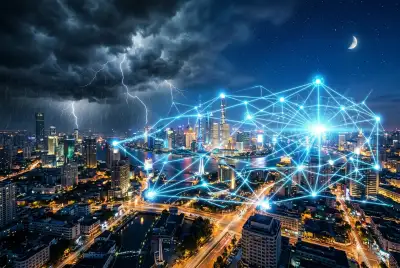
Predicting climate change and its impacts is incredibly complex, involving interactions between oceans, atmosphere, ice, and land. AI models can integrate vast amounts of climate data – satellite imagery, weather station readings, ocean buoy data – to create more accurate and granular climate predictions. This not only helps us understand future scenarios but also allows for more effective strategies for mitigation and adaptation. AI is even being used to optimize renewable energy grids and predict extreme weather events with greater precision. For a deeper dive into how machine learning aids scientific discovery, check out this [Wikipedia article on Machine Learning in Science](https://en.wikipedia.org/wiki/Machine_learning_in_science).
### **How Does AI "Predict" a Breakthrough?**
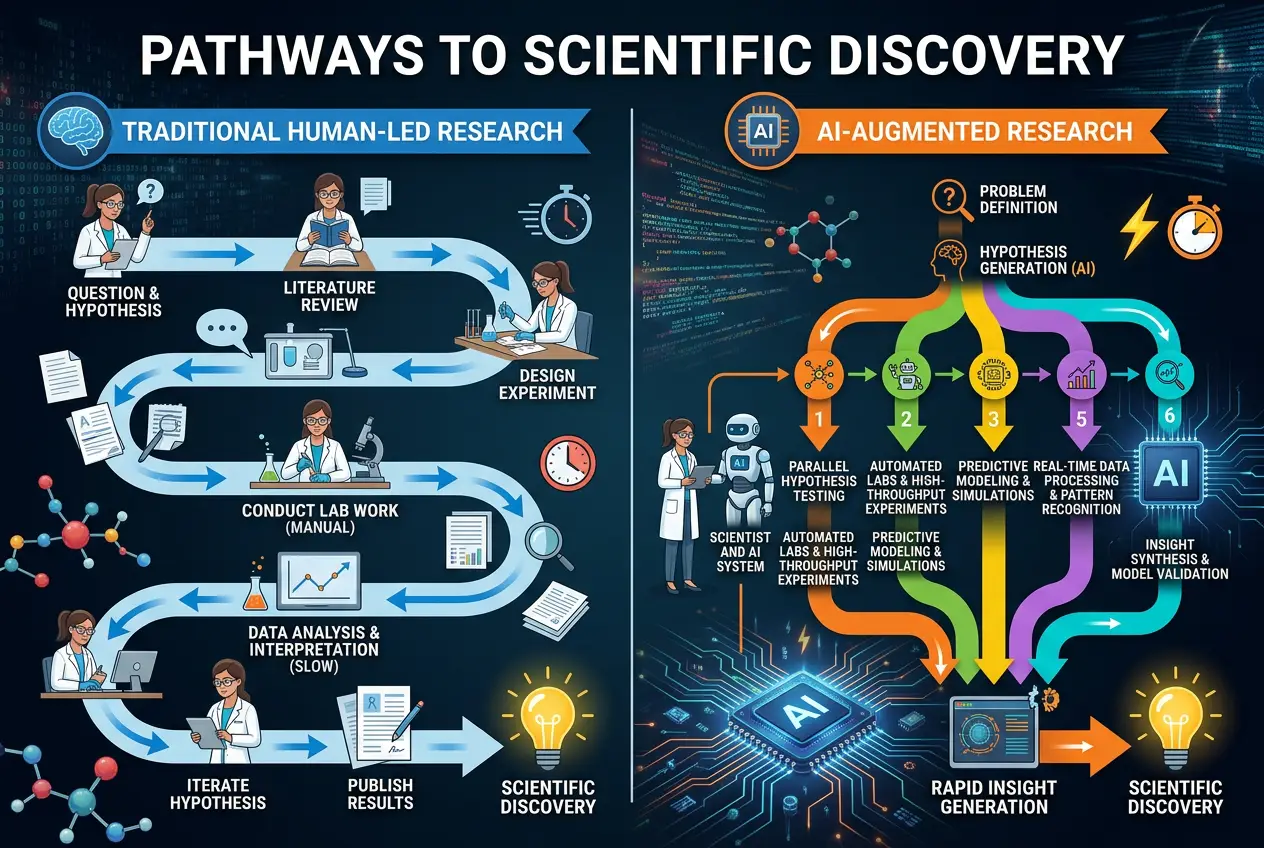
It's crucial to understand that AI isn't clairvoyant. It doesn't gaze into a crystal ball. Instead, its "predictions" stem from sophisticated pattern recognition and probabilistic reasoning. Here's a simplified breakdown:
1. **Data Ingestion:** AI systems are fed enormous datasets relevant to a scientific domain (e.g., chemical structures, genomic sequences, astronomical observations, experimental outcomes).
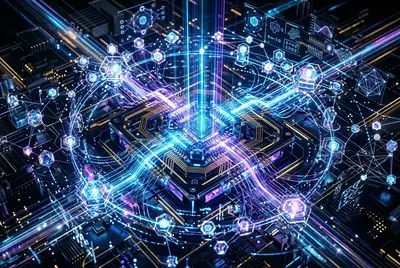
2. **Pattern Recognition:** Deep learning algorithms, especially neural networks, identify subtle, non-obvious patterns and relationships within this data that humans would likely miss.
3. **Hypothesis Generation:** Based on these patterns, AI can generate novel hypotheses or predict outcomes that fit the established rules, even if these outcomes haven't been observed yet. For instance, it might predict a new molecule that will bind strongly to a specific protein target.
4. **Simulation & Validation:** AI can then simulate experiments or perform virtual screenings to test these hypotheses, refining its predictions based on simulated results. This massively reduces the need for costly and time-consuming physical experiments.
5. **Targeted Experimentation:** The most promising AI-generated hypotheses are then passed to human scientists for real-world validation.
This iterative feedback loop between AI and human researchers accelerates the entire scientific process, allowing us to explore a much larger "discovery space" than ever before. It's a testament to the symbiotic relationship between machine processing power and human interpretative wisdom.
### **The Challenges and the Human Element**
While the potential is immense, I recognize that challenges exist. The "black box" problem, where an AI can make an accurate prediction but can't explain *why* it made it, can hinder trust and further scientific understanding. Data bias can also lead to skewed predictions, and ethical considerations surrounding autonomous AI research must be carefully navigated.
Furthermore, AI still lacks true creativity, intuition, and the ability to formulate entirely new paradigms out of nothing. It excels at finding patterns within existing frameworks but struggles to invent the framework itself. The serendipitous discovery, the "eureka!" moment born from unexpected observation and abstract thought, remains a uniquely human domain.
Therefore, the future of scientific discovery isn't about AI replacing human scientists, but rather empowering them. It's about AI becoming a tireless, hyper-efficient research assistant, hypothesis generator, and data analyst, freeing up human minds for the creative leaps, ethical oversight, and profound understanding that only we can provide. Perhaps AI can even learn from human intuition, a concept explored in our article, [Can AI Truly Learn From Human Intuition?](https://www.curiositydiaries.com/blogs/can-ai-truly-learn-from-human-intuition-5138).
### **Looking Ahead: A Future Forged by Collaboration**
The idea that AI can predict our next big scientific breakthrough is not a far-fetched dream but an ongoing reality, unfolding in labs and research institutions worldwide. From designing new drugs to uncovering cosmic secrets, AI is rapidly transforming the pace and scope of discovery. As I see it, the most exciting future is one where human curiosity and creativity are amplified by the incredible analytical power of artificial intelligence. Together, this powerful partnership promises to unlock a future filled with wonders we can barely imagine today.
What breakthrough do *you* think AI will help us achieve next? Share your thoughts!
Frequently Asked Questions
While AI can generate hypotheses and analyze data to an unprecedented degree, true independent scientific discovery, which includes formulating entirely new paradigms and interpreting results with deep understanding and ethical consideration, still requires significant human oversight and input. AI currently excels as a powerful assistant, not an autonomous scientist.
Key limitations include the 'black box' problem (where AI's reasoning isn't transparent), potential biases in the training data leading to skewed results, the current inability of AI to exhibit true creativity or serendipitous discovery, and the ethical considerations around its autonomous deployment without human values.
No, it's highly unlikely AI will replace human scientists. Instead, it acts as a transformative tool that amplifies human capabilities. AI handles the computationally intensive and data-heavy tasks, freeing up human scientists to focus on conceptual thinking, experimental design, critical analysis, ethical considerations, and creative problem-solving – aspects where human intellect remains indispensable.
The accuracy of AI's scientific predictions varies widely depending on the domain, the quality and quantity of data it's trained on, and the specific algorithms used. In fields like protein folding (AlphaFold) or material property prediction, AI has demonstrated remarkably high accuracy, often surpassing traditional methods. However, predictions still require experimental validation.
Future scientists will need skills in data science, computational thinking, understanding AI ethics, and interpreting AI outputs. Critical thinking, experimental design, interdisciplinary collaboration, and the ability to formulate novel research questions will become even more crucial, as AI handles much of the raw data processing and pattern recognition.
Verified Expert
Alex Rivers
A professional researcher since age twelve, I delve into mysteries and ignite curiosity by presenting an array of compelling possibilities. I will heighten your curiosity, but by the end, you will possess profound knowledge.
Leave a Reply
Comments (0)
No approved comments yet. Be the first to share your thoughts!
 Join Us
 Alex Rivers











Leave a Reply
Comments (0)