


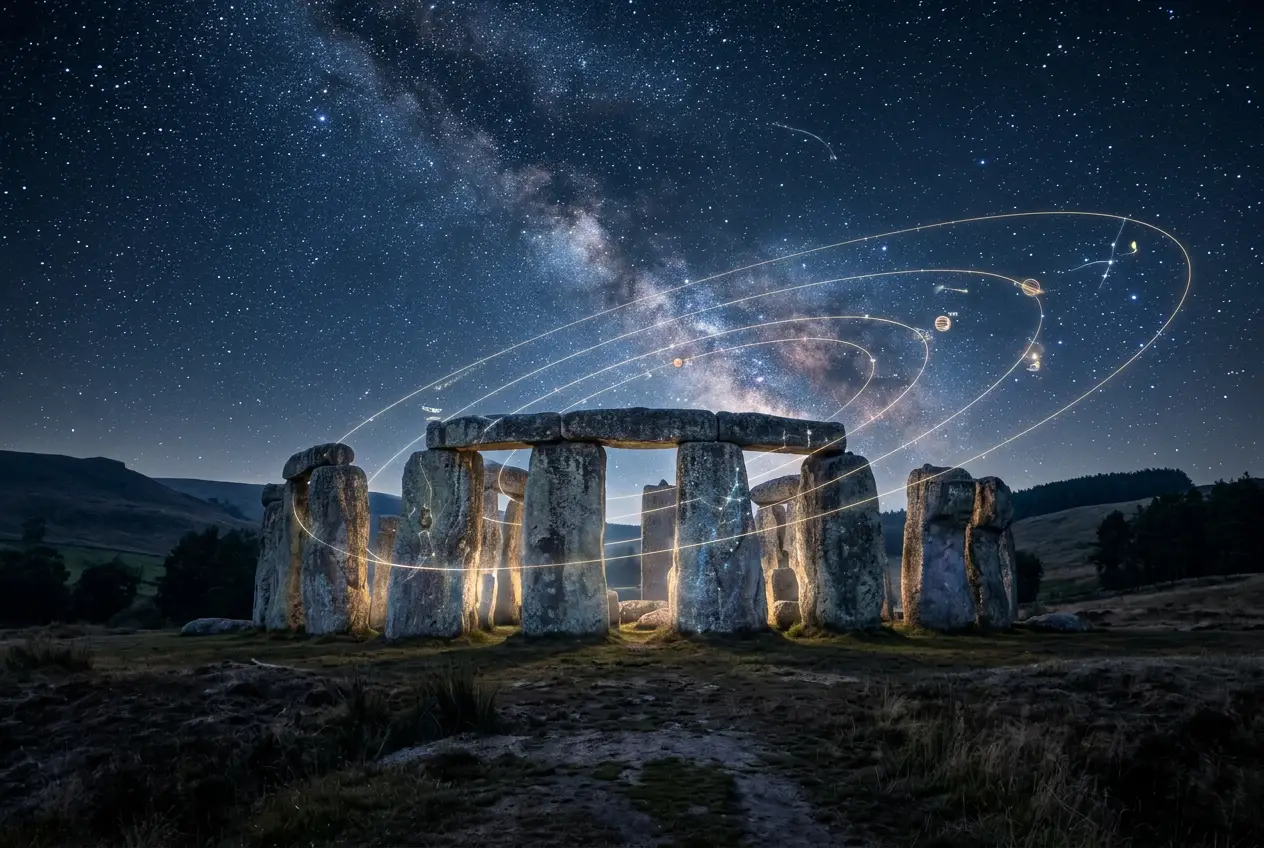
I remember standing before the towering stones of Stonehenge, feeling an undeniable chill that wasn’t just from the English wind. It was the weight of millennia, the silent question echoing from those ancient rocks: what did they know? We marvel at their sheer monumental effort, their precise alignment with solstices and equinoxes, but what if these weren't just calendars or ceremonial sites? What if, embedded within their very dimensions, their placements, and their intricate geometries, lay a profound understanding of our solar system—a cosmic blueprint coded in stone?
For centuries, our view of ancient civilizations often relegated them to rudimentary science, focused purely on survival and basic agriculture. Yet, time and again, archaeological discoveries challenge this narrative, revealing a sophistication that pushes the boundaries of our accepted history. The idea that ancient cultures could have encoded complex astronomical data, not just observed it, into their monumental architecture sparks a thrill of genuine curiosity. It suggests a form of "cosmic computer" built not of gears and bronze, but of rock, shadow, and mathematical ratios – a silent, enduring testament to forgotten knowledge.
The Stones Speak: Early Glimpses of Celestial Mastery
From the sprawling complexes of the Maya to the mysterious cairns of the British Isles, evidence abounds that our ancestors were keen observers of the heavens. Sites like Stonehenge, the Goseck Circle in Germany, and the Pyramids of Giza all show undeniable astronomical alignments. They weren't just pointing randomly; they marked significant celestial events with breathtaking precision. The rising sun on the summer solstice at Stonehenge, for instance, or the cardinal alignment of the Great Pyramid, speaks volumes about their observational prowess.
But was this merely about tracking seasons for agriculture or religious festivals? Or did it hint at a deeper, more systemic understanding of the cosmos? As we’ve explored in blogs like Ancient Alignments: Did Structures Track the Cosmos?, these alignments were fundamental. However, the concept we're delving into now goes beyond mere tracking; it posits an encoding of the entire solar system's mechanics.
Decoding Cosmic Blueprints in Earthly Structures
The idea truly begins to take shape when we examine sites not just for their alignments but for their internal dimensions and proportional relationships. Take the Great Pyramid of Giza, for example. Its sheer scale and precision have baffled engineers and historians for millennia. While some of its supposed astronomical connections verge on numerological speculation, others are harder to dismiss.
For instance, the ratio of its perimeter to twice its height (2π) very closely approximates pi (π). The perimeter itself, if measured in ancient cubits, is said to relate to the length of the year or even the circumference of the Earth at the equator. More strikingly, some researchers have proposed that the pyramid's position on Earth (at 30 degrees North latitude) and its dimensions are not arbitrary but are part of a larger geodetic system. Could it be that the Egyptians, through some unknown means, had a grasp of global geodesy and even the dimensions of our planet and its relationship to the sun, embedding this in their most iconic structure? You can dive deeper into the fascinating history and measurements of this wonder on its Wikipedia page (opens in a new tab).
Consider the incredible precision. The base of the Great Pyramid is level to within an inch across its vast expanse, and its sides are oriented to the cardinal points with near-perfect accuracy. This wasn't achieved by chance. It implies a sophisticated understanding of surveying, geometry, and potentially, astronomy, far exceeding what traditional narratives suggest for the Bronze Age.
Mathematical Echoes in Megalithic Sites
The "coding" of planets isn't limited to Egypt. Megalithic structures across Europe also present intriguing patterns. Sites like Newgrange in Ireland, an ancient passage tomb dating back over 5,000 years, are famous for their solstice alignments. But researchers have found complex numerical relationships within its design that go beyond simple solar tracking. Some theories suggest these numbers represent lunar and solar cycles, possibly even attempting to reconcile the discrepancies between them – a truly advanced astronomical feat.
Similarly, other megalithic sites exhibit what is often called "sacred geometry," where recurring patterns and proportions mirror those found in nature and, some argue, in celestial mechanics. The application of mathematical constants like the Golden Ratio (Phi, φ) or the Fibonacci sequence in ancient architecture has been observed globally. While often attributed to aesthetic preference, some scholars propose these were deliberate inclusions to represent a deeper cosmic order, a mathematical language reflecting planetary harmonies. You can learn more about this ancient art and science of Sacred Geometry on Wikipedia (opens in a new tab).
One compelling (though controversial) theory posits that certain megalithic alignments across vast distances formed a global grid, with nodes corresponding to powerful energy points or sites of significant astronomical observation. While this treads close to speculative territory, the consistency of some measurements and alignments suggests a shared, sophisticated knowledge system.
Beyond Observation: A 'Cosmic Database'?
If these structures weren't just observatories but active repositories of cosmic knowledge, how did they function as a "cosmic computer" or "database"? Imagine a civilization without written language as we know it, or at least one where knowledge was primarily oral. How would you transmit complex astronomical data, planetary orbital periods, or even the grand cycles of precession to successive generations?
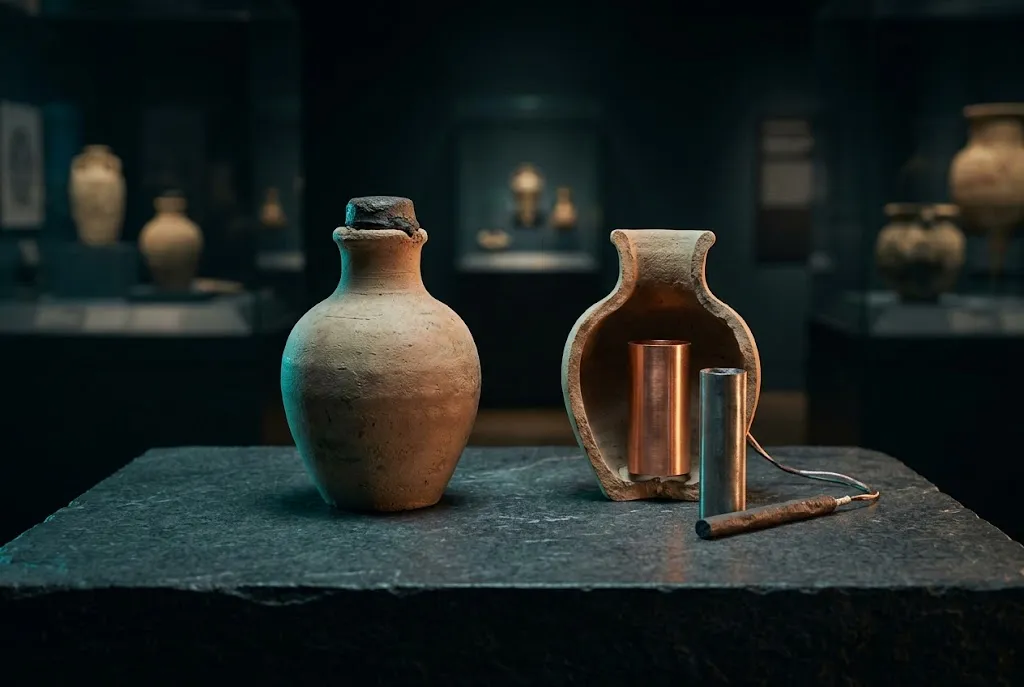
Building this knowledge into immovable, enduring structures could be the answer. The architecture itself becomes the textbook, the mnemonic device. By engaging with these sites, by walking their paths, aligning with their shadows, and observing their celestial markers, initiates could "read" the cosmic code. Each dimension, each angle, each material choice might have been a data point in a grand, three-dimensional model of the universe. This moves beyond mere "impossible artifacts" like some we've discussed in Impossible Artifacts: Clues to Lost Ancient Tech? to an entire architectural system as a knowledge base.
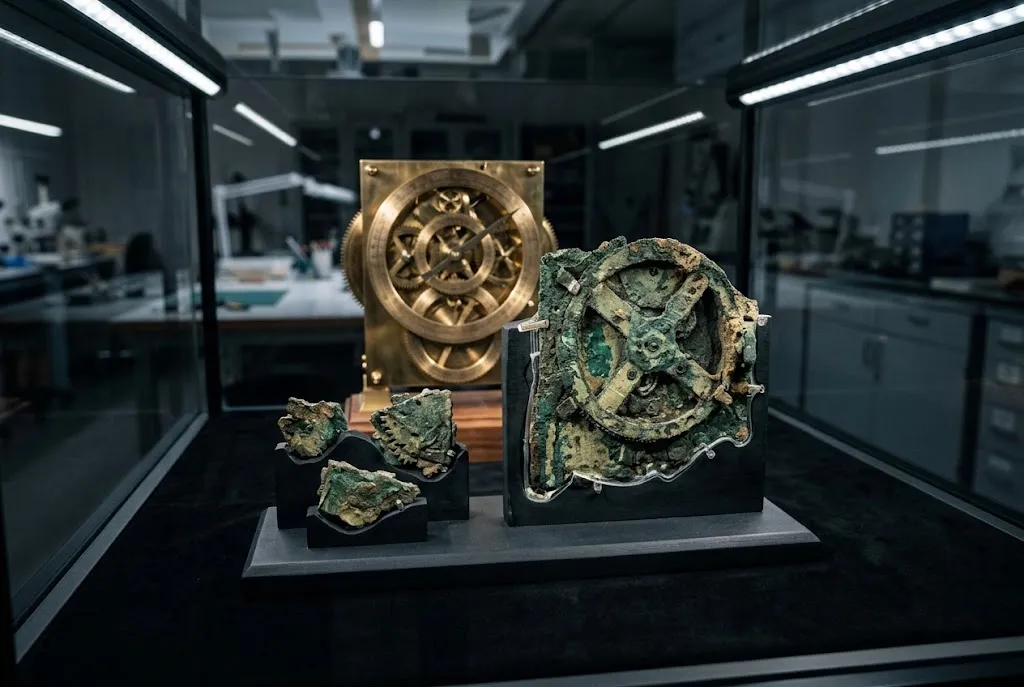
This isn't about mechanical gears like the Antikythera Mechanism, but about a more abstract, encoded form of computation – a system of understanding and representing cosmic data through geometry and orientation. It’s a physical manifestation of science, designed to be resilient against the ravages of time.
Challenges and Skepticism: Separating Fact from Fascination
Of course, these theories face considerable skepticism, and rightly so. The human mind is adept at finding patterns, even where none exist. This is often called the "Texas Sharpshooter" fallacy, where one shoots first and then draws targets around the bullet holes. It's easy to retroactively apply modern mathematical and astronomical knowledge to ancient structures and find seemingly profound correlations that might be mere coincidence.
The lack of definitive written records explaining these purported "codes" is a significant hurdle. Without explicit ancient texts detailing their intent to encode planetary data into a pyramid's height or a megalith's spacing, we are left to interpret through inference and statistical analysis. Distinguishing between genuine, intentional design and statistical anomalies requires rigorous academic scrutiny.
However, the sheer consistency of certain ratios across different sites, and the undeniable precision of construction given the apparent technological limitations of the time, compel many researchers to continue their investigations. The field of archaeoastronomy continues to evolve, using sophisticated tools and methodologies to analyze these ancient puzzles. You can explore the fascinating discipline of Archaeoastronomy on Wikipedia (opens in a new tab).
The Unseen Connection: Why Code It in Stone?
If ancients did indeed possess and encode this sophisticated knowledge, the question shifts from "how" to "why." What was the purpose of these stone-etched planetary models?
- Preservation of Knowledge: In an era before printing presses or digital storage, monumental architecture was the most durable medium for information. Encoding vital cosmic data ensured its survival through societal collapse or natural disaster.
- Spiritual Significance: For many ancient cultures, the cosmos was intimately connected with the divine. Understanding and mirroring celestial order on Earth could have been a deeply spiritual act, a way to align human existence with cosmic rhythms.
- Educational Tools: These sites could have served as open-air classrooms or initiation temples, where generations were taught the movements of the heavens, the cycles of time, and the fundamental laws governing their world. Much like Gobekli Tepe: First Observatory or Cosmic Calculator? might have served a similar knowledge-transfer purpose, but with a different kind of 'calculation'.
- Technological Application: While less understood, some speculate that this deep cosmic knowledge might have had practical applications beyond calendars, perhaps in fields we are only beginning to rediscover, or in ways that integrated with their understanding of earth energies or even sound.
The allure of these possibilities is immense. It transforms our understanding of ancient peoples from mere sun-worshippers to profound scientists and philosophers, capable of seeing the universe as an interconnected, measurable system, and leaving its secrets etched in the very bedrock of our world.
The stones remain silent, yet their message, if we can learn to read it, speaks of a forgotten chapter in humanity's quest to understand its place in the cosmos. Perhaps the most advanced computers of antiquity weren't powered by steam or electricity, but by the relentless sweep of planetary orbits and the enduring wisdom of those who sought to capture their essence in solid rock. As we continue to probe these ancient enigmas, who knows what other cosmic secrets we might uncover, patiently waiting in plain sight?



Conversation0
No comments yet. Be the first to share a thought — the best questions often become new stories.