I recently found myself staring at a physics diagram, utterly captivated by a concept so mind-bending, it felt like something ripped straight from a science fiction novel. The idea? Quantum tunneling. It's not just a theoretical oddity; it’s a real, verified phenomenon where particles can, quite literally, pass through solid barriers as if they weren't there. If you’ve ever felt like the universe holds more secrets than we can possibly imagine, prepare for a deep dive into one of its most bizarre and profound truths.
Imagine, for a moment, trying to roll a ball over a hill. In our everyday macroscopic world, if the ball doesn’t have enough energy to reach the top, it simply rolls back down. There’s no way it can appear on the other side of the hill without overcoming the peak. This is classical physics, the world we experience directly. But shrink down to the subatomic realm, to the domain of electrons, protons, and other quantum particles, and these rules shatter. Here, the ball (our particle) sometimes *tunnels* through the hill (a potential energy barrier) even when it doesn't have the energy to go over it. It's like walking into a brick wall and finding yourself on the other side, completely unharmed, without having knocked it down or found a door. This isn't a magic trick; it's the fundamental weirdness of quantum mechanics at play.
## The Unseen World: Where Classical Physics Fails
For centuries, our understanding of the physical world was dominated by classical mechanics, largely defined by Isaac Newton’s laws. Objects had definite positions and momenta; their future states could be precisely predicted if we knew their initial conditions. The world was deterministic, predictable, and, well, sensible. But as scientists began probing the tiny constituents of matter in the early 20th century, they encountered phenomena that simply defied this sensible world.
Quantum mechanics emerged as a revolutionary framework to explain these perplexing observations. It introduced concepts like **wave-particle duality**, suggesting that particles can behave as both particles and waves, and the **Heisenberg Uncertainty Principle**, which states that you cannot simultaneously know a particle's exact position and momentum. These are not just abstract philosophical ideas; they are the bedrock upon which modern technology is built, from lasers to transistors. Quantum tunneling is a direct consequence of this strange new reality.
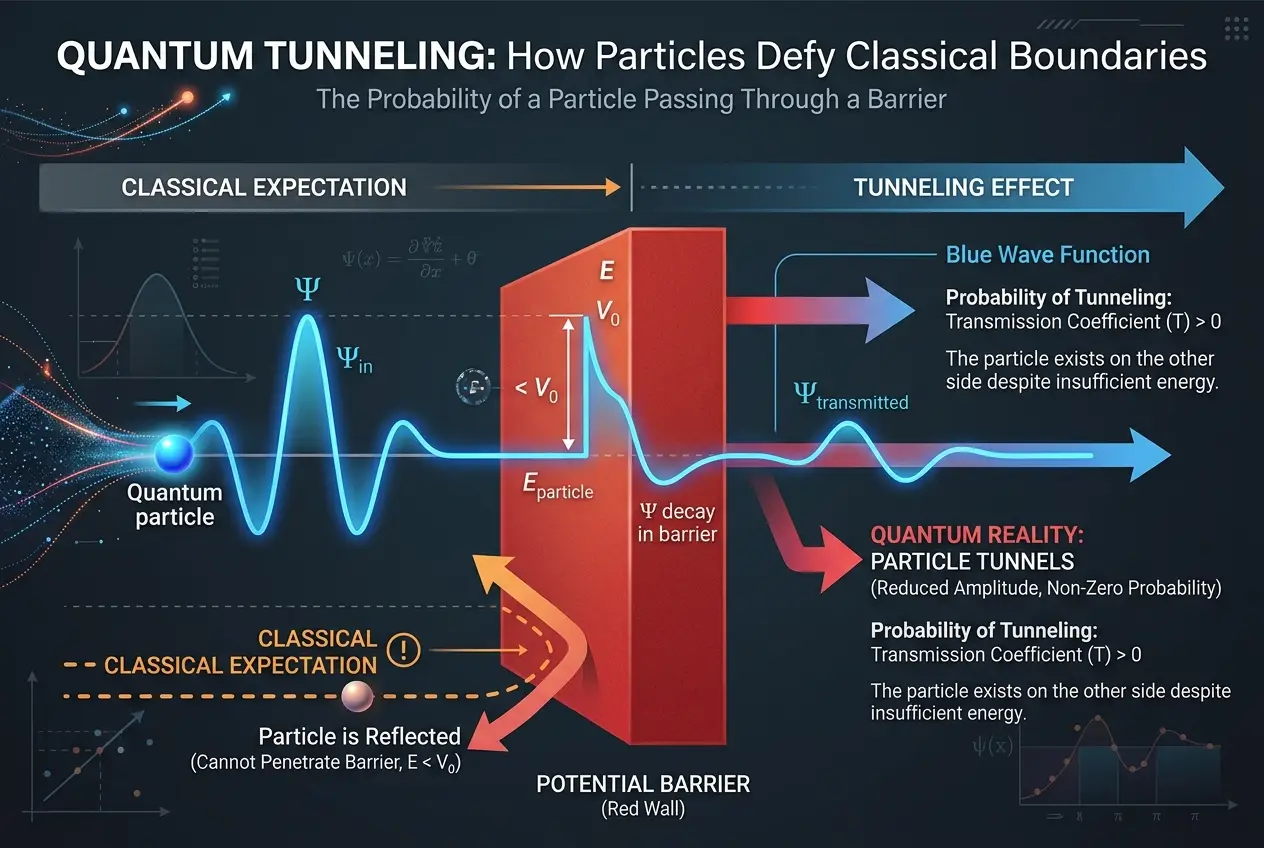
### How Does Tunneling Actually Work?
At its core, quantum tunneling is a manifestation of a particle's wave-like nature. According to quantum mechanics, particles aren't just tiny, distinct spheres; they exist as **probability waves**. These waves describe the likelihood of finding a particle at a particular location. When a particle's wave encounters an energy barrier, classical physics would say it stops or reflects if it doesn't have enough energy. However, in the quantum realm, the probability wave doesn't just stop at the barrier. Instead, it *penetrates* it.
The amplitude of this probability wave diminishes exponentially within the barrier. This means the probability of finding the particle *inside* the barrier is very low, and it gets lower the thicker the barrier is. But if the barrier is thin enough, the wave function can extend all the way through to the other side, meaning there's a non-zero probability of finding the particle on the other side, even though it classically shouldn't be able to get there. It effectively "tunnels" through.
This probability is extremely small for macroscopic objects, which is why you don’t walk through walls. The probability wave for something as large as a human is practically zero to extend through a solid wall. But for electrons, protons, and other subatomic particles, it happens constantly. You can learn more about the quantum wave function on [Wikipedia](https://en.wikipedia.org/wiki/Wave_function).
## Quantum Tunneling: Not Just a Theoretical Quirk
The implications of quantum tunneling extend far beyond abstract physics diagrams. This bizarre phenomenon is fundamental to numerous natural processes and cutting-edge technologies that impact our daily lives.
### Powering the Stars: Nuclear Fusion
One of the most profound examples of quantum tunneling occurs at the heart of stars, including our Sun. Nuclear fusion, the process that powers stars, involves atomic nuclei overcoming their mutual electrostatic repulsion to fuse together. These nuclei are positively charged, so they naturally repel each other. To get close enough for the strong nuclear force to bind them, they need immense energy to overcome this electrostatic "Coulomb barrier."
The temperature inside the Sun is incredibly high, but not quite high enough for most nuclei to classically overcome this barrier. If it were, the Sun would burn out much faster! Instead, quantum tunneling allows these nuclei to effectively "tunnel" through the Coulomb barrier, enabling fusion reactions to occur at a rate sufficient to sustain the star for billions of years. Without quantum tunneling, there would be no stars, and no life as we know it.
### The Backbone of Modern Electronics: Diodes and Transistors
Quantum tunneling is also indispensable in modern electronics. Consider the **tunnel diode**, a semiconductor device that utilizes quantum tunneling to achieve very fast switching speeds. Electrons can tunnel through a very thin depletion region in the diode, leading to unique current-voltage characteristics.
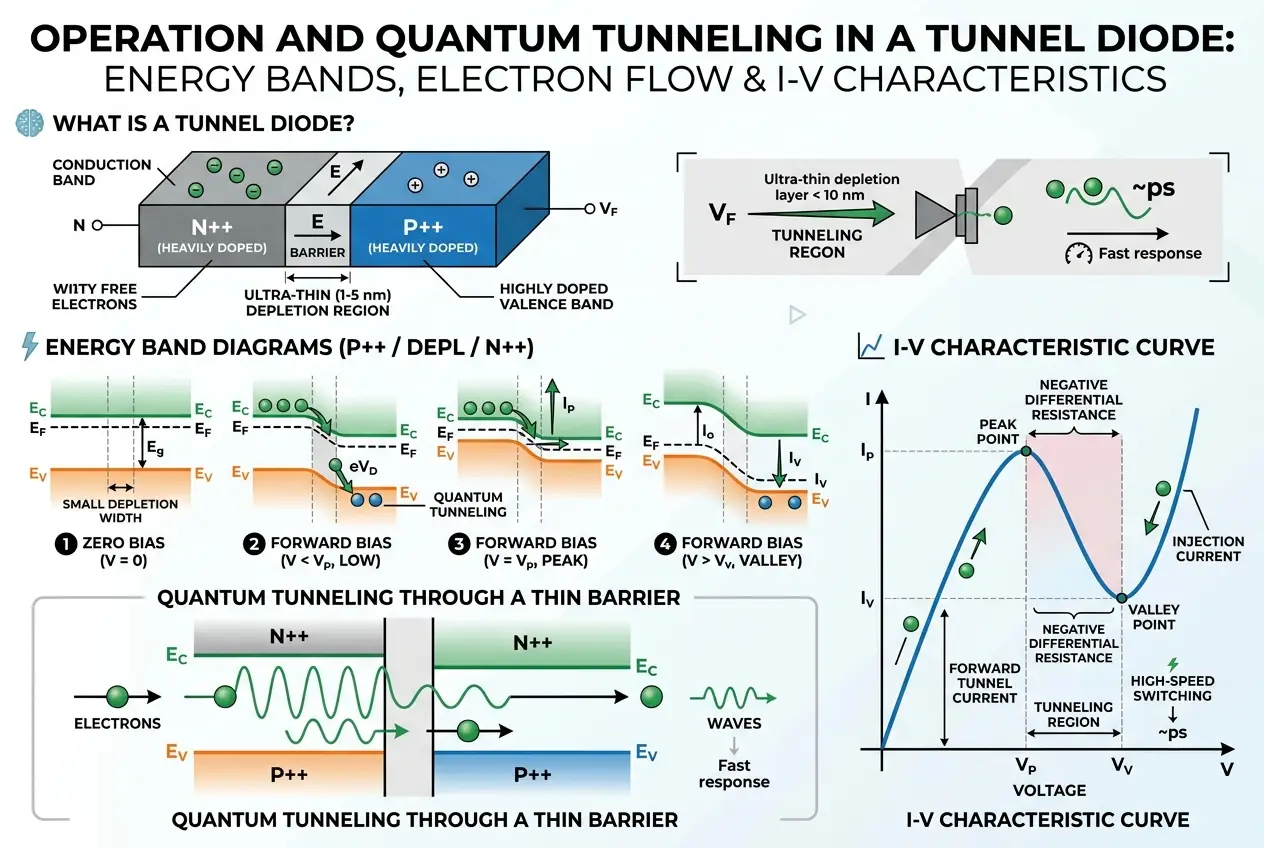
Similarly, the operation of **flash memory** – the technology in your USB drives and smartphones – relies on quantum tunneling. Data is stored by trapping electrons in a floating gate, and quantum tunneling is used to move these electrons into and out of this gate, essentially writing and erasing information. Without tunneling, these devices wouldn't exist in their current form, highlighting how deeply intertwined this quantum anomaly is with our technological progress.
### Scanning Tunneling Microscopes (STMs): Seeing the Atomic World
One of the most direct and amazing applications of quantum tunneling is the **Scanning Tunneling Microscope (STM)**. This revolutionary instrument allows scientists to image individual atoms on a surface, a feat previously impossible.
An STM works by bringing an extremely sharp conducting tip very close to a conducting surface (within a few atomic diameters). When a small voltage is applied between the tip and the surface, electrons can quantum tunnel across the tiny gap. The tunneling current is incredibly sensitive to the distance between the tip and the surface. By scanning the tip across the surface and maintaining a constant tunneling current (by adjusting the tip's height), the STM can create a topographical map of the surface with atomic resolution. This has opened up new frontiers in materials science, nanotechnology, and fundamental physics. You can find more information about STMs on [Wikipedia](https://en.wikipedia.org/wiki/Scanning_tunneling_microscope).
### Quantum Biology: Life's Hidden Quantum Secrets
Perhaps one of the most surprising and actively researched areas where quantum tunneling plays a role is in biology. This field, known as **quantum biology**, explores whether quantum phenomena influence fundamental biological processes.
For instance, quantum tunneling of protons is believed to be crucial in **enzyme catalysis**. Enzymes are biological catalysts that speed up chemical reactions in living organisms. In some cases, the rate of these reactions seems to be higher than what classical mechanics would predict, suggesting that protons are tunneling through energy barriers during bond formation or breakage. This could be a vital mechanism for the efficiency and specificity of life’s chemical machinery.
Another intriguing area is **photosynthesis**, where the highly efficient transfer of energy within light-harvesting complexes might involve quantum coherence and tunneling effects. If these quantum phenomena are indeed at play in biological systems, it suggests that life itself might be harnessing the strange rules of the quantum realm to function optimally. We've even discussed related topics, like whether [plants use quantum entanglement to talk](https://www.curiositydiaries.com/blogs/do-plants-use-quantum-entanglement-to-talk-1312), in previous articles.
## The Philosophical Edge: Can it "Break" Reality?
While quantum tunneling is a well-established phenomenon with practical applications, its implications for our understanding of "reality" are profound. If particles can literally defy solid barriers, what does that say about the solidity of matter itself?
The key lies in understanding that at the quantum level, determinism gives way to **probability**. A particle doesn't *definitely* tunnel through; it has a *probability* of doing so. This probabilistic nature is what makes quantum mechanics so counter-intuitive yet so powerful. It challenges the classical notion of a fixed, tangible reality, suggesting instead a universe built on a tapestry of probabilities and possibilities.
The concept that [empty space might be a quantum computer](https://www.curiositydiaries.com/blogs/is-empty-space-a-quantum-computer-9021) or that [quantum ripples tear spacetime](https://www.curiositydiaries.com/blogs/do-quantum-ripples-tear-spacetime-1543) further emphasizes how deep the rabbit hole goes when we delve into the quantum realm. Quantum tunneling, in a way, breaks the "rules" of classical reality, showing us that our everyday experience is merely a limited perception of a much stranger and more flexible underlying truth. It pushes the boundaries of what we thought was possible, forcing us to redefine what "solid," "barrier," and even "existence" truly mean.
## The Future: Harnessing the Unseen
As our understanding of quantum tunneling deepens, so too do the possibilities for future technologies. Researchers are exploring:
* **Faster and Smaller Electronics:** Further miniaturization of electronic components could leverage quantum tunneling to create devices with unprecedented speed and efficiency.
* **Quantum Computing:** While not directly a tunneling phenomenon, the principles of quantum mechanics, including the probabilistic nature revealed by tunneling, are foundational to quantum computing, which promises to solve problems currently intractable for even the most powerful supercomputers.
* **Medical Imaging and Therapies:** Precision medical instruments could be developed that harness tunneling for ultra-sensitive diagnostics or targeted drug delivery.
* **New Energy Solutions:** A deeper understanding of tunneling in nuclear fusion could contribute to the elusive goal of controlled fusion reactors, offering a clean, virtually limitless energy source. More on fusion and its potential can be found on [Wikipedia](https://en.wikipedia.org/wiki/Nuclear_fusion).
Quantum tunneling isn't just a fascinating anomaly; it's a window into the true nature of reality. It shows us that the universe is far more complex, dynamic, and probabilistic than our macroscopic senses suggest. As we continue to explore this quantum realm, we're not just uncovering new scientific facts; we're redefining the very rules by which our universe operates, revealing a reality that is infinitely more wondrous and intriguing than we ever dared to imagine. What other hidden dimensions might the universe be hiding, waiting for us to decode?
Frequently Asked Questions
Quantum tunneling is a probabilistic event, and its probability decreases exponentially with the mass of the object and the thickness of the barrier. For macroscopic objects like humans, the probability of tunneling through a wall is astronomically small, effectively zero, making it an impossible feat in our everyday experience.
Quantum tunneling is crucial for modern electronics, particularly in flash memory (used in USB drives and smartphones) and tunnel diodes, enabling high-speed switching and data storage. It's also the principle behind Scanning Tunneling Microscopes (STMs) which allow imaging of individual atoms.
No, quantum tunneling doesn't break the laws of physics; it operates entirely within the framework of quantum mechanics. It challenges our classical intuition and macroscopic understanding of reality, revealing that at the subatomic level, particles behave according to different, probabilistic rules that allow for such 'impossible' passages through barriers.
Quantum tunneling is vital for nuclear fusion in stars. Atomic nuclei lack sufficient kinetic energy to overcome their electrostatic repulsion (Coulomb barrier) classically. However, quantum tunneling allows them to pass through this barrier with a certain probability, enabling fusion reactions to occur and sustain stars like our Sun.
While quantum tunneling involves particles 'appearing' on the other side of a barrier without passing over it, it doesn't allow for faster-than-light communication or instantaneous teleportation of information or matter. The process is still bound by the speed of light, as the probability wave propagates within the barrier, and no information can be transmitted instantaneously.
Quantum biology is an emerging field exploring how quantum mechanical phenomena influence biological processes. Quantum tunneling of protons is hypothesized to play a role in enzyme catalysis, making biochemical reactions more efficient, and may also be involved in energy transfer during photosynthesis. It suggests life might harness quantum weirdness.
Verified Expert
Alex Rivers
A professional researcher since age twelve, I delve into mysteries and ignite curiosity by presenting an array of compelling possibilities. I will heighten your curiosity, but by the end, you will possess profound knowledge.
Leave a Reply
Comments (0)
No approved comments yet. Be the first to share your thoughts!
 Join Us



 Unknown Author























Leave a Reply
Comments (0)